

Only 1 left to order
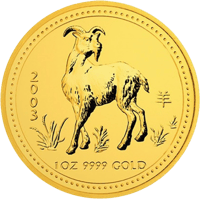
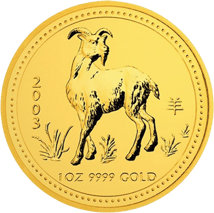
1 Ounce Gold Lunar I Goat 2003
£5,228.06
VAT-free and plus shipping costs
Available in 2–3 business days

 More than 280,000
 Over 30 years
 Secure shipping
 Google: 4.9/5
Lunar I: twelve animals in gold.
From 1996 to 2007, the Perth Mint struck the animal of the Chinese lunar calendar in gold every year.

The Lunar Series I is the direct predecessor of the Lunar Series 2. Due to the great success of the first series, the second series was distributed internationally with an even larger mintage and became one of the most sought-after series in the world. Each year, a new coin in the series is released, each featuring the symbol of the Chinese zodiac sign of that year.


The legend
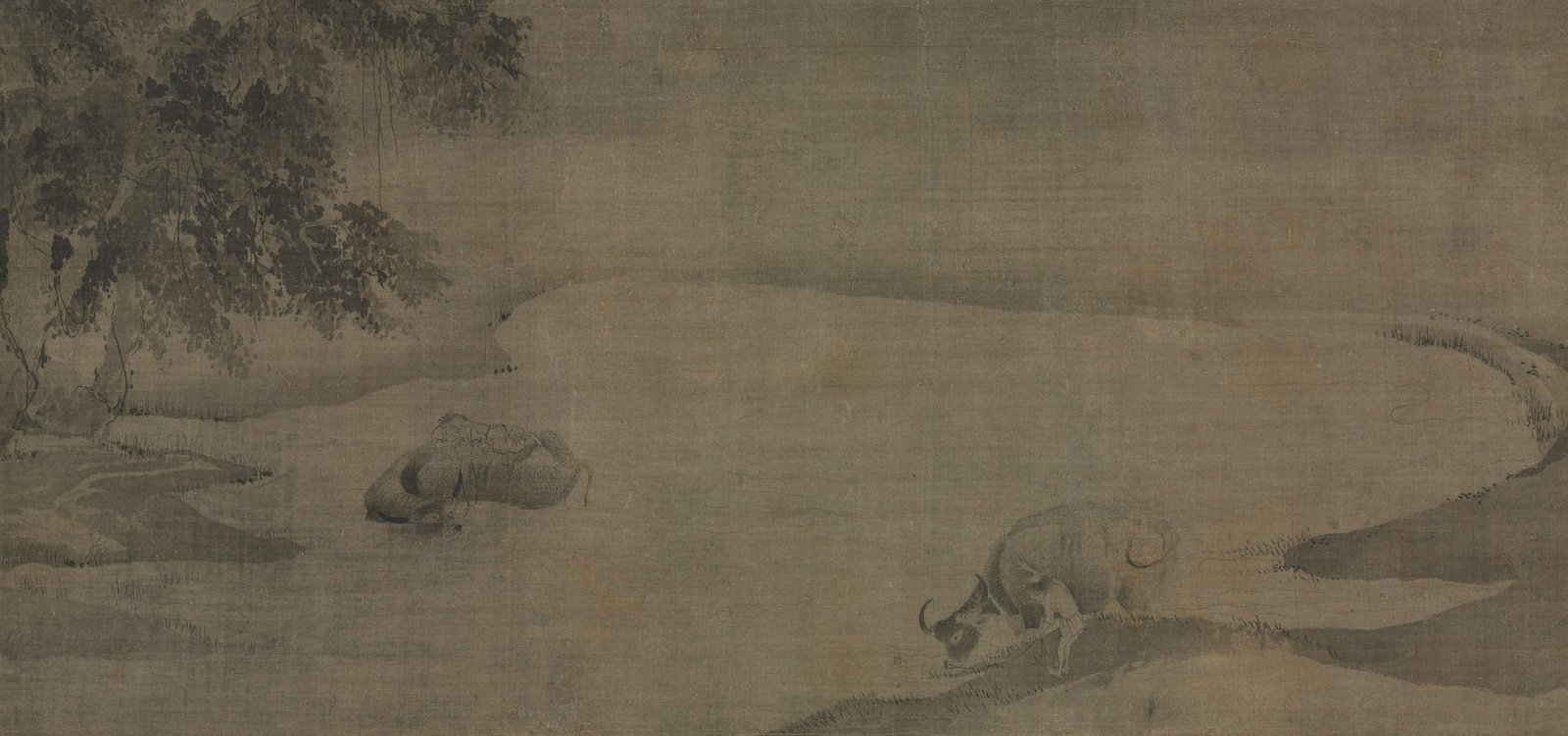
Several Chinese folk tales tell how the twelve animals got their order. In one of them, the little mouse rode across the river on the back of the ox and jumped ahead just before the bank. That, the story goes, is why it comes first in every cycle of the twelve animals.
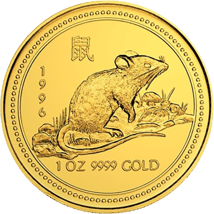
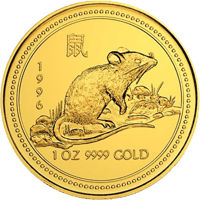
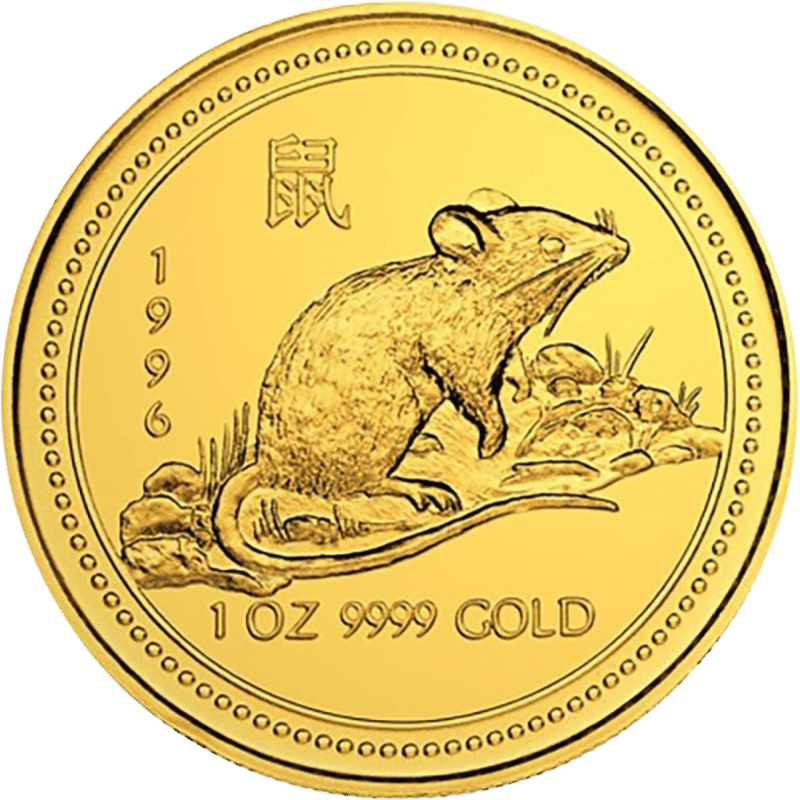
The Perth Mint starts with it too: the first Lunar Series begins with the Mouse of 1996, the second with that of 2008 and the third with that of 2020.
The calendar
The Chinese year does not begin on 1 January. New Year is usually the day of the second new moon after the winter solstice. That is why it moves from year to year between 21 January and 20 February, and only on that day does the animal change.
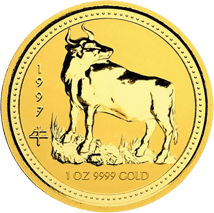
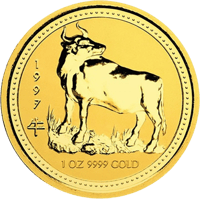
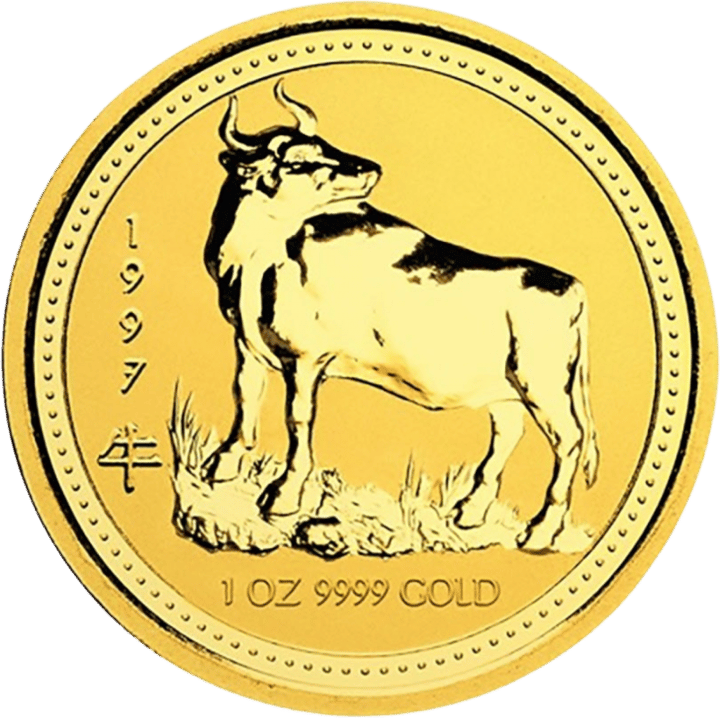
The Perth Mint announced it would release each new animal in good time before the festival. It issued the collector set with the Ox of 1997 as early as October 1996.
If you were born between 1 January and 20 February, look closely: until New Year’s Day, the animal of the previous year still applies.
The characters
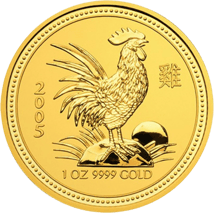
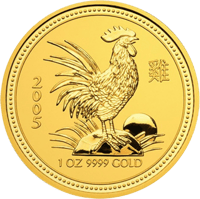
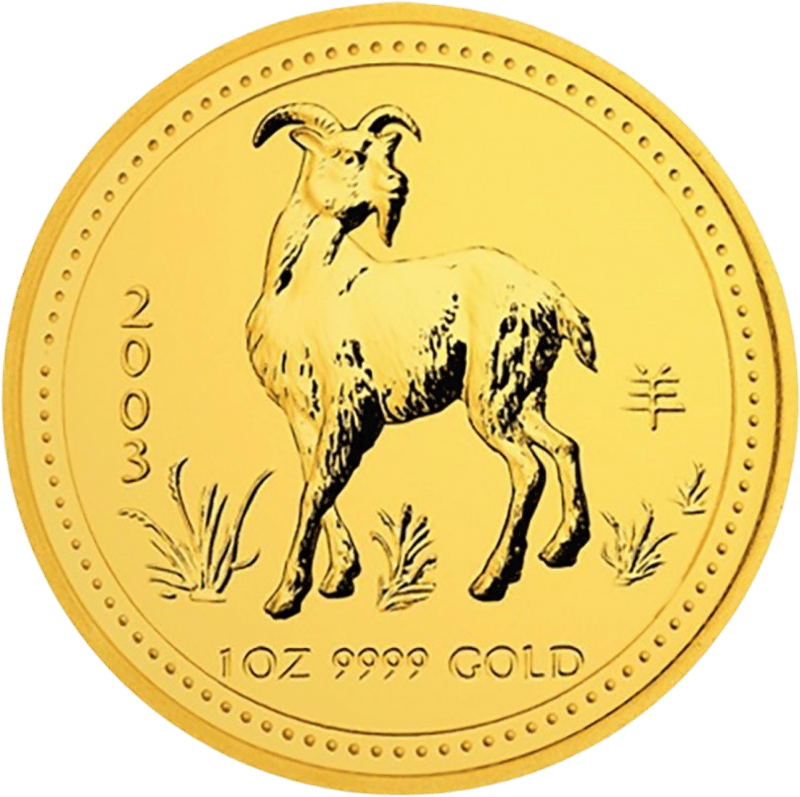
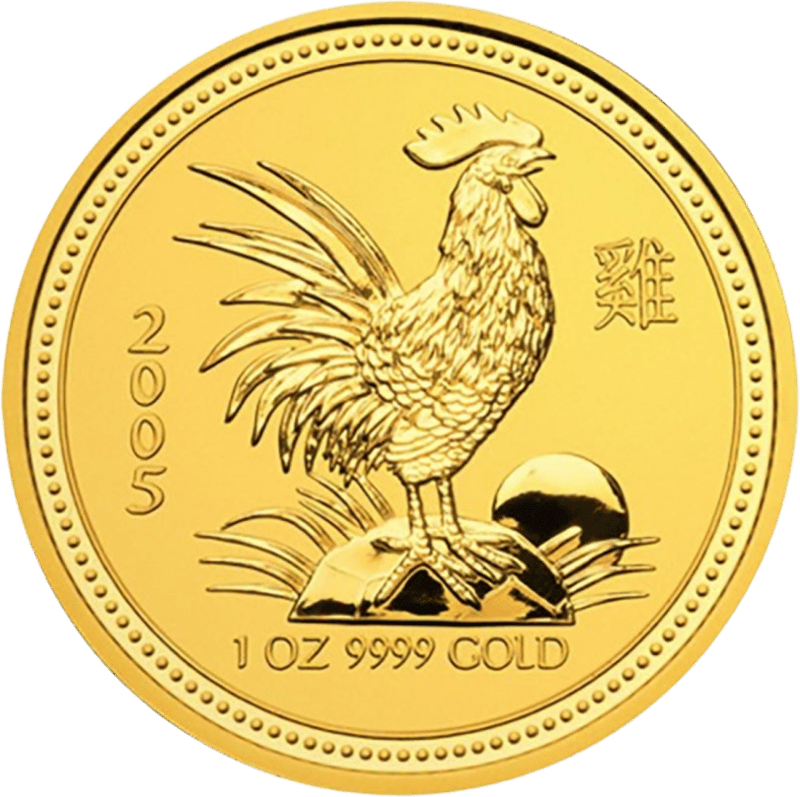
Some Chinese characters cover more than one English word. 鼠 stands for rat and mouse, 羊 for goat, sheep and ram, 雞 for chicken and rooster. That is why the same coin goes by different names.
The Perth Mint calls the three animals the Mouse, the Goat and the Rooster.
The series
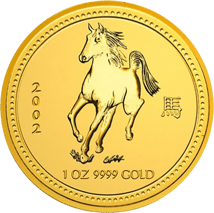
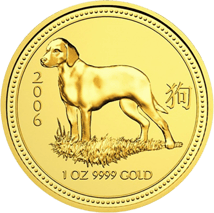
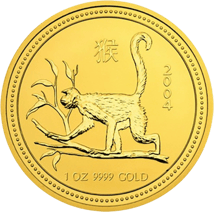
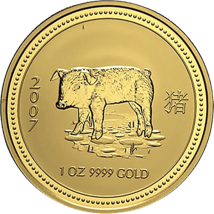
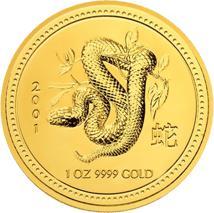
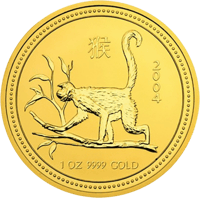
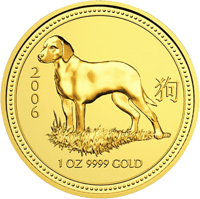
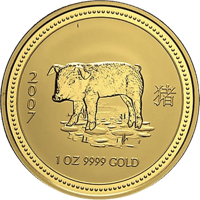
From the Mouse of 1996 to the Pig of 2007, in calendar order.
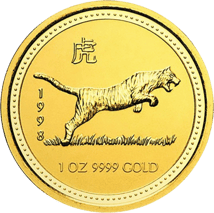
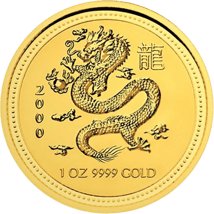
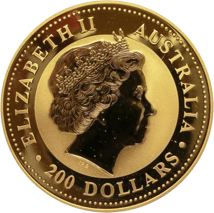
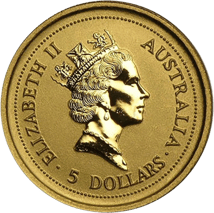
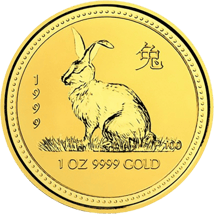
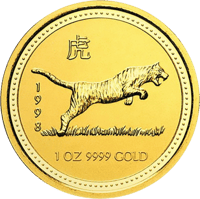
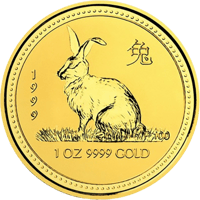
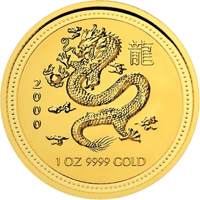
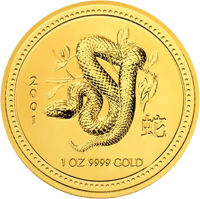
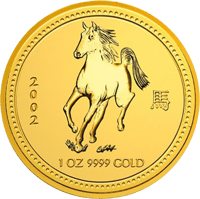
Each coin: one troy ounce of 999.9 gold, 32.1 mm in diameter, 180 serrations on the edge. On the value side, Queen Elizabeth II and a face value of 100 Australian dollars.
Your animal
Many people look for a coin for their own birth year or that of a loved one, others give one as a gift for the New Year festival, the Perth Mint writes.
We use the New Year dates of the Hong Kong Observatory. Other tables place the change at the Chinese start of spring instead, around 4 February.
The mint
The Perth Mint was founded as a branch of the Royal Mint in London. The gold discoveries of the 1880s and 1890s in Western Australia made a local mint necessary.
On 20 June 1899, the first gold was processed and coined at Hay Street in East Perth. The building is heritage listed today, and since 1970 the Perth Mint has belonged to the State of Western Australia.
With the Pig of 2007, the circle was complete.In 2008 it began again with the Mouse.
The next circles:Lunar Series II from 2008Lunar Series III from 2020
Sources: the Perth Mint (collector’s guide of 1999, catalogue of 2007, overview of the first Lunar Series, announcement of 22 January 2020, pages on the history of the mint and on the P mintmark), the Heritage Council of Western Australia, the Hong Kong Observatory, the Unicode Consortium, Colin Mackerras (Griffith University), Royal Museums Greenwich, National Geographic, the University of Nottingham, the Lam Museum of Anthropology and the photos of the coins shown. Image: China, Yuan dynasty, “Water Buffalo and Herdboys”, late 13th or early 14th century, The Cleveland Museum of Art, CC0.
Receive a free and individual precious metals offer matching your financial goals within just a few minutes.
 Request offer now
Die Lunar Serie I ist der direkte Vorgänger der Lunar Serie 2. Auf Grund des großen Erfolges der ersten Serie, wurde die zweite Serie mit einer noch größeren Auflage international vertrieben und wurde zu einer der begehrtesten Serien der Welt. Jedes Jahr erscheint eine neue Münze der Serie, jeweils mit dem Symbol der chinesischen Tierkreiszeichen des Jahres.
Die Münzen mit den Tieren im chinesischen Mondkalender aus der Lunar Serie zählen zu den beliebtesten Goldmünzen der Welt. Im Prägejahr 1996 kamen die Lunar Münzen zum chinesischen Neujahrsfest erstmals auf den Markt und haben die Szene für Goldmünzen nachhaltig beeinflusst. Mit einem Feingewicht von einer Unze und der Prägequalität „Stempelglanz“ sowie einem Nennwert in australischen Dollar (AUD) zeichnen sich die Goldmünzen durch eine hohe Akzeptanz in aller Welt aus.
Die Lunar-Münzen aus Australien werden jedes Jahr in verschiedenen Stückelungen hergestellt. Neben der Standardausführung zu einer Unze (1 oz) gibt es auch Münzen zu einer halben Unze (1/2 oz), einer Viertelunze (1/4 oz) und einer Zehntelunze (1/10 oz).
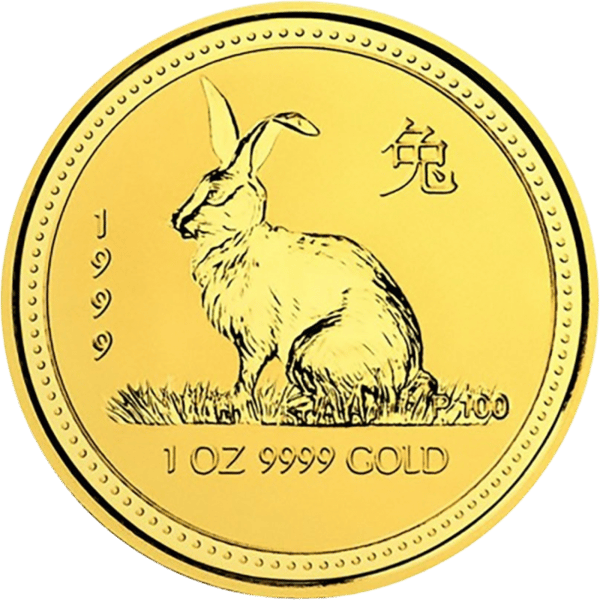
Die Lunar Münzserie in Gold wird seit 1996 von der Perth Mint geprägt. Jedes Jahr bringt die Perth Mint ein anderes Tiermotiv auf die Münzen, so wurden unter anderem der Hase, der Hahn, das Pferd und der Hund dargestellt. Die Motive werden von den Graveuren der Perth Mint jedes Jahr neu gestaltet. Bei der Perth Mint handelt es sich um die offizielle Prägestätte Australiens, in der die australischen Anlagemünzen hergestellt werden.
Auf der Wertseite der Münzen ist das Bildnis von Königin Elisabeth zu sehen. Sie regiert als Staatsoberhaupt von Australien. Die Wertseite zeigt zudem den Nennwert in australischen Dollar (AUD).Hintergrund
Die Geschichte der hessischen Tierkreiszeichen geht auf eine Legende zurück. Demnach soll zum Neujahrsfest ein Wettrennen zwischen verschiedenen Tieren stattgefunden haben, darunter die Schlange, der Drache, der Affe und das Schwein. Als schnellstes Tier kam die flinke Maus ins Ziel, zuletzt traf das Schwein ein. Der Lunar-Serie gehören auch der Tiger, die Rate und der Ochse an.
In unserem Sortiment befinden sich alle Münzen der ersten Lunar Serie aus den verschiedenen Jahren:
Wer schon begonnen hat, Münzen der zweiten Serie zu kaufen, sollte unbedingt auf die Lunar Serie 1 Gold einen Blick werfen. Die Darstellungen der Tierkreiszeichen sind sehr schön und der Sammlerwert der Münzen stieg stetig an. Somit ist eine Anlage in die Serie ein spannendes Investment auch über den aktuellen Goldpreis hinaus.
Die Münzen mit einem Gewicht von einer Unze (1 oz) sind nicht nur wegen ihrer prächtigen Motive für Sammler interessant, sondern auch wegen der geringen Auflage zahlen. So wurden die Münzen lediglich entsprechend der jeweiligen Nachfrage geprägt und in Jahren mit geringer Nachfrage wurden dementsprechend nur wenige Münzen hergestellt. Diese Jahrgänge haben sich inzwischen zu modernen Raritäten entwickelt. Sammler sind bereit, für diese Motive, beispielsweise mit der Ratte oder dem Tiger, massive Aufpreise zu bezahlen. Wegen der Auflagezahlen sind die Münzen der Lunar-1-Serie nur noch mit einem massiven Aufschlag auf den reinen Metallwert zu bekommen. Es handelt sich hierbei um moderne Raritäten.
 Lunar Serie I
Stay informed with product launches, financial news and exclusive offers. Sign up for our free newsletter today.
By entering your email address and clicking the "Submit" button, you give the following consent: "I agree to be informed by email about new products, financial news and exclusive offers, and therefore consent to the processing of my email address for the purpose of sending the newsletter. I can revoke this consent at any time without giving reasons, with effect for the future. The lawfulness of processing carried out prior to revocation remains unaffected."