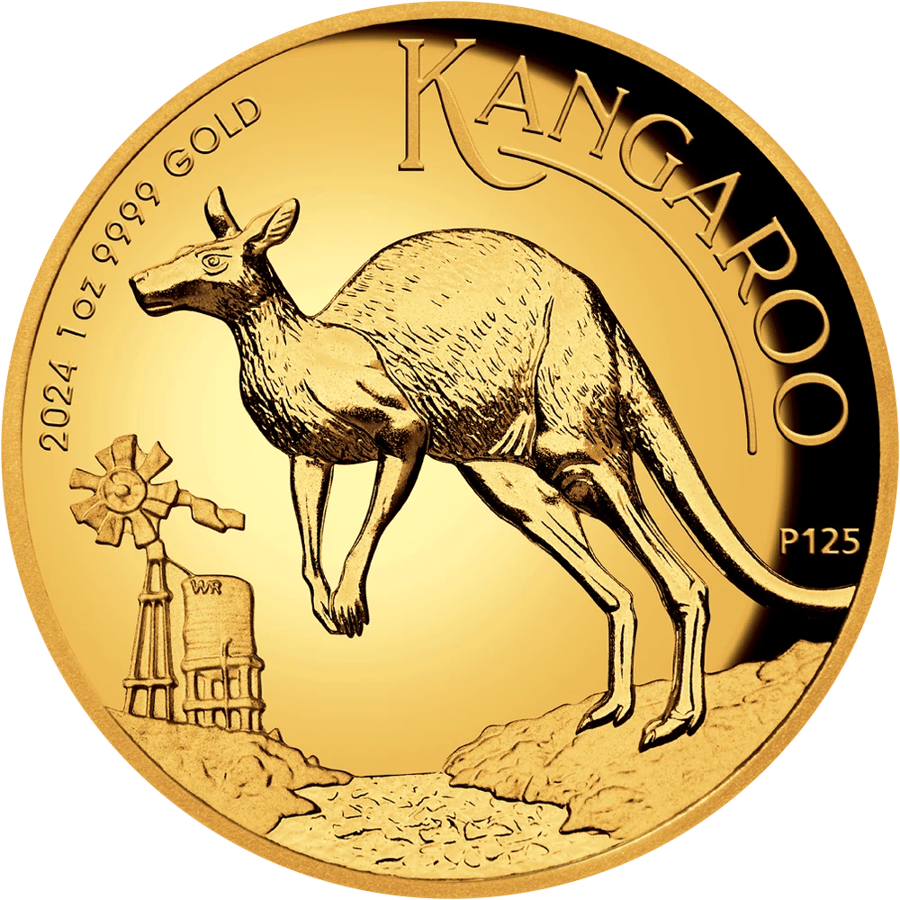
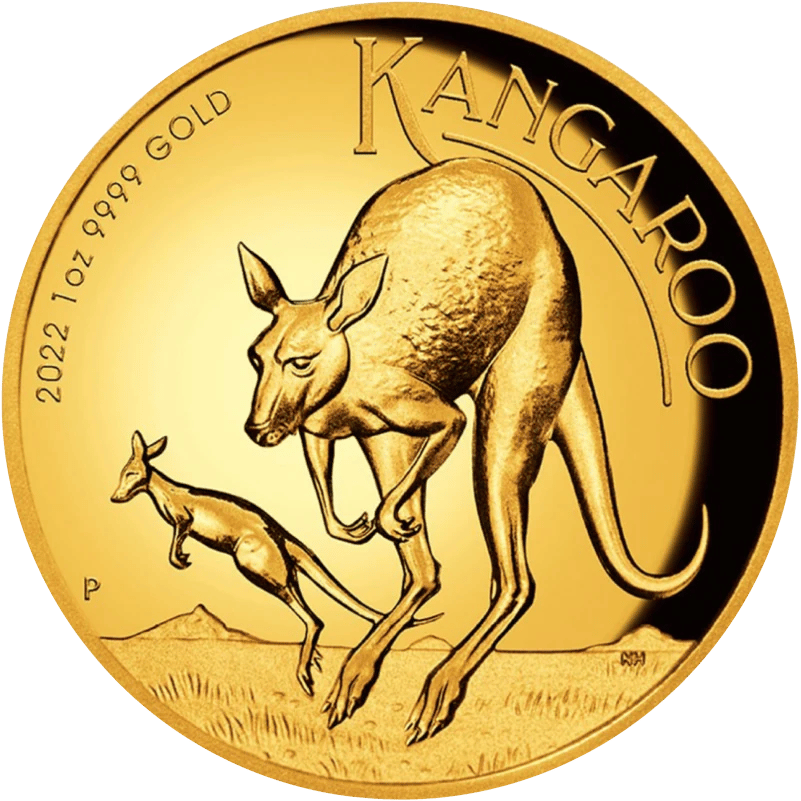
1 Ounce Gold Kangaroo Nugget 2026
£3,151.71
VAT-free and excl. shipping
Available in 2–3 business days

 More than 300,000
 Over 30 years
 Secure shipping
 Google: 4.9/5
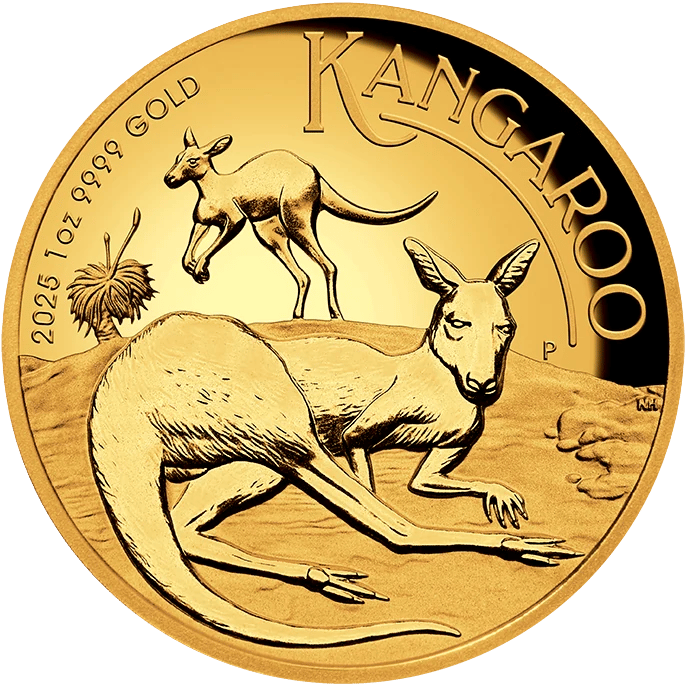
Australia's most famous animal has been part of the Australian Kangaroo coin series in gold since 1986, although the kangaroo itself did not appear on the coin until 1990. Previously, the reverse featured the Welcome Stranger Nugget, which is why the coin was also known as the Gold Nugget or Australian Nugget. The gold coin is produced in various sizes ranging from 1/10 ounce to 1 kilogram.


In Eadweard Muybridge’s series of photographs from 1887, a kangaroo first walks on all fours and then changes to jumping. Researchers later measured how much effort hopping takes in red kangaroos.
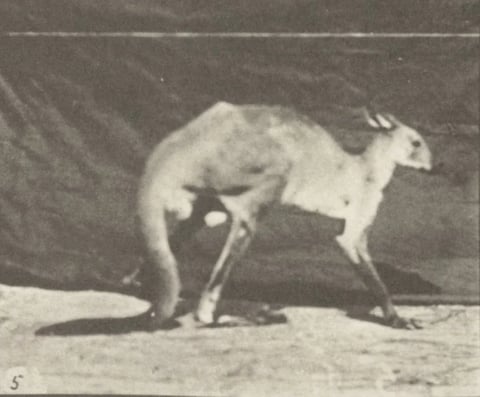
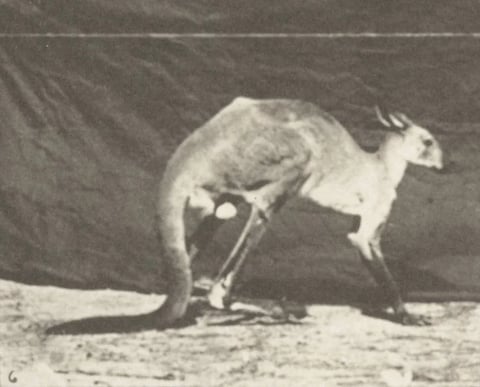
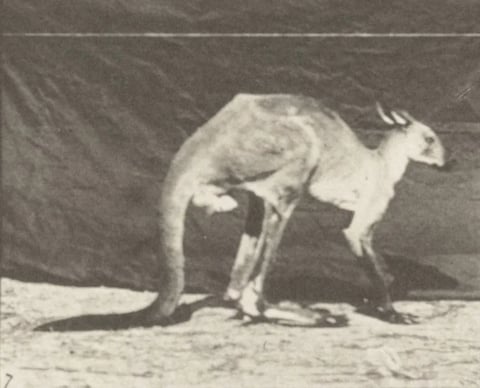
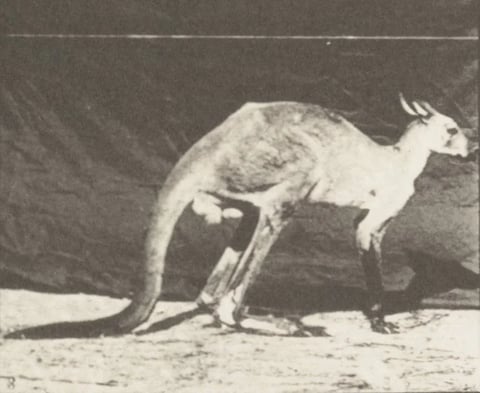
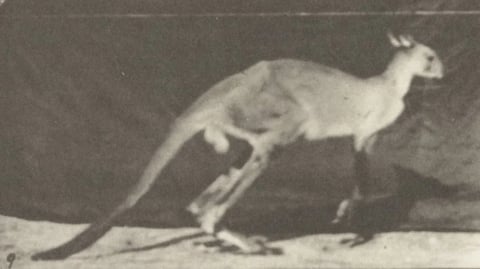
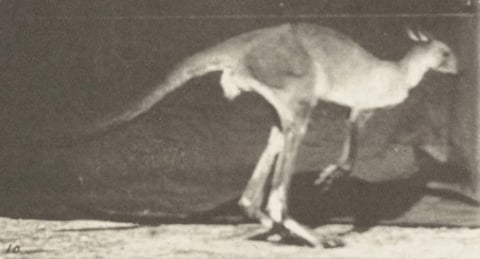
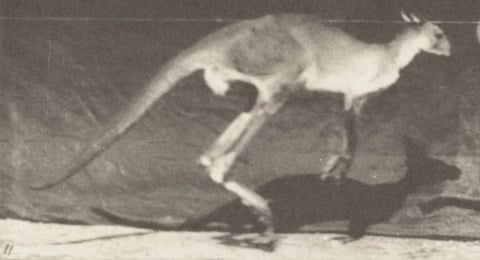
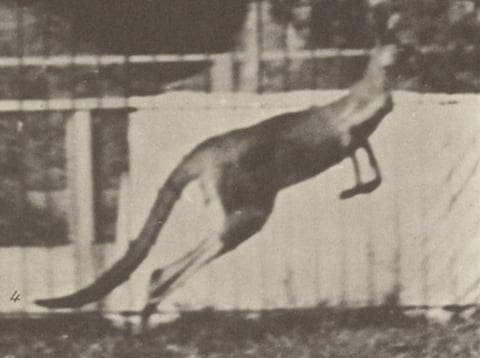
As red kangaroos hop faster over level ground, their rate of oxygen consumption (indicating metabolic energy consumption) remains nearly the same.
Kram and Dawson, 1998
This is explained by the long, elastic tendons of the legs: they store energy and release it again. The Australian Museum compares them to sprung ropes. The faster red kangaroos hop, the less energy they need for each metre. Even so, they mostly choose a rather leisurely pace that spares their tendons.
When a kangaroo walks slowly, it puts its tail on the ground like a fifth leg. In 2014, O’Connor, Dawson, Kram and Donelan measured what the tail contributes in red kangaroos.
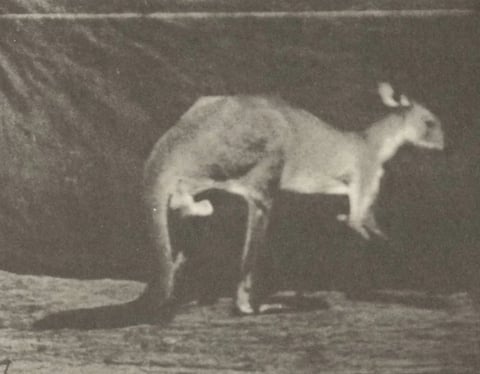
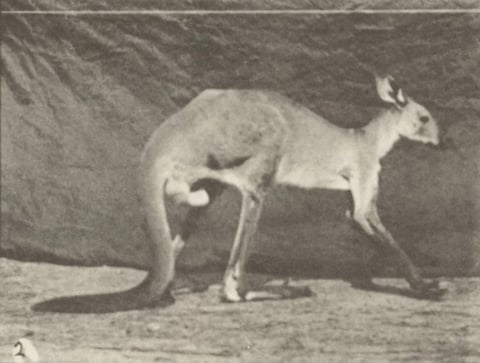
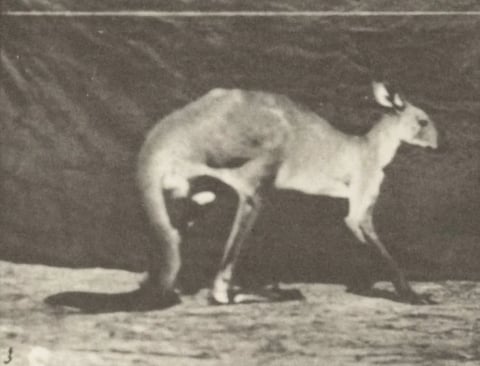
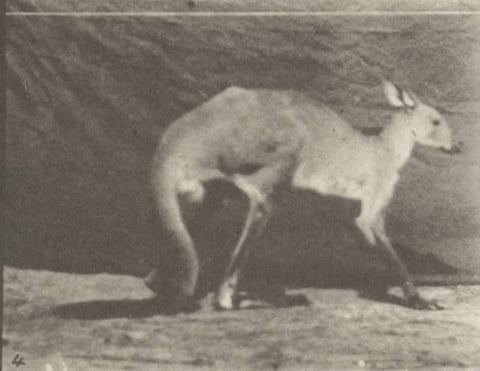
We found that the tail is responsible for as much propulsive force as the front and hind legs combined.
O’Connor, Dawson, Kram and Donelan, 2014
The researchers call this gait “pentapedal”, meaning five‑legged. In this gait the tail almost only pushes and hardly brakes. Per kilogram of body weight, it does as much work as a human leg walking at the same speed. As early as 1971, Windsor and Dagg described this gait: kangaroos use it mainly when grazing, and they are fastest when hopping on their hind legs. The tail then keeps the balance; that is how the Australian Museum describes it for the eastern grey kangaroo.
Even the head sets the red kangaroo apart from the eastern grey kangaroo. The colour of the fur alone is not reliable, because red kangaroo females are often blue‑grey.
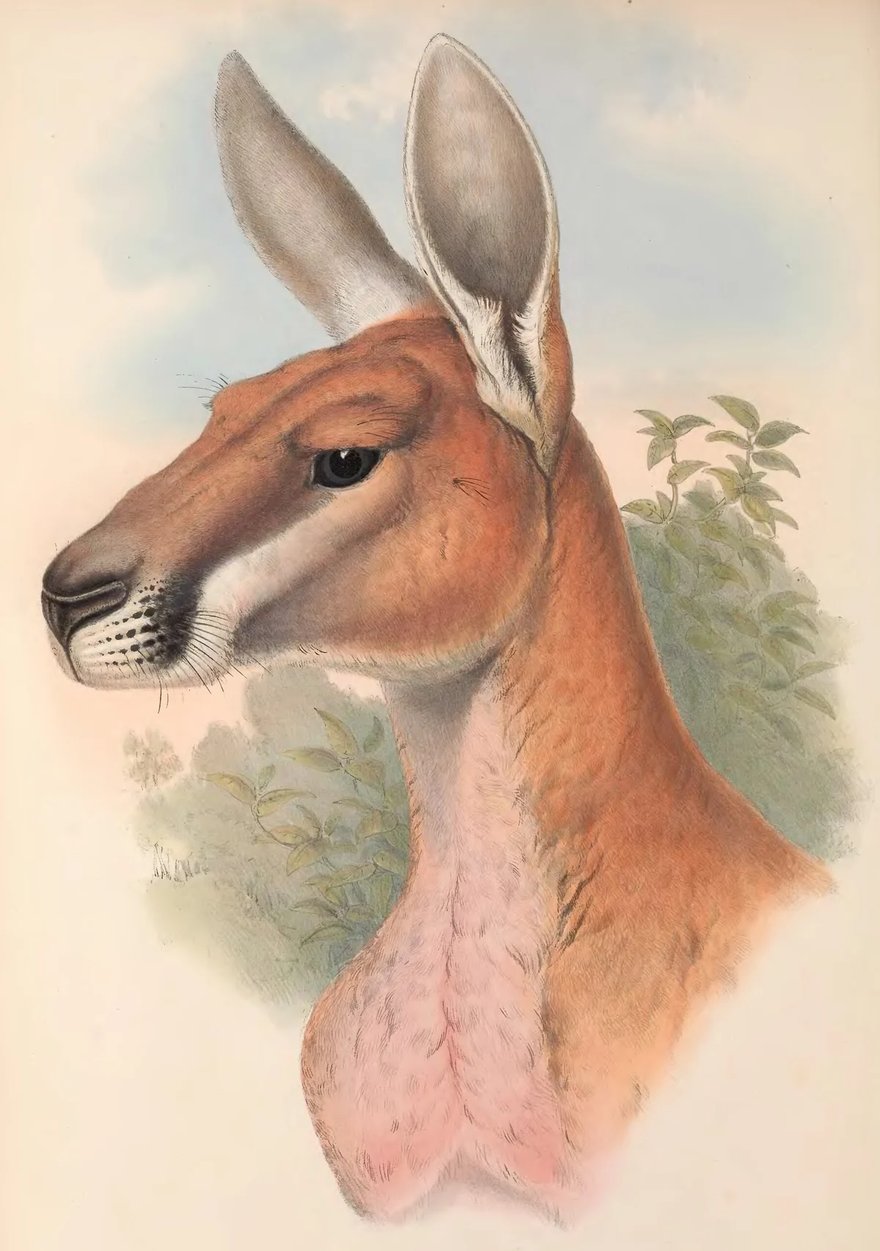
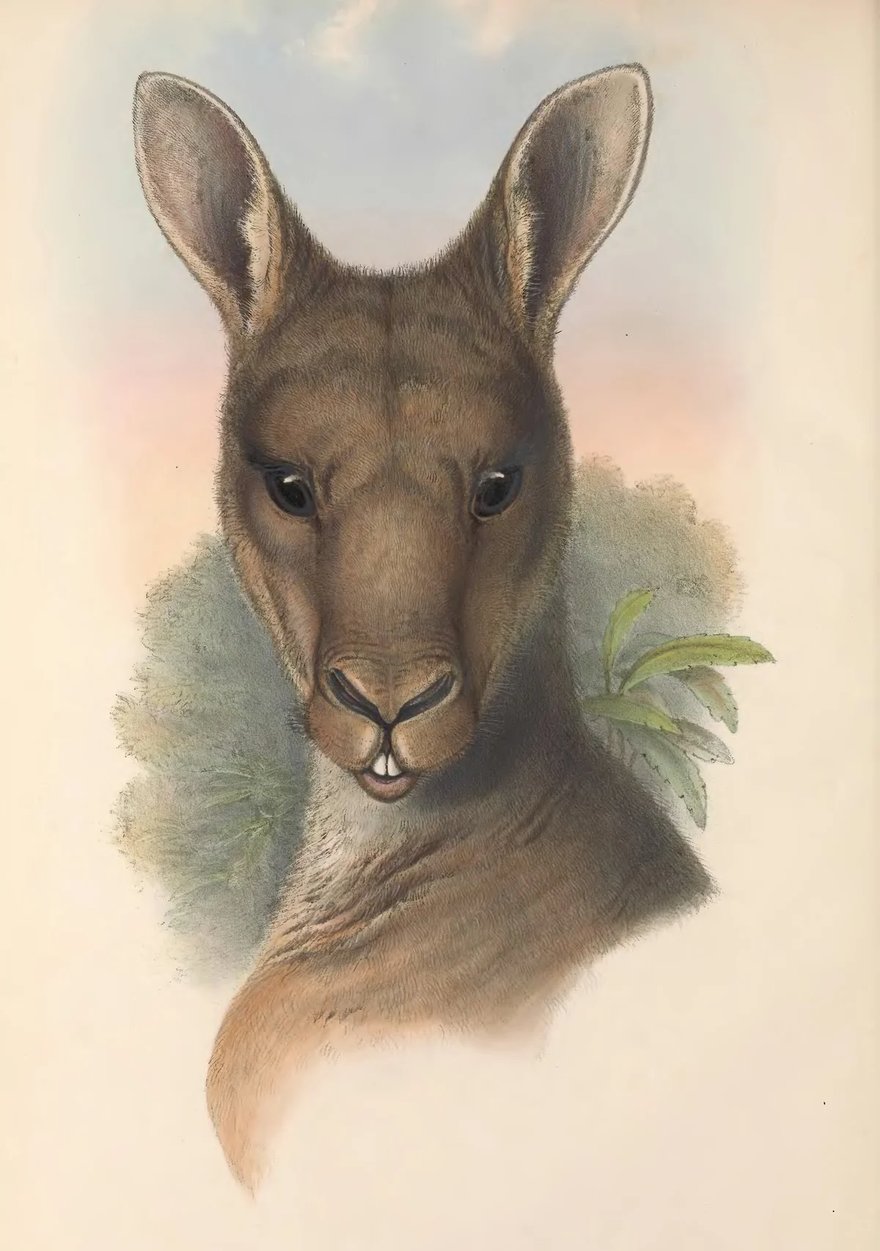
John Gould and H. C. Richter, The Mammals of Australia, volume 2, 1863, public domain
| Red kangaroo | Eastern grey kangaroo |
|---|---|
| What do the cheeks look like? | |
| Patches and a white stripe, features 1 and 2 | The face is darker, feature 4 |
| What colour is the fur? | |
| Males mostly orange‑red, females often blue‑grey | Light grey and woolly, the tail tip dark |
| Where does it live? | |
| In semi‑arid and arid areas of the mainland | From the inland plains to the coast, where more than 250 mm of rain falls a year |
What do the cheeks look like?
What colour is the fur?
Where does it live?
Today their scientific names are Osphranter rufus and Macropus giganteus. On John Gould’s plate, the grey is still called Macropus major.
Australian Museum, pages “Red Kangaroo” and “Eastern Grey Kangaroo”
Two studies measured how much water kangaroos turn over and how they cool down in the heat.
Free‑living animals in summer, north‑western New South Wales (Dawson and others, 1975). The study kangaroos: red kangaroos and euros, kangaroos of the hill country.
Shares of heat loss by evaporation (Dawson and others, 2000). “Calculated” means: 100 minus the share in the study.
The Red Kangaroo has the ability to survive when water is scarce.
Australian Museum, page “Red Kangaroo”
It takes in a large part of its water with its food. In summer in north‑western New South Wales, Dawson and others measured the water turnover of free‑living animals in 1975. It did not differ between red kangaroos and euros, kangaroos of the hill country. Feral goats turned over three times as much water, domestic sheep four times as much.
At 45 °C the air is warmer than the body. Red and eastern grey kangaroos then cool themselves by evaporation: they pant and lick their forearms. In both, the greater part of the heat lost this way went through breathing. In the red, a greater part went through the skin than in the grey, apparently mainly through licking.
Whether red kangaroos have young depends on the weather, because the weather determines the food.

All females bred when green herbage was abundant after good rains.
Newsome, 1965
In drought, when food was scarce, many females stopped breeding. The Australian Museum describes a further adaptation: the female can delay birth until the previous joey has left the pouch.
The kangaroo is the national emblem of Australia, and since 1986 it has also been the face of one of the world's best-known gold bullion coins. What began as the Australian Nugget, featuring the image of a famous gold nugget, today carries a new kangaroo design every year from the renowned Perth Mint. The following sections cover its history and changing designs, denominations and fineness, authenticity, tax, storage, and the question of what makes this gold coin so appealing to investors and collectors alike.

Alongside the Krugerrand and the Maple Leaf, the Kangaroo gold coin ranks among the most popular bullion coins of all. Its special feature: unlike most bullion coins, the design changes every year. This combines the pure gold value of a bullion coin with the appeal of a small collector series, a combination that many buyers appreciate.
The first issue appeared in 1986 with a fine weight of one ounce. In the early years, the obverse did not show the kangaroo but the famous gold nugget Welcome Stranger, one of the largest gold nuggets ever found. This is where the still-common name Australian Nugget comes from. From 1990 onwards, the kangaroo replaced the nugget, and in 2008 the series was officially renamed Australian Kangaroo. The change had a simple reason: coins with animal designs simply sold better. For buyers this has a pleasant side effect: older vintages are now sought after and are sometimes traded at a collector's premium.
Anyone wishing to view the series in a broader context will find further coins from the continent in the overview of Australian gold coins.
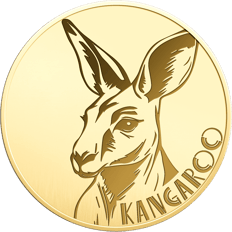
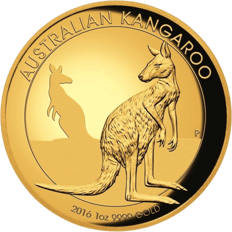
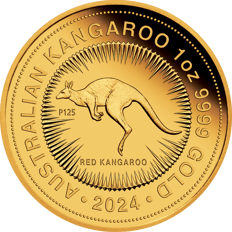
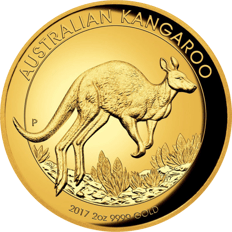
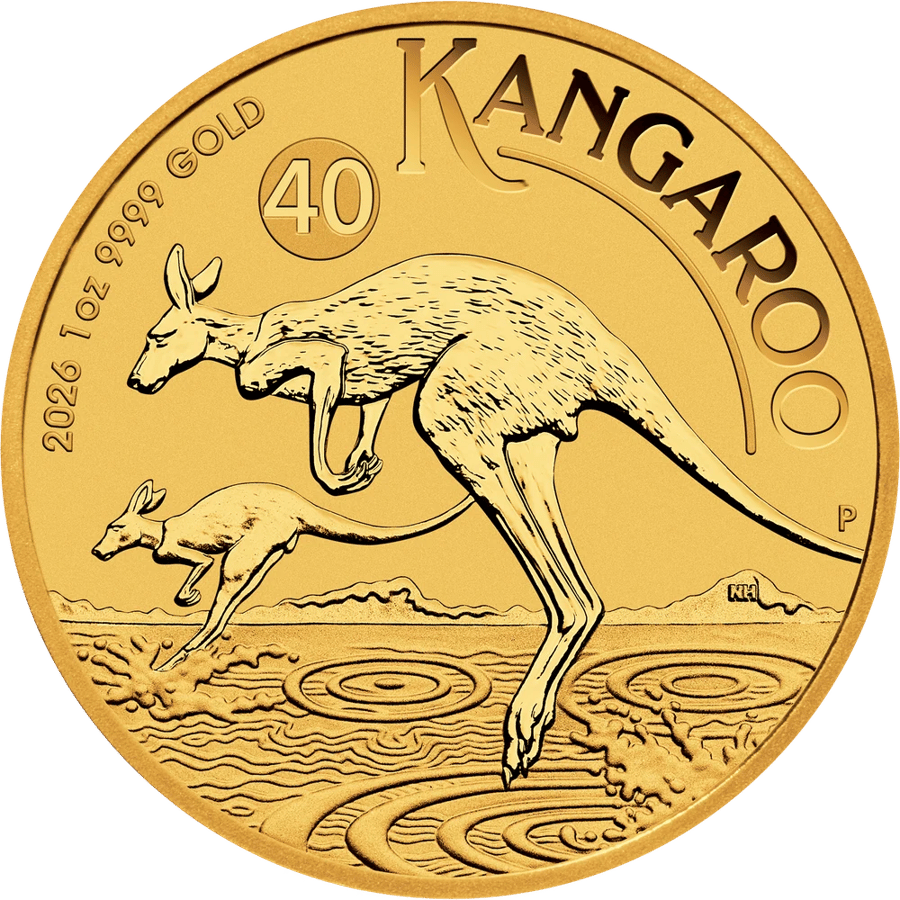
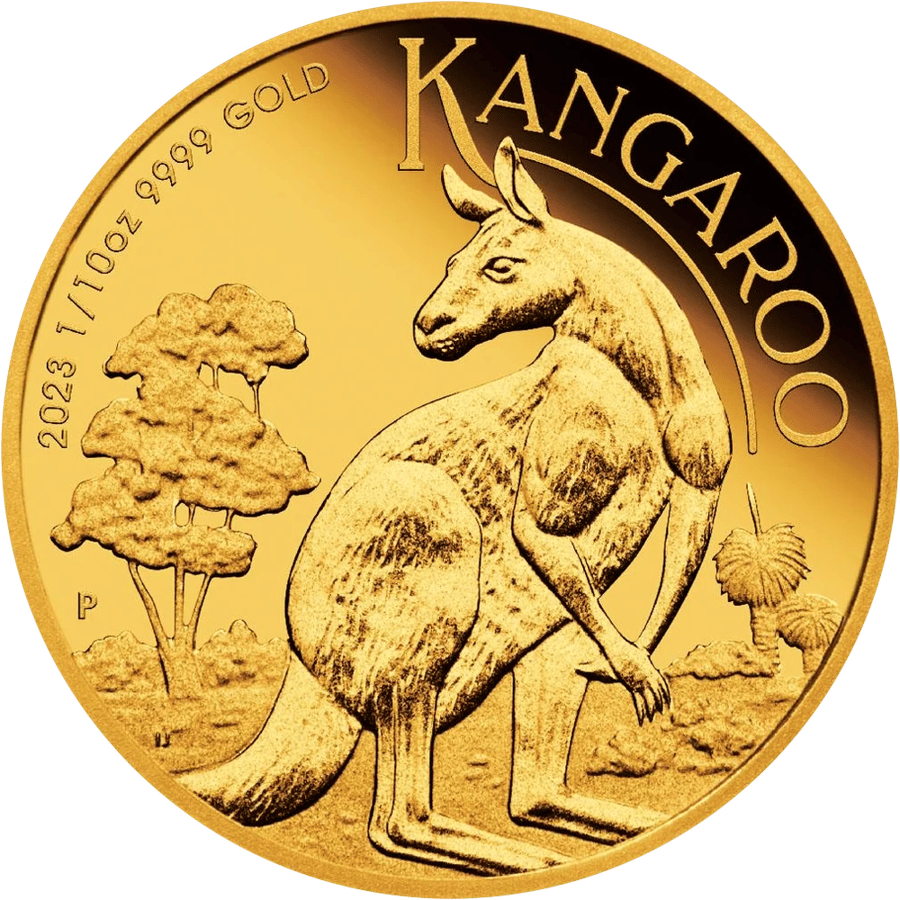
Each vintage begins with a new design. The kangaroo is depicted in its natural habitat, sometimes leaping, sometimes at rest, often set against a typical Australian landscape with the moon in the background. Various artists have tried over the years to capture the dynamic national animal as vividly as possible. These yearly changing designs are the main reason why the coin is also of interest to collectors.
The kangaroo stands at the centre, framed by a smoothly polished rim. There you find the inscription AUSTRALIAN KANGAROO, the year of issue, the weight, and the fineness marking 9999 GOLD. The design and rim stand out finely from the coin's field, a hallmark of the Perth Mint's high striking quality.
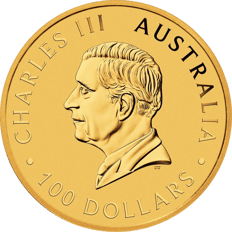
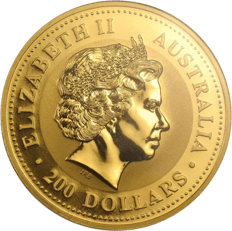
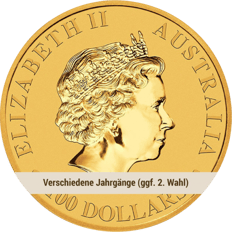
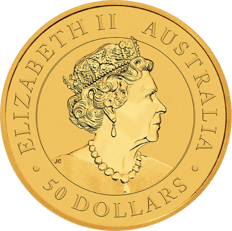
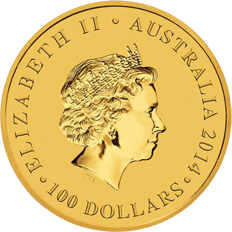
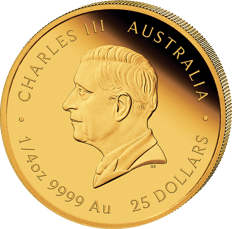
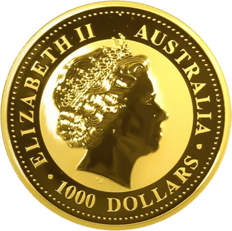
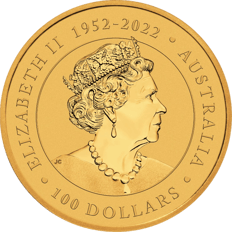
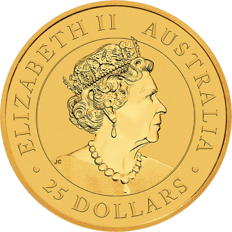
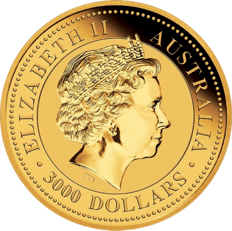
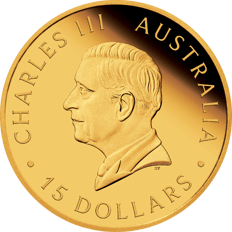
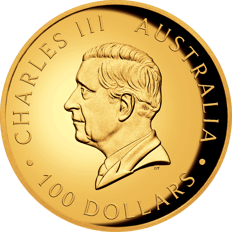
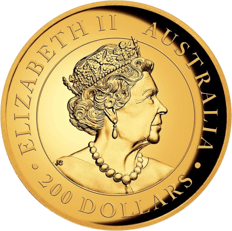
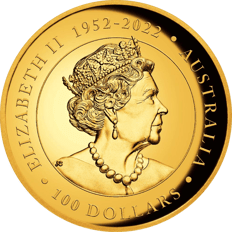
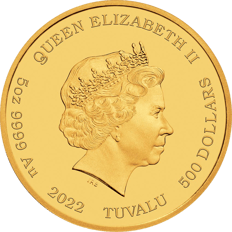
The reverse follows the classic design of Australian coins and shows the portrait of the British head of state. Below it are the country, the face value, and further standard details. Important to know: the engraved face value is significantly lower than the trading value. A one-ounce coin, for example, carries a face value of 100 Australian dollars, while its actual value follows the current gold price. The face value merely serves to qualify the coin as official legal tender and has no bearing on the material value.
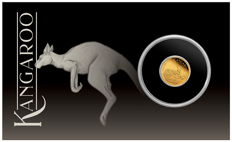
The Kangaroo gold coin is minted in an exceptionally wide range of sizes, from the handy tenth-ounce to the hefty kilo coin. All denominations are made of 999.9 fine gold and are therefore purer than, for example, the Krugerrand with its copper alloy. Smaller units are suitable for building up a holding gradually, while larger ones score with a lower percentage premium over the pure gold value.
Anyone who prefers a pure material investment will find a cost-effective alternative in the 1 oz gold bar category. For building wealth in small steps, savings plan products are also a good option.
Good to know
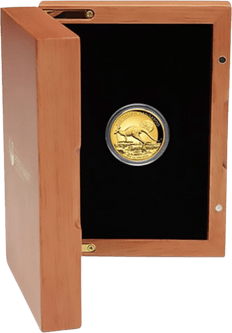
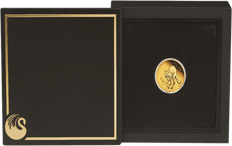
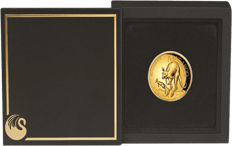
In addition to the classic bullion strikes, strictly limited editions in Proof quality as well as high-relief variants are issued every year. These are aimed specifically at collectors and are often issued with a certificate of authenticity and in a small mintage.
All Kangaroo coins are struck by the Perth Mint in Western Australia, one of the most traditional mints in the world. Its mint mark is a small P, found on many issues. The Perth Mint enjoys a first-class reputation for its striking quality and also produces other well-known series such as the Koala or the Lunar series.
A nugget is not produced but found, and this idea of origin still resonates in every Kangaroo gold coin today.
The coin became a curiosity when the Perth Mint struck a Kangaroo edition weighing one tonne, for a long time the largest and most valuable gold coin in the world, and an impressive testament to the mint's skill. More on the individual manufacturers can be found in the overview of Perth Mint Australia.
The Kangaroo gold coin is known for its sometimes small mintage limits. While the mintage in 1986 was around 15,000 pieces, more than 300,000 one-ounce coins were issued at times during boom years. Since each design is only produced until the end of the year, a great variety of designs and weights has emerged over the decades, and it is precisely this scarcity that drives demand for older vintages.
In principle, a physical bullion coin such as the Kangaroo is traded at a premium of a few per cent above the pure gold price. For common vintages, the year of issue hardly affects the price. However, for particularly old or low-mintage issues, a noticeable collector's premium may apply. A price comparison before buying is always worthwhile. Anyone specifically looking for scarce editions will find what they need in the rarities category.
Physical gold should always come from a trustworthy source. The Kangaroo gold coin has several features that make verification easier:
At Kettner Edelmetalle, every coin undergoes an ISO-compliant authenticity verification before being shipped with insured delivery. Anyone wishing to verify reliably on their own will find suitable tools in the collector accessories section.
In Germany, an important special rule applies to the Kangaroo gold coin compared with many other valuables.
Tax note
In Germany, investment gold is exempt from VAT under the rules governing so-called investment gold. Furthermore, after the one-year holding period has elapsed, any capital gain on physical gold is tax-free. This information does not replace tax advice.
This makes gold significantly different from silver, which is usually subject to the margin scheme upon purchase. Anyone wishing to combine both metals will find a suitable selection among the gold-silver mix packages. Incidentally, the Kangaroo has also been available in silver since 2014.
There are several proven ways to safely store physical precious metals. Many investors prefer home storage, as it gives them access to their gold at all times. A high-quality safe and discreet handling of one's own holdings are crucial here. The bank safe deposit box is also popular, though it comes with ongoing costs and limited access times.
Regardless of where it is stored, the right packaging protects against scratches and abrasion, which is particularly important for coins in Proof quality. Suitable coin capsules and coin cassettes preserve the condition, and thus the value, of the collection.
A major advantage of the Kangaroo gold coin is its worldwide tradability. As an established bullion coin, it can be resold almost anywhere, a benefit particularly valued by security-conscious buyers. At buy-back, the price is based on the current daily gold value; for common issues, the year the coin was minted hardly matters for the buy-back price.
Because the series has produced new designs every year since 1986, used coins are often offered as mixed vintages. This means buyers receive a coin of the respective denomination without choosing a specific year of issue, often at the most favourable price, since the focus here is purely on the gold value. Anyone looking for a specific vintage or a limited edition, on the other hand, should compare mintages and pay particular attention to condition and certificate. Current new releases can be found in the overview New coins and bars.
The Kangaroo gold coin appeals to two groups of buyers at once. For the pure investor, what counts is the high fineness, worldwide tradability and the low premium of the larger denominations. For the collector, the appeal lies in the yearly changing design, the limited special editions and the long tradition of the series since 1986. It is precisely this dual role that makes the Kangaroo one of the most versatile representatives among gold coins.
Anyone wishing to compare beyond the Australian coin will find two further internationally established investment classics in the Vienna Philharmonic and the American Eagle.
In the first vintages from 1986, the obverse did not show a kangaroo but a famous gold nugget. This is where the original name Australian Nugget comes from, which is still used today alongside the official name Australian Kangaroo.
All Kangaroo gold coins are made of 999.9 fine gold (24 carats). This makes them purer than the Krugerrand or the American Eagle, which contain a copper alloy.
Yes. Unlike most bullion coins, the Kangaroo gold coin receives a new design every year, showing the national animal in different poses. This fact also makes the series attractive to collectors.
As investment gold, the coin is exempt from VAT in Germany. After the one-year holding period has elapsed, any capital gain is tax-free. For a binding assessment, tax advice is recommended.
Smaller units such as the tenth or quarter ounce allow an affordable entry and can be resold flexibly. Larger denominations such as the full ounce or the kilo coin offer a lower percentage premium over the pure gold value.
As the national animal and the design of the Australian Nugget, the Kangaroo is regarded by many as the best-known Australian gold coin. Internationally, series such as the Perth Mint's Lunar series are also highly sought after.
 Kangaroo
Stay informed with product launches, financial news and exclusive offers. Sign up for our free newsletter today.
By entering your email address and clicking the "Submit" button, you give the following consent: "I agree to be informed by email about new products, financial news and exclusive offers, and therefore consent to the processing of my email address for the purpose of sending the newsletter. I can revoke this consent at any time without giving reasons, with effect for the future. The lawfulness of processing carried out prior to revocation remains unaffected."