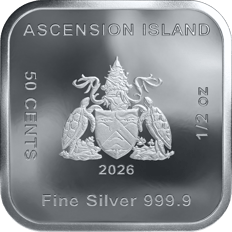
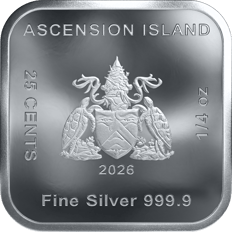
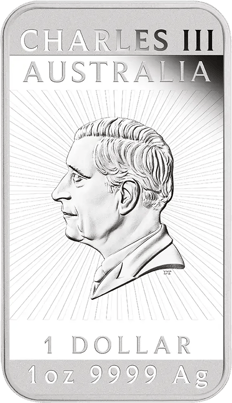
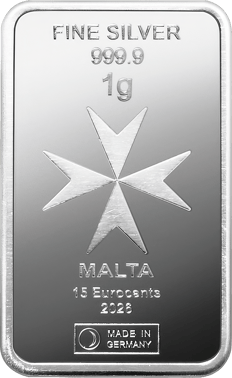
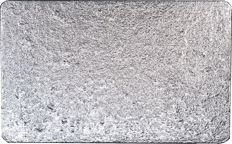
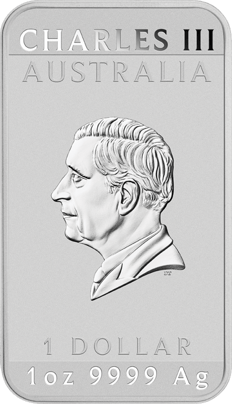
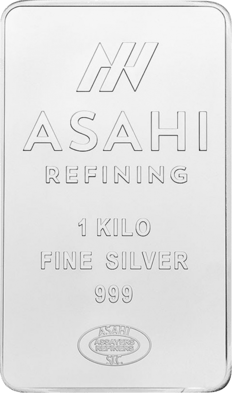
100 x 1g Silver CombiCoin Coin Sheet
£203.69
excl. UK import VAT and shipping
Available in 2–3 business days

 More than 310,000
 Over 30 years
 Secure shipping
 Google: 4.9/5
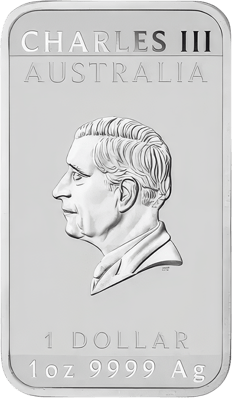
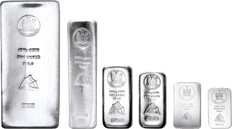
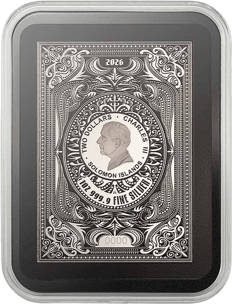
Minted bars made of silver feature a coin minting that gives the bar the properties of a coin. Due to the stamped face value, the silver minted bar is treated in the same way as a comparable silver coin.


A minted bar combines two worlds in a single piece of precious metal: the clear, value-dense form of a bar and the face value stamped onto it like a genuine coin. This means a silver minted bar is legally recognised as legal tender of its issuing country, even though it is bought exclusively for investment purposes. The following sections cover origin, production, denominations, authenticity features, tax treatment, and the question of who this special form of investment is worth considering for: compact, well-founded and without empty promises.

A silver minted bar is a physical silver bar that has been given a full coin strike. The bar shape is marked with all the features also found on a classic bullion coin: face value, currency, issuing country and metal content. It is precisely this stamped face value that legally turns the bar into official legal tender, a subtle but decisive difference from an ordinary bar.
These pieces have been offered to the private investor market since 2007. They form the link between the two major investment classes in the silver sector: anyone unable to decide between distinctive silver coins and plain, functional silver bars will find an appealing hybrid form in the minted bar. Another characteristic feature is the high fineness: a purity of 999/1,000 is standard for silver minted bars, and many editions even reach 999.9/1,000.
The classic 1 kg silver bar scores with the lowest premium per gram and is well suited to building up larger holdings. A bullion coin, in turn, offers a wide variety of designs and collector appeal. The minted bar deliberately sits between the two: rectangular and stackable like a bar, with a face value and year of issue like a coin. For smaller entry quantities, the 100 g silver bar serves as a useful reference size.
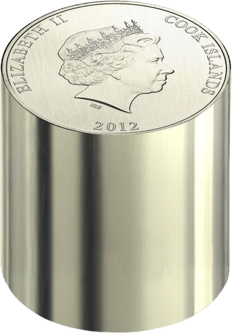
The origin of this product category lies with the Cook Islands. It was there that the idea arose of creating an angular silver coin and giving it all the strike features of a genuine coin. The design quickly caught on, and for years the minted bar also offered a tax advantage thanks to its coin status, which remained in place until October 2022.
The Cook Islands editions were the first of their kind and remain internationally sought after to this day. Until the end of 2013 they were produced in Pforzheim, in the German state of Baden, by the traditional firm Heimerle und Meule, founded as early as 1845. Since the 2014 minting year, production has come from the Swiss manufacturer Argor Heraeus. One special feature: even though the pieces carry the usual 999 fineness stamp, the silver is not alloyed down to 99.90 percent after electrolysis, so the very high fineness is preserved.
Closely related are the silver coin bars: silver bars bearing the coin design of classic Cook Islands coins, which can be produced more cheaply in large quantities and therefore represent an affordable alternative to the minted bar.
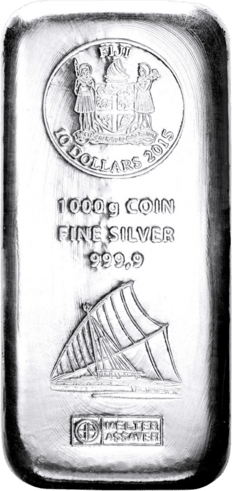
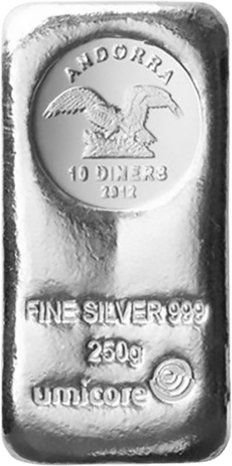
Also popular are the Fiji minted bars with a fineness of 99.99 percent. Their design shows, among other things, the face value, a coat of arms and the melter-assayer mark. Earlier editions for Andorra came from Umicore, while editions for other countries were produced by houses such as the New Zealand Mint. Anyone wishing to trace the origin in detail will find the most important mints and refineries in the manufacturer overview.
Silver minted bars are made using two processes, depending on their weight:
For struck minted bars, fine silver granules are melted down and rolled into sheets of precisely defined thickness. Blanks are punched from these sheets, weighed and, if necessary, ground down until the target weight is reached. The strike itself then takes place in a hydraulic press, followed by a quality check for striking errors. Cast bars are made from molten silver granules at around 1,000 °C, which is poured into preheated moulds and then cooled in a water bath.
The raw silver is refined in refineries by electrolysis to a purity of at least 99.9 percent, a mix of freshly mined silver and recycled scrap silver. The metal type, weight, face value, currency and issuing country are always stamped onto the piece. For protection, most minted bars up to around 1,000 grams are sealed in plastic film and supplied with a certificate of authenticity.
Silver minted bars are available in a wide range of weight units: from gram formats for getting started to large investment sizes:
Smaller denominations are more flexible for partial resale later on, but carry a higher premium as a percentage. Larger units are cheaper per gram, though less finely divisible. Anyone who prefers a fixed investment size will find suitable counterparts, for example in the 250 g silver bar or the convenient 1 oz silver bar. A practical rule of thumb: small formats for liquidity, large formats for efficiency.
A common misunderstanding concerns tax. Until 6 October 2022, many minted bars were taxed under the margin scheme, offering a price advantage of almost twelve percentage points over regularly taxed silver bars. This special status no longer applies.
Tax note
Since 6 October 2022, silver minted bars have been treated in Germany in exactly the same way as silver coins and standard silver bars: subject to regular taxation, without the former tax advantage. Unlike investment gold, which is exempt from VAT under § 25c UStG, regular VAT applies to silver. This is general information, not tax advice.
The margin scheme remains interesting for resale: when private individuals sell their minted bars to a dealer, many providers can resell them under the margin scheme. Anyone wishing to complement the silver portion of their holdings with VAT-exempt investment gold will find a sensible combination of both precious metals there.
The value of a minted bar primarily follows the silver price, which is quoted worldwide in US dollars per troy ounce. Silver is traded, among other venues, on the COMEX in New York and via the London Bullion Market (LBMA). The price is set several times a day based on supply and demand.
Silver is considered particularly sensitive to the economic cycle because a large proportion of it is consumed industrially, from electronics and vehicles to medical technology. This dual role as both an industrial metal and an investment asset makes the silver market livelier and more prone to fluctuation than, say, the gold market. For investors outside the dollar zone, there is also a currency risk, as the exchange rate can noticeably affect the purchase price.
Silver is rare, indestructible and industrially indispensable all at once: this combination gives it its quiet, enduring appeal.
Physical silver needs to be kept secure. Smaller minted bars can be stored cost-effectively at home in an insurance-approved safe; alternatively, a bank safe deposit box or dealer storage can take care of safekeeping in exchange for ongoing fees. Because larger quantities of silver quickly add up to noticeable volume and weight, the question of storage plays a bigger role with silver than with gold.
Preserving value also means protecting the surface: the sealed plastic film keeps the strike free from scratches and tarnishing. Anyone wishing to display individual pieces or keep them sorted will find suitable solutions in the accessories range, such as coin capsules or coin cassettes for a tidy collection.
Visually, minted bars are initially simple metal bars; their special status is owed to their official recognition as legal tender. The year of minting is also visible on every piece, which offers an additional appeal especially for collectors. The most important arguments include:
Silver is often referred to as the poor man's gold, because even with a modest amount of capital, meaningful quantities can be acquired. This makes minted bars suitable both for beginners starting small and for collectors who value years of issue and provenance. As an addition, they sensibly complement a more broadly diversified holding of silver and gold bars. Anyone wishing to build up wealth regularly and automatically will find suitable options among the savings plan products.
A minted bar carries a full coin strike with a face value, currency and issuing country, and is therefore recognised as legal tender of the issuing country. A conventional silver bar does not have this coin status. Visually and in material value, both are very similar; the difference lies in the status and, frequently, in the stamped year of issue.
No. Since 6 October 2022, silver minted bars have been taxed under the regular scheme in Germany, just like silver coins and ordinary silver bars. The former tax advantage of almost twelve percentage points no longer applies. However, margin scheme taxation is still possible when private individuals resell to dealers. This information is general in nature and does not replace tax advice; for your personal situation, consulting a tax advisor is recommended.
A fineness of 999/1,000, i.e. 99.9 percent silver, is standard. Many editions, such as Fiji minted bars, even reach 99.99 percent. For Cook Islands editions, the actual silver content is sometimes higher than the stamped 999 fineness, because the silver is not reduced after electrolysis.
For getting started, smaller formats such as 1 g, 10 g, or the common 1 oz unit are well suited, as they can later be sold flexibly and in partial quantities. Anyone investing larger amounts gets the lowest premium per gram with 500 g, 1 kg or even heavier bars. A mix of small and large units combines flexibility with cost efficiency.
The well-known Cook Islands and Fiji minted bars are produced today by Argor Heraeus in Switzerland. Earlier Cook Islands editions came from Heimerle und Meule in Pforzheim until 2013. Further country editions were produced, among others, by Umicore and the New Zealand Mint. An LBMA-certified manufacturer is accepted worldwide by banks and dealers.
Smaller minted bars can be stored cost-effectively in an insurance-approved home safe; for larger holdings, a bank safe deposit box or dealer storage is advisable. The original protective film should be kept intact wherever possible, as it protects the strike from scratches and tarnishing. Coin capsules or coin cassettes are also suitable for sorted collections.
 Minted Bars
Stay informed with product launches, financial news and exclusive offers. Sign up for our free newsletter today.
By entering your email address and clicking the "Submit" button, you give the following consent: "I agree to be informed by email about new products, financial news and exclusive offers, and therefore consent to the processing of my email address for the purpose of sending the newsletter. I can revoke this consent at any time without giving reasons, with effect for the future. The lawfulness of processing carried out prior to revocation remains unaffected."