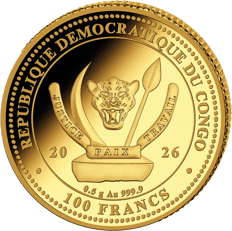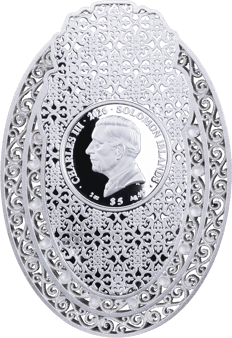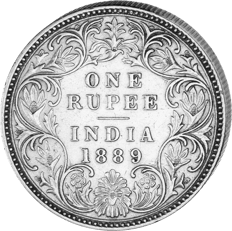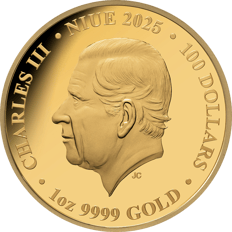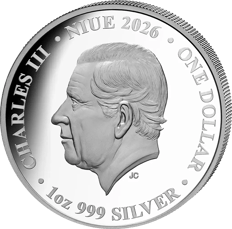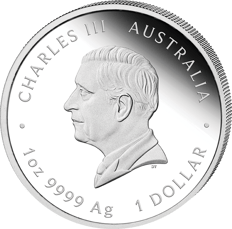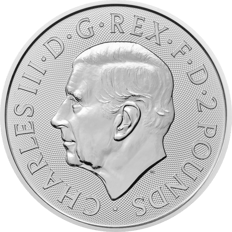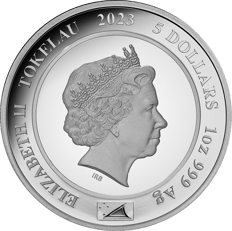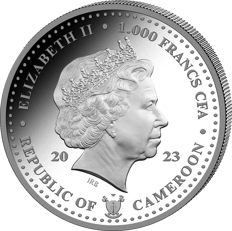
1 oz Silver King Charles III. and Camilla 2023 (Mintage 5,000)
£87.33
excl. UK import VAT and shipping
Available in 2–3 business days

 More than 310,000
 Over 30 years
 Secure shipping
 Google: 4.9/5
The global influence has led to the British head of state being omnipresent in the precious metals sector. However, the English language is also widely spoken, and this ensures that there is still great interest in British history today. But the country also continually produces new icons and defining figures who conquer the world in no time at all, which is why the term British cult has also taken hold.


Each of these five figures begins with a few lines and grows with every new text: a forest changes, a role is rewritten, a second grave appears, doubters get an answer, three voices come together in one name. Each chapter shows one such step and, at the end, the coin from the Royal Mint’s “Myths and Legends” series.
Robin Hood
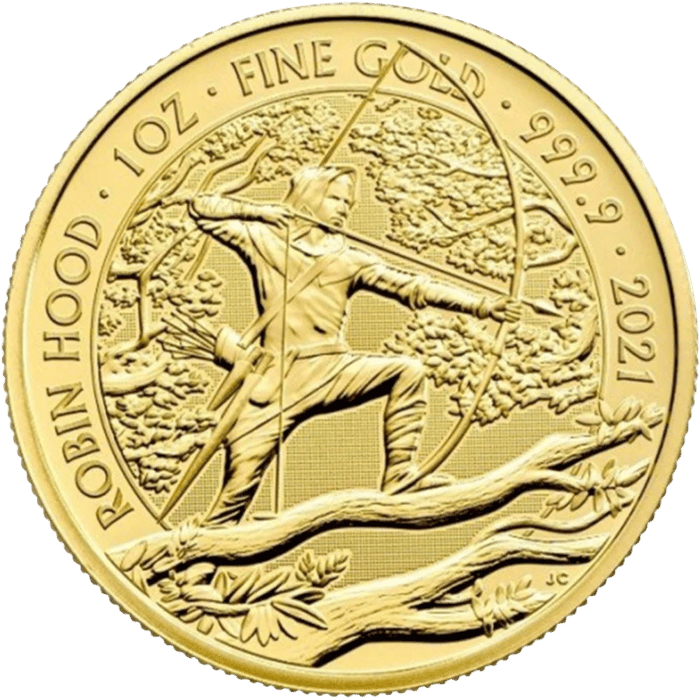
Robin Hood appears in many old texts, but not always in the same forest. Ballads, songs that tell a story, and chronicles, histories ordered by year, place him now in Sherwood, now in Barnsdale, once also in Inglewood, and some name no forest at all. According to the Robin Hood Project of the Robbins Library, the name Barnsdale comes up far more often before 1500; by the 17th century Sherwood seems to have moved to the front, the forest most people link with Robin Hood today.
Schematic, not to scale
Time wanders too: Wyntoun places Robin Hood under the year 1283, Walter Bower, around 1440, in the year 1266, and John Major, in 1521, in the last years of the 12th century.
On the picture side Robin Hood stands with a bow in the forest, among branches and leaves: a forest without a name.
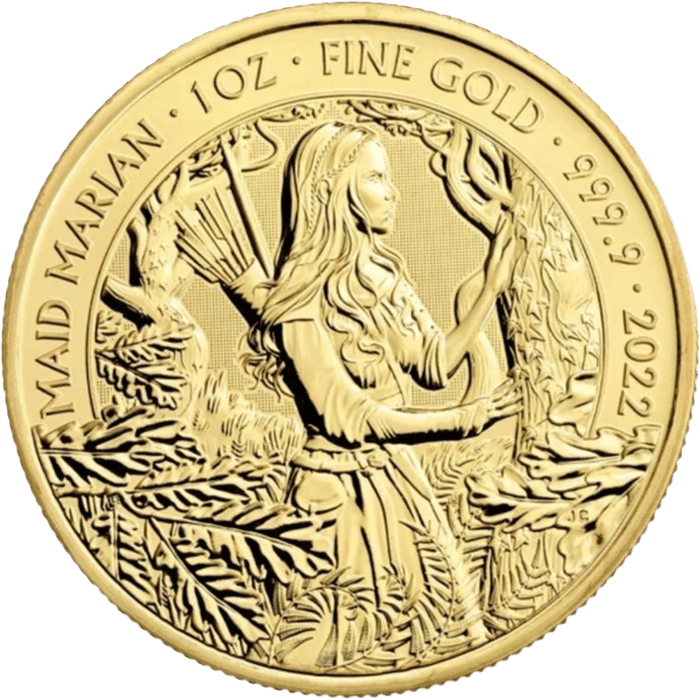
Maid Marian
Marian does not appear in the early ballads about Robin. French pastourelles, songs about a shepherdess, know a Marion instead; if she has a partner, he is called Robin. Around 1283 Adam de la Halle makes this into the play with songs Robin et Marion, and his Robin is a peasant, not an outlaw. In England, records from Kingston of 1509/10 name Marian for the first time, at a Robin Hood play. After that, stage and poetry rewrite her role again and again.
it may be her complexity takes her back before the early outlaw ballads to the medieval French pastourelle tradition.
Stephen Knight in the Robin Hood Project
Characters
On the picture side Marian stands with long hair among branches, ferns in front. Which of her roles she plays, the picture leaves open.
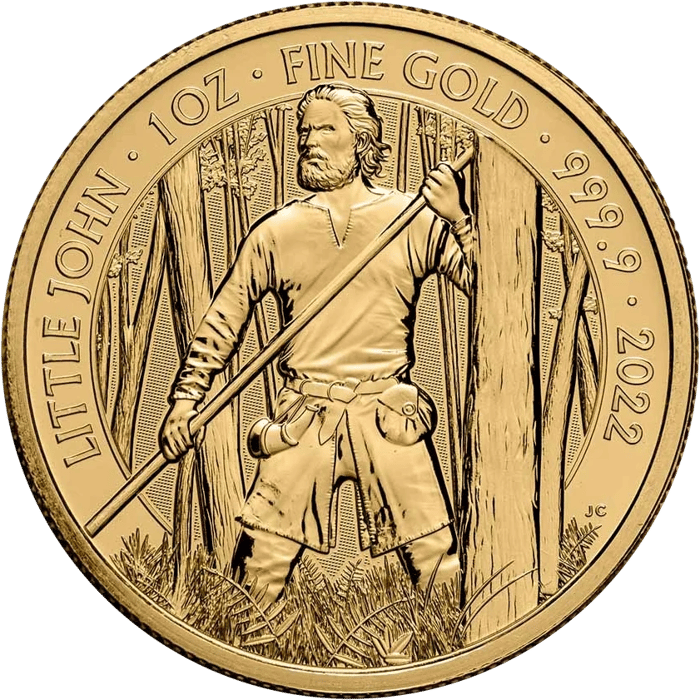
Little John
With Little John, two things grow over the years: his name and his grave. Andrew of Wyntoun already writes the name around 1420; an explanation comes from a ballad whose text is traced back to the years 1680 to 1685. A Scottish print from around 1536 to 1540 lays his bones at Pette; in the 17th century the antiquary Roger Dodsworth notes a grave at Hathersage in Derbyshire. The Victorian headstone there calls him the friend and lieutenant of Robin Hood.
HERE LIES BURIEDLITTLE JOHNTHE FRIEND ANDLIEUTENANTOF ROBIN HOOD
First sentence of the inscription on the Victorian headstone at Hathersage, wording after the Derbyshire Historic Environment Record.
The record It calls it a “so-called” grave.
On the picture side Little John stands in the forest, among tall tree trunks and grass.
King Arthur
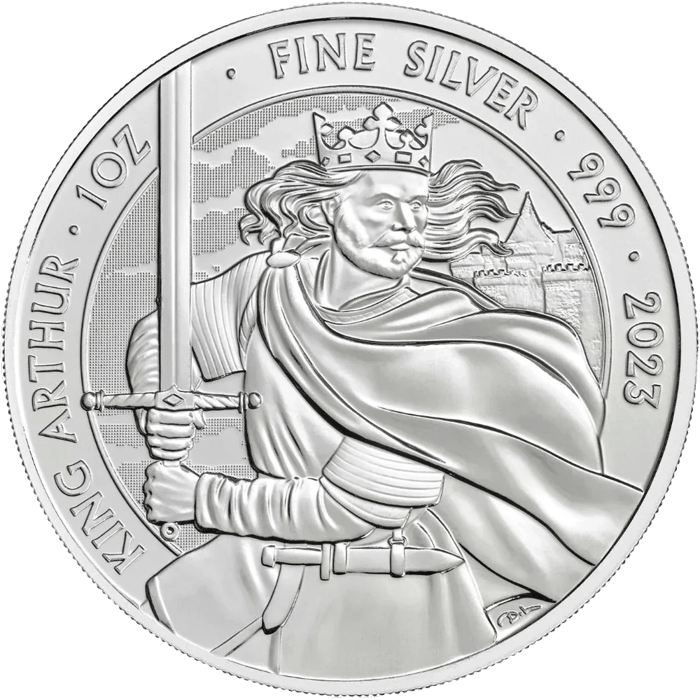
With King Arthur, the legend grows as texts cite one another. Geoffrey of Monmouth tells of him in his Latin history of Britain, which existed by 1138. In 1485 William Caxton prints Thomas Malory’s book Le Morte Darthur, and in his preface the gentlemen who urge him to print it answer doubts with witnesses.
Geoffrey of Monmouth
cites the very old book
Names as his source a “librum vetustissimum” (roughly: very old book) which, he says, Walter, Archdeacon of Oxford, had given him.
The very old book
No trace of such a manuscript has been found, and most readers, then as now, doubt that the book existed.
William of Newburgh
rejects Geoffrey of Monmouth
“let this fabler, with his fictions, be instantly rejected by all”
William Caxton, preface
names Galfridus as a witness
Caxton objects to the gentlemen: “divers men hold opinion that there was no such Arthur”. One of them names witnesses:
The manuscript from Winchester
perhaps lay in Caxton’s workshop
A copy of Malory’s text; according to the British Library it “differs significantly from the printed edition”. On four pages, offsets of printer’s ink can be seen.
The circle closes: in the preface to the print, one witness is a Galfridus, in the usual reading the author whom Newburgh had rejected.
On the picture side King Arthur stands in a wide cloak, his hair in the wind, a tower behind him.
Merlin
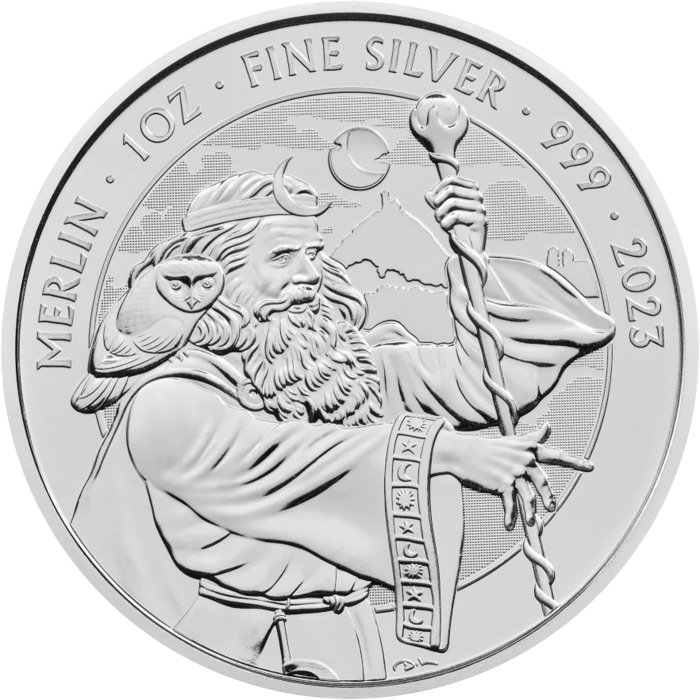
Merlin grows together from three voices. In the Historia Brittonum of Nennius, from the 9th century, a boy named Ambrosius foretells the future. Welsh poems tell of Myrddin, a seer. And by 1135 prophecies of Merlin by Geoffrey of Monmouth are in circulation. In Geoffrey’s history of Britain the figure is called Merlin Ambrosius and does not meet Arthur; only later tales have Merlin take part in Arthur’s upbringing.
Merlin
According to Tatlock, whom the Camelot Project cites, Geoffrey reshaped the Welsh name Myrddin into Merlin.
The reverse path is possible too, from Geoffrey’s Vita Merlini to the Welsh poems; most scholars see it the other way round. William of Newburgh calls the prophecies “the mendacious predictions of one Merlin”.
On the picture side Merlin stands with a long beard, an owl on his shoulder, behind him a hill with a tower.
The Royal Mint began its series in 2021 with Robin Hood, and each figure has its own picture side in it. So the legends keep growing.
Over time, reinterpretations of these myths and legends create new narratives and meanings
The Royal Mint, “Myths and Legends”
Hardly any country has left as lasting a mark on the world of numismatics as Great Britain. From the centuries-old Royal Mint and the legendary Britannia to the five coin portraits of Queen Elizabeth II, every British coin tells a piece of world history. The British Icons theme area brings together coins that immortalise famous landmarks, monarchs and cultural icons of the United Kingdom in gold, silver and platinum. This guide sheds light on the history behind the designs, the role of the coin portraits, the available precious metals and denominations, tax particularities, as well as tips on collecting and storing.
The British kingdom is known far beyond the borders of Great Britain, and its most important personalities are revered worldwide. It is no wonder, then, that coins featuring British icon designs are now available in numerous variations, from the reigning head of state to historical monarchs and landmarks such as Tower Bridge or Big Ben. The worldwide influence of the Empire and the spread of the English language have ensured that interest in British history and culture remains unbroken to this day.
British icon coins always move between two worlds: they are collector's items with high emotional value and, at the same time, carriers of genuine precious metal. Many of the most popular designs appear on both classic gold coins and silver coins, so that a suitable version exists for every budget and taste. Those wishing to explore the category further thematically will find four dedicated collecting focuses: the British Royal House, British coats of arms, British history and British literature.
One feature that makes British coins unique is the official coin portrait of the respective head of state, known as the effigy. It adorns not only coins minted in Great Britain itself, but also coins from numerous Commonwealth states such as Canada, Australia or New Zealand. For collectors, these portraits hold a special appeal because they document the spirit of the times and the age of the monarch.
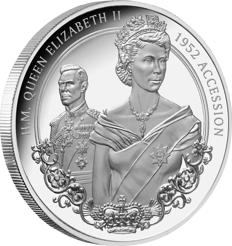
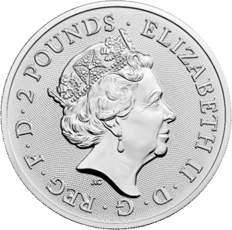
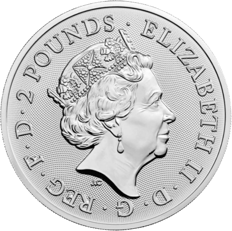
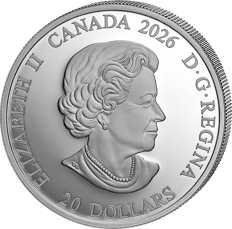
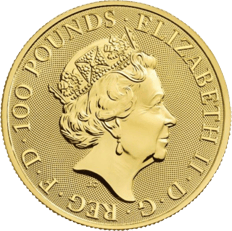
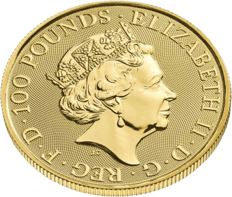
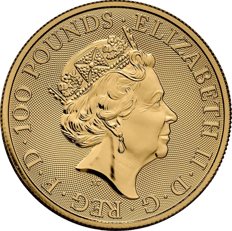
Queen Elizabeth II ascended to the throne in 1952, and until 2022 her likeness adorned the obverse of countless coins. No personality was depicted on coins more frequently in the 20th century. During her reign, five official coin portraits were created, each adapted to reflect her age:
These names still appear today on modern collector's and platinum coins that honour individual effigies in series, often in the exquisite Proof finish and with a very small mintage.
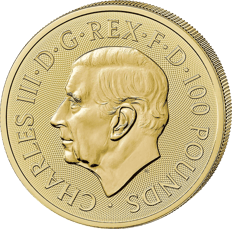
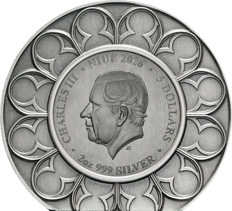
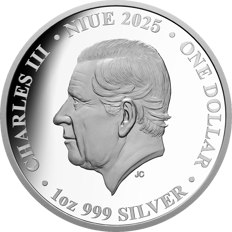
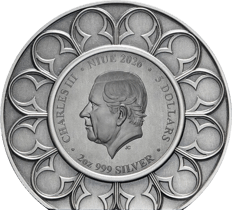
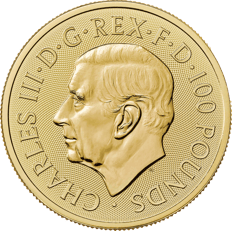
After the Queen's death, her son succeeded her as King Charles III. The first official portrait of the new monarch was designed by Martin Jennings. A notable tradition dates back to the 17th century: each new monarch faces the opposite direction to their predecessor. Charles therefore faces left, while his mother faced right. The years 2022 and 2023 are considered numismatically special, as during this time both the late Queen and the new King appeared on coin obverses.
Whoever holds a British coin in their hand holds a piece of lived monarchy: every portrait is a dated chapter of the Crown.
Some designs have become true classics and appear in regular new editions. Alongside the portraits of the Royals, it is above all historical symbols and iconic buildings that delight collectors worldwide.
A special case is the Queen’s Beasts series: ten heraldic beasts that lined the route at the coronation of Elizabeth II became one of the most sought-after collecting series of all, available in silver, gold and even as a platinum edition. Those who prefer classic bullion coins will find the Britannia, the timeless symbolic figure of the United Kingdom.
The Royal Mint, one of the oldest and most renowned mints in the world, stands for the substance of British coinage. Two of its products are regarded as the epitome of British numismatics.
The Britannia embodies the female personification of Great Britain, with trident, shield and flowing robes. As a gold coin and as silver from Great Britain, it is one of the best-known European bullion coins and is usually minted in the classic one-troy-ounce (1 oz) format. It combines high fineness with modern security features, making it part of the field of bullion coins as well as a sought-after collector's item.
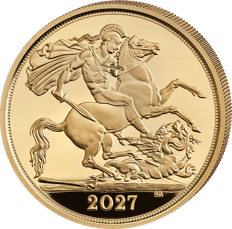
The Sovereign is one of the most traditional gold coins in the world and usually bears the design of Saint George fighting the dragon. Over generations, the monarchs' coin portraits changed, which has made the Sovereign a popular collector's item with great historical depth. Many British collector's and bullion coins are available in various denominations, from smaller fractions up to the full troy ounce, so that both beginners and advanced collectors can find suitable pieces. The gold Queen’s Beasts series also comes from the Royal Mint.
Which precious metal is most suitable depends on budget and personal taste. Many of the most popular designs are minted in several precious metals; traditionally, the largest selection is available in gold and silver.
Tax Notice
Investment gold is exempt from VAT in Germany pursuant to § 25c UStG, provided the coin meets certain criteria. Silver, platinum and copper coins, on the other hand, are subject to VAT, and imported collector's coins are often taxed under the margin scheme. This information is for guidance only and does not replace tax advice.
British icon coins serve two different needs. As a pure investment, classic bullion coins and gold bars with as low a premium as possible over the material value are suitable. Collector's coins, on the other hand, thrive on design, minting quality and mintage.
Anyone looking for thematically similar collector's items from the Commonwealth will find what they are looking for in Canadian Maple Leaf coins or the Australian Kangaroo, both of which also bear the portrait of the British head of state. Precious metal sets are also a good option for broad diversification.
To ensure that a collection brings lasting enjoyment and retains its value, it is worth looking at a few basic rules. Valuable pieces should always be stored in their original packaging and protected from air, moisture and touch.
Experience shows that limited editions sell out quickly and are often later only available from other collectors. Regularly checking new coins and bars helps you discover sought-after designs in good time.
At Kettner Edelmetalle, a German family business founded in 2011 and based in Villingen-Schwenningen, you will find a wide selection of collector's and bullion coins featuring British icon designs. Every coin undergoes an ISO-compliant authenticity verification, and shipping is fully insured. Anyone who considers themselves a fan of the British kingdom or wants to build a collection with historical depth will find both classic landmarks and the portraits of the Royals in this category. As the official German partner of the South African Mint, the company combines international minting tradition with German service.
The effigy is the official image of the reigning British head of state on the obverse of a coin. There are five official portraits of Queen Elizabeth II, designed by Mary Gillick, Arnold Machin, Raphael Maklouf, Ian Rank-Broadley and Jody Clark. These portraits appear not only on British coins, but also on coins from numerous Commonwealth states.
It is a British tradition dating back to the 17th century that each new monarch faces the opposite direction to their predecessor. Since Queen Elizabeth II faced right, King Charles III is depicted facing left on coins.
Most popular designs are available in gold and silver, with many also available in platinum and copper. Gold is particularly suitable as a value-dense investment, silver and copper offer an affordable entry point, and platinum is often used for strictly limited portrait editions.
Proof is the highest minting quality. It is characterised by mirror-like background surfaces and frosted raised designs. Such coins are minted with particular care, appear in small mintages and are especially sought-after by collectors.
Yes. Coins featuring British icon designs are a popular gift for fans of the kingdom and, at the same time, a lasting keepsake made of genuine precious metal. Occasions such as jubilees, coronations or birthdays of the Royals make them emotionally charged collector's items.
Investment gold is exempt from VAT in Germany pursuant to § 25c UStG, provided the coin meets the statutory criteria. Silver, platinum and copper coins, on the other hand, are subject to VAT. This information does not replace individual tax advice.
 British Cult
Stay informed with product launches, financial news and exclusive offers. Sign up for our free newsletter today.
By entering your email address and clicking the "Submit" button, you give the following consent: "I agree to be informed by email about new products, financial news and exclusive offers, and therefore consent to the processing of my email address for the purpose of sending the newsletter. I can revoke this consent at any time without giving reasons, with effect for the future. The lawfulness of processing carried out prior to revocation remains unaffected."