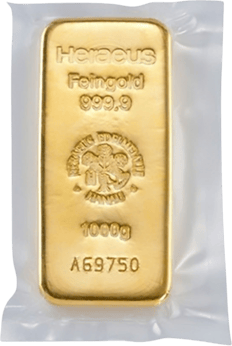
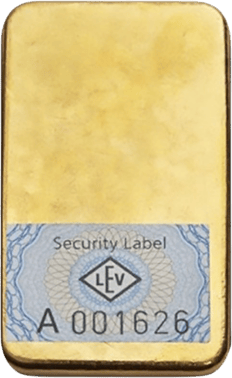
1kg Gold Bar Heimerle und Meule (Cast Bar)
£90,784.51
VAT-free and excl. shipping
Available in 3–4 business days

 More than 310,000
 Over 30 years
 Secure shipping
 Google: 4.9/5
1 kg gold bars are a frequently chosen bar size for investors seeking large weight units. The low production costs are spread so widely due to the size that the purchase price of the bar is very close to the spot price of gold. Our bestsellers are bars from Heraeus, Umicore and Degussa.


The Shanghai Gold Exchange delivers its Au99.99 contract in bars of one kilogram. Each of these bars has a fineness of at least 999.9/1,000.
“The Exchange shall only provide whole bars and ingots for withdrawal, and will not offer to cut or exchange any bars or ingots.”
Shanghai Gold Exchange, Detailed Delivery Rules of 2019, Article 36
Based on the Detailed Delivery Rules of the Shanghai Gold Exchange of 2019, Annex 1 and Article 14, and its product page for Au99.99. The 100 tick marks are calculated: 1,000 grams per bar, 10 grams per lot.
This contract is traded in lots of 10 grams. Whoever withdraws gold from the exchange’s vault, however, receives it only as a whole bar. By calculation, that is 100 lots for one kilo bar.
Kilo bars may go into any vault the exchange has certified. The large bars of 12.5 kilograms are accepted only in its vaults in Shanghai and Shenzhen.
Refineries recognised by the LBMA, the association of the London precious metals market, may also deliver. The gold and silver exchange in Hong Kong also has its own contract for the kilo bar of 999.9/1,000.
In the London wholesale market, the kilo bar does not count as a standard bar. For the kilo bar of 999.9/1,000 there is a separate specification, endorsed by the LBMA, the association of the London precious metals market, and by the gold exchange in Shanghai.
It sets out a frame: 80 to 120 millimetres long, 40 to 60 millimetres wide and 7 to 14 millimetres high, rectangular and weighing at least 1,000 grams.
“Specifications are for cast bars.”
LBMA and Shanghai Gold Exchange, specifications for the kilo bar of 999.9/1,000
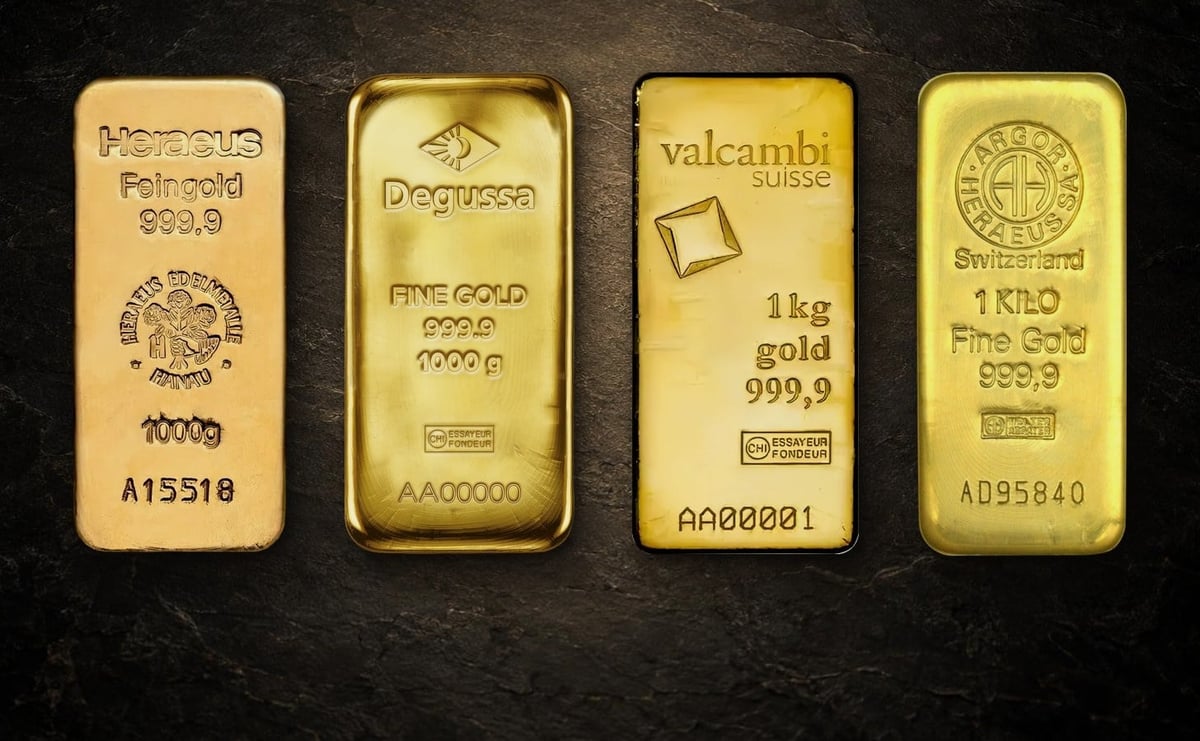
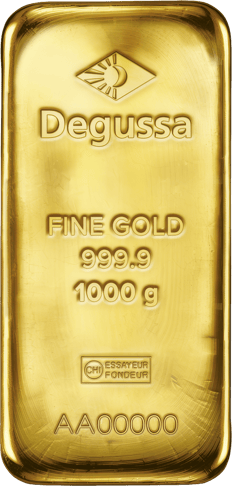
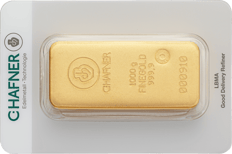
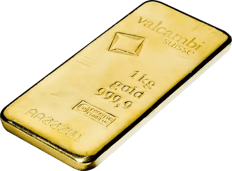
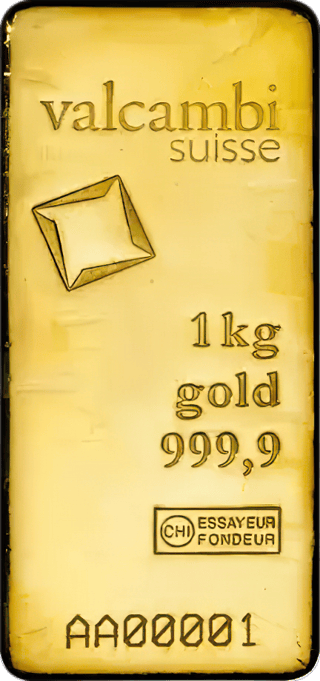
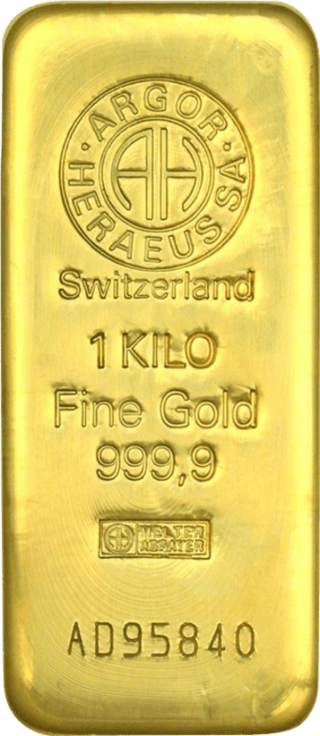
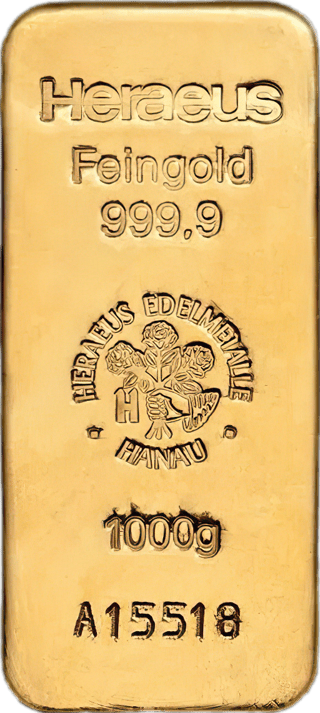
Outlines according to the makers: Heraeus 116 × 51, Degussa 117 × 51, Valcambi 117 × 53, Argor‑Heraeus 117.5 × 52 millimetres. Heraeus, Degussa and Argor‑Heraeus state the height, Valcambi does not. The identity card in the card format ID‑1. At the same scale, not at a scale of 1:1.
Four details belong on each of these bars: the refiner’s stamp, a serial number, the weight and the fineness to four digits. Every bar leaves the refinery with a certificate of analysis, and no serial number may be issued a second time.
In length and width, the kilo bars from Heraeus, Degussa, Valcambi and Argor‑Heraeus fall within this frame. According to the makers, they measure 116 to 117.5 by 51 to 53 millimetres.
For comparison, an identity card: it is 85.6 millimetres wide and 54 millimetres high. So these kilo bars are roughly as wide as the card is high, and about three centimetres longer than it is wide.
The London gold trade works in large bars of 350 to 430 fine ounces of gold. The World Gold Council calls them 400‑ounce bars. By calculation, 400 fine ounces are 12.44 kilograms of fine gold, enough for twelve kilo bars.
“… the shipment and transformation, on an epic scale, of 400oz London Good Delivery (LGD) bars into smaller denominations more suitable for consumers’ pockets.”
World Gold Council, Gold Demand Trends Full year 2013
Seen from above, at the same scale. The large bar in the middle of the dimensions the LBMA permits: 250 by 70 millimetres on top, 35 millimetres high, about four times as high as a kilo bar of 9 millimetres. Weights calculated at 31.1035 grams per fine ounce.
That is how the World Gold Council described the year 2013. At the time, much gold went from western vaults via refineries in North America, Switzerland and Dubai to Asia and the Middle East.
In the assessment of Thomson Reuters GFMS, the large bars went mainly through Swiss refineries and were converted there into kilo bars or smaller bars. According to its customs statistics, Switzerland exported 2,777 tonnes of gold that year, Reuters reported in February 2014.
Two formats meet here: London stores large bars, while in Shanghai, Hong Kong and India the kilo bar is one of the usual sizes.
Around two‑thirds of the gold India imports arrives as cast kilo bars of 995.0/1,000 or as 100‑gram bars. So the World Gold Council wrote in 2021. In the year before, the largest supplier was Switzerland.
There is a weight for gold and silver there that is older than the gram: the tola. Its name comes from the Sanskrit word tulā, “a balance”. That is what the Anglo‑Indian dictionary Hobson‑Jobson records, in its edition of 1903.

The balance is schematic, its tilt not to scale. Valcambi states the footprint of both bars, not their height. Calculated at 0.06479891 grams per grain, the value of the grain since 1959.
In 1833 the tola was fixed in British India at 180 grains, the weight of a silver rupee. In 1939 a law laid down the tola of 180 grains for the whole of British India, in force from 1 July 1942. By calculation, that is 11.66 grams.
By calculation, a bar of ten tola weighs just over 116.6 grams, about a sixth more than a 100‑gram bar. Valcambi in Switzerland still casts it today. At Valcambi, both bars have the same footprint of 26 by 44 millimetres. The extra weight of the tola bar lies in its height.
On 1 October 1958, India officially began to use the metric system. In 2003, Indian customs expressly set tola bars apart from bars that carry their weight in grams or kilograms and a serial number. In trade, the tola lives on: in the Emirates, according to an LBMA report, bars for private buyers range from 1 gram up to 10 tola.
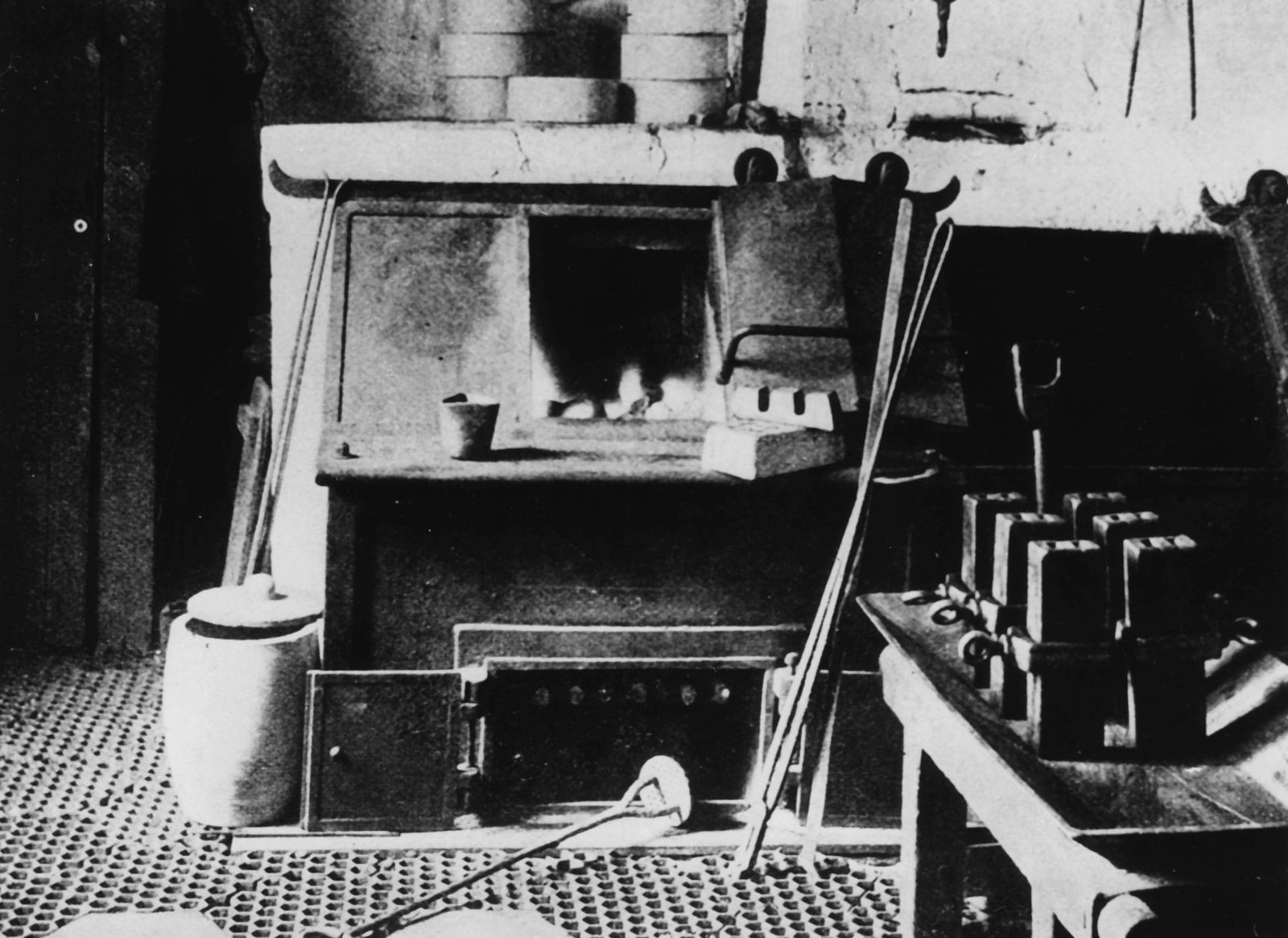
Large gold bars are mostly cast. For its large gold bars, the LBMA permits exactly two methods, both with moulds of graphite or cast iron.
“… either by the conventional method of pouring molten metal into them; or non‑conventional method of melting grain in an induction tunnel system …”
LBMA, Good Delivery List Rules, January 2022, section 2.1.2
Schematic, after the Rand Refinery for open casting and the equipment maker Italimpianti for the tunnel furnace.
In open casting, the caster directs a soft gas flame onto the gold in the mould until the top has solidified. In this way the bar cools from the bottom upwards, no shrinkage cavities remain, and the flame polishes the surface at the same time. Then the bar goes into the water bath. That is how a description of the Rand Refinery in South Africa from the 1980s puts it.
In the tunnel furnace, the gold already lies in the graphite mould as grain. A pusher moves the moulds into the melting zone, where induction melts the gold, and then over a water‑cooled plate, usually under nitrogen instead of air. Each bar weighs as much as the grain that lay in its mould, so the grain is weighed beforehand. That is how the equipment maker Italimpianti describes it.
Stamping comes only after casting. At the Rand Refinery in the mid‑1980s, the large bars waited for the laboratory result first, and only then was their fineness stamped in.
A 1 kg gold bar weighs 1,000 grams and consists of fine gold, which is around 32.15 troy ounces. The kilo bar is a fixed size in international gold trading, from the refineries in Switzerland to the trading hubs in Asia. At Kettner Edelmetalle you can buy kilo bars from Heraeus, Heimerle + Meule, Argor-Heraeus, Valcambi, Degussa and other renowned manufacturers, delivered with insurance.
At 19.3 grams per cubic centimetre, gold is one of the densest metals there is. A kilogram of fine gold therefore takes up only around 52 cubic centimetres. Anyone who wants to hold a large part of their wealth in precious metal needs little space for it with kilo bars, for example in a bank safe deposit box or a safe.
A kilo bar can only be sold as a whole. For this reason, many investors also hold bars of lower weight or gold coins, which they can later sell or give away individually. You can find an overview of all sizes under gold bars.
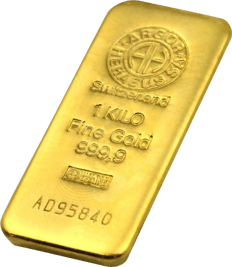
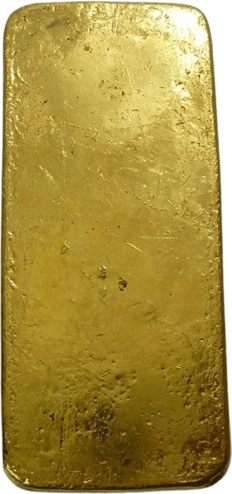
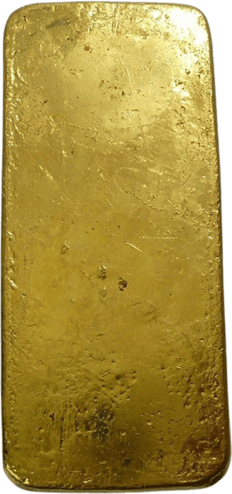
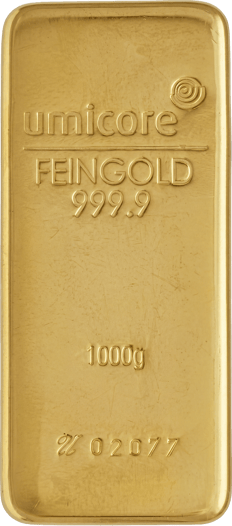
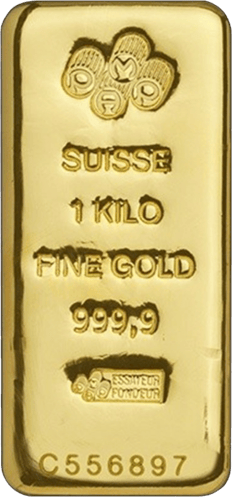
Almost all 1 kg gold bars are cast bars. The liquid gold is poured into a mould and cools down inside it. This is how the matte, slightly wavy surface is created that lets you recognise a cast bar. The manufacturer's logo, the weight, the fineness and an individual serial number are then stamped on. Keep the invoice and any certificate of authenticity supplied together with the bar. Both make a later sale easier.

In trading, what matters most for a kilo bar is the name on the bar. Our range includes, among others:
Several of these manufacturers, including Valcambi, Argor-Heraeus and Heimerle + Meule, are on the Good Delivery list of the London Bullion Market Association (LBMA). It is considered the benchmark of international gold trading. You can see all manufacturers at a glance in our manufacturer overview.
The purity of a gold bar is indicated by its fineness. 1 kg gold bars consist of fine gold with a fineness of at least 999/1,000. Most have 999.9/1,000, meaning they are 99.99 per cent pure gold. The fineness is stamped on every bar, and the exact value is also stated on every product page.
The best protection against counterfeits is to buy from an established dealer. After delivery, check that the manufacturer, weight and fineness match your invoice and that the serial number matches an enclosed certificate of authenticity. Tungsten has almost the same density as gold. Before privately reselling a kilo bar, it is therefore worth having it checked by ultrasound or conductivity measurement at a specialist dealer. You can read how to check gold for authenticity at home and with a specialist under checking gold for authenticity.
The price of a 1 kg gold bar follows the gold price. Gold is traded worldwide in US dollars per troy ounce, so the exchange rate also plays a role in the euro price. Since a kilo bar contains a good 32 troy ounces, every movement in the gold price has a noticeable effect on the euro amount. The current price of each bar is shown on the product tile, and you can see the development of recent days and years under gold price.
Investment gold under § 25c UStG
Gold bars with a fineness of at least 995/1,000 are considered investment gold and are exempt from VAT under § 25c UStG. The product tile and every product page show you whether an item is VAT exempt.
If you sell gold as a private individual, any gain is generally tax free after a holding period of more than one year (§ 23 EStG). This is general information and does not replace tax advice.
For a kilo bar, a bank safe deposit box or a securely anchored safe at home are good options. If you use a safe, check up to what amount your household contents insurance covers valuables stored in it, and adjust the policy if needed. Leave the bar in the sleeve or film in which it was delivered, and avoid handling it with bare hands if possible. You can find suitable accessories for storage under accessories.
Which size suits you depends on how you plan to use your gold later. Anyone who wants to hold as much gold as possible in a single piece goes for the kilo bar. Anyone who wants to stay flexible spreads the same amount across several bars, for example 500 g gold bars, 10 oz gold bars, 250 g gold bars or 100 g gold bars. For individual ounces there are 1 oz gold bars and bullion coins such as the Krugerrand. Ready-made combinations can be found among the gold investor packages.
You can order your 1 kg gold bar directly here in the shop or by phone with our customer advisors on 07930-2699, Monday to Friday from 8 am to 8 pm. If you would like to invest a larger amount, we will be happy to prepare a personal offer for you and discuss selection, payment and delivery with you. You can also request your offer online.
Every shipment is insured for its full value right up until it is handed over to you. In a video-monitored high-security area, two specialists check every order following the dual-control principle and pack it in a neutral box.
A kilo bar is delivered personally to your address by Prosegur as a secure cash-in-transit service, with Prosegur arranging the appointment with you by phone beforehand. You can pay for it by bank transfer. You can read more about this under shipping and payment.
Gold bars that you bought from us, we will buy back from you on request. After registering in our buy-back portal, you select the items directly from your orders. You do not need an invoice for this. Gold from another purchase can be offered to us there together with the purchase invoice. Whether we make you an offer in this case depends on the item, the quantity and our current demand.
You will usually receive a written offer within 24 hours. If you accept it, you will receive an insured DHL shipping label for sending it from Germany. From an offer amount of €500 it is free of charge. A parcel can hold goods worth up to €12,500. If the value is higher, we will prepare several insured parcels for you or arrange for the goods to be collected from you by a cash-in-transit service. A kilo bar is collected from your address in Germany by a cash-in-transit service. Please send your bars in complete, that is including blister card, case and certificate, where these were supplied. Our experts check authenticity, completeness and condition. We then transfer the amount to your account. For investment bars, the gold price on the day your gold reaches us applies, so the amount may differ from the offer. For limited collector's bars, the price depends on demand. Fixed, agreed prices remain unchanged. A buy-back from Switzerland and Liechtenstein is currently not possible due to customs regulations.
A 1 kg gold bar contains around 32.15 troy ounces. One troy ounce equals 31.1035 grams. Gold is traded worldwide in this unit.
Yes, provided its fineness is at least 995/1,000. In that case it counts as investment gold and is exempt from VAT under § 25c UStG. The product tile and every product page show you whether an item is VAT exempt.
We offer kilo bars from, among others, Heraeus, Heimerle + Meule, Argor-Heraeus, Valcambi and Degussa. Bars from well-known manufacturers are recognised in the trade, which makes a later sale easier.
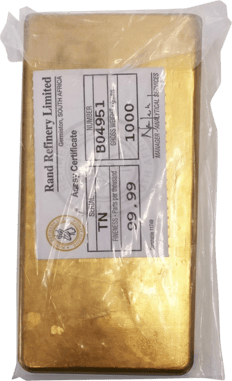
If your bar is sealed, it is best not to open the packaging. Keep cast bars without sealing in the sleeve in which they were delivered, and handle them only with gloves if possible. The invoice and certificate of authenticity belong with the bar.
In a bank safe deposit box or in a securely anchored safe at home. If you use a safe, check in advance with your household contents insurer up to what amount valuables are covered.
Gold bars that you bought from us, we will buy back from you on request. After registering in the buy-back portal, you select the bar from your orders and usually receive a written offer within 24 hours. A kilo bar is collected from your address in Germany by a cash-in-transit service.
 1 kg Gold Bars
Stay informed with product launches, financial news and exclusive offers. Sign up for our free newsletter today.
By entering your email address and clicking the "Submit" button, you give the following consent: "I agree to be informed by email about new products, financial news and exclusive offers, and therefore consent to the processing of my email address for the purpose of sending the newsletter. I can revoke this consent at any time without giving reasons, with effect for the future. The lawfulness of processing carried out prior to revocation remains unaffected."