Only 1 left to order
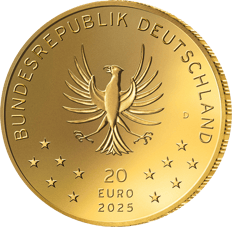
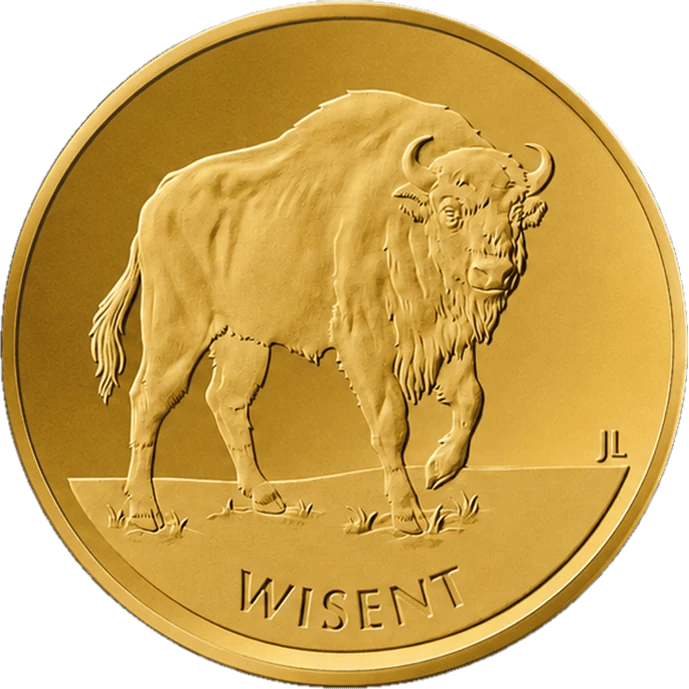
1/8 Ounce Gold 20 Euro Return of Wildlife Bison 2026 (Mintage: 57,000 | various letter)
£512.21
VAT-free and excl. shipping
Available in 2–3 business days

 More than 310,000
 Over 30 years
 Secure shipping
 Google: 4.9/5
In 2002, the Federal Republic of Germany decided to produce the Gold Euro. Since then, a new design has been minted annually for various German federal states and events. The coin is produced at several mints in Germany to ensure the highest quality. Following the success of the Gold Mark, this was a logical step and represents a great opportunity for gold investors.


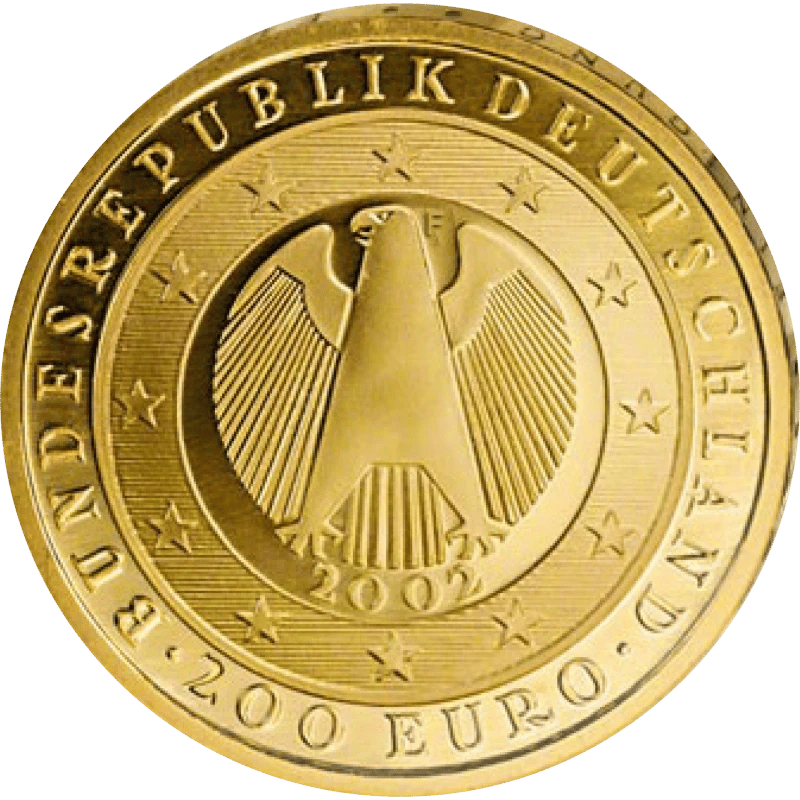
20 euro17.5 mm
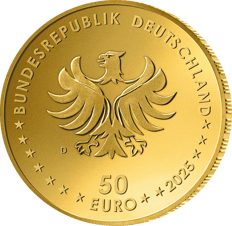
50 euro22 mm
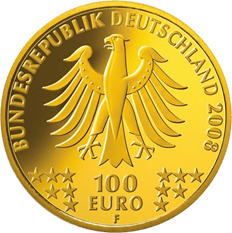
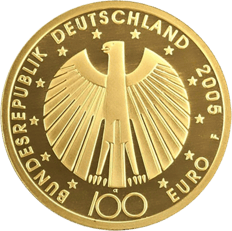
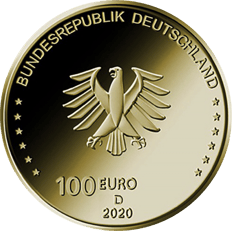
100 euro28 mm
200 euro32.5 mm
Since 2002, the Federal Republic of Germany has had euro gold coins struck, so far in four sizes: 20, 50, 100 and 200 euro. All are made of fine gold 999.9/1,000.
“Goldeuro” is a name used in the coin trade. In the Coinage Act and in the Federal Law Gazette, the coins are called German euro commemorative coins; the Federal Ministry of Finance calls them collector coins.
“Because of the material, gold coins can only be produced in the minting quality ‘brilliant uncirculated’.”
Federal Ministry of Finance, translated
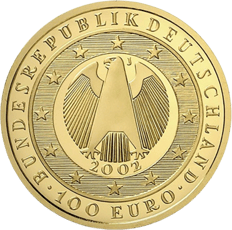
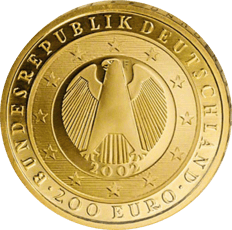
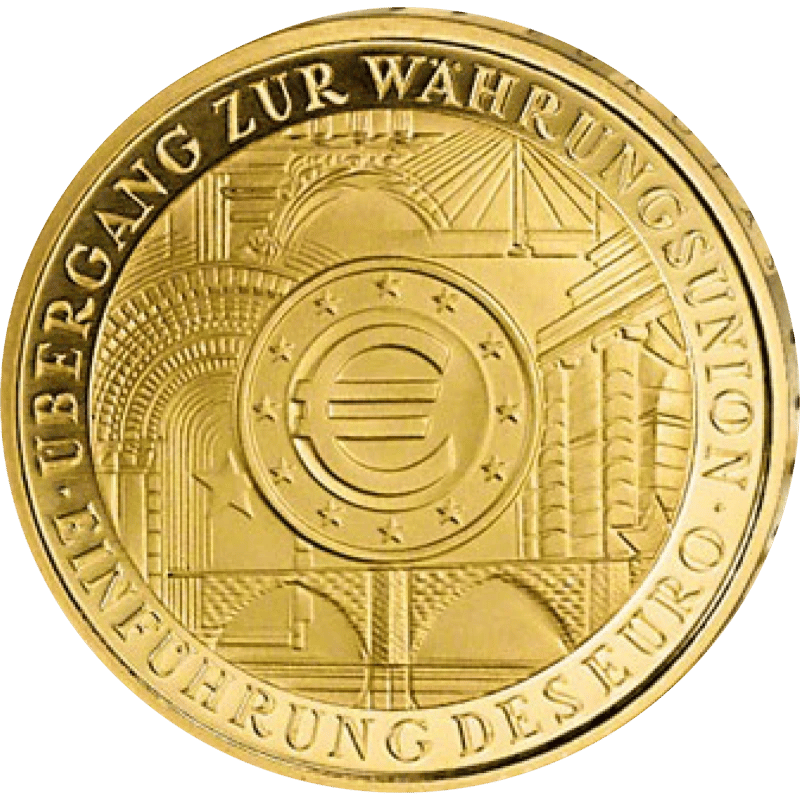
So far, the 200 euro coin has been issued only once: in 2002, together with the 100 euro coin, for the introduction of the euro. Its plain edge bears the incuse inscription IM ZEICHEN DER EINIGUNG EUROPAS (in the sign of European unification).
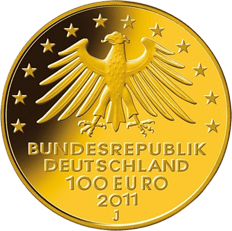
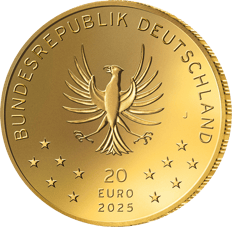
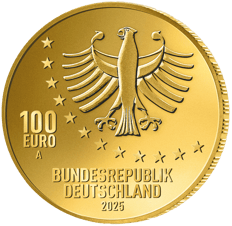
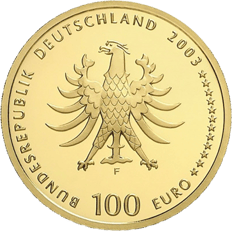
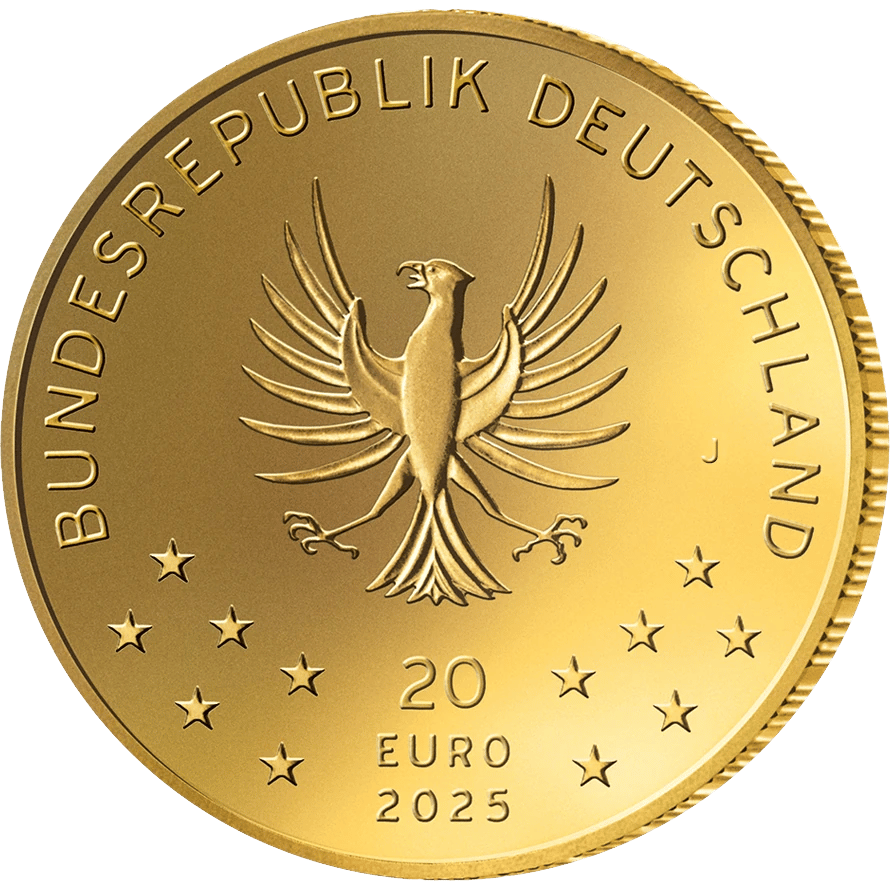
Its value side shows “an eagle framed by twelve stars”.
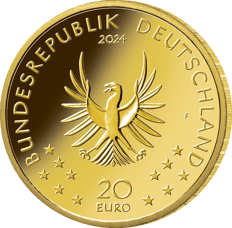
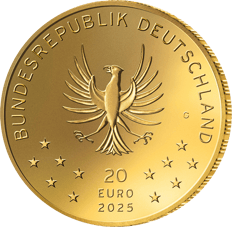
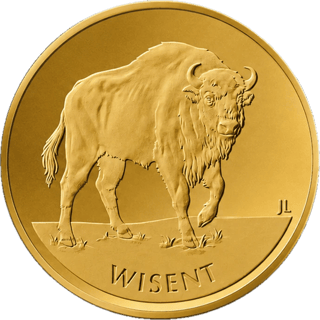 20 euro European bison 2026European bison 20263.89 g (1/8 oz), 17.5 mm3.89 g, 17.5 mmReturn of the Wild Animals
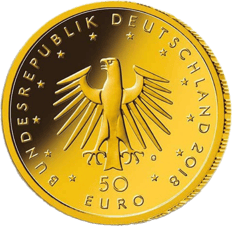
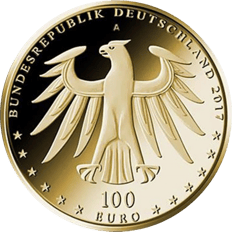
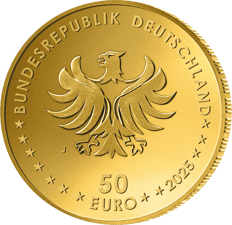
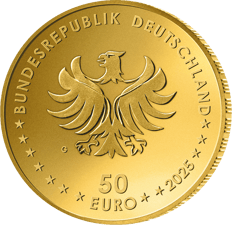
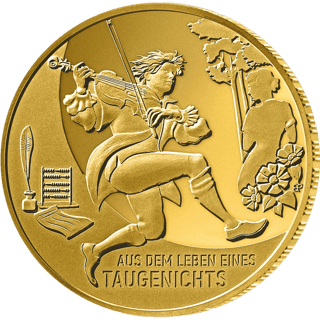
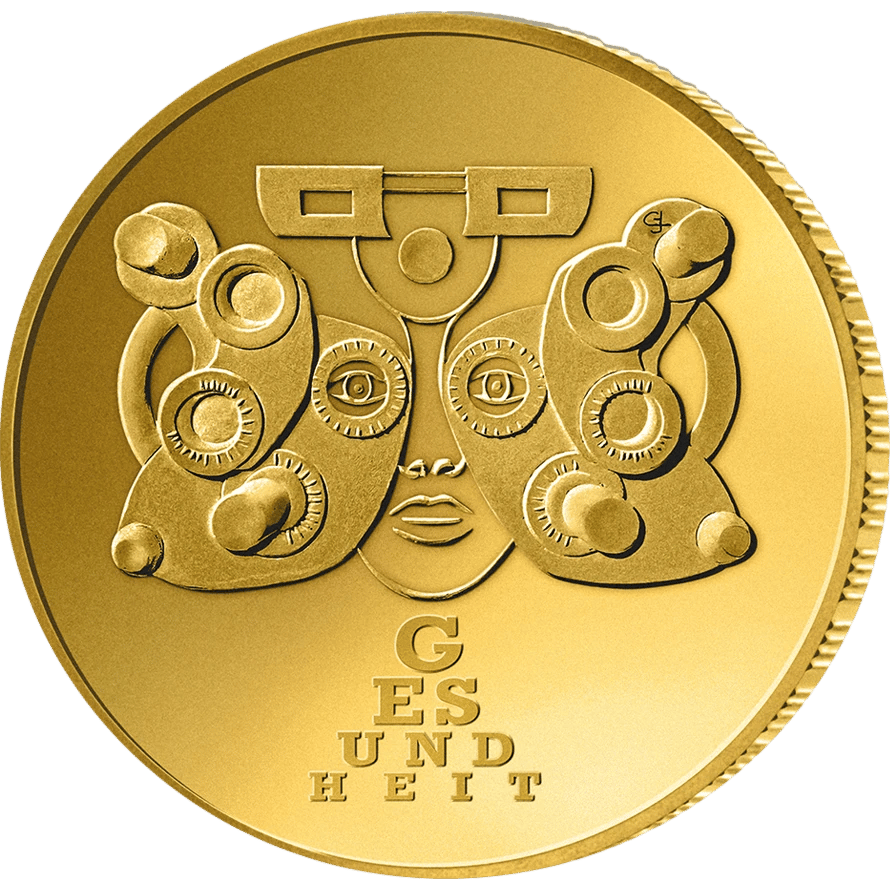
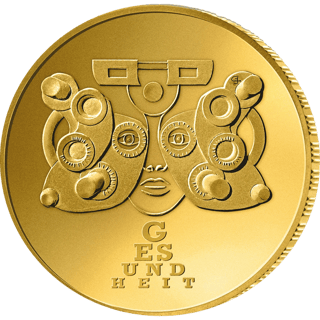 50 euro Health 2025Health 20257.78 g (1/4 oz), 22 mm7.78 g, 22 mmGerman Craftsmanship, Letter ALetter A
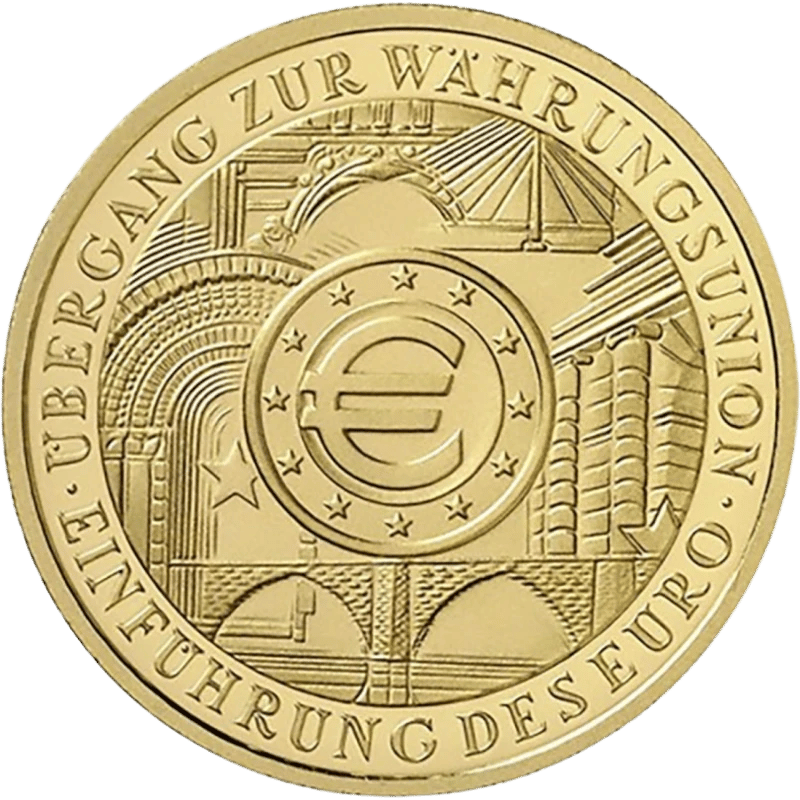
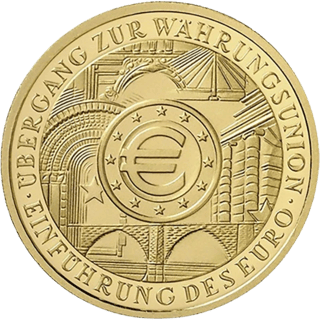 100 euro 2002100 euro 200215.55 g (1/2 oz), 28 mm15.55 g, 28 mmIntroduction of the euroIntroduction of the euro
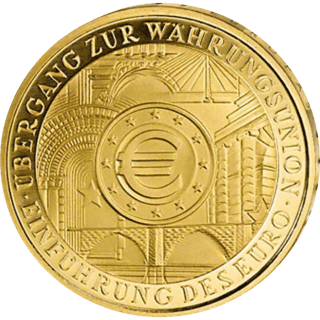 200 euro 2002200 euro 200231.1 g (1 oz), 32.5 mm31.1 g, 32.5 mmIntroduction of the euroIntroduction of the euro
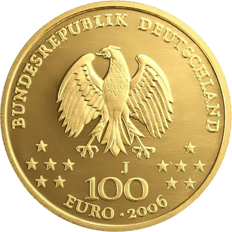
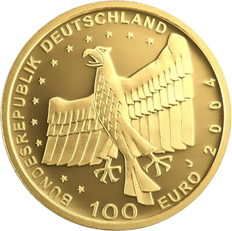
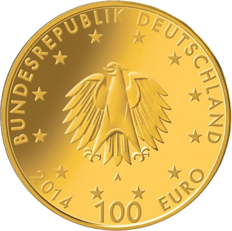
From 2003 to 2019, the 100‑euro coin showed a German World Heritage site year after year. Only 2005 was different: that year it was dedicated to the 2006 football World Cup.
The sites range from Lübeck in the north to Regensburg in the south and from Aachen in the west to Wittenberg in the east.
The order does not follow the year of inscription on the World Heritage List: Aachen Cathedral has been on it since 1978, but came onto the coin in 2012.

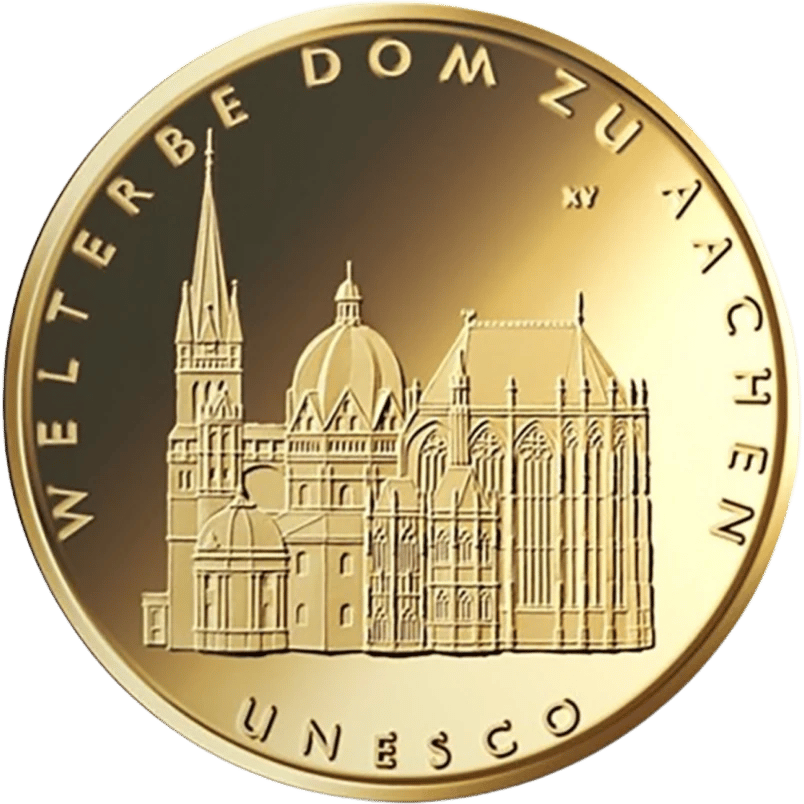
“the cathedral of Aachen set in its full width and height right up to the edge of the coin”
Notice, BGBl. I 2012, 2174, translated
Design: Erich OttWorld Heritage since 1978
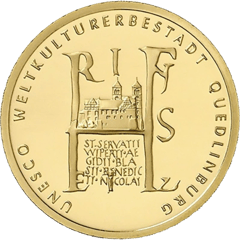 2003Quedlinburg
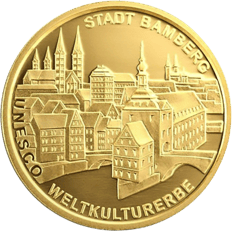
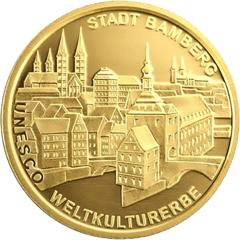 2004Bamberg
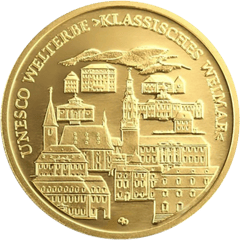 2006Weimar
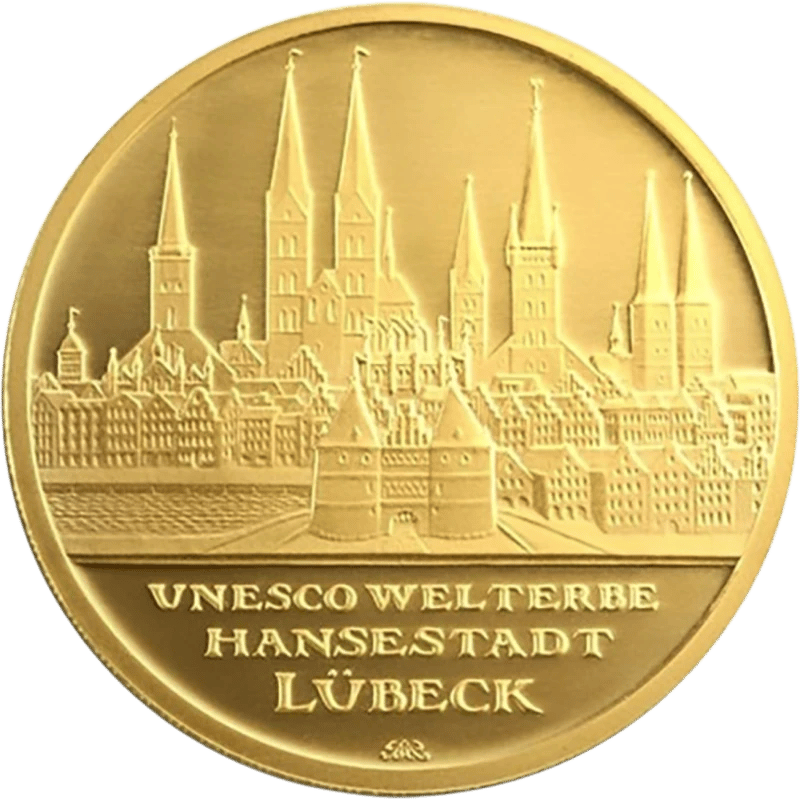
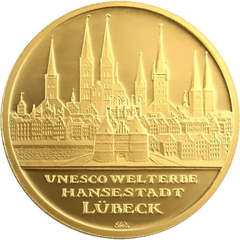 2007Lübeck
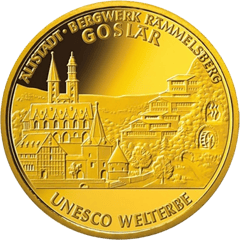 2008Goslar
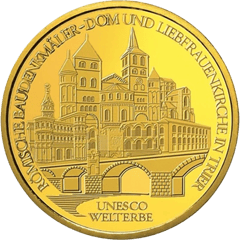 2009Trier
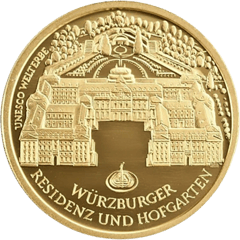 2010Würzburg
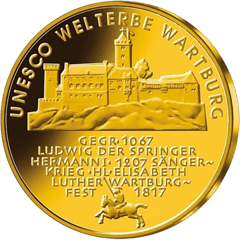 2011Wartburg
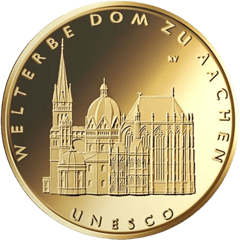 2012Aachen
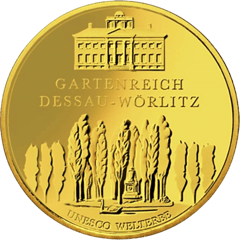 2013Dessau‑Wörlitz
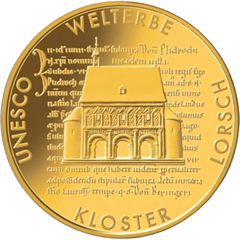 2014Lorsch
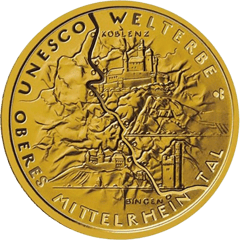 2015Middle Rhine
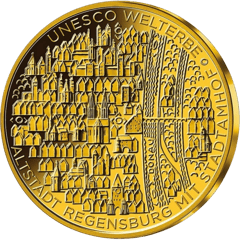 2016Regensburg
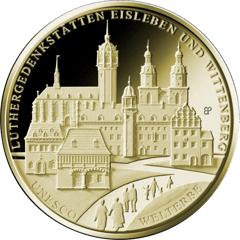 2017Eisleben and Wittenberg
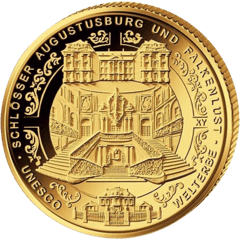 2018Brühl
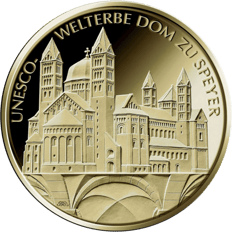
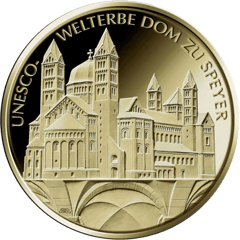 2019Speyer
Since 2022, the 20‑euro coin has shown one animal each year. Behind every coin stands a landscape of the kind the animal needs.
“The series focuses in particular on animals that had almost been wiped out in Germany in the past and have meanwhile … returned.”
Notice, BGBl. I 2022, 724, translated

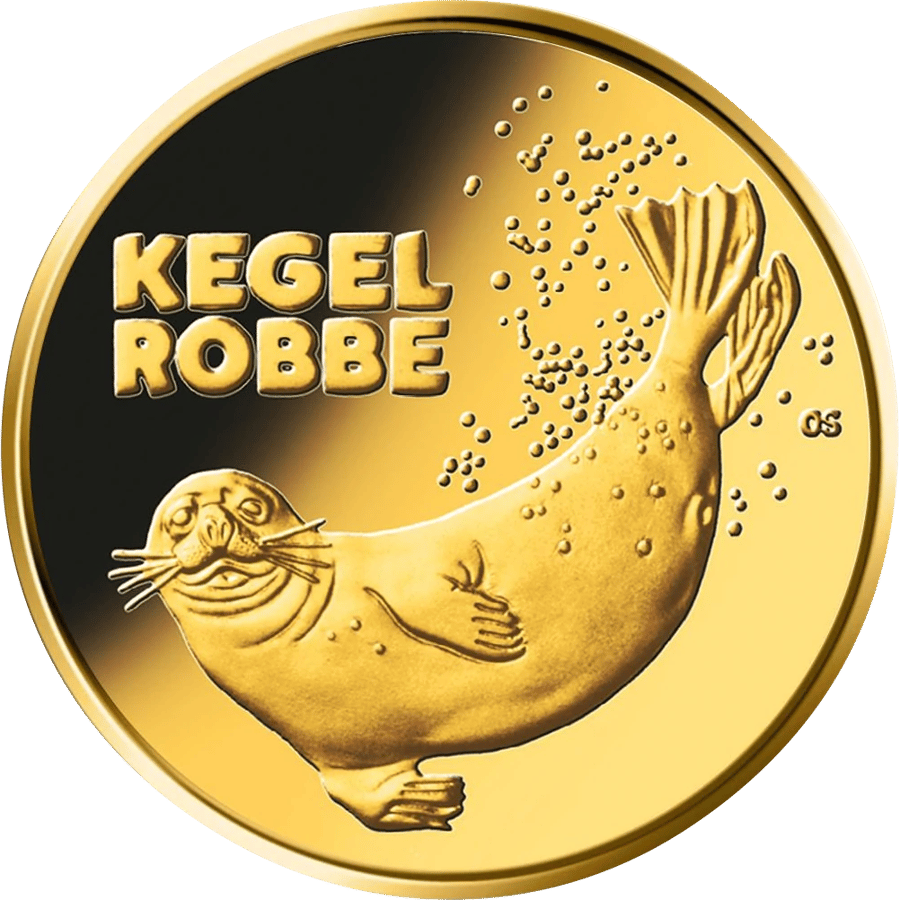
Grey seal2022
Returned to the Wadden Sea from British waters of its own accord in the second half of the 20th century. Its most important pupping area in Germany is Heligoland.
Design: Olaf Stoy

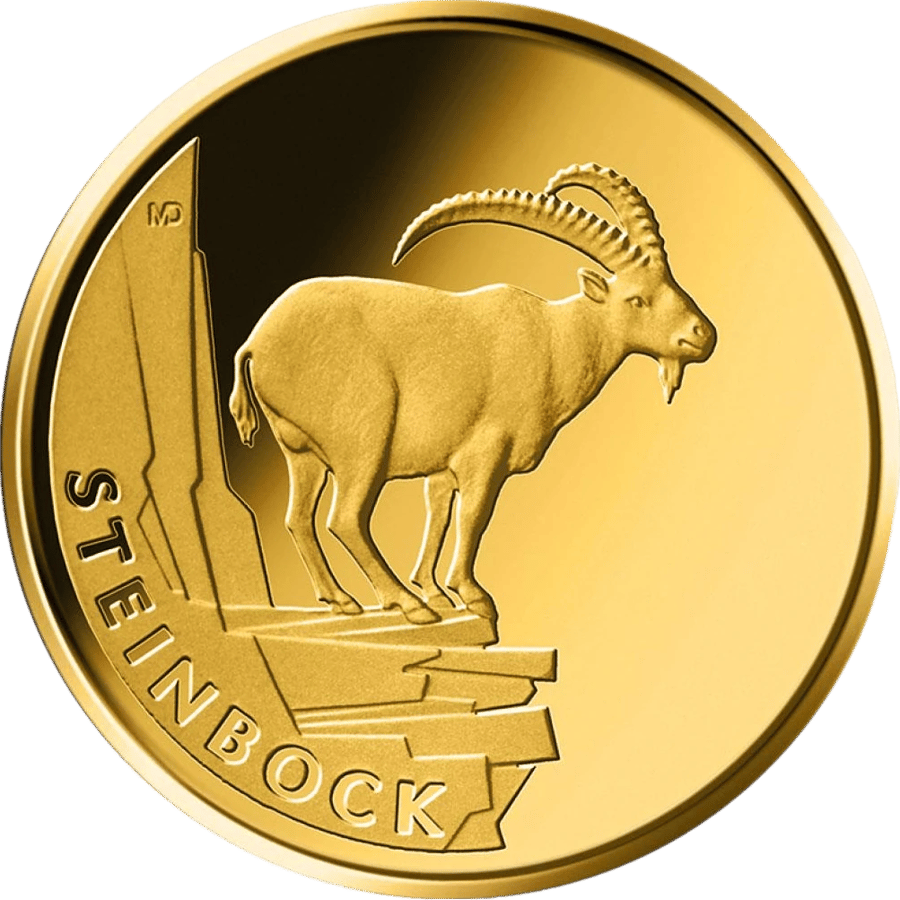
Alpine ibex2023
Survived only in Gran Paradiso. In the 1930s, animals were released in Berchtesgaden.
Design: Marianne Dietz

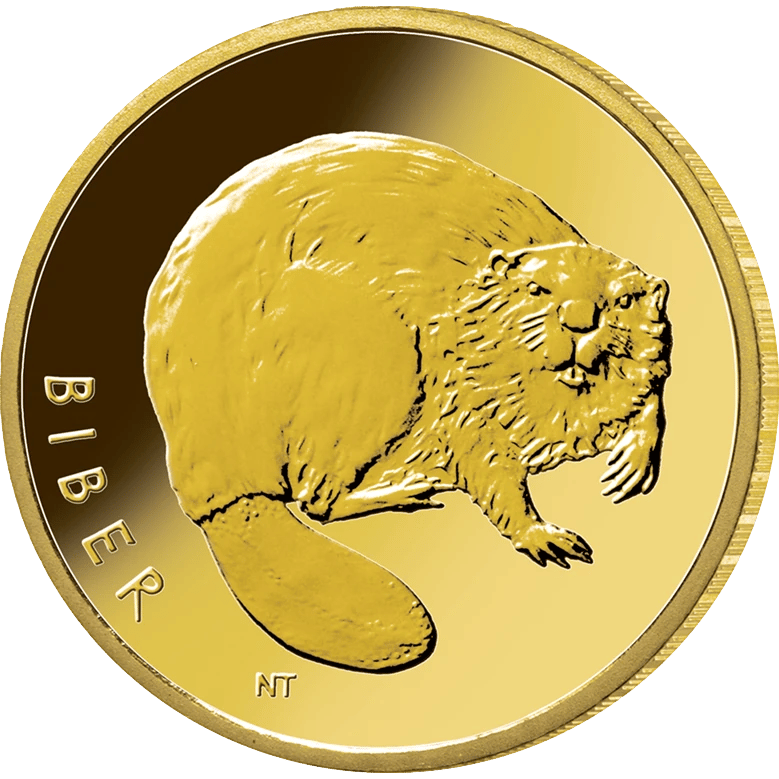
Eurasian beaver2024
In Germany, it survived only on the Middle Elbe. Reintroductions brought it back, and it continues to spread.
Design: Natalie Tekampe

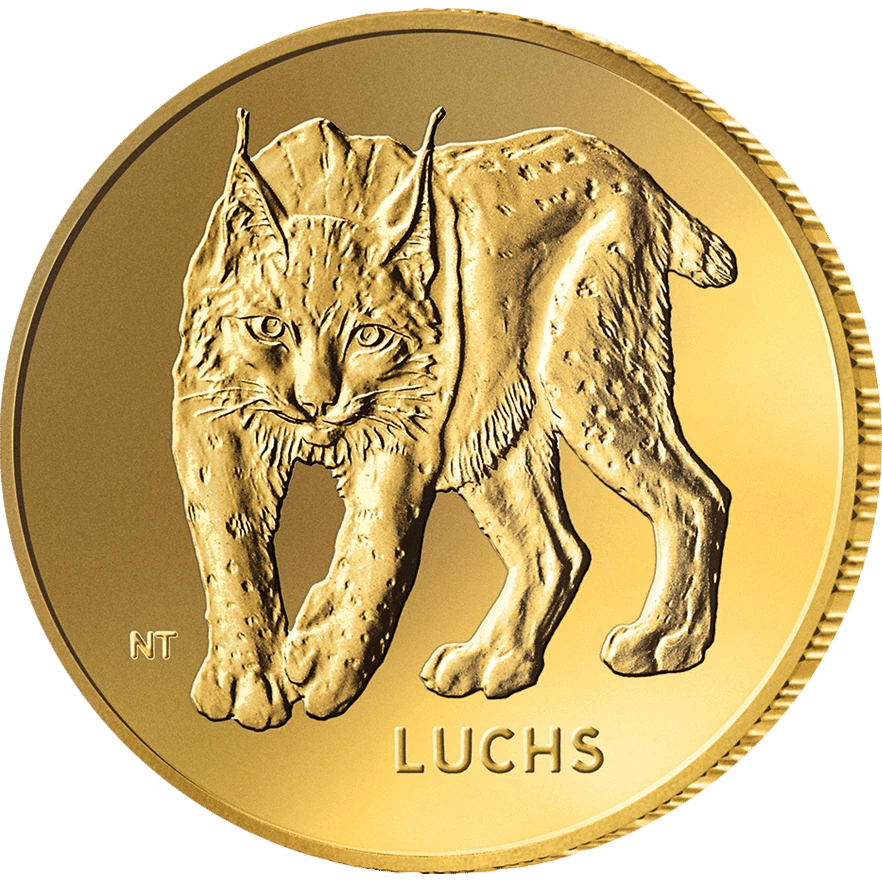
Lynx2025
In the Harz National Park, a reintroduction project began in 2000. The lynx needs large home ranges and lives at low density.
Design: Natalie Tekampe

European bison2026
All European bison alive today descend from twelve animals.
Design: Jasmin Lewis

Eurasian otter2027
According to the annual programme, its coin will be issued on 11 October 2027.
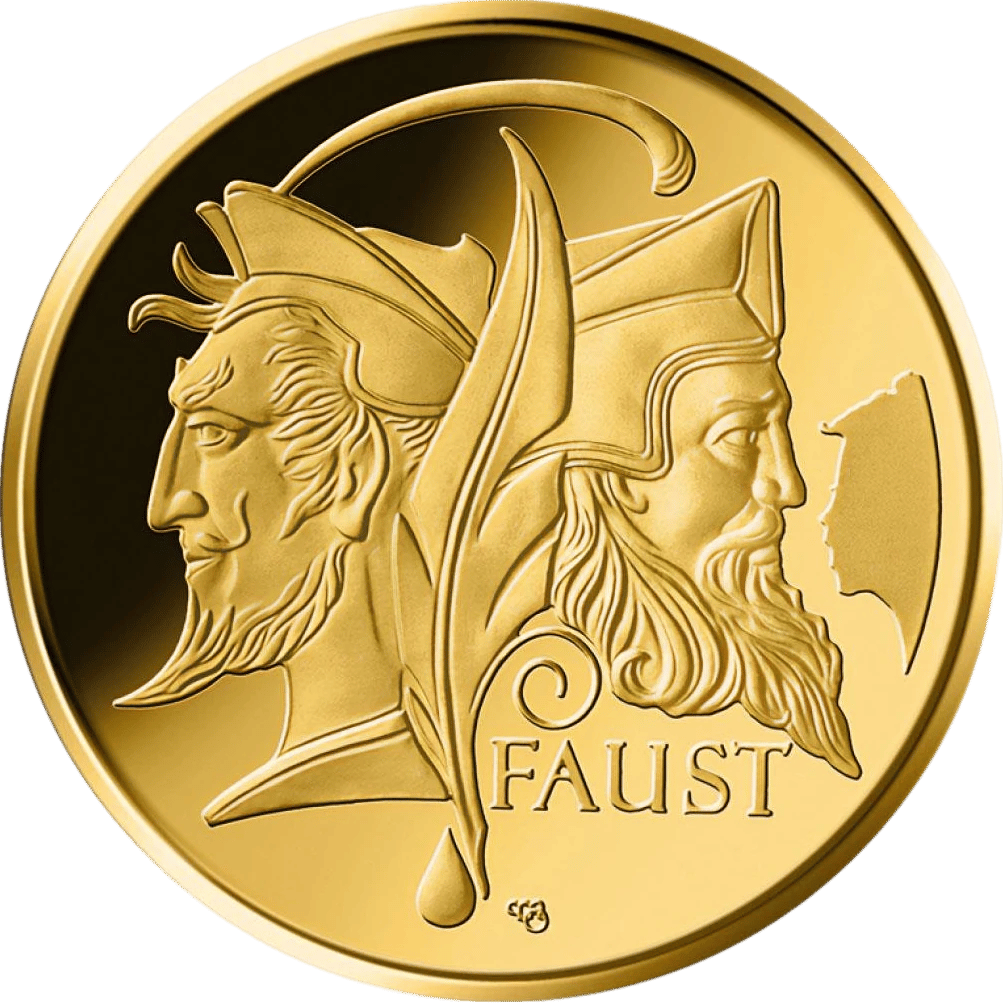
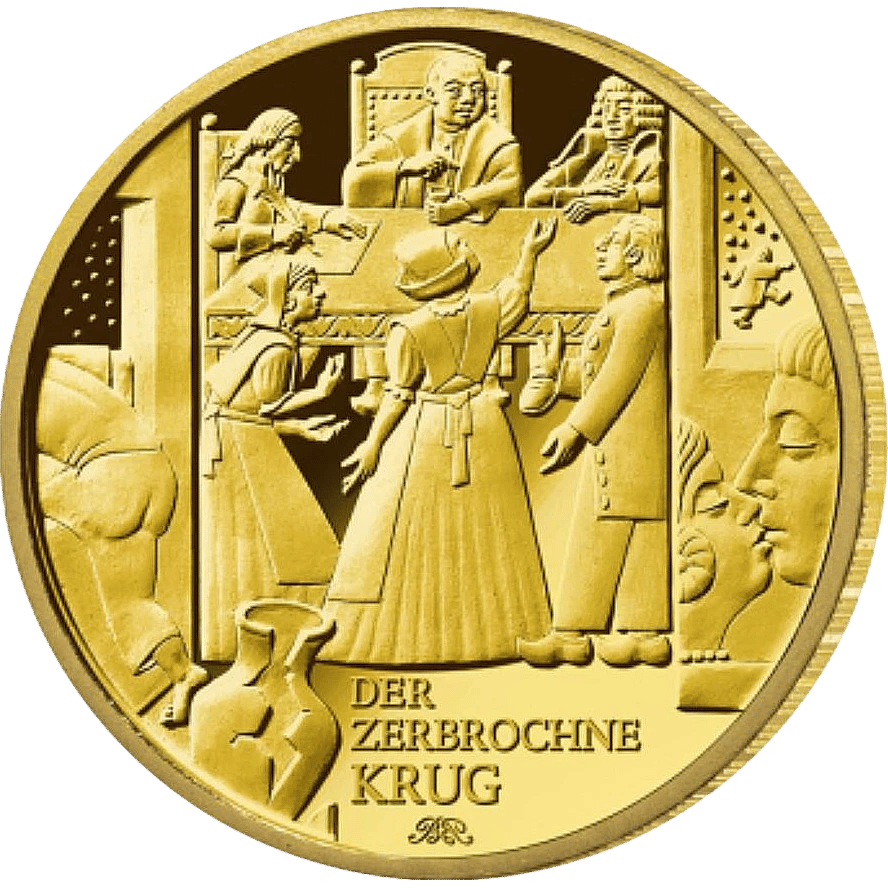
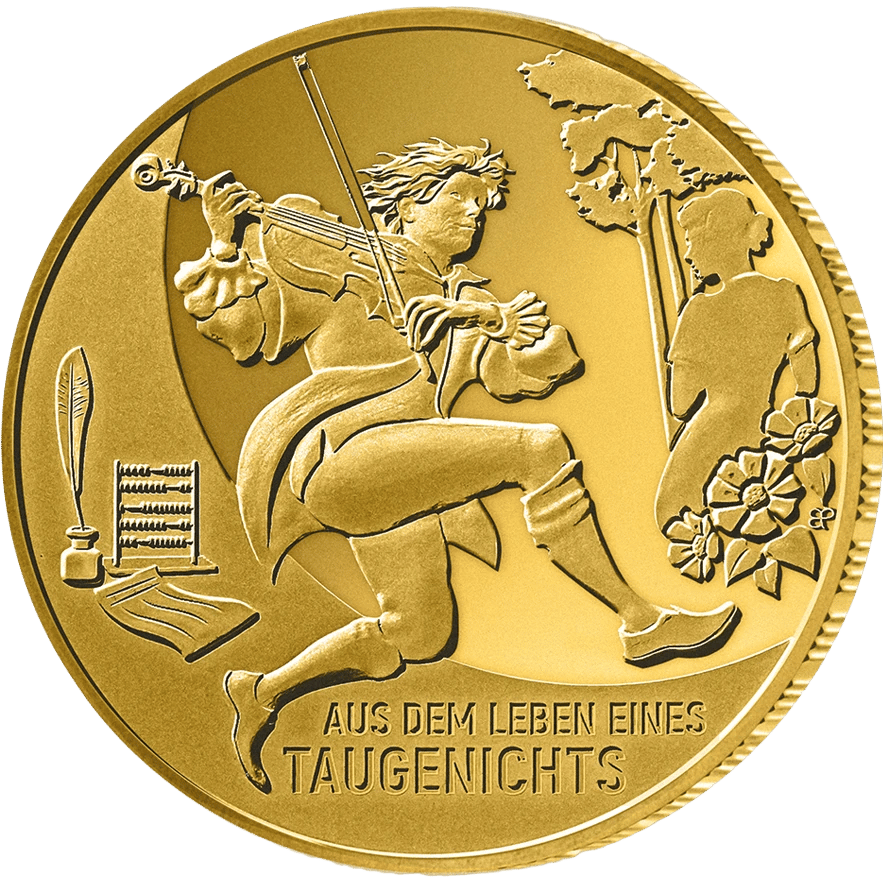
Since 2023, a 100‑euro coin has been issued each year for a masterpiece of German literature, eight up to 2030.
“The series does not focus on the respective author, but on the literary work in its monumental significance for German culture.”
Notice, BGBl. 2024 I Nr. 77, translated
“The Jew’s Beech” was issued in 2026. According to the annual programme, “Dies Buch gehört dem König” follows on 21 June 2027.

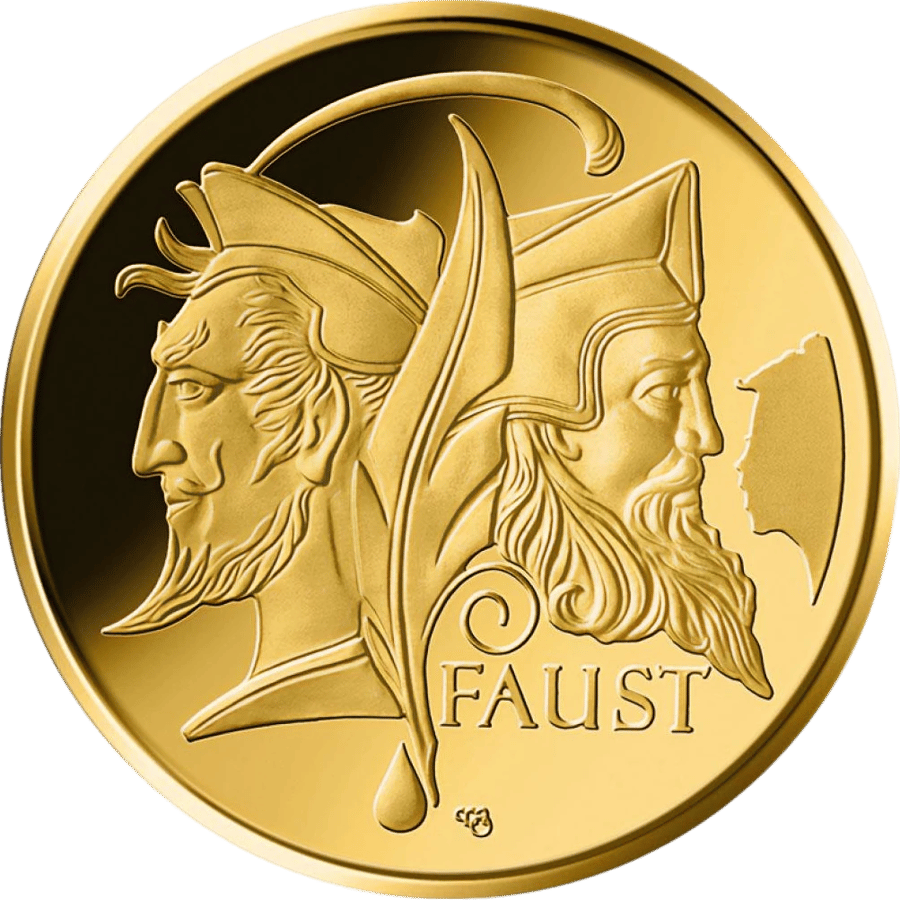
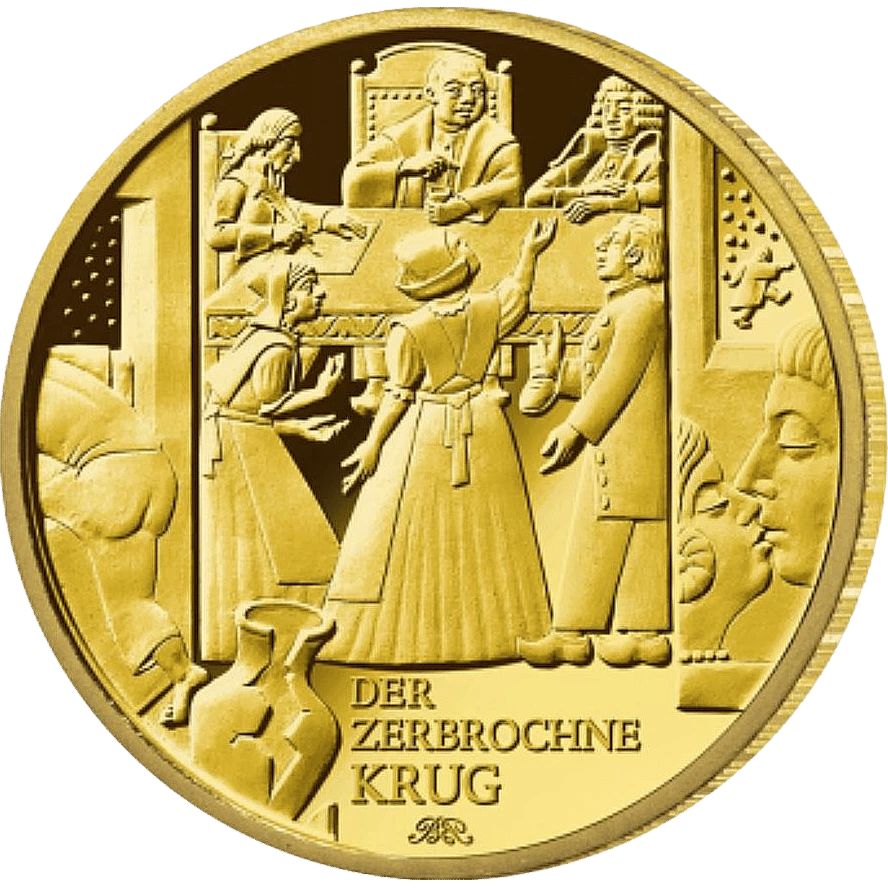
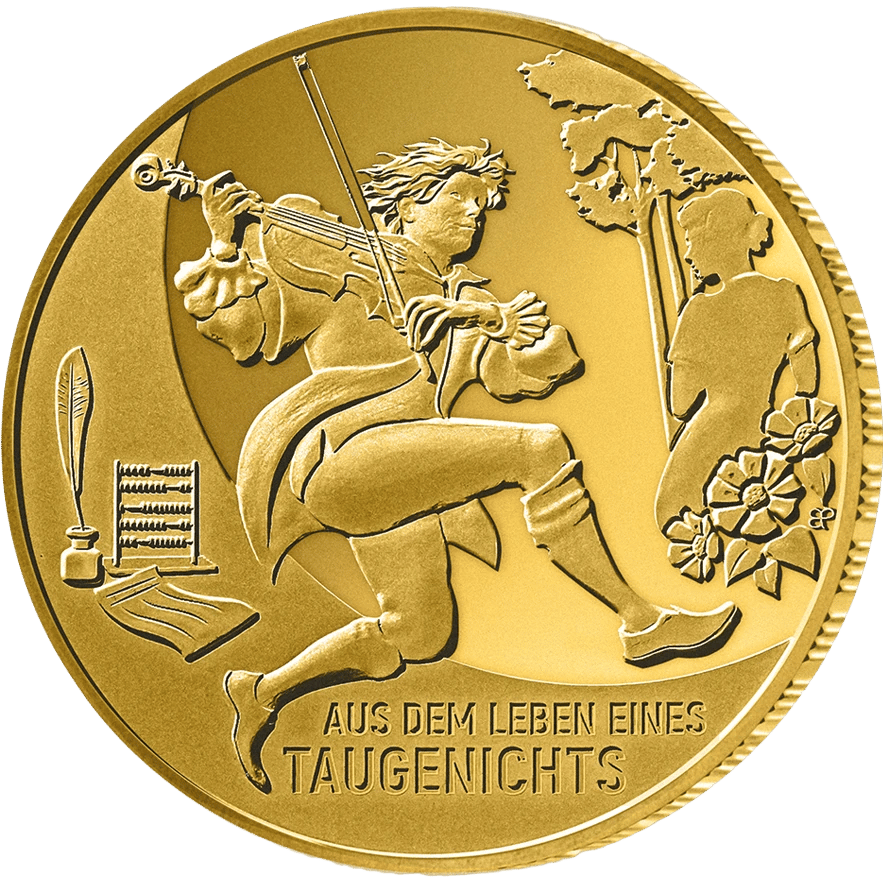
Picture sides according to the notices, BGBl. 2023 I Nr. 399, 2024 I Nr. 77 and 2025 I Nr. 270
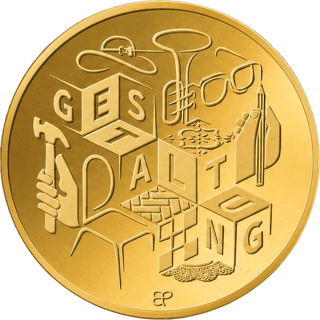
Since 2023, a 50‑euro coin on craft has been issued each year, five up to 2027: Nutrition, Mobility, Health, Design and Construction. Here they stand beside woodcuts from Jost Amman’s Book of Trades (Ständebuch) of 1568.
“The series honours craft as one of the most important and most diverse sectors of the economy of the Federal Republic of Germany.”
Notice, BGBl. 2023 I Nr. 300, translated
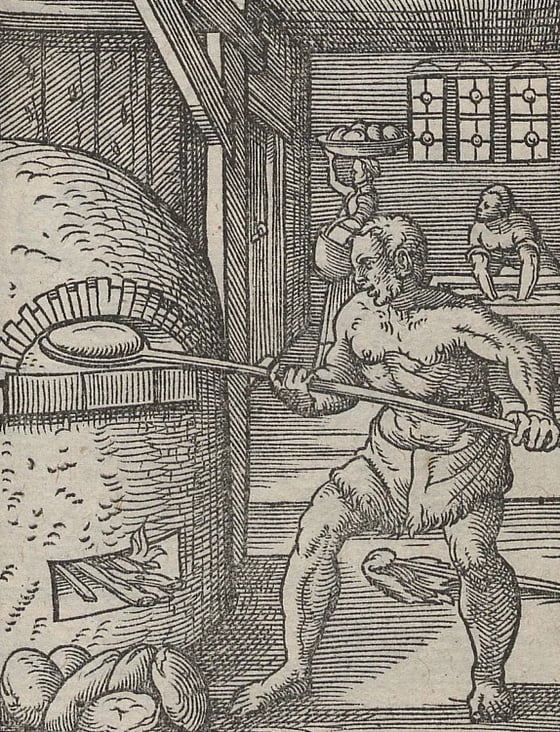
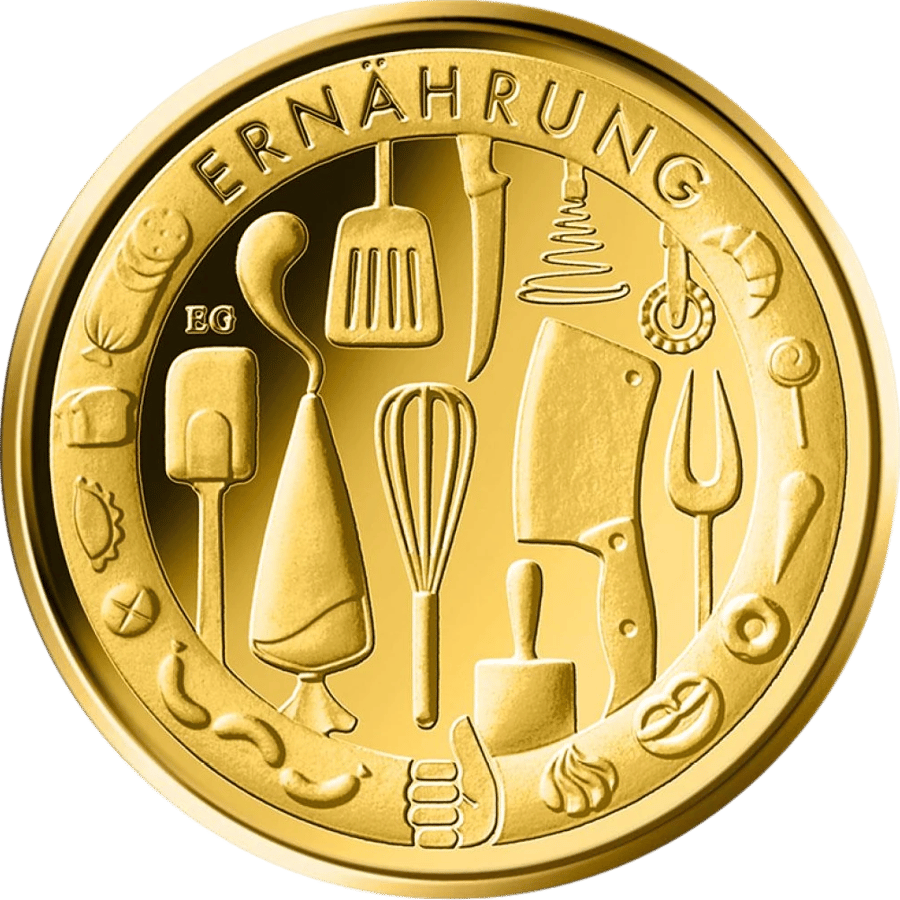
The coin shows “typical tools of the food trades in a dense composition”, framed by the thumb of the German crafts logo.
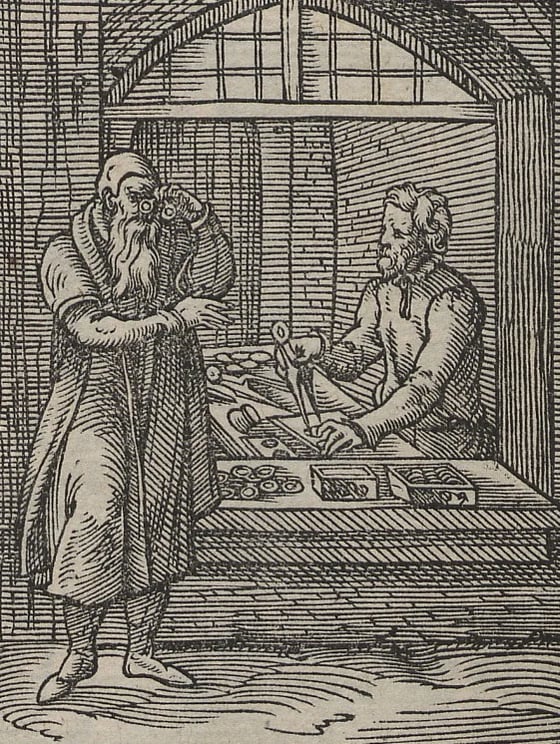
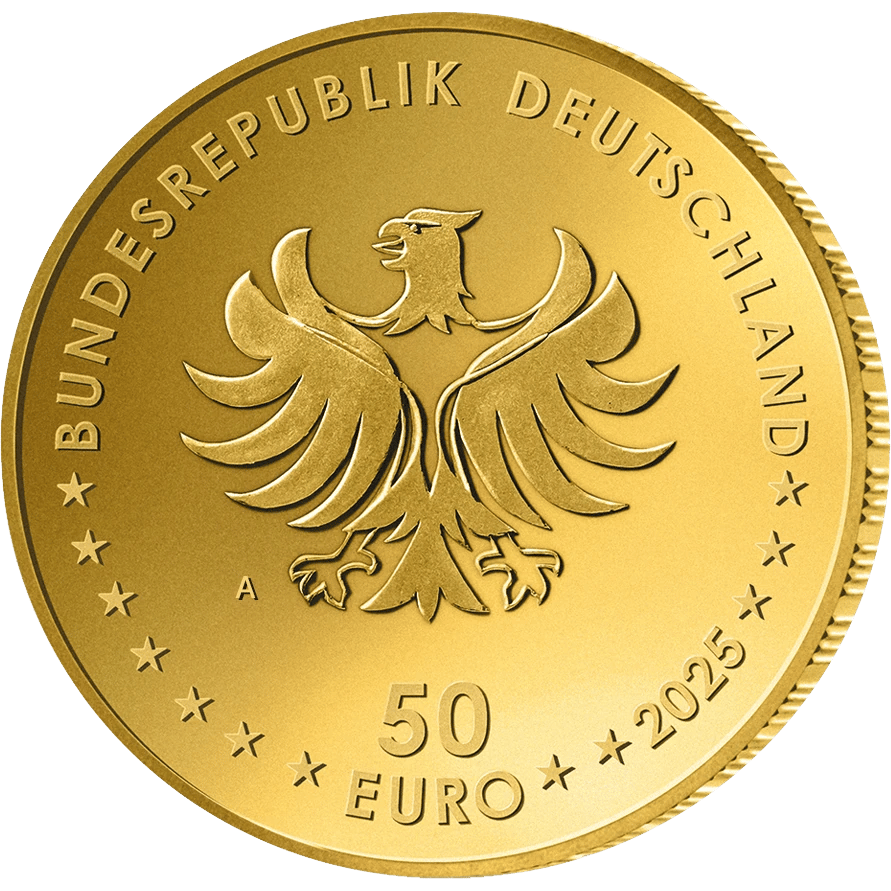
The coin shows a shape reminiscent of a face, as a symbol of ophthalmic optics, hearing aid acoustics, orthopaedic (shoe) technology and dental technology. The word GESUNDHEIT forms a triangle below the chin, and the lettering of optotypes grows smaller towards the edge.
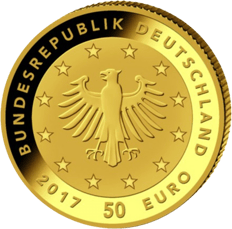
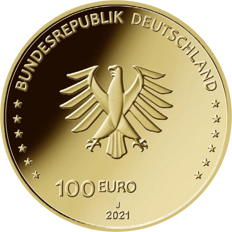
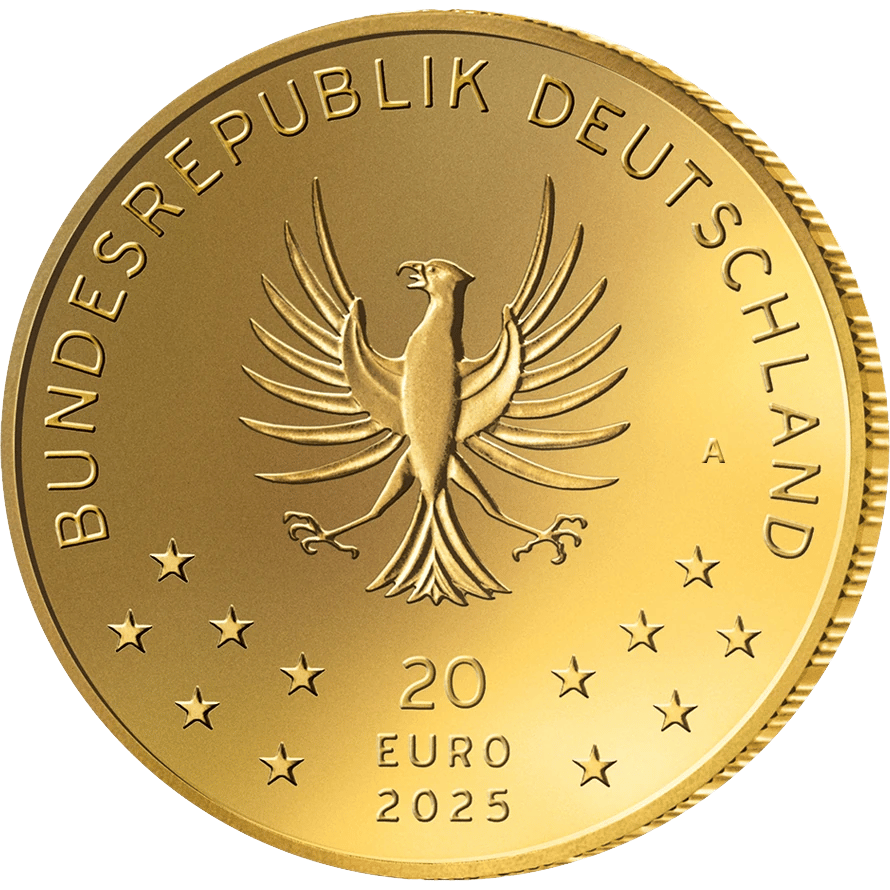
The value side bears “an eagle whose hexagonal outline relates to the picture side”.
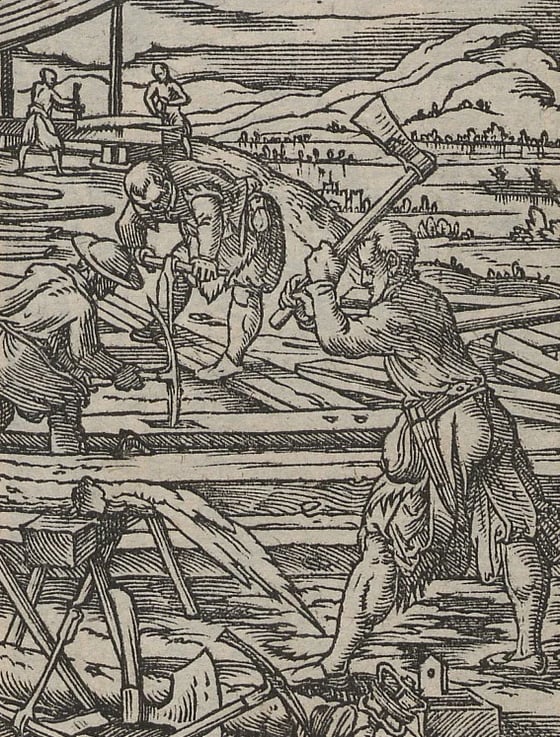
According to the annual programme, to be issued on 16 August 2027.
Design was issued in 2026, and Construction follows in 2027. Before that, there was the 50 euro coin Luther Rose in 2017, at 20 mm, and from 2018 to 2022 the Musical Instruments series.
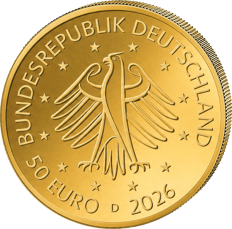
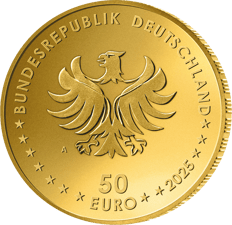
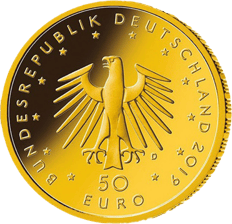
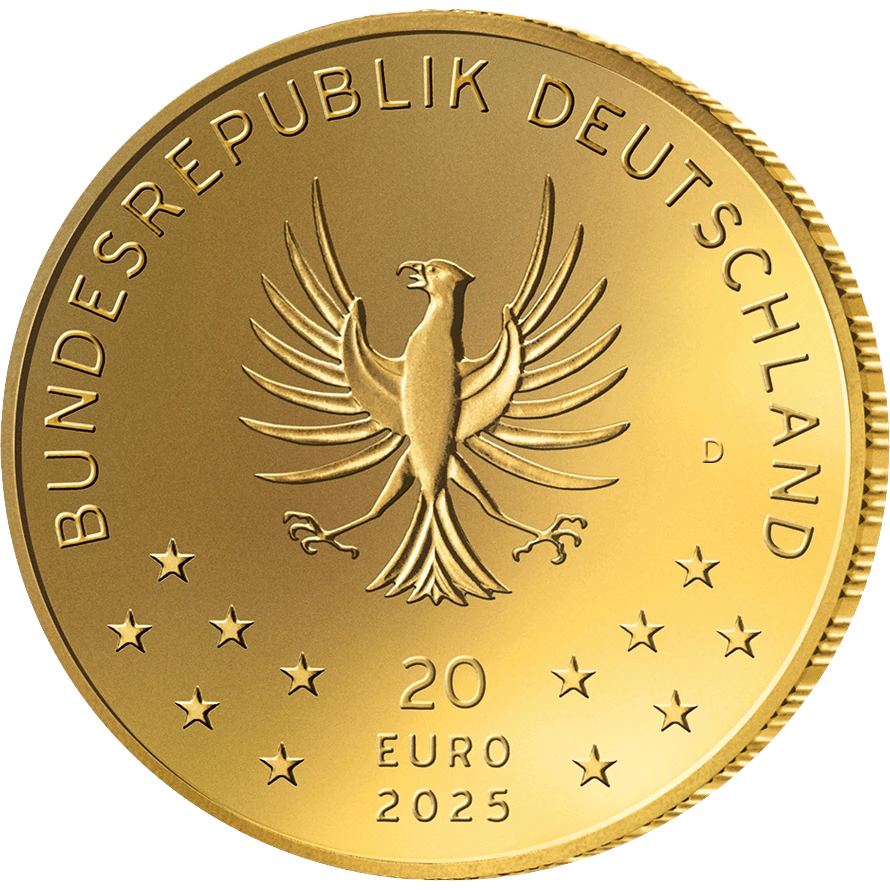
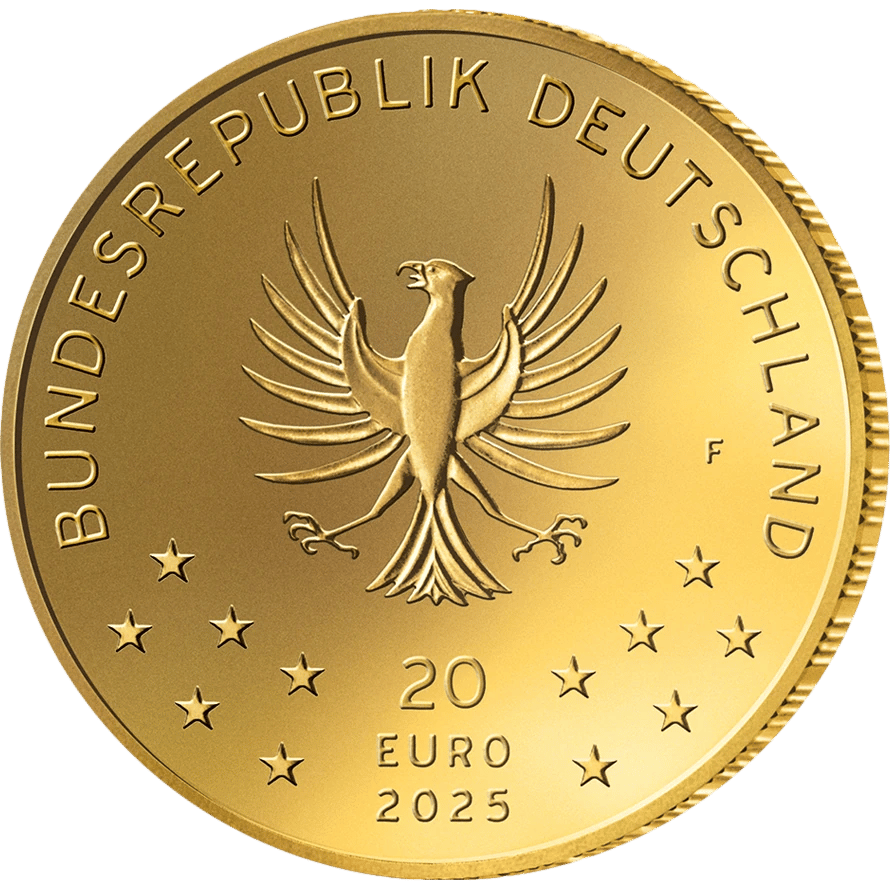
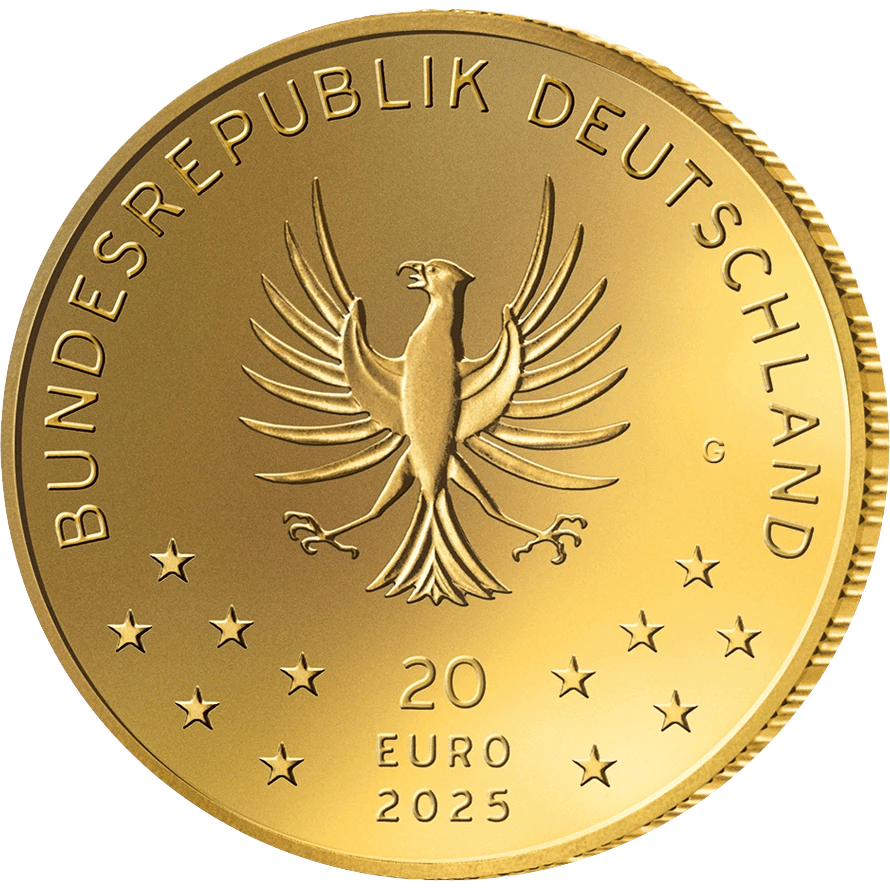
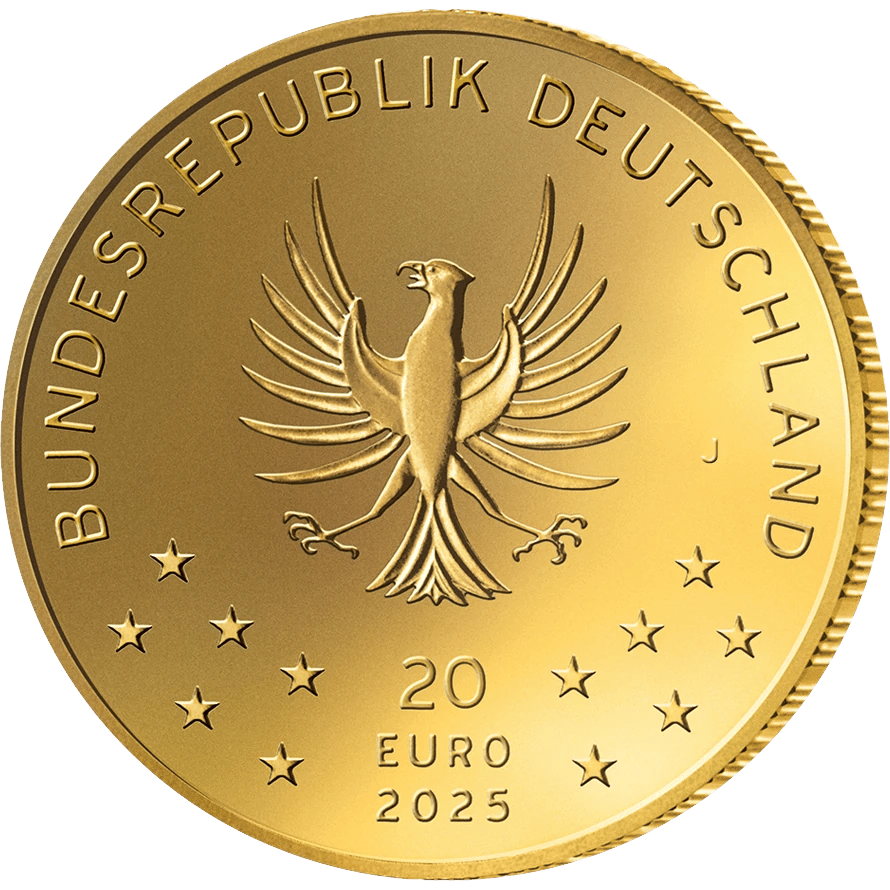
Every issue is struck at five mints. The letter on the value side shows where the individual coin comes from. For the Lynx 2025, it reads:
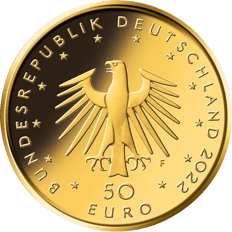
“The coin is struck in equal parts at the mints in Berlin (mint mark ‘A’), Munich (mint mark ‘D’), Stuttgart (mint mark ‘F’), Karlsruhe (mint mark ‘G’) and Hamburg (mint mark ‘J’) in brilliant uncirculated quality.”
Notice, BGBl. 2025 I Nr. 273, translated
This is how it appears in the product names:
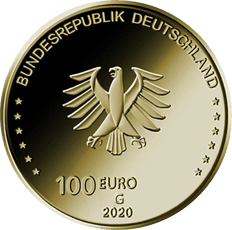
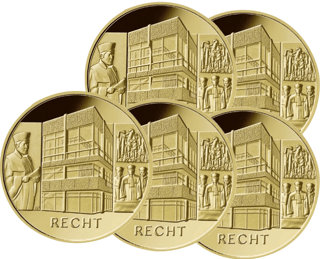 100 euro Law 2021, Complete SetLaw 2021, Complete SetLetters A, D, F, G and JLetters A, D, F, G and JPillars of DemocracyPillars of Democracy

Mint mark A
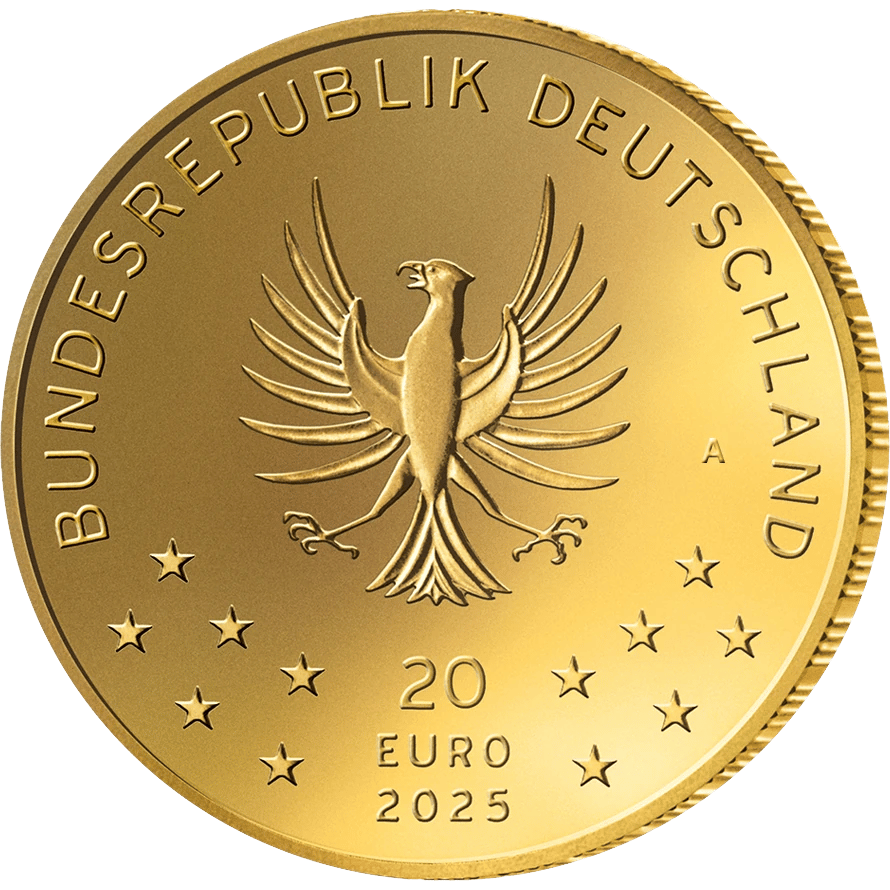
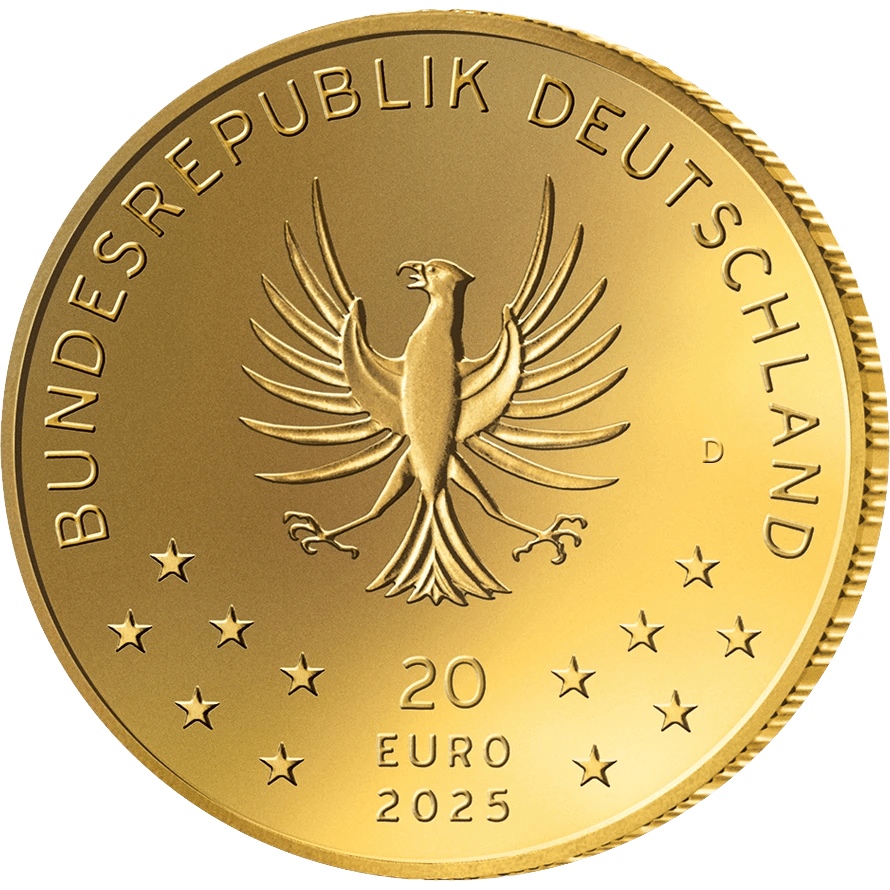
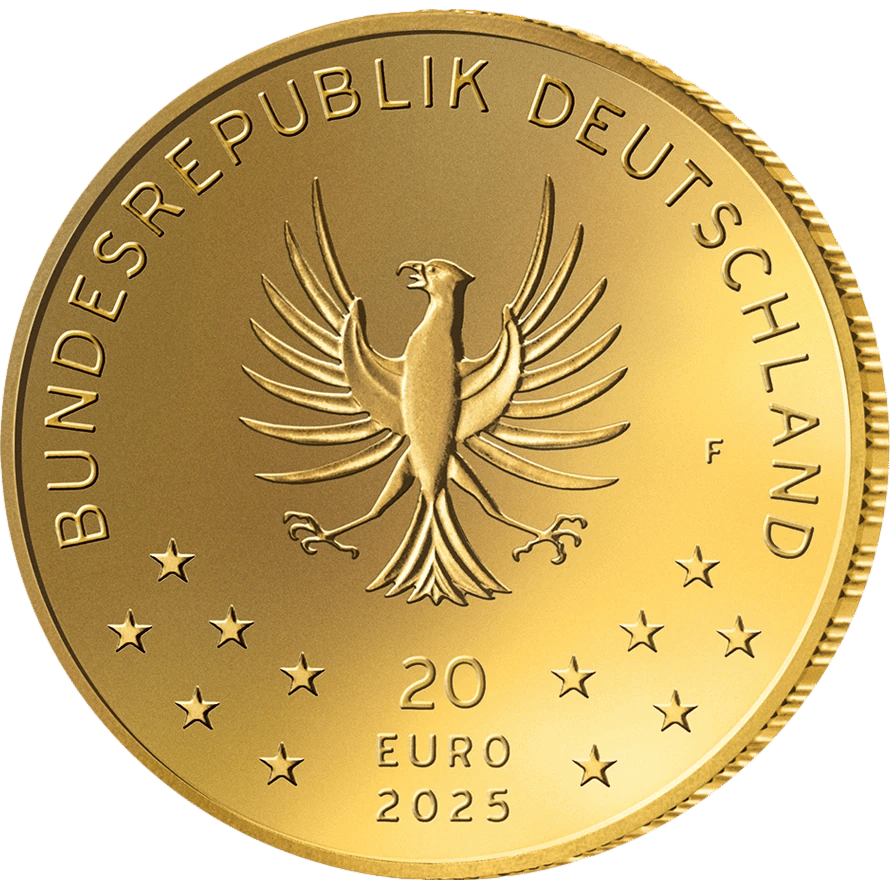
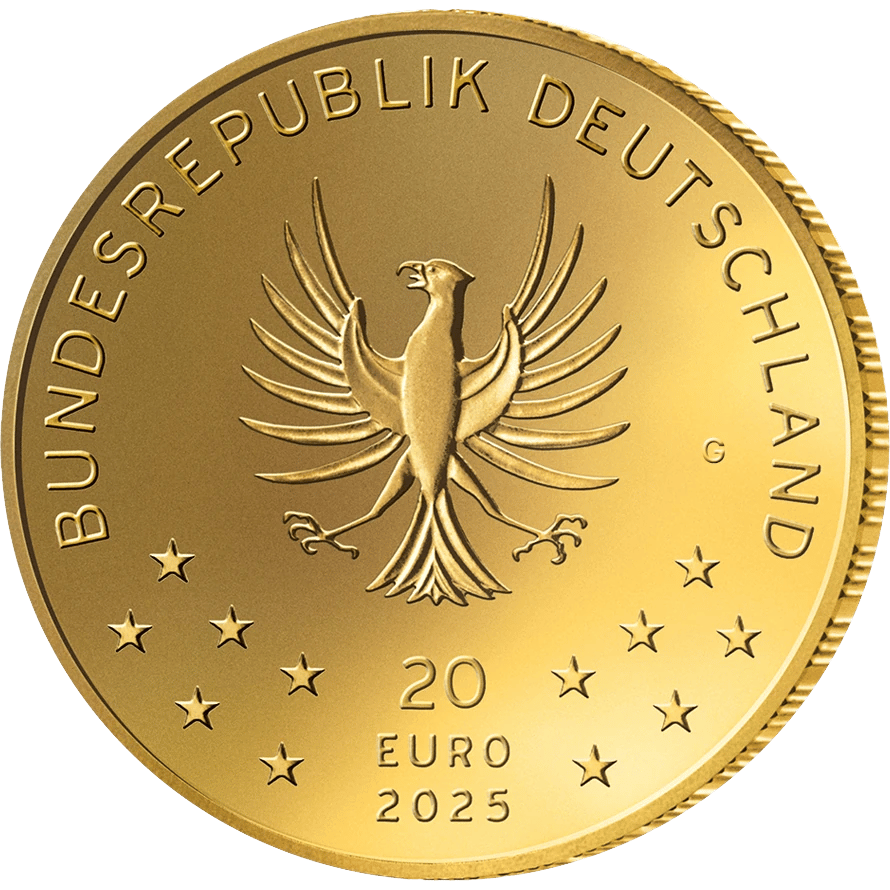
The euro gold coins by size, from 2002 to 2030. The years from 2027 onwards are announced.
Hardly any German gold coin combines national history, craftsmanship and stable fine gold value as impressively as the Goldeuro. Since 2002, the Federal Republic of Germany has issued new designs every year, from UNESCO World Heritage sites to literary masterpieces and musical instruments. The following sections cover the history and background, the various denominations, an overview of all years of issue, the five German mints, as well as information on tax, storage and purchase criteria.
The Goldeuro is an official euro gold coin of the Federal Republic of Germany and also legal tender. Following the great success of the Goldmark marking the farewell to the Deutsche Mark, the Federal Government decided in 2002, with the introduction of the euro, to launch its own series in gold. Since then, at least one new design has appeared every year, honouring a significant building, an event or an aspect of German culture.
What makes this series so special is the combination of numismatic appeal and pure gold value. The coins are made of 999.9 fine gold and carry a face value stamped in euros, yet their actual value lies far above the nominal amount. For many collectors and investors, the Goldeuro is therefore the centrepiece of any collection of German gold coins, uniting investment and passion in one.
The series began in 2002 with the theme Introduction of the euro / transition to monetary union. From 2003 followed the long, much-noted series on the UNESCO World Heritage, which concluded in 2019 with Speyer Cathedral. Between these milestones, the German mints struck designs that today read like a small cultural encyclopaedia of Germany.

After the launch in 2002, the Goldeuro depicted the World Heritage town of Quedlinburg in 2003, followed by the old town of Bamberg, classical Weimar, the Hanseatic city of Lübeck and the historic old town of Goslar. Later came the Würzburg Residence, Wartburg Castle, Aachen Cathedral and the Garden Kingdom of Dessau-Wörlitz. A highlight for many collectors are the Luther Memorials and the Upper Middle Rhine Valley, designs closely tied to German history.
From 2020, the three-part series Pillars of Democracy, with the themes Unity, Justice and Freedom, replaced the UNESCO theme. Since 2023, the Goldeuro has been dedicated to German literature: the series began with Goethe's Faust, followed by further masterpieces of German literature. This thematic variety keeps the series alive and makes each new year of issue a small event in itself.
The Goldeuro tells German history in gold: each edition is a chapter of its own.
For many years, the classic Goldeuro was issued as a 1/2 oz gold coin with a face value of 100 euros. Over time, further weights were added, so that today several denominations are available for different budgets:
Those wishing to start collecting the series will find an affordable entry point in the smaller denominations. It is also worth taking a look at classic gold bars, which as pure investment gold combine well with a Goldeuro collection. All issues have a fineness of 999.9/1,000.
So that no mint is left out, the Federal Republic distributes the production of the Goldeuro across all five German mints. Each has its own mint mark, found as a small letter on the coin. This gives collectors an appealing detail: a complete set comprises all five letters of a given year.
| Location | Mint mark | Mint |
|---|---|---|
| Berlin | A | Staatliche Münze Berlin |
| Munich | D | Bayerisches Hauptmünzamt |
| Stuttgart | F | Staatliche Münzen Baden-Württemberg / Stuttgart |
| Karlsruhe | G | Staatliche Münzen Baden-Württemberg / Karlsruhe |
| Hamburg | J | Hamburgische Münze |
While the designs and mint marks distinguish the individual issues, it is the gold price per ounce that remains decisive for the pure material value. Those who view the Goldeuro as an investment therefore focus mainly on the fine weight, whereas collectors particularly value the variety of letters and designs.
Over the years, an impressive series has emerged. Mintages ranged from around 500,000 pieces in the early years to significantly smaller quantities more recently, one reason why older years of issue are especially sought after by collectors. The following overview summarises the most important issues:
| Year of issue | Design | Mintage (approx.) |
|---|---|---|
| 2002 | Introduction of the euro | 500,000 |
| 2003 | Quedlinburg | 400,000 |
| 2005 | 2006 FIFA World Cup | 350,000 |
| 2008 | Old town of Goslar | 320,000 |
| 2012 | Aachen Cathedral | 270,000 |
| 2015 | Upper Middle Rhine Valley | 163,000 |
| 2017 | Luther Memorials | 158,000 |
| 2019 | Speyer Cathedral | 155,000 |
| 2020-2022 | Pillars of Democracy | 125,000-175,000 |
| from 2023 | Masterpieces of Literature | 165,000-175,000 |
A historical curiosity even made headlines in 2019 and 2020: because the gold price rose sharply after the official issue price had been set, the face-value issue price of some coins slipped below the pure fine gold value. Demand was correspondingly high, and numerous years of issue sold out quickly. Those wishing to complete the entire collector's coin series must usually search the secondary market for older issues today.
As investment gold, the Goldeuro benefits from an important tax feature: the sale of investment gold in Germany is exempt from VAT under § 25c UStG. For coins with high collector value, the tax classification may differ; in individual cases it is worth consulting a tax advisor.
Tax information
If physical gold is held for longer than one year, any later sales profit is, under current German law, exempt from income tax. This information is general in nature and does not replace individual tax or investment advice.
For storage, a secure location is recommended, a bank safe deposit box or a high-quality home safe. To preserve the delicate mint lustre, the coins should be stored protected from contact. Suitable accessories such as coin capsules or a coin case protect against scratches and fingerprints and keep a growing collection organised.
Unlike pure investment classics such as the Krugerrand or the Vienna Philharmonic, the Goldeuro combines both investment and collector appeal. While bullion coins score points with the lowest possible premium over the pure gold value, the Goldeuro impresses with changing designs, limited mintages and German origin.
Those wishing to build a broadly diversified collection often combine the Goldeuro with international classics such as the Canadian Maple Leaf or the Swiss Vreneli. This creates a portfolio that combines national collector appeal with worldwide tradability. Within German minting tradition, the related series Goldeuro Deutscher Wald is also worth a look.
A Goldeuro is a long-term acquisition, so it is worth taking a careful look before buying. The most important criteria at a glance:
At Kettner Edelmetalle, every coin undergoes an ISO-compliant authenticity verification before being shipped with insurance. This means the Goldeuro can be purchased online with the same confidence as in a personal consultation. Those wishing to invest regularly will also find suitable savings plan products for continuous wealth building in precious metals.
The first Goldeuro was issued in 2002 to mark the introduction of the euro. Since then, the Federal Republic of Germany has released new designs every year: initially for the UNESCO World Heritage series, later for the Pillars of Democracy, and most recently for masterpieces of German literature.
The best known is the 1/2 oz coin with a face value of 100 euros. There is also the 1/4 oz (50 euros), the 1/8 oz (20 euros), and the rare 1 oz issue from 2002 with a face value of 200 euros. All issues are made of 999.9 fine gold.
The letters are mint marks of the five German mints: A stands for Berlin, D for Munich, F for Stuttgart, G for Karlsruhe and J for Hamburg. Collectors often aim for a complete set with all five mint marks of a given year.
Investment gold is exempt from VAT in Germany under § 25c UStG. For issues with a pronounced collector character, the classification may differ. For your personal situation, tax advice is recommended.
The Goldeuro combines pure gold value with collector appeal. Its material value is based on the current gold price, while rare years of issue can also carry an additional collector premium. As part of a broadly diversified precious metals investment, it is a popular choice; however, performance cannot be guaranteed.
Ideal is storage protected from contact in a coin capsule, supplemented by a home safe or a bank safe deposit box. This way, mint lustre and condition are preserved long-term, important factors for a later resale.
 Gold Euro
Stay informed with product launches, financial news and exclusive offers. Sign up for our free newsletter today.
By entering your email address and clicking the "Submit" button, you give the following consent: "I agree to be informed by email about new products, financial news and exclusive offers, and therefore consent to the processing of my email address for the purpose of sending the newsletter. I can revoke this consent at any time without giving reasons, with effect for the future. The lawfulness of processing carried out prior to revocation remains unaffected."