


Only 1 left to order
Deutsche Mark 4 Gold Coins Fractional Set Reverse Proof 2026 (Mintage: 99 | Proof Design)
£2,925.55
VAT-free and excl. shipping
Ships from 05/03/2027

 More than 310,000
 Over 30 years
 Secure shipping
 Google: 4.9/5
Here you will find our rarest pieces! These extraordinary limited coins or rare bars are also suitable for investors due to their appreciation potential. These pieces are often already sold out worldwide. Take your chance now and don't miss out on our limited rarities!


Limited collector's coins and rarities represent the exact opposite of mass-produced goods: strictly limited mintages, elaborate minting techniques and designs that exist in this form only once. Unlike classic bullion coins, these pieces do not follow the gold or silver price alone, but rather demand for rarity. This guide explains what defines a limited mintage, which finishes and grades of preservation determine value, how mintage size and certificate affect collectability, and what to look out for when buying.
The term rarity describes precious metal products whose mintage is deliberately kept low, in some cases only 99, 250 or 500 pieces worldwide. This artificial scarcity creates a collector's market in which price is determined not by pure metal weight alone, but by the combination of rarity, design, minting quality and condition. While a common bullion coin appears in mintages of millions, many of these pieces sell out quickly worldwide and are then only available on the secondary market.
Anyone wishing to first familiarise themselves with the broader field of collector's coinage will find a good starting point in the range of collector's coins. The rarities presented here form the most exclusive peak of this range: pieces with particularly low numbers and elaborate craftsmanship. The distinction from pure bullion coins is fluid, as some rarities combine collector's value and precious metal content in a single product.
The decisive difference lies in the logic of value. With a gold bar or a standard bullion coin, the price is determined almost entirely by the current precious metal price. With a rarity, a collector's premium is added, which is derived from the mintage size, the popularity of the series and the grade of preservation. This makes these pieces a complement that can develop more independently of daily prices, without this implying any promise of return.
The value of a rarity is largely created at the mint. Elaborate finishing techniques accentuate the relief, create colour and gloss contrasts and turn each piece into a small work of art. The following techniques are the most common for limited precious metal mintages:
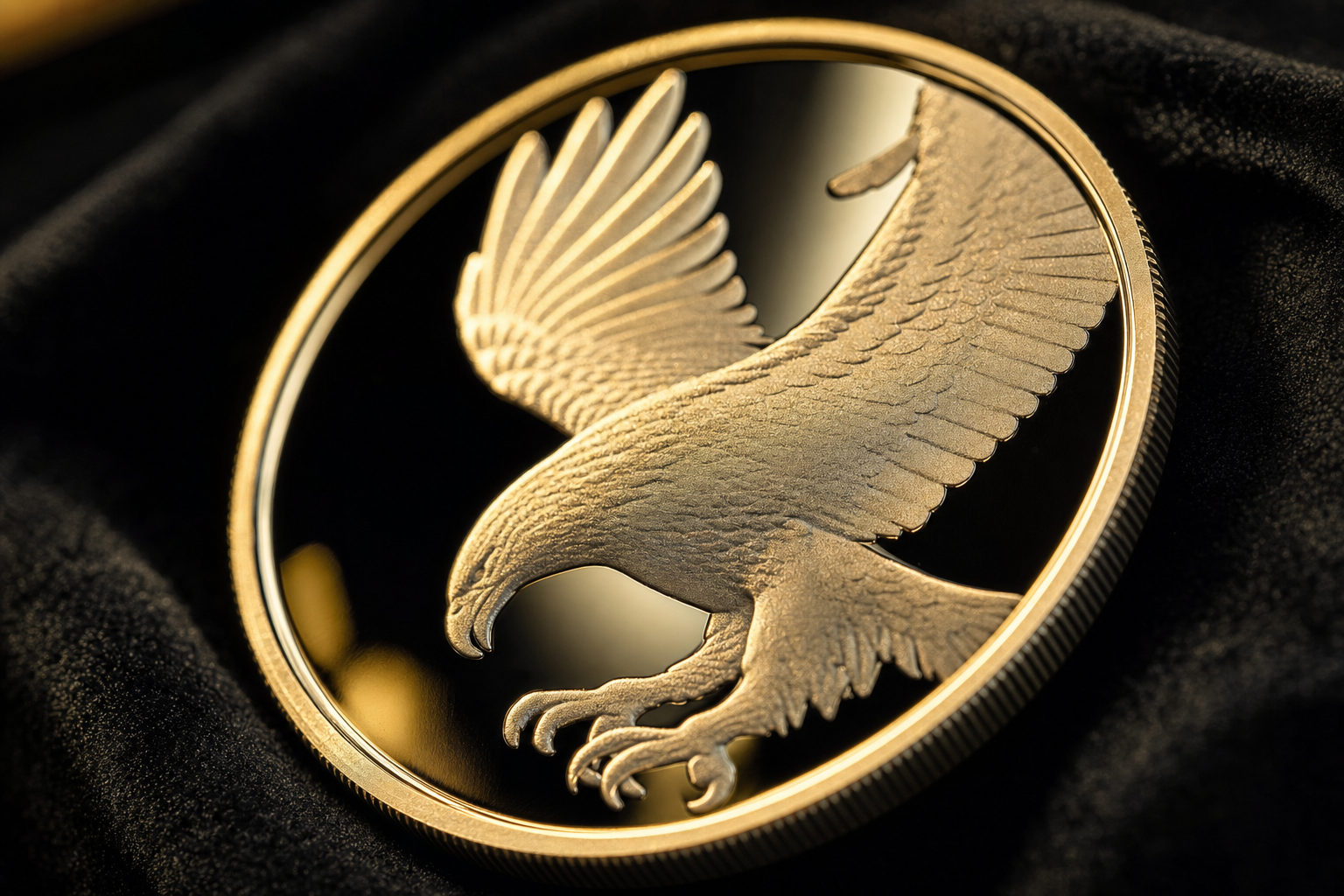
The finishing of silver coins in particular has diversified greatly in recent years. Partially gilded editions can be found grouped together in the range of partially gilded silver coins, coloured mintages in the category of coloured silver coins. Anyone who finds the colour effect of precious metals appealing should also take a look at platinum, which is used for dark, high-contrast finishes.
Every additional work step, from multiple striking and hand polishing to sandblasting for the final touch, increases effort and the risk of rejects. This is precisely why minting quality is clearly reflected in the price premium. The grade of preservation is therefore not a minor detail, but a key purchasing criterion.
The mintage is the most important figure for a rarity. It indicates how many pieces are struck worldwide, and is thus directly responsible for the rarity. Mintages ranging from as few as 25 to a few thousand pieces are common for limited mintages; pieces with a three-digit mintage are particularly sought after.
Almost every rarity comes with a certificate of authenticity bearing an individual serial number. It documents membership of the limited series and is just as important for a later resale as the coin itself. Case, capsule and certificate form a single unit and should always be kept together and stored with care. Anyone who collects several pieces from a series with an identical serial number further increases the appeal of the ensemble.
Why the certificate secures the value
Without the matching certificate and original case, it is difficult to prove that a rarity is what it claims to be: a numbered piece from a strictly limited mintage. Without this proof, the collector's value can drop noticeably.
Many rarities are part of a series whose designs change from year to year. For many collectors, the appeal lies in assembling a series in its entirety. Successful ranges are often continued with a new design or reissued as a special edition.
African and Australian animal worlds are among the most sought-after themes. Series centred on the Big Five can be found, for example, among the Big Five silver coins and the Big Five gold coins, while the African Safari series portrays the natural wonders of the continent. Anyone enthusiastic about fauna as a theme will find a broad range under land animals and marine animals.
Even established bullion classics appear as limited special finishes. The world-famous Krugerrand, for example, is available as a Proof, with a privy mark or as a fractional set: versions that go far beyond the regular bullion mintage. The Maple Leaf and the Lunar series, with its yearly changing zodiac signs, are also popular as collector's editions.
Besides nature and classics, modern themes also shape the market: zodiac sign sets, historical commemorative designs or mintages featuring well-known personalities. This variety also makes rarities interesting as a gift idea, since a fitting design can be found for almost any interest.
The grade of preservation describes the minting quality and condition of a coin and, alongside the mintage, is the most important driver of value. The most common designations in the rarities segment are:
For collectors, the Proof finish is the gold standard, because it showcases the design most impressively. Handling is also important: fingerprints or scratches permanently diminish the grade of preservation. Suitable coin capsules and coin cases reliably protect the sensitive surface.
The tax classification depends heavily on the precious metal. Investment gold is generally exempt from VAT in Germany; this applies to many gold mintages regardless of whether they are a bullion or collector's issue. Accordingly, gold rarities are often traded VAT-free.
For silver, platinum and copper, on the other hand, VAT is payable. For silver collector's coins, the margin scheme often applies, under which tax is levied only on the trading margin, which can lower the final price compared to standard taxation. An overview of the entire silver range is available in the silver category, while the tax-privileged gold products can be found under gold.
Tax note
Under German VAT regulations, investment gold is exempt from VAT. Different rules apply to silver and other metals. This information does not replace individual tax advice.
With rarities in particular, proper storage determines the long-term preservation of collector's value. Since value lies not only in the metal but also in the surface, case and certificate, careful handling is essential.
For storing several pieces, coin boxes and coin pouches are well suited, combining order and protection. The complete range for storage can be found in the accessories category.
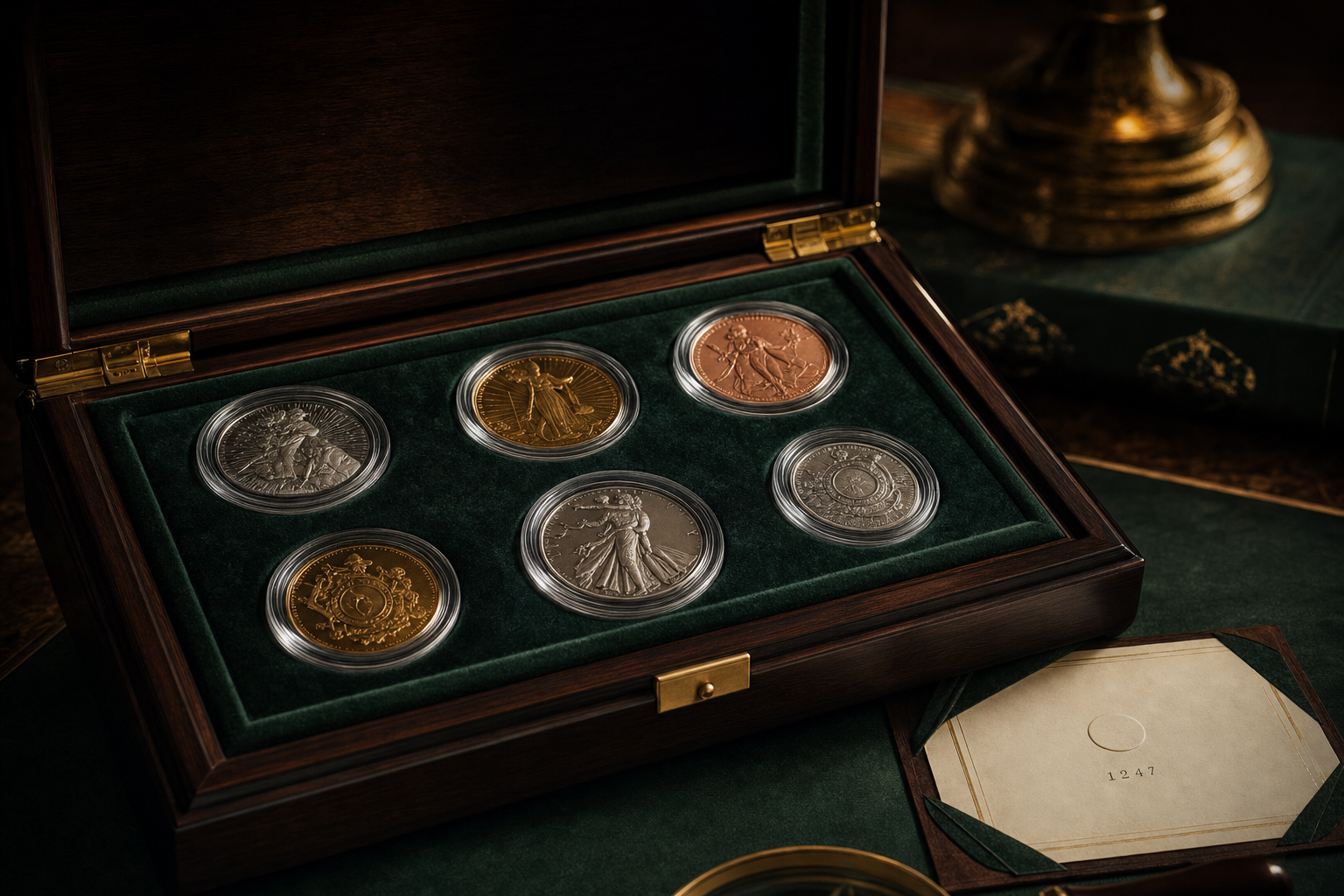
Anyone purchasing a rarity should consider several factors together, rather than focusing on price alone. The following criteria help with the assessment:
As a German family business with over 200,000 satisfied customers and ISO-compliant authenticity verification, Kettner Edelmetalle places great importance on verified provenance and secure, insured shipping. Anyone who deliberately regards rarities as a complement to classic bullion coins combines the joy of collecting with real precious metal value.
A rarity is struck in a strictly limited mintage and given an elaborate finish. Its value is derived not only from the precious metal content, but also from rarity, design and grade of preservation. Bullion coins, on the other hand, are issued in high mintages and follow almost entirely the daily price of the respective metal.
The mintage determines the rarity. The fewer pieces exist worldwide, the more sought after a piece is among collectors. Mintages of just a few hundred pieces are considered particularly exclusive and are often sold out shortly after release.
For gold, the VAT exemption for investment gold generally applies, which is why gold rarities are usually traded VAT-free. Silver, platinum and copper are subject to VAT; for silver collector's coins, the margin scheme is often applied. For individual cases, tax advice is recommended.
Very important. The numbered certificate of authenticity proves membership of the limited series, while the case protects the coin. Together, both are crucial for a later resale, as missing proof can significantly reduce the collector's value.
Proof, abbreviated PP, is the highest-quality minting technique. The blank and minting die are polished to a high shine, so that the matte relief stands out in sharp relief against a mirrored background. This finish is considered particularly sought after among collectors.
Ideally, storage is in the original capsule, dry, dark and protected from touch. For collections, coin cases or coin boxes are a good choice, while a safe or bank safe deposit box provides additional security. Direct skin contact should be avoided, as fingerprints can permanently damage the surface.
Stay informed with product launches, financial news and exclusive offers. Sign up for our free newsletter today.
By entering your email address and clicking the "Submit" button, you give the following consent: "I agree to be informed by email about new products, financial news and exclusive offers, and therefore consent to the processing of my email address for the purpose of sending the newsletter. I can revoke this consent at any time without giving reasons, with effect for the future. The lawfulness of processing carried out prior to revocation remains unaffected."
