1 Ounce Silver Krugerrand 2026
£54.81
excl. UK import VAT and shipping
Available in 2–3 business days

 More than 300,000
 Over 30 years
 Secure shipping
 Google: 4.9/5

More and more people are choosing to buy silver in order to make an alternative investment or an additional investment alongside gold. Here you will find a large selection of our quality products: silver bars and silver coins.


Of all the metals, pure silver has the whitest colour and reflects the most light. In the middle of the visible spectrum, it can reflect around 98 of every 100 parts of light.
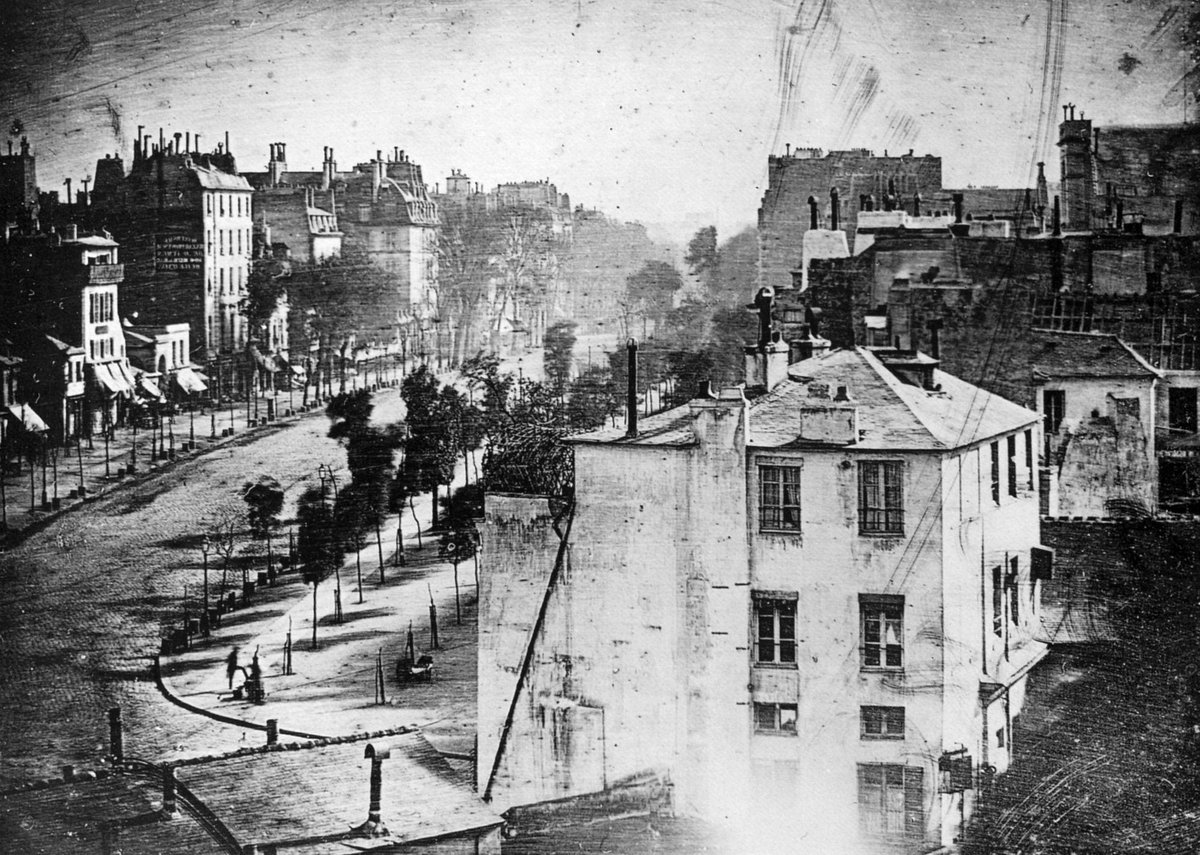
“The mirror with a memory”
Oliver Wendell Holmes on photography in 1859: the mirror with a memory.
The chemical symbol for silver comes from the Latin argentum. The root of the word means “shining, whitish”.
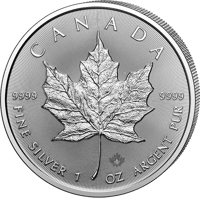 Maple Leaf1 ounce, CanadaFine silver 999.9/1,000
Along the bottom edge it reads ARGENT PUR, French for pure silver.
In 1168, silver ore was found near Christiansdorf. The “Berggeschrey”, as the rush after a silver find was once called, drew miners to the area, and the village became the town of Freiberg. Many of the first miners came from the Harz Mountains, including some from the Rammelsberg near Goslar.
“The Ore Mountains was the most important source of silver in Europe, particularly in the century from 1460 to 1560.”
UNESCO, justification for the Erzgebirge/Krušnohoří Mining Region World Heritage Site, 2019
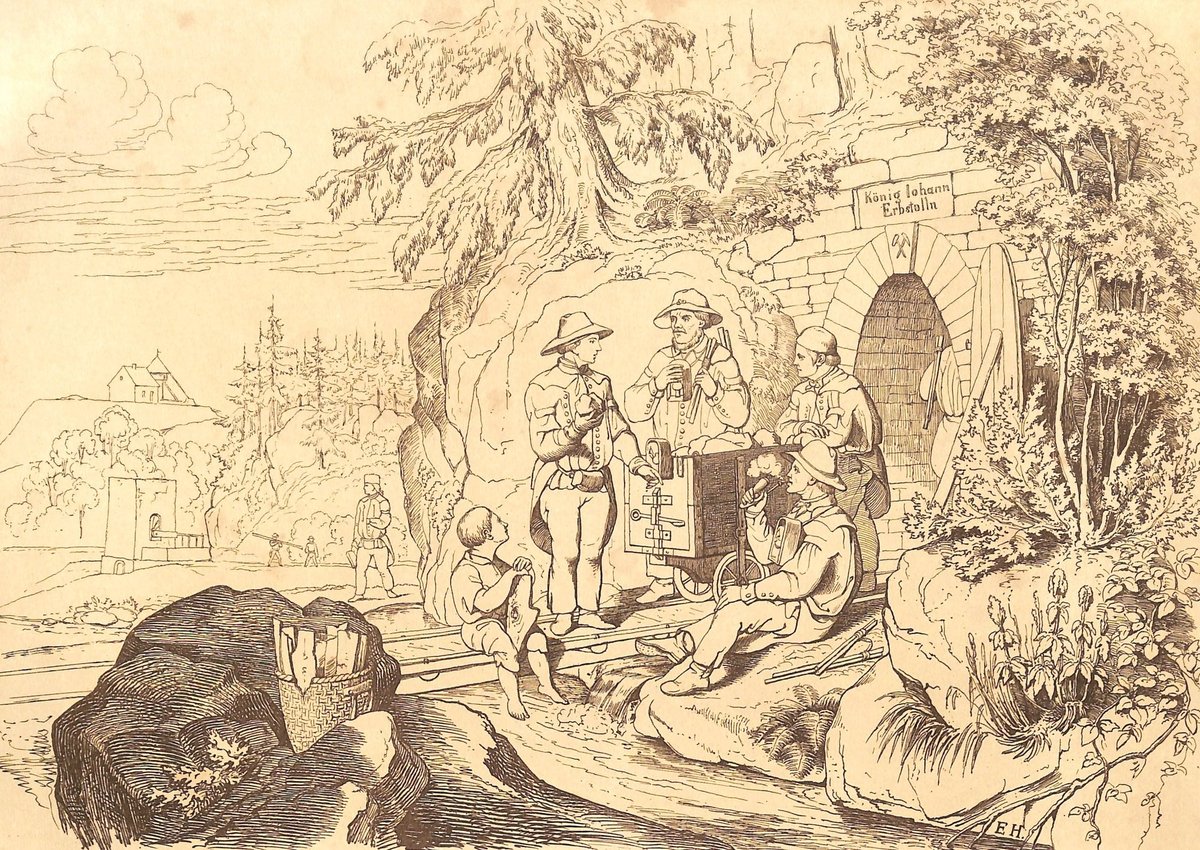
Around 8,000 tonnes of silver came from the Saxon Ore Mountains. That is the estimate of the Saxon State Office for Environment, Agriculture and Geology.
The Freiberg mines did not reach their highest output until 1884, with around 35 tonnes of silver. Mining in Freiberg was shut down in 1969.
The Freiberg Mining Academy was founded in 1765. It is the oldest mining academy still in existence.
At the Rammelsberg near Goslar, mining ended on 30 June 1988, after around 1,000 years.
The years are spaced to scale.
Joachimsthal lies in the Bohemian part of the Ore Mountains and is now called Jáchymov. On 9 January 1520, permission was given there to strike large silver coins, each weighing around 28 grams. Named after their town, they were called Joachimsthalers, and soon simply thalers.
On 6 July 1785, the Continental Congress decided that the money unit of the United States should be the dollar.
“Resolved, That the money unit of the United States of America be one dollar.”
Resolution of the Continental Congress, 6 July 1785
The Coinage Act of 1792 measured the new dollar against the Spanish silver coin. Each dollar was to be worth as much as a Spanish milled dollar, the silver peso.
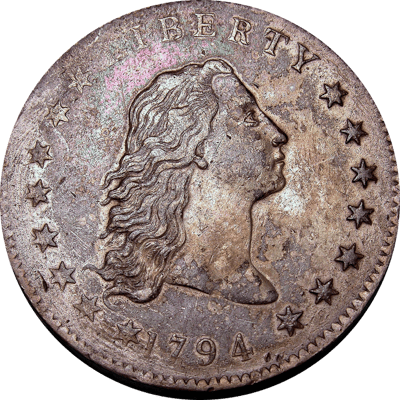
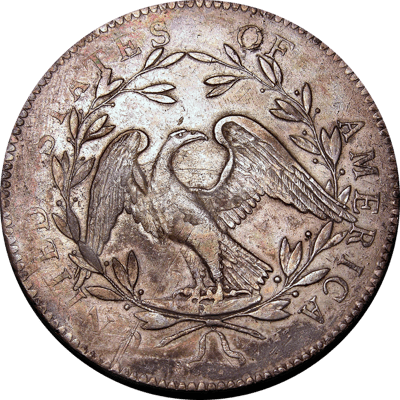
Its official name was real de a ocho, the eight‑real piece. In English it was called the Spanish dollar or the piece of eight.
According to the Smithsonian in Washington, the Mexican eight‑real piece was the most widely circulated coin in the world when the United States was founded. It remained legal tender in the United States until 1857.
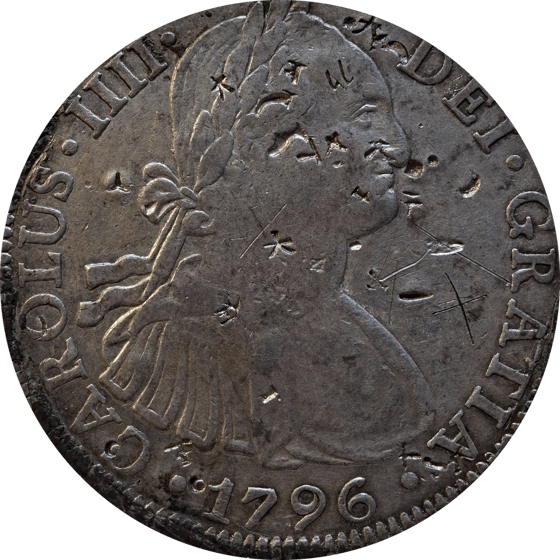
The founding of Manila in 1571 created the first direct and lasting trade link between the Americas and Asia.
In 1545, silver was found at Potosí in the Andes. According to UNESCO, the city was considered the largest industrial complex in the world in the 16th century. Its silver went mainly to Spain.
The back of the coin shows the two pillars after which the eight‑real piece was also called the pillar dollar in English. With this coin, the Perth Mint recalls the year 1800, when Governor King gave the Spanish dollar a fixed value in New South Wales.
In French, argent means both silver and money. The same is true of airgead in Irish and arian in Welsh. In Latin America, the Spanish plata stands for silver and for money.
| Language | Silver | Money |
|---|---|---|
| French | argent | argent (the same word) |
| Irish | airgead | airgead (the same word) |
| Welsh | arian | arian (the same word) |
| Spanishin Latin America | plata | plata (the same word) |
| English | silver | money |
It gave the rupee its name.
銀 means silver, and in Chinese 行 means “shop”. In Japan, the word was written into the regulations on national banks in 1872. Another option was 金行, with the character for gold. The choice fell on 銀行, which is said to have sounded better.
From it come the Spanish dinero and the d of old British pence. The £ sign comes from libra, Latin for pound.
Stay informed with product launches, financial news and exclusive offers. Sign up for our free newsletter today.
By entering your email address and clicking the "Submit" button, you give the following consent: "I agree to be informed by email about new products, financial news and exclusive offers, and therefore consent to the processing of my email address for the purpose of sending the newsletter. I can revoke this consent at any time without giving reasons, with effect for the future. The lawfulness of processing carried out prior to revocation remains unaffected."