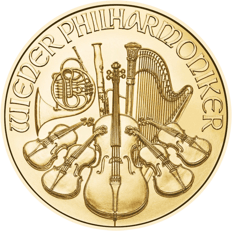
1 Ounce Gold Vienna Philharmonic
£2,904.49
VAT-free and excl. shipping
Available in 2–3 business days

 More than 310,000
 Over 30 years
 Secure shipping
 Google: 4.9/5
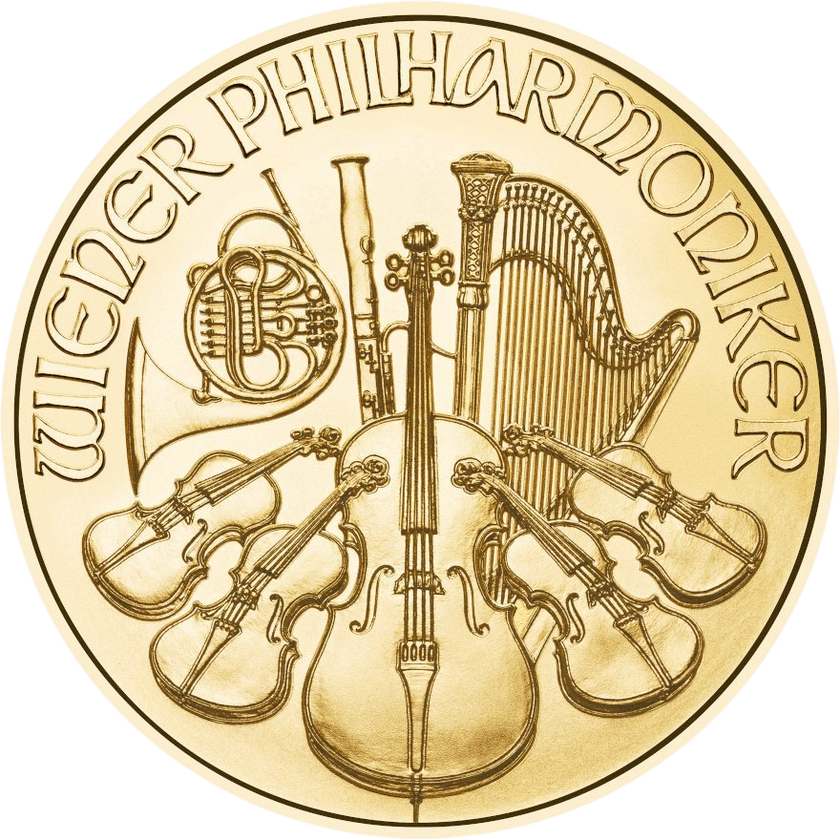
Coins have been struck in Vienna since 1194. Münze Österreich is owned by the Oesterreichische Nationalbank and has been striking the Vienna Philharmonic in gold since 1989.


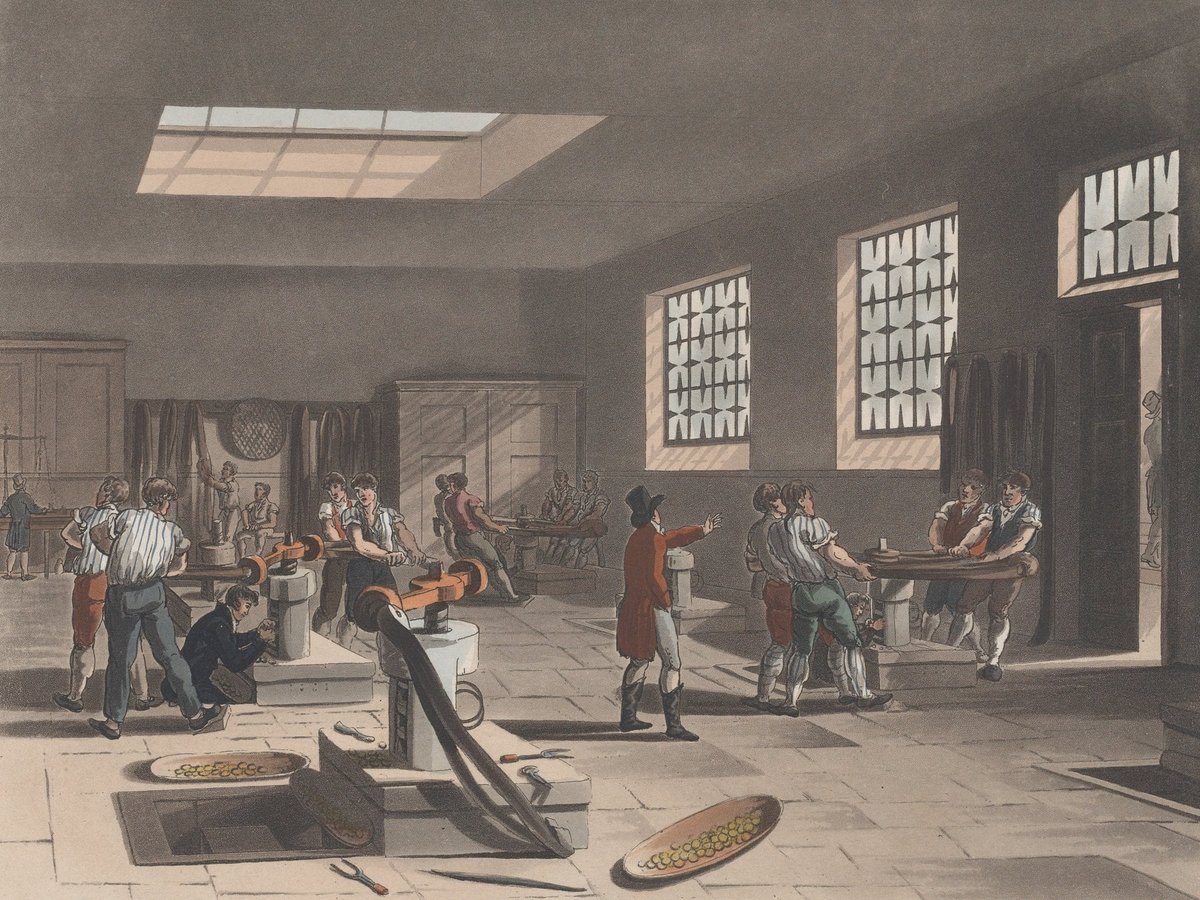
Originally located near the Hoher Markt, the mint is now situated at the Heumarkt in Austria, where its production facility remains to this day. Münze Österreich AG currently produces approximately 450 million coins per year and also operates internationally as a minting institution. It also produces bars, which are manufactured in Switzerland by Argor-Heraeus. Over the years, numerous well-known coin designers have worked for Münze Österreich, including Edwin Grienauer, Hans Köttenstorfer, and Thomas Pesendorfer.


In 1193/94, the Babenbergs moved their mint from Krems to Vienna. From then on, a pfennig was struck in Vienna too; it is first mentioned in a charter in 1204. The Neue Deutsche Biographie considers it likely that the founding of the Hausgenossen of Vienna is linked to the ransom for Richard the Lionheart.
“The Hausgenossen were a body of 48 Viennese burghers to whom minting, money changing and the trade in precious metals in the Duchy of Austria were reserved.”
Wien Geschichte Wiki of the City of Vienna, article “Hausgenossen”
One figure for each of the 48 Hausgenossen. The number is given by the Wien Geschichte Wiki of the City of Vienna.
The Wiki explains the name like this: the body was regarded as part of the ruling prince’s “house” (Haus), that is, his retinue. The striking itself was the work of a craft, the moneyers. Money was changed by employed changers at benches that stood in the open air, at first on the Hoher Markt.
On 7 June 1522, Ferdinand I dissolved the body. In 1524, the mint became a state office. Until then, according to the Wiki, it had been “a domain of Vienna’s wealthy burghers”.
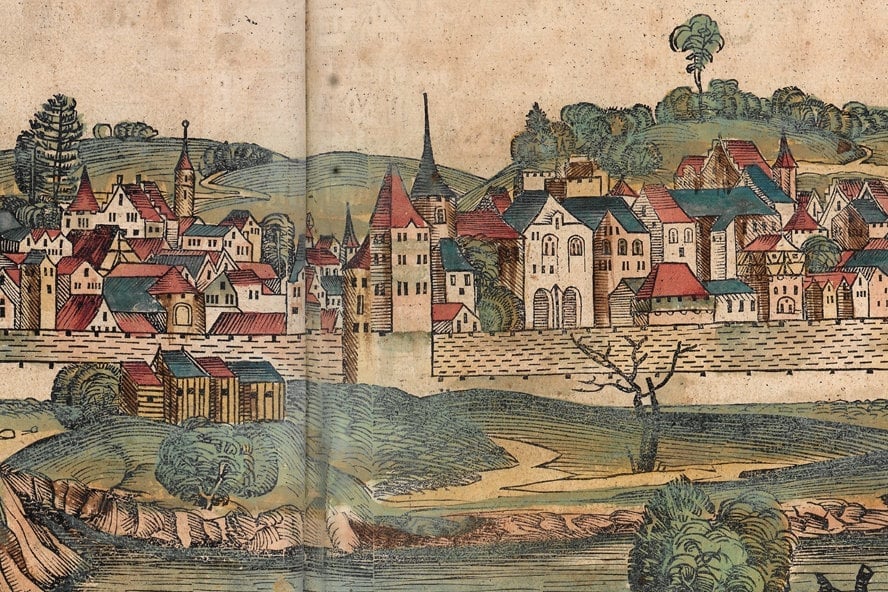
The Vienna Mint has moved many times. The Wien Geschichte Wiki of the City of Vienna lists seven addresses for it. Six lie in the Inner City, the seventh east of the Stadtpark: Am Heumarkt 1.
It started out in the Kammerhof on the Brandstätte; the Wiki says “probably”. Around 1280 it moved into the former residence at Am Hof, and in the late 14th century to the Wollzeile. It stayed there longest, until 1752 according to the Wiki’s list. In 1753, Maria Theresa moved it to the Himmelpfortgasse, to the Winter Palace of Prince Eugene.
There are also two secondary addresses: the Schlagstube in the Landskrongasse, where the moneyers struck the coins, and, from 1621 to 1625, a second mint in the Schenkenstraße.
Years according to the list in the Wien Geschichte Wiki; other sources sometimes give different ones. The bars show the length of the stay, and the positions of the dots are simplified.
At the end of the line stands the building at Am Heumarkt 1. It is a protected monument. At the top, above the centre of the façade, stand four figures by Joseph Klieber: Hermes, Apollo, Artemis and Aphrodite. They embody the coinage metals zinc, gold, silver and copper.
“The magnificent building is still a place of production and administration.”
Münze Österreich, company history
A coining die begins with a large plaster model, made in the mint’s own engraving department. Münze Österreich describes the next step like this:
“First, the plaster model made in the engraving department is scanned with digital technology, and the die is then machined true to the original using a milling cutter.”
Münze Österreich, guide “Werkzeugbau”
Circles and section at the same scale. The model’s measurements are given by the Oberösterreichische Nachrichten (2016). The mint’s silver‑niobium coins, for example, measure 34 millimetres.
In 2016, the newspaper Oberösterreichische Nachrichten reported how large such a model is: 18 centimetres in diameter. According to the same report, the relief may be no more than one millimetre high.
For proof coins, according to the mint, the die alone goes through 22 steps. Münze Österreich calls a coin “Handgehoben” (hand‑lifted) if it is struck as a first strike with a new die, as the first piece of a series. It is packed individually straight after striking.
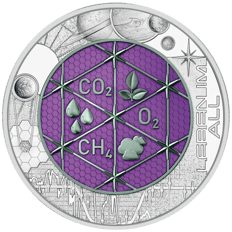
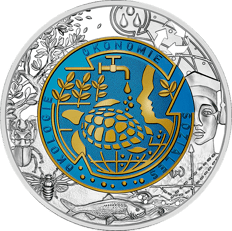
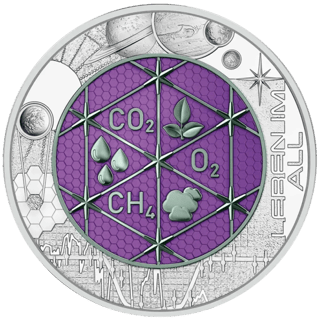
Since 2003, Münze Österreich has struck coins with a core of niobium. On its own, the metal is light grey. Even so, the cores glow, for example in violet on the 2022 coin “Leben im All” (Life in Space). Nothing is coloured in the process:
“What is special is that the colour is not applied. … This technique is called ‘anodic oxidation’. So nothing is lacquered.”
Münze Österreich, information page “Silber‑Niob‑Münzen” (archived version, 2016)
The section is greatly exaggerated in height and not to scale. The layer is transparent; only the reflected light is drawn in violet. Münze Österreich does not give the diameter of the core, so it is drawn only schematically.
When a current is applied, a wafer‑thin, transparent layer of oxide grows on the niobium. Light is reflected at its upper surface, and a second time at the metal beneath. The two rays overlap, and depending on the thickness of the layer, a different colour remains. Physicists call this interference; it is familiar from soap bubbles.
The thickness depends on the voltage. With every volt, the layer grows just over two millionths of a millimetre thicker, according to measurements published by Krzysztof Fitzner and Michał Stępień in 2023 in the journal “Materials”.
For “Leben im All”, Münze Österreich gives these details: a ring of silver 900/1,000 with 9.00 grams of fine silver, inside it the core of niobium, together 16.50 grams, 34 millimetres in diameter, face value 25 euros.
The first of these coins appeared on 29 January 2003. It was preceded by two years of preparatory work, together with the company Plansee from Tyrol.
Every face value comes with a question: who has to accept the coin, and how many of them? In Austria, the answer lies in § 8 (3) of the Scheidemünzengesetz, the coinage act of 1988. Coins are counted per single payment.
The Oesterreichische Nationalbank and Münze Österreich must accept valid coins without limit. The federal government, the states and the municipalities must accept up to one hundred coins, everyone else up to fifty, of which commemorative and gold coins of Münze Österreich only up to ten.
One dot per coin, per single payment, under § 8 (3) of the Scheidemünzengesetz 1988. For all other persons, the limit of ten coins applies to commemorative and gold coins of Münze Österreich, and there is also a maximum amount per payment.
The 2005 amendment added a maximum amount per payment to the limit of ten coins. The government bill gives the reason: with coins of unusually high face value, private individuals in particular can be put at a disadvantage if they cannot accept such a coin at all because of the large “amount of change” required. Moreover, the commemorative and gold coins of Münze Österreich are legal tender only in Austria, not in the other countries of the EU. This does not apply to the 2‑euro commemorative coins, which are valid throughout the euro area.
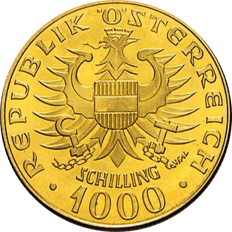
From 1989 to 2001, the Philharmonic carried a face value in schillings.
The same workshop also strikes the small change. Münze Österreich makes the euro and cent coins for circulation on behalf of the Nationalbank, as required.
The Austrian sides were designed by Josef Kaiser, a professor at the University of Applied Arts Vienna. The three smallest coins show flowers: the gentian on the 1‑cent coin, the edelweiss on the 2‑cent coin and the primrose on the 5‑cent coin. The 20‑cent coin shows Belvedere Palace, the 50‑cent coin the Secession.
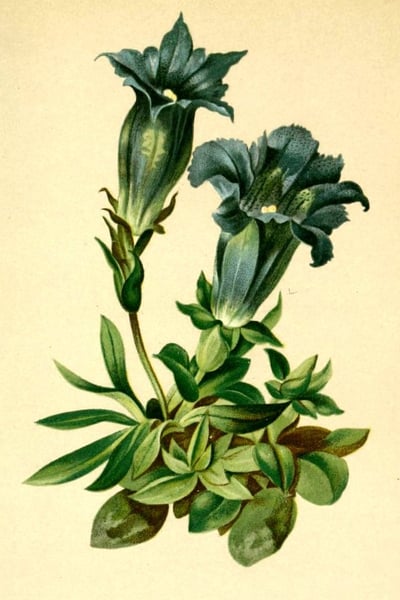 1 cent16.25 mmGentian
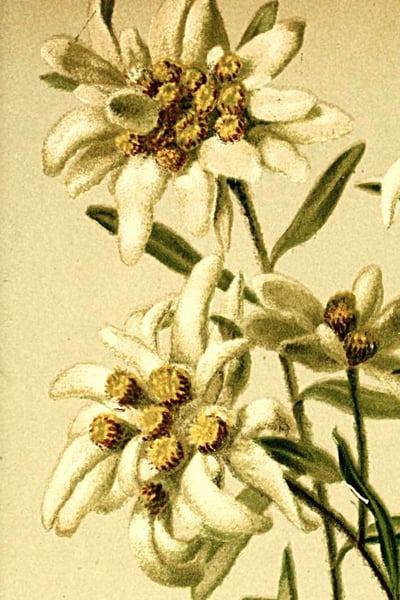 2 cent18.75 mmEdelweiss
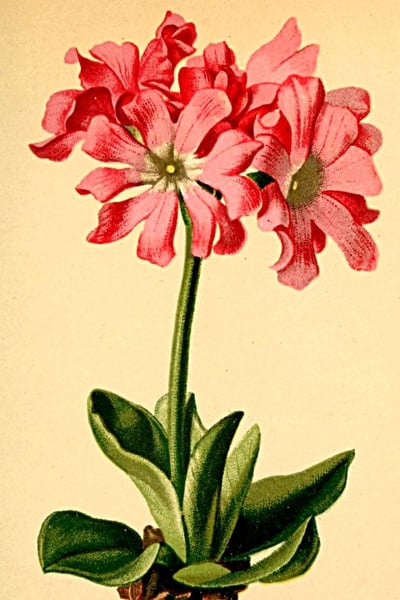 5 cent21.25 mmPrimrose
The circles show only the size of the coins, at the same scale, based on the measurements of the European Central Bank. The plates from Anton Hartinger’s “Atlas der Alpenflora”, Vienna 1882, show plants of the Alps, not the coin designs.
According to Münze Österreich, the face value appears not only on the common side but also on the national side.
“All euro coins struck in the period from 1998 to 2002 bear the year 2002.”
Münze Österreich, “Der Euro”
Authenticity
Every piece bears the mark of Münze Österreich. Before it goes out to you, we check it ourselves.
Every bullion coin bears the design of its mint and the year it was struck, and almost every one its weight and fineness.
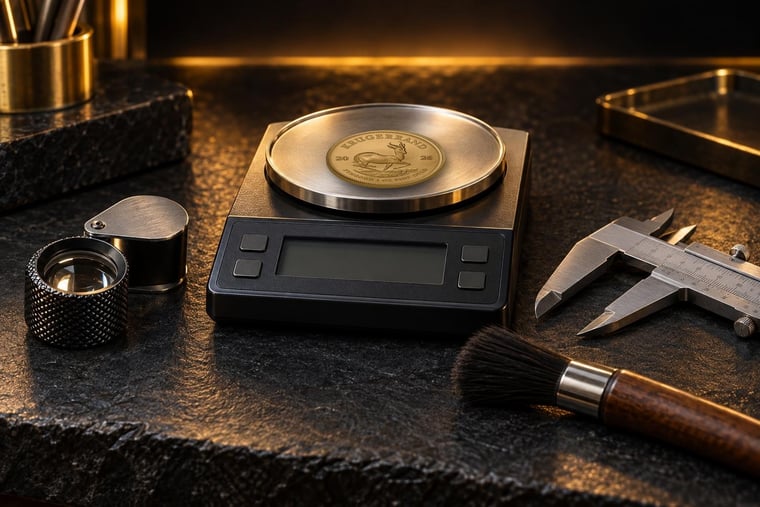
In our CCTV-monitored high-security area, two specialists check every order following the four-eyes principle, including its weight and, by X-ray, its authenticity.
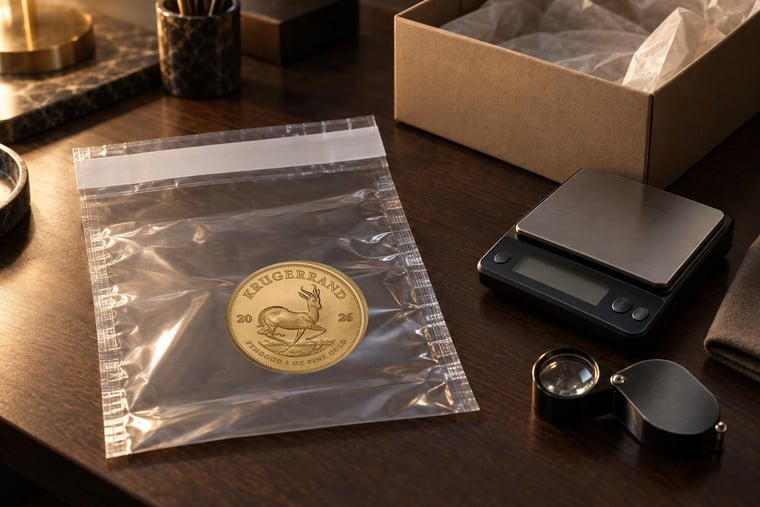
We then seal your order in a security bag that can only be opened once. You will be the first to open it.
Our testing methods
The house
Sources: manufacturer’s details, as of 14 November 2026
The Münze Österreich AG is one of Europe's most traditional mints and the official state mint of the Republic of Austria, headquartered at Heumarkt in Vienna. Its presses produce globally sought-after bullion classics such as the Vienna Philharmonic as well as historic circulation coins, commemorative coins and certified gold bars. This guide sheds light on the mint's history, minting technology, product range, authenticity and quality standards, tax particulars, and what matters when buying coins struck in Vienna.
The roots of coin minting in Vienna go back around 800 years. Since 1834, the mint has been located at Heumarkt in Vienna, having previously been based near the Hoher Markt. As the sole mint of the Republic of Austria, it is responsible for producing the official circulation coins as well as a broad range of bullion and collector's coins.
In its current legal form, Münze Österreich was established in 1989 through the conversion of the Austrian Hauptmünzamt (Principal Mint Office) into a public limited company and its subsequent transfer to the Oesterreichische Nationalbank. Previously, the state's minting right lay with the Hauptmünzamt, which was subordinate to the Ministry of Finance, until 31 December 1988. Over the decades, renowned coin artists such as Edwin Grienauer, Hans Köttenstorfer and Thomas Pesendorfer shaped the design profile of the house.
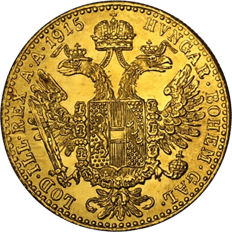
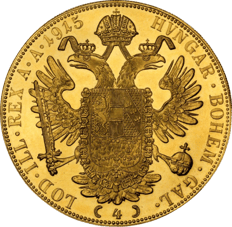
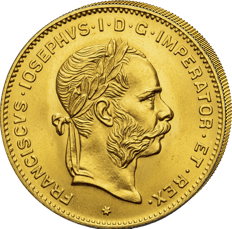
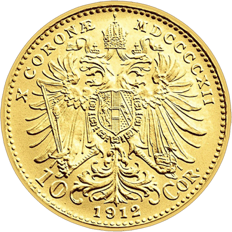
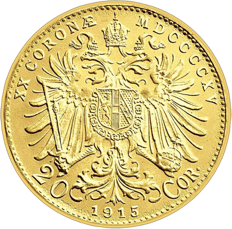
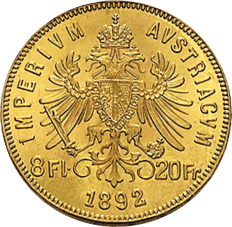
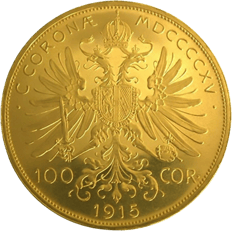
Until the introduction of the euro, the mint produced the circulation coins of the schilling currency. Historic coins such as the Austrian gold crowns or the ducats are still available today as new strikings and document the country's long numismatic tradition. Anyone interested in the full range of historic and modern coins will find a comprehensive overview in the gold coins category.
The development of coin minting can be traced through the history of the mint. Until the 16th century, coins were struck using the hammer die. This was followed by roller minting, screw-press minting and spindle-press minting, before collar minting was introduced from 1830 onwards, producing a consistently round shape and remaining the standard to this day. Modern minting presses can now produce up to 700 coins per minute.

Beyond the minting process itself, Münze Österreich also undertakes the engraving of the minting dies. This expertise dates back a long way historically: as early as 1733, an engraving academy was founded in Vienna, and only the finest engravers were permitted to design coin dies. This depth of craftsmanship is reflected today in the fine detail of both bullion products and elaborate collector's coins alike. Those wishing to protect the results of this craftsmanship will find suitable coin capsules accessories for safe storage.
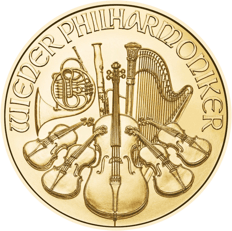
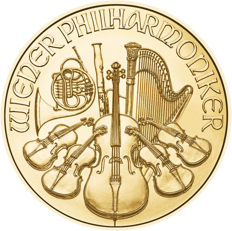
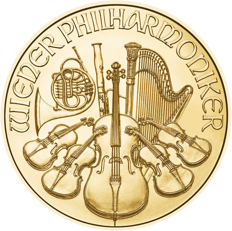
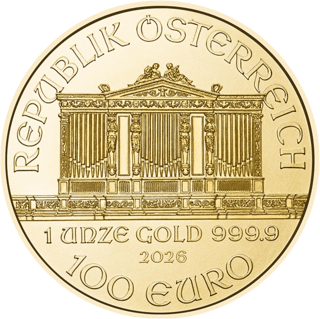
The Vienna Philharmonic is the mint's best-known coin and ranks among the most traded bullion coins worldwide. The coin honours one of the world's most famous orchestras and helps spread Austria's musical tradition. The obverse shows the organ of the Vienna Musikverein, while the reverse depicts various instruments of the orchestra.

The gold version has a fineness of 999.9/1,000 and is therefore struck from pure fine gold. The Vienna Philharmonic in gold is available in several denominations, covering different budgets and investment strategies:
Since 2008, the coin has also been struck in silver, in a 1 oz denomination with a purity of 999/1,000. The Vienna Philharmonic in silver is one of the highest-mintage silver coins in Europe. In 2016, a platinum edition was added as well, likewise in 1 oz with a fineness of 999.5/1,000. The Vienna Philharmonic in platinum rounds off the range for investors wishing to diversify their precious metals portfolio beyond the classic metals.
An orchestra cast in metal: the Vienna Philharmonic combines cultural history with the timeless value of precious metal.
Beyond the Vienna Philharmonic, Münze Österreich's range includes numerous coins steeped in tradition, some of which are continued today as new strikings:
This diversity makes the mint appealing both to investors and to collectors seeking numismatically valuable editions. For silver enthusiasts, the silver coins overview offers further thematic series.
In addition to coins, the mint also produces bars. These are made in cooperation with the Swiss refinery partner Argor-Heraeus and carry the coveted Good Delivery status of the London Bullion Market Association (LBMA). This internationally recognised certification guarantees the highest level of security and quality: bars with this status are accepted and traded worldwide.
The bar range includes several formats and versions:
A wide selection of formats can be found in the gold bars category; particularly popular small units include the 1 g gold bar and the 100 g gold bar. Anyone storing bars over a longer period should ensure dry, vibration-free storage.
Münze Österreich's bullion products are secured by several features. The high fineness levels, 999.9/1,000 for the gold Philharmonic, are just as much an indicator of quality as precise coin images with sharp contours and exact weight specifications. For the Kinebar, a hologram additionally provides a visual security feature that is very difficult to replicate.
When buying, it is advisable to bear a few criteria in mind:
Kettner Edelmetalle relies on ISO-compliant authenticity verification and a fully automated high-security logistics centre. For storing larger holdings, coin tubes or coin cassettes are well suited.
Tax classification depends significantly on the precious metal in question. Investment gold, such as the gold Philharmonic or gold bars, is generally exempt from VAT in Germany. Silver coins, on the other hand, are subject to VAT, with imported investment silver coins often being subject to the margin scheme.
Tax notice
Investment gold is exempt from VAT in Germany under the rules governing VAT exemption. For private disposal transactions, the following also applies: after a holding period of more than one year, a profit from the sale of physical precious metals may be tax-free. This is general information and does not replace individual tax advice.
Anyone wishing to diversify their portfolio more broadly can, in addition to gold, also consider platinum coins or silver bars. The specific tax situation should always be clarified with a tax advisor.
Physical precious metals retain their value but require proper storage. In principle, options include home storage in a safe, a bank safe deposit box, or insured custody. For the long-term preservation of value of bullion and collector's coins, protecting the minted surface is crucial: fingerprints, moisture and friction can reduce the grade of collector's editions.
Proven accessories help preserve condition for years: individual capsules for collector's items, tubes for uniform bullion coins and lockable cassettes for larger collections. It is worth taking a look at the accessories range to find the right solution for your own volume of holdings. Savings plan products are also suitable for getting started with structured saving.
Münze Österreich ranks among the world's leading state and private mints. Comparable houses with internationally traded bullion coins include the Royal Canadian Mint with the Maple Leaf, Perth Mint Australia with the Kangaroo and Koala series, and the South African Mint with the Krugerrand.
It is worth taking a broader look across the landscape of mints to compare minting quality, fineness and the variety of designs. A complete overview is provided by the manufacturers category. Thematically related bullion classics can also be found with the Maple Leaf or in the overarching bullion coins category.
Münze Österreich AG is the state mint of the Republic of Austria, headquartered in Vienna. It mints official circulation coins, bullion coins such as the Vienna Philharmonic, commemorative and collector's coins, as well as certified gold bars, and as a public limited company is a subsidiary of the Oesterreichische Nationalbank.
The gold Vienna Philharmonic is struck with a fineness of 999.9/1,000 and therefore consists of pure fine gold. It is available in the denominations 1 oz, 1/2 oz, 1/4 oz, 1/10 oz and 1/25 oz.
Investment gold is generally exempt from VAT in Germany. This applies to gold coins such as the Vienna Philharmonic as well as to investment gold bars. Silver coins, on the other hand, are subject to VAT. For a binding classification, individual tax advice is recommended.
The Good Delivery standard of the London Bullion Market Association defines internationally recognised quality and security criteria for precious metal bars. Bars with this status meet strict requirements regarding fineness and origin and are accepted and traded worldwide.
The Vienna Philharmonic and the Maple Leaf are both struck from fine gold with a fineness of 999.9/1,000, whereas the Krugerrand has a copper alloy with a fineness of 916.7/1,000, making it more robust. The Philharmonic also differs through its musical design and its European origin from Vienna.
In addition to modern bullion coins, the mint continues to strike historic classics as new issues, including gold ducats, Austrian gold crowns and the Maria Theresa thaler. These coins document Austria's long numismatic tradition and are in demand among both investors and collectors.
 Münze Österreich AG

Personal advice
Our client advisers know the range of Münze Österreich and help you choose, by phone or at an appointment that suits you.
Monday to Friday, 8 am to 8 pm
Stay informed with product launches, financial news and exclusive offers. Sign up for our free newsletter today.
By entering your email address and clicking the "Submit" button, you give the following consent: "I agree to be informed by email about new products, financial news and exclusive offers, and therefore consent to the processing of my email address for the purpose of sending the newsletter. I can revoke this consent at any time without giving reasons, with effect for the future. The lawfulness of processing carried out prior to revocation remains unaffected."