Sold out

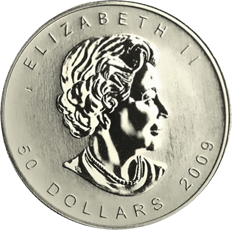
1 Ounce Palladium Maple Leaf
£970.65
excl. UK import VAT and shipping
currently not available

 More than 310,000
 Over 30 years
 Secure shipping
 Google: 4.9/5
The selection of palladium coins is currently still quite limited, especially compared to the range available for silver– and gold coins. Most major mints do offer coins in palladium, however. With us you will find these beautiful coins in well-known designs.


Platinum and palladium are two of the six platinum-group metals. All six have “similar physical and chemical properties and tend to occur together in nature”, writes the U.S. Geological Survey.
Atomic number, symbol and name. The metal of this page is highlighted.
They come together in magma. When it becomes saturated with sulphur, a sulphide melt separates out, and the platinum-group metals preferentially concentrate in it. Deposits of this kind provide almost everything that is mined.
The upper crust contains, on average, half a milligram of platinum per tonne. Ores mined for platinum-group metals contain 5 to 15 grams of all six combined per tonne. Our own calculation: around 10,000 to 30,000 times as much.
Palladium can even hide in another mineral: in pentlandite, it takes the place of nickel.
“Most geologists can spend a lifetime working on rocks enriched in PGEs and never see a platinum-group mineral in a hand specimen.”
U.S. Geological Survey, 2017
In June 1924, A. F. Lombaard panned gravel from a dry river bed on the farm Maandagshoek in South Africa. He found “a few specks of heavy white metal” and immediately suspected platinum. His concentrate was sent to Hans Merensky on 7 June; on 12 August, Merensky joined him in the field.
The most important discovery followed in the first half of September: the rock layer now known as the Merensky Reef. The reports of 1925 do not say who took the first sample, and no one recorded the exact day.
This reef contains palladium as well as platinum.
A reef like this is usually a rock layer centimetres to metres thick, extending over tens to hundreds of kilometres. The Merensky Reef can be traced throughout the eastern and western parts of the Bushveld Complex.
The complex is around 2.05 billion years old and underlies an area of around 69,000 km². According to the U.S. Geological Survey (as of 2017), 7,200 tonnes of platinum-group metals have been mined there since the 1920s.
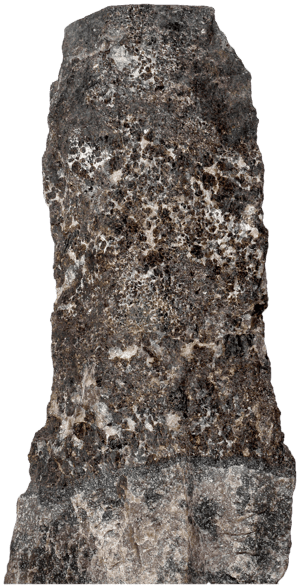
Diagram, not to scale: the band is drawn much thicker than it would be in proportion.
A United States law of 14 December 2010 provided for a palladium bullion coin: a face value of 25 dollars, a weight of one ounce and a fineness of 999.5/1,000.
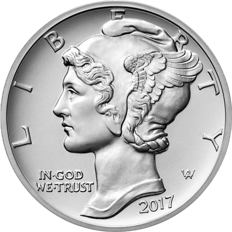
The law prescribed the design too: adaptations of works by the coin designer and medallist Adolph Alexander Weinman, both sides in high relief. On the obverse, the “Winged Liberty” of the so-called Mercury dime; on the reverse, the reverse of his medal for the American Institute of Architects from 1907.
Under the law, the palladium should come from United States deposits wherever possible and have been mined no more than one year before purchase.
On 25 September 2017, sales of the first issue began to the United States Mint’s Authorized Purchasers. This places 110 years between the medal and the coin (our own calculation).
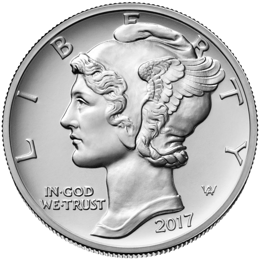 Obverse
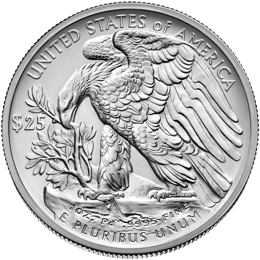 Reverse
The gaps correspond to the years.
In the ore, palladium usually occurs alongside platinum and the other four platinum-group metals; only the refinery separates them. The platinum page tells how people learnt to shape platinum.
Palladium coins are probably among the most underestimated investment assets in the precious metals market. This silvery-white metal from the platinum group metals is rarer than gold, plays a key role in industry, and, as a coinage metal, looks back on a young but exciting history. The following sections cover its origin and minting tradition, the most important designs, fineness and denominations, tax treatment, and the question of who stands to benefit from holding palladium in their portfolio, and who does not.
The selection of palladium coins is manageable, especially compared to the vast range of silver coins and gold coins. Only a handful of mints produce bullion coins from this metal at all, which gives each individual issue a special character. Anyone holding a palladium coin notices immediately: this is no mass-produced item, but a rarity with its own appeal. At Kettner Edelmetalle you will find well-known issues such as the Cook Islands or the Maple Leaf in palladium.
Historically, palladium was rarely used as a coinage metal. Today there are essentially bullion coins, commemorative coins and a few collector's issues. Anyone wishing to invest larger amounts more cost-effectively often opts instead for palladium bars, since these avoid the surcharge for minting and design. You can find all palladium bars and coins at Buy palladium.
Palladium was discovered in 1803 by the British chemist William Hyde Wollaston and named after the asteroid Pallas, which had been discovered shortly before. For a long time, it held little significance as a coinage metal. One exception is Russia: there, palladium has a tradition dating back to the tsarist era, and for a time circulating coins were even made from the metal.
Outside Russia, the first palladium coins appeared in Sierra Leone in 1966, followed shortly afterwards by a commemorative issue in the Kingdom of Tonga marking the coronation of King Taufa'ahau Tupou IV. About two decades later, starting in 1987, countries such as Australia, Portugal, the Isle of Man and France also began minting. When the palladium price rose rapidly in 1999, many countries discontinued production again. Since then, the market has remained small, a fact that makes these coins particularly appealing to collectors precisely because of their rarity.

Despite the limited supply, a handful of issues have become firmly established. Among collectors and numismatists, the Canadian Maple Leaf and the Cook Islands in particular enjoy a good reputation. The most important issues include:
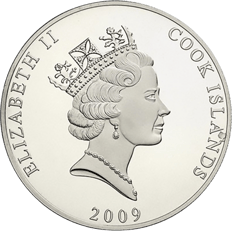
The Cook Islands palladium coin is considered one of the best-known of its kind and has been issued since 2008. On one side it shows the historic sailing ship "Bounty", and on the other the portrait of Queen Elizabeth II. The design has remained unchanged over the years; the coin weighs one troy ounce and carries a face value of 50 Cook Islands dollars.
The world-famous Maple Leaf in palladium from the Royal Canadian Mint has been issued since 2005. As with the related gold and silver issues, the classic maple leaf adorns the obverse, while the reverse shows the portrait of the Queen. The coin is available in a 1 oz size with a face value of 50 Canadian dollars.
The American Eagle in palladium has been minted since 2017 and remains, to this day, the only US palladium bullion coin. The obverse bears a Liberty portrait, while the reverse shows the bald eagle. This 1 oz coin also keeps its design unchanged and carries a face value of 25 US dollars. Anyone interested in related metals will find similar classics among the platinum coins.
Modern palladium bullion coins are produced with a high fineness of 999.5/1,000. Historical issues deviate from this: the 1967 Tonga coins reached 980/1,000, and the French coins from 1986 to 1989 contained only 90 percent palladium. Classics such as the Maple Leaf, by contrast, reliably meet the high standard of 999.5/1,000.
In terms of size, the troy ounce clearly dominates. Over the years, however, other denominations have also been issued:
The Russian rouble was offered in 1/4, 1/2 and 1 oz, while most other bullion coins are available exclusively in the classic one-ounce size. Anyone looking for smaller entry-level sizes in palladium will therefore more quickly find what they need among the bars.
Palladium's appeal lies not only in numismatics but also in its industrial significance. By far the largest share of global demand comes from the automotive industry, where the metal converts toxic emissions into less harmful substances in the catalytic converters of petrol vehicles. Palladium is also in demand in the electronics industry, dental technology and jewellery making, where, thanks to its noble sheen, it is popularly used for wedding rings.
Supply is scarce: palladium is mined predominantly as a by-product of nickel and copper ores, concentrated in a few countries such as Russia and South Africa. It is precisely this combination of strong industrial demand and limited supply that has, over the years, driven the market into a structural deficit and caused sharp price swings. For investors, this means high potential, but also noticeable volatility.
Good to know
Because the palladium price is so closely tied to economic cycles and technological trends in the automotive industry, it often reacts more sharply than gold or silver. This volatility is both an opportunity and a risk; broad diversification across several precious metals helps cushion it.
Palladium coins are robust and scratch-resistant, similar to platinum coins. Their price is determined primarily by the metal's current daily spot price; for special issues, a collector's value may be added. Due to the high price level, one-ounce coins are also suitable for larger investment volumes.
Palladium is not a metal for the quick grab, but a deliberate addition for anyone who thinks about their portfolio beyond the classics.
Because the market is narrow, experienced dealers advise against a portfolio consisting solely of palladium. Reselling larger holdings can prove more difficult than with gold or silver. Anyone who already has a solid foundation of gold bars and silver bars can use palladium in a targeted way to achieve additional diversification while remaining flexible.
The decisive factor for the price is the spot price. Additional factors include:
Especially with special collector's pieces, it is worth comparing offers and informing yourself thoroughly beforehand. Beginners should not act hastily and, in case of doubt, should initially opt for the proven bullion coins.
Unlike investment gold, palladium is not exempt from VAT. In Germany, 19% VAT applies to both purchases and sales, as is also the case with silver coins and platinum coins. This increases the entry costs and is one reason why many investors prefer the cheaper palladium bars.
For private capital gains, the speculation period applies: if at least twelve months pass between purchase and sale, any potential profit remains tax-free. This information does not replace tax advice; expert consultation should be sought for individual cases.
Tax Note
Unlike investment gold, which is exempt from VAT under § 25c UStG, palladium coins are subject to the full VAT rate. After the one-year speculation period has elapsed, however, a private capital gain is exempt from income tax.
Palladium coins with a face value carry the classic minting features that characterise a reputable bullion coin:
Since there have so far been only a few minting years, no single year has yet become established as particularly valuable, unlike with some series coins. When buying, it is therefore usually not crucial to look for a specific minting year. The scratch-resistant surface and the high fineness are among the typical quality features by which genuine items can be recognised.
Even scratch-resistant coins should be stored under protection, since the condition is particularly relevant to price in the case of collector's items. The coins are supplied in a protective plastic capsule; for larger holdings, suitable coin capsules and coin cases are well suited.
Several coins should never be kept loose in a tin, as they can scratch one another. For storage at home, a secure hiding place or a safe is recommended; in addition, the accessories range offers solutions such as can safes. Anyone handling the collection should wear cotton gloves to avoid fingerprints and scratches.
Before adding palladium to a portfolio, it is worth taking a sober look at its strengths and weaknesses:
Among the best-known issues are the Canadian Maple Leaf, the Cook Islands coin, and the American Eagle in palladium. All three are predominantly minted in the one-ounce size with a fineness of 999.5/1,000.
Yes. In Germany, palladium coins are subject to the full VAT rate of 19%. Unlike investment gold, they are not exempt from VAT. However, after the one-year speculation period has elapsed, a private capital gain remains exempt from income tax.
Anyone focused primarily on the pure metal value is usually better off with a palladium bar, since the premium is lower. Coins, on the other hand, offer a design, a face value and possible collector's appeal.
Current bullion coins such as the Maple Leaf are minted with a fineness of 999.5/1,000. Older issues, such as the 1967 Tonga coins or French coins from the 1980s, had lower values.
Palladium is mostly consumed by industry, above all in car catalytic converters. Since supply is concentrated in a few producing countries, economic and political events quickly lead to significant price movements.
Best protected in a capsule, so that the surface remains undamaged. For several pieces, coin cases are suitable, while a safe or a can safe is recommended for secure storage at home.
Stay informed with product launches, financial news and exclusive offers. Sign up for our free newsletter today.
By entering your email address and clicking the "Submit" button, you give the following consent: "I agree to be informed by email about new products, financial news and exclusive offers, and therefore consent to the processing of my email address for the purpose of sending the newsletter. I can revoke this consent at any time without giving reasons, with effect for the future. The lawfulness of processing carried out prior to revocation remains unaffected."