Only 3 left to order
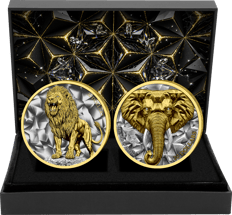
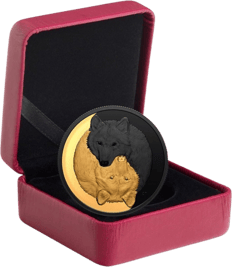
Polar Animals Silver Set 2026 (Mintage: 50 | Partially Gilded)
£675.41£844.47
excl. UK import VAT and shipping
Ships from 18/12/2026

 More than 310,000
 Over 30 years
 Secure shipping
 Google: 4.9/5
Swift-footed emu, hissing panther or cold-blooded reptile – the magnificent diversity of species can be admired time and again through coin designs. Mints today no longer depict only gazelles and lions, but have also set their sights on the exotic creatures of the animal kingdom. Join us on a breathtaking safari into the numismatic animal kingdom!


From the roaring big cat of the African savannah to the mighty elephant and the nimble quokka of Australia: coins featuring land animals are among the most popular design themes in modern numismatics. Gold, silver, platinum and copper issues capture the diversity of land-dwelling species in the finest minting artistry, combining the pure material value of the precious metal with a distinct collector's appeal. This guide highlights the most important series and designs, explains denominations, grades and authenticity features, outlines the tax treatment, and offers guidance on storage, mintage figures and purchase criteria.
Animals are among the oldest pictorial motifs in the history of coinage. Even ancient coins depicted lions, bulls or horses as symbols of power, fertility and strength. Modern bullion coins and collector's coins continue this tradition, albeit with far greater depth of detail. Land animals are particularly well suited as coin motifs because fur, musculature, plumage or scales can be rendered impressively in relief and fine detail.
The range of motifs spans the iconic Big Five of Africa, native forest dwellers and exotic species that only rarely appear on a coin. Collectors value the variety, while investors appreciate the combination of tangible precious metal value and potential collector's premium. Anyone looking to get an overview of the metals will find a suitable foundation in the ranges of gold coins and silver coins, while thematically related design worlds can be found under marine animals and birds.

The range of animal coins is growing continuously, as mints around the world release new issues every year. Some series have established themselves as fixtures and form the core of many collections. The following overview shows the most important groups of motifs in the land animals category.
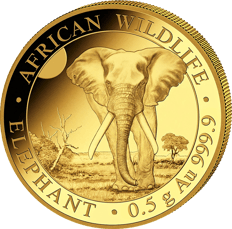
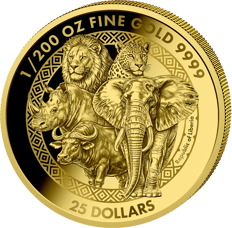
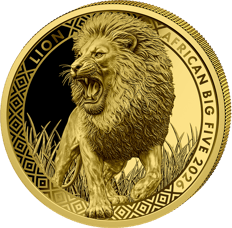
The Big Five comprise the lion, elephant, rhinoceros, buffalo and leopard: a term originally used in big-game hunting, now the quintessential symbol of African wildlife. These motifs appear in elaborate issues, often in Proof quality with high-relief striking and low mintages. Anyone looking to focus specifically on big cats and pachyderms will find suitable subcategories under predators and pachyderms. The dedicated series Big Five in Silver and Big Five in Gold are also found here.
Alongside the Big Five, other African motif series have become established, featuring leopards, cheetahs or elephants in changing annual editions. They are often issued as partially gilded or coloured variants and appeal to both investors and motif collectors. Related ranges can be found in the Silver African Range and the Gold African Range.
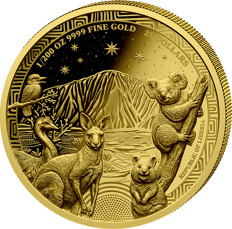
The savannah is not the only source of motifs: wolves, lynxes and other native forest animals find their way onto coins just as much as Australian exotics do. The quokka, the marsupial often described as the friendliest animal in the world, and the koala are popular motifs from the Perth Mint and the Royal Australian Mint. Collectors of native species will find what they are looking for in the categories German forest animals and domestic animals, while reptile and amphibian enthusiasts should head to the snakes and amphibians sections.
Common motifs at a glance:
Those enthusiastic about primates will find suitable issues under monkeys and jungle; fans of small crawling creatures should head to the insects category.
Animal coins are available in all common precious metals. The choice of metal has a significant impact on price, tax treatment and collector character.
| Metal | Character | Special feature |
|---|---|---|
| Gold | High value density, highly durable | Investment gold exempt from VAT |
| Silver | Affordable entry point, strong motifs | Usually margin scheme taxed |
| Platinum | Rare, in industrial demand | Small mintages, niche appeal |
| Copper | Very affordable, decorative | Pure motif value takes centre stage |
Gold coins concentrate a lot of value in a small space and enjoy tax privileges as investment gold. Silver coins offer a more affordable entry point and are often struck in particularly detailed collector's editions. Those seeking motif appeal without a large capital outlay will find attractive alternatives under platinum coins and copper coins. A balanced mix of gold and silver combines value density with an easy entry point.

Animal coins are issued in a wide range of weights. For silver, the spectrum ranges from 1 oz through 2 oz and 5 oz to massive 1 kg issues. Gold coinage covers fine denominations such as 1/200 oz and 1/4 oz, as well as the classic troy ounce.
The grade describes the quality of the strike. Mint State (MS) denotes bullion-grade coins fresh from striking, while Proof (PP), with mirrored fields and frosted motifs, denotes the highest collector quality. These are complemented by enhanced finishes such as partially gilded or coloured coins. Suitable protective accessories can be found in the coin capsules and coin cases categories.
Two value drivers come together in animal coins: the pure precious metal content and the collector's premium. The latter depends heavily on the mintage and the popularity of the motif. Issues of only a few hundred pieces are naturally scarcer than series coins with a five-figure mintage.
A motif with a low mintage can retain its collector's appeal long after that year's edition has sold out.
Authenticity can be verified through several characteristics: exact weight and diameter, correct fineness, clean minting edges and an accompanying certificate of authenticity. Renowned mints such as the Perth Mint, the South African Mint or the Royal Canadian Mint stand for verified quality. Kettner Edelmetalle additionally relies on an ISO-compliant authenticity verification before the goods leave the high-security vault.
Note on collector's value
The amount of any possible premium over the material value cannot be guaranteed. It depends on the motif, mintage, grade and demand. Animal coins should therefore primarily be regarded as a source of collecting enjoyment and as a tangible asset, not as a promise of returns.
The tax classification differs depending on the metal. In Germany, investment gold is exempt from VAT under the applicable regulations, provided the coin meets the legal criteria for investment gold. Silver coins, by contrast, are usually subject to the margin scheme, under which tax is only levied on the dealer's margin.
For private sales, the speculation period also applies: if a coin is held for longer than one year, any capital gain on sale is currently tax-free under present law. This information does not replace tax advice; expert advice should be sought for individual cases. Those who regard animal coins as a long-term tangible asset will find further ranges under bullion coins and collector's coins.
Proper storage is essential if animal coins are to retain their condition, and thus their value. Silver in particular is sensitive to humidity and can tarnish, while gold remains largely unreactive. Proof coins should never be touched with bare fingers on their surfaces.
Suitable accessories for storage can be found under coin chests and in the entire accessories range. For secure shipping, Kettner Edelmetalle relies on 100% insured delivery.
Before buying, it is worth looking at several factors to find the coin that best suits your own goals. Collectors tend to focus more on motif and mintage, while investors pay closer attention to precious metal content and premium.
Those wishing to build a collection systematically can include thematically related design worlds such as nature or the dedicated themed world Big Five, thereby covering a broad range of themes.
The most sought-after motifs include the African Big Five, lion, elephant, rhinoceros, buffalo and leopard, as well as big cats such as cheetah and tiger. Australian exotics like the quokka and koala, or native species such as the wolf, also enjoy great popularity. Demand depends heavily on mintage and finish.
This depends on your objective. Gold concentrates a lot of value in a small space and, as investment gold, is exempt from VAT. Silver offers a more affordable entry point and is often struck in particularly detailed collector's editions. Many collections combine both metals.
Proof (also known as PP) denotes the highest minting quality. The coin shows mirrored background fields and frosted motifs that stand out in relief. Such issues are produced using elaborate processes and are usually struck in low mintages.
If a coin is held as a private asset for longer than one year, any profit on sale is currently tax-free under present law. Investment gold is also exempt from VAT at the time of purchase, while silver coins are usually subject to the margin scheme. This information does not replace individual tax advice.
Mints deliberately set low mintages to create scarcity and exclusivity. Elaborate finishes such as high relief, partial gilding or colouring are also often limited. A low number of pieces increases the collector's appeal but does not guarantee any particular performance in value.
Yes. Animal coins are a popular present for occasions such as births, christenings, starting school or milestone birthdays. They combine an appealing motif with a lasting tangible asset. Smaller gold denominations and motif-rich silver issues are particularly well suited for this purpose.
 Land Animals
Stay informed with product launches, financial news and exclusive offers. Sign up for our free newsletter today.
By entering your email address and clicking the "Submit" button, you give the following consent: "I agree to be informed by email about new products, financial news and exclusive offers, and therefore consent to the processing of my email address for the purpose of sending the newsletter. I can revoke this consent at any time without giving reasons, with effect for the future. The lawfulness of processing carried out prior to revocation remains unaffected."