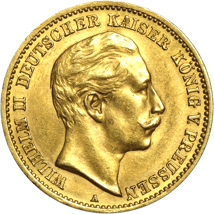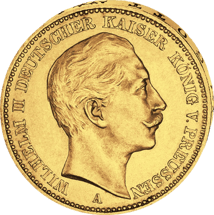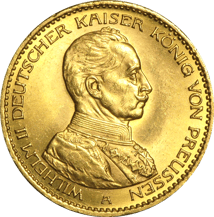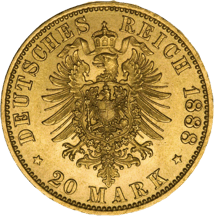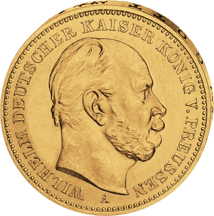

20 Mark Prussia Wilhelm II Gold Coin
£967.11
VAT-free and excl. shipping
Available in 2–3 business days
 +49 7930-2699

 More than 300,000
 Over 30 years
 Secure shipping
 Google: 4.9/5
When people paid in gold.
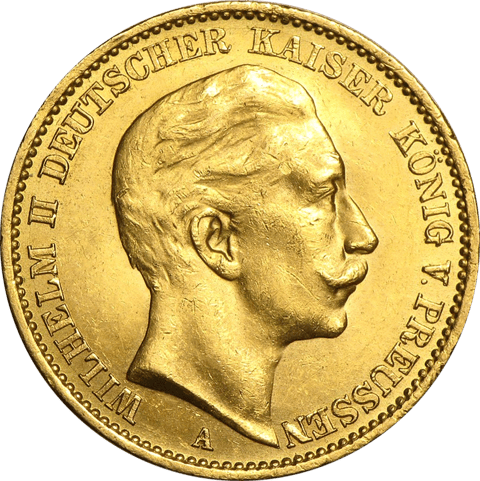
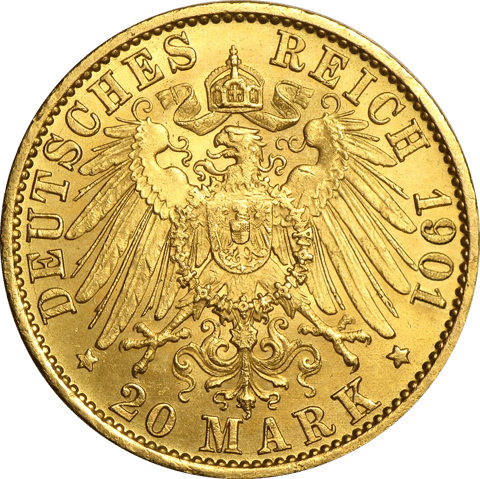
From 1871 to 1914, Germans paid with gold. In 1913, a 20‑mark piece was about a week’s wages.

Between 1871 and 1915, the Imperial gold coins were produced in denominations of 5, 10 and 20 Reichsmark. Unlike many other gold coins, the Imperial gold coins were actually legal tender. Today, they are highly sought after, especially among collectors.


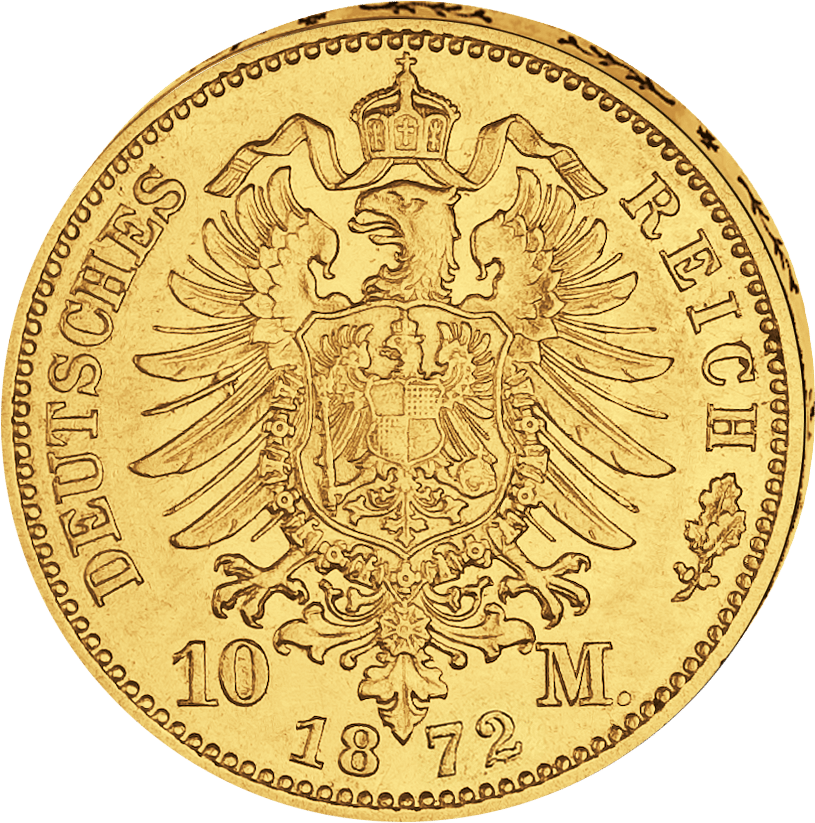
On 4 December 1871, the young Empire enacted the law on the new gold coins. The first 20‑mark pieces were struck in Berlin that same month.
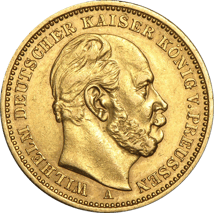
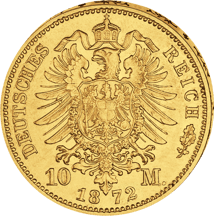
Each gold coin bears the image of its own state on the front, usually its ruler, and the imperial eagle on the back. The 10- and 20‑mark pieces here come from Prussia.
The Coinage Act of 1873 replaced the thaler, the gulden and the other state currencies. From one pound of fine gold, 1,395 marks were struck.
1871
The first imperial gold coin
The law of 4 December introduces the mark as the new unit of account, divided into 100 pfennigs.
1873
The mark becomes the Empire’s currency
The Coinage Act of 9 July makes the mark the currency of the entire Empire. It takes two and a half years to become legal tender everywhere.
1876
The Reichsbank opens
On 1 January, the mark is legal tender throughout the Empire, and the Reichsbank begins its work.
1913
The last imperial portrait
The last Prussian issue shows Wilhelm II in uniform. It is now struck only in Berlin.
1914
Paper instead of gold
On 31 July, one day before Germany’s declaration of war on Russia, the Reichsbank stops redeeming its notes for gold. After almost 43 years, gold coins disappear from everyday life.
In 1888, the Berlin Mint struck 20‑mark pieces with three different emperors. Wilhelm I died on 9 March, his son Frederick III on 15 June. On the same day, Wilhelm II succeeded him.
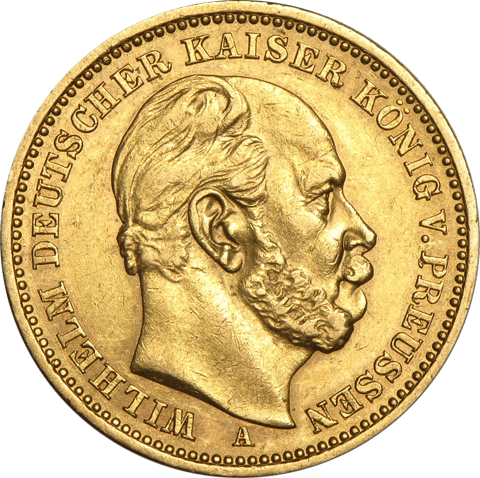
Wilhelm I
1871 to 1888
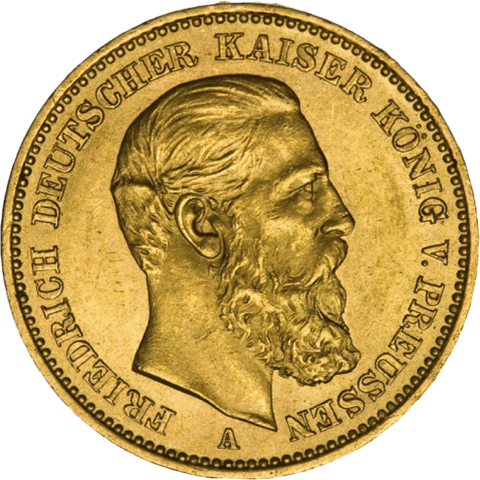
Frederick III
99 days
Wilhelm II
1888 to 1918
Gold coins with Frederick III therefore exist only from 1888 and only with the mint mark A for Berlin.
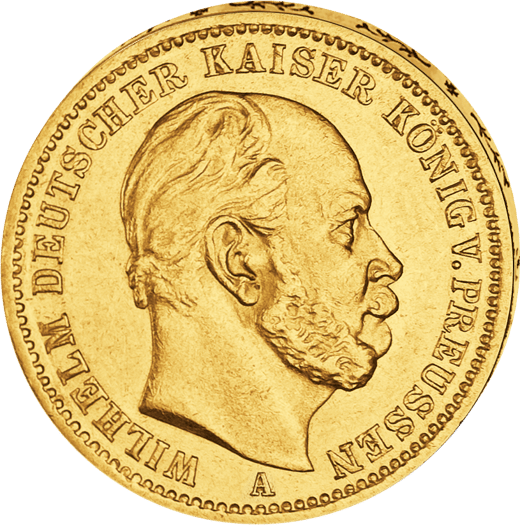
As a gift
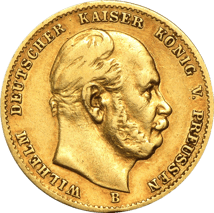
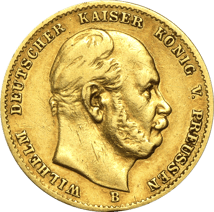
The 10‑mark piece of 1872, the first year of issue, in a coin card, containing half as much gold as a 20‑mark piece.
View the 1872 10‑mark piece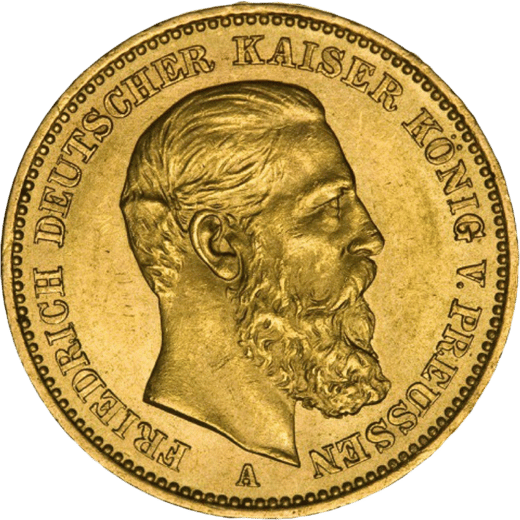
For collectors
Frederick III, the 99‑day emperor. Every one of his 20‑mark pieces bears the date 1888.
View the Frederick III piece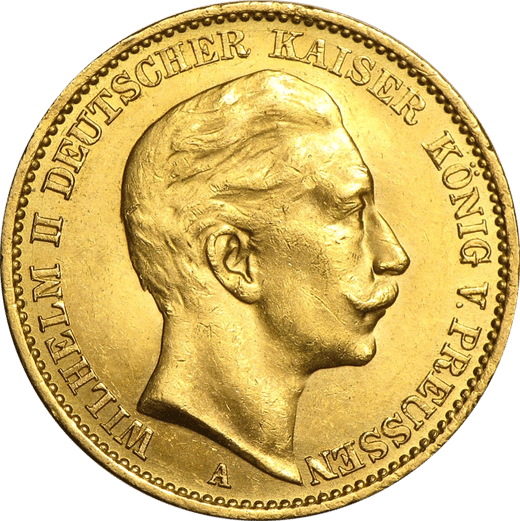
As a reserve
The 20‑mark piece with Wilhelm II, in .900 gold with 7.168 g of fine gold per coin.
View the 20‑mark pieceOver a hundred years old. And still gold.
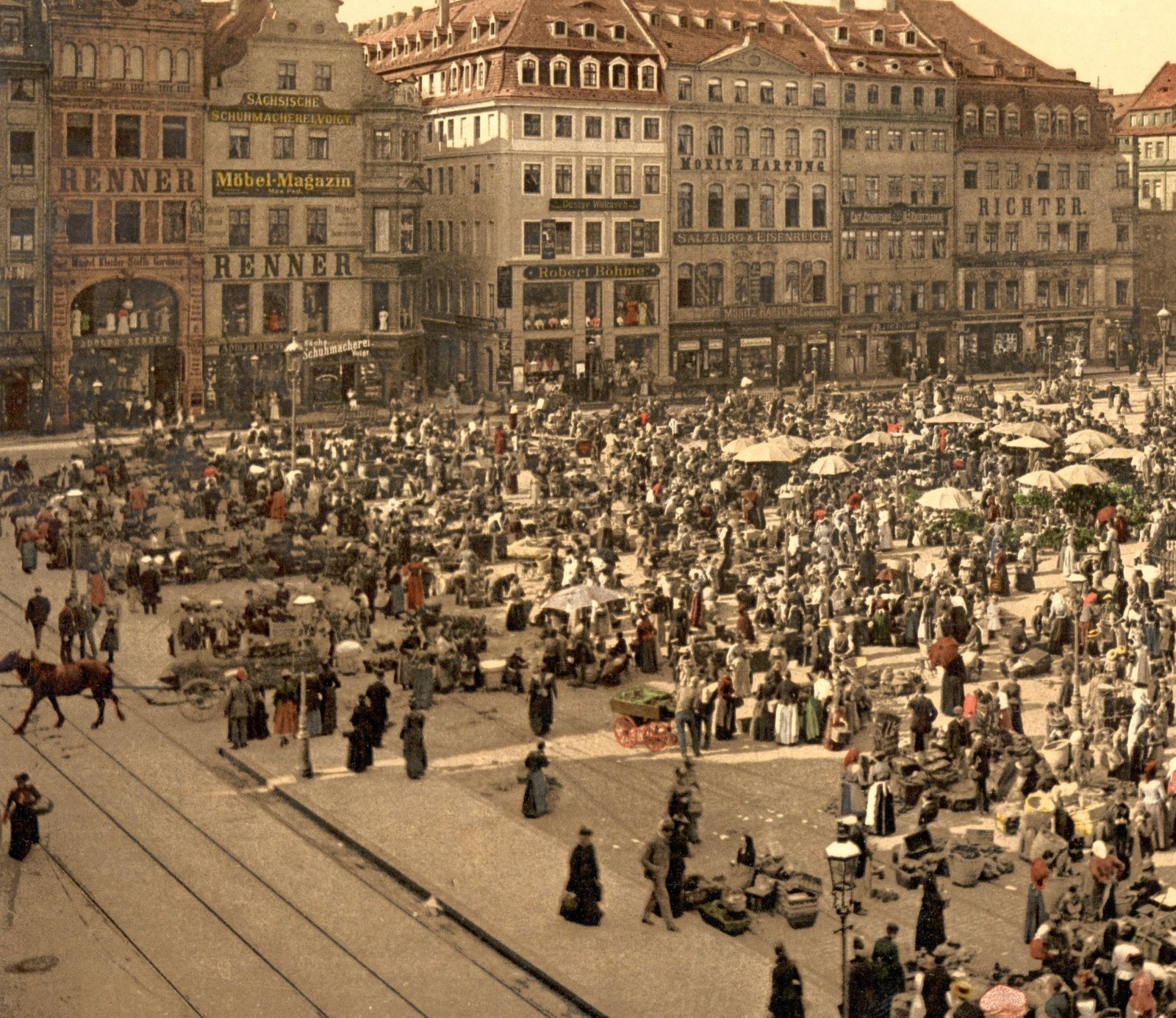
Historical details based on the Reichsgesetzblatt, the Deutsche Bundesbank, the German Bundestag, the German Historical Museum, the Federal Agency for Civic Education, economic history studies of the Goldmark and numismatic catalogues. Header image: market day on the Altmarkt in Dresden, photochrom around 1900, Library of Congress.
 German Empire
Stay informed with product launches, financial news and exclusive offers. Sign up for our free newsletter today.
By entering your email address and clicking the "Submit" button, you give the following consent: "I agree to be informed by email about new products, financial news and exclusive offers, and therefore consent to the processing of my email address for the purpose of sending the newsletter. I can revoke this consent at any time without giving reasons, with effect for the future. The lawfulness of processing carried out prior to revocation remains unaffected."