


Only 3 left to order
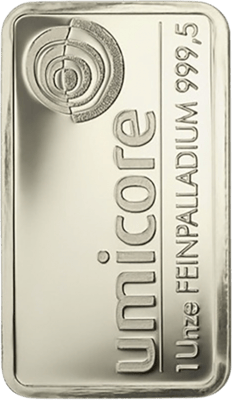
1 Ounce Palladium Bar Umicore, Heraeus, Degussa
£1,186.12
excl. UK import VAT and shipping
Available in 2–3 business days

 More than 310,000
 Over 30 years
 Secure shipping
 Google: 4.9/5
Palladium is the quiet heavyweight among precious metals: rarer than gold, indispensable for industry, and for a long time a genuine insider tip beyond the classic investment metals. The 1 oz palladium bar bundles exactly one troy ounce of this rare metal into a compact, convenient form, making it the most popular entry point into a palladium investment. The following sections cover origin and production, fineness and dimensions, tax treatment, proper storage, and an honest comparison between bars and coins.
A 1 oz palladium bar weighs exactly 31.10 grams and consists of pure fine palladium with a fineness of 999.5/1,000. This gives it the same investment quality as gold and silver bars, yet it comes from a considerably tighter market. Palladium is a silvery-white, noble and at the same time highly resilient metal: it does not tarnish, is corrosion-resistant and retains its lustre for decades.
For many investors, the troy ounce is the ideal size: large enough to add noticeable weight to a portfolio, yet small enough to remain flexible. Anyone wishing to start with smaller units will also find denominations of 10 or 20 grams in the broader range of palladium bars. As an addition to a broadly diversified portfolio, palladium ranks equally alongside gold and silver. An overview of palladium bars and palladium coins can be found under Palladium.
Global supply is concentrated in just a few regions: Russia and South Africa together mine the lion's share, supplemented by North America. Palladium is rarely mined on its own; it is usually obtained as a by-product of nickel and platinum production. This dependence on a handful of producing countries makes supply vulnerable, one reason why the palladium price has historically been among the most volatile of all precious metals.
An investment bar lives on its purity and the reputation of the mint. For the 1 oz palladium bar, both points are clearly defined:
Names such as Umicore, Heraeus and Degussa stand internationally for verified quality. Their hallmark is also a promise of authenticity: the obverse features the manufacturer's name, the denomination of 1 ounce, and the fineness 999.5. The design is deliberately classic and standardised: plain, functional and recognisable worldwide.
Smaller units such as the troy ounce are usually minted and delivered in a sealed blister card that combines the bar and certificate of authenticity. Larger formats such as the 500 g palladium bar or the 1 kg palladium bar are often cast. Both methods result in the same investment value: what matters is solely the fine weight contained.
Unlike gold, which primarily serves as a store of value, palladium is first and foremost an industrial metal. By far the largest share of annual demand comes from the automotive sector: in the catalytic converters of petrol vehicles, palladium converts harmful exhaust gases into less toxic compounds. Further buyers include the electronics, dental and chemical industries, as well as jewellery manufacturing, where palladium gives white gold its bright colour.
This strong industrial tie explains the particular price dynamics. Because supply is scarce and demand is heavily dependent on the economic cycle, the price reacts sensitively to supply and demand shocks. For investors, this means that palladium offers a diversification clearly different from the classic precious metals. Anyone wishing to spread their wealth more broadly will find further building blocks of physical tangible assets in the inflation hedge section.
Palladium combines two worlds: the charm of a precious metal and the tangible usefulness of an industrial commodity: this dual role makes it so fascinating for investors.
One key difference compared to investment gold concerns VAT. While gold bars, as investment gold, are exempt from VAT, palladium bars are subject to the standard tax rate of 19 percent. The same rule also applies to platinum bars and silver bars. This tax rate is already included in the stated purchase price.
Tax notice
Palladium bars are taxed in Germany at the standard rate of 19%. A sale of physical precious metals may be tax-free after the one-year holding period has elapsed. This is general information and does not replace tax advice.
For the long-term view, the holding period is of particular interest: if a bar held privately is sold after more than one year, any increase in value is generally exempt from income tax. This aspect makes physical palladium an interesting building block within retirement provision as well.
The price of a 1 oz palladium bar follows the current palladium price on the world market plus a comparatively small premium. In recent years, palladium has experienced a turbulent up and down: phases of tight supply at times drove the price above the gold price, while an economic slowdown and the trend towards electromobility put it under pressure again. This range of fluctuation is both an opportunity and a risk alike: no precious metal comes with a guarantee of returns.
When buying, what counts is therefore the current daily price, a fair premium, and secure, insured shipping. The bar is delivered sealed and protected, so that it arrives in bank-grade condition. Anyone wishing to acquire smaller amounts on a regular basis will find, among the savings plan products, a way to spread the entry over time and offset price fluctuations.
Palladium is available both as a bar and as a coin, but the differences are significant. Bars are pure material investments and are traded close to the metal value: their premium is low. Palladium coins, on the other hand, are considerably rarer and can develop a collector's value in addition to their material value.
Among the best-known minted designs are the Maple Leaf in palladium as well as issues from the Cook Islands. Anyone who values the emotional appeal of a design and the chance of a collector's value opts for the coin. Anyone seeking as much metal as possible per euro is better served by the bar. Collectors looking beyond palladium will also find it worthwhile to browse through the collector's coins.
Palladium is resilient and does not tarnish, yet the sealed packaging should remain as intact as possible, since an undamaged blister with certificate makes later resale easier. For storage at home, a secure, dry place is recommended, ideally a safe. Anyone collecting several bars can keep them organised and protected with suitable accessories.
Practical aids include, for example, coin capsules for minted issues or lockable coin cassettes for a clear overview of a collection of several pieces. This keeps bars and coins protected from scratches and fingerprints, preserving their flawless condition.
A palladium bar is more than a number in a portfolio: it can be held in the hand, given as a gift and passed on across generations. As a compact tangible asset, the troy ounce also makes a special gift that, unlike many other presents, retains a lasting material value.
A troy ounce corresponds to exactly 31.10 grams. The bar consists of high-purity fine palladium with a fineness of 999.5/1,000.
Investment gold is exempt from VAT in Germany. Palladium, platinum and silver are not considered investment gold for tax purposes and are therefore subject to the standard tax rate of 19 percent, which is already included in the purchase price.
The bars come from renowned mints such as Umicore, Heraeus and Degussa. Their hallmark guarantees verified quality and makes later resale easier.
Anyone wishing to invest as close as possible to the pure material value chooses the bar with its low premium. Anyone who values a particular design and the chance of a collector's value opts for a palladium coin such as the Maple Leaf.
The largest share of demand comes from the automotive industry, where palladium cleans exhaust gases in catalytic converters. Further applications include electronics, dental technology, chemistry and jewellery manufacturing.
Ideally dry and secure, preferably in a safe. The sealed original packaging with certificate should remain intact, since an undamaged blister makes resale easier.
 1 oz Palladium Bar
Stay informed with product launches, financial news and exclusive offers. Sign up for our free newsletter today.
By entering your email address and clicking the "Submit" button, you give the following consent: "I agree to be informed by email about new products, financial news and exclusive offers, and therefore consent to the processing of my email address for the purpose of sending the newsletter. I can revoke this consent at any time without giving reasons, with effect for the future. The lawfulness of processing carried out prior to revocation remains unaffected."