


1kg Palladium Bar Umicore, Heraeus, Degussa, PAMP, UBS
£34,778.17
excl. UK import VAT and shipping
Available in 2–3 business days
 More than 300,000
 Over 30 years
 Secure shipping
 Google: 4.9/5
The 1 kg palladium bar is the heaviest and most valuable format within the palladium bars and is aimed at investors who want to concentrate a larger sum in a single piece of precious metal. Palladium belongs to the group of platinum metals and is noticeably less present in everyday life than gold or silver, and this is precisely where the appeal lies for many. The following sections cover properties, manufacturers and fineness, the tax treatment, the storage of such a large bar, and the question of who the kilo format is actually worthwhile for.
A palladium bar weighing 1 kilogram combines around 32.15 troy ounces of precious metal in a compact, manageable piece. This makes it the counterpart to the small units from the range of palladium bars and appeals above all to those who want to hold not many small units but one large position. The advantage is obvious: the larger the bar, the lower the percentage premium on the pure material value. Anyone wanting to invest a fixed sum tends to get the most fine metal for their money with the kilo format.
Palladium has developed from an industrial niche metal into an investment asset in its own right. Investors value it as a complement to a broader-based precious metals portfolio, because it follows a different supply and demand logic than the classic coinage metals. Anyone already invested in gold or silver can add an extra facet with palladium, one that is more strongly driven by industrial demand.
The 1 kg bar is not an entry-level product for a small budget, but an instrument for the long-term storage of larger portions of wealth. Anyone wanting to stay flexible and sell or exchange in partial amounts is better served with several smaller units. The kilo format unfolds its cost advantage, by contrast, when a large sum is to be invested as efficiently and permanently as possible.
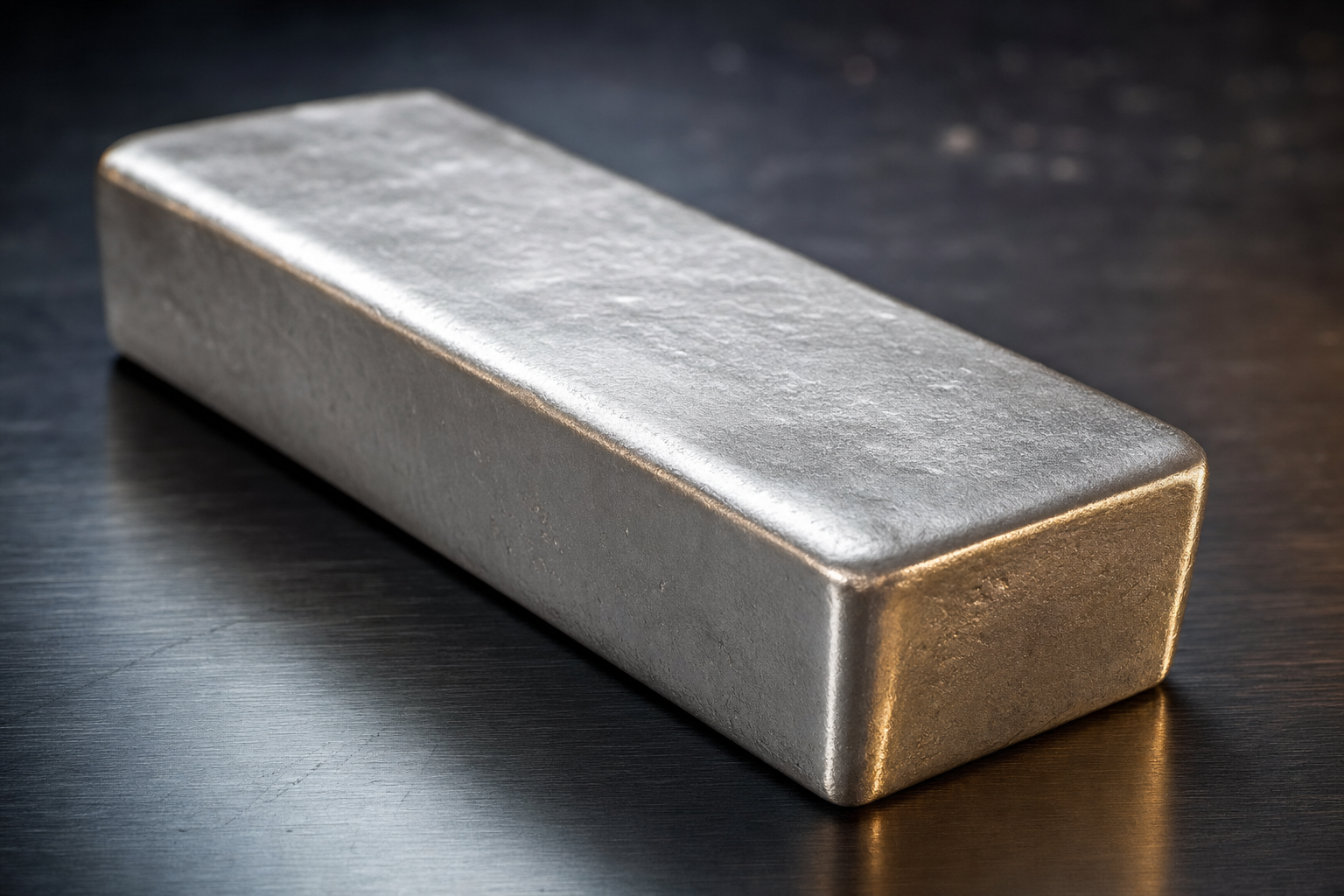
Palladium is a silvery-white precious metal from the platinum metals group and shows remarkable chemical stability as well as high resistance to corrosion. Visually, a 1 kg palladium bar resembles pieces made of silver or those from the platinum bars segment, but with a density of around 12 g/cm³ it is noticeably lighter than platinum.
The largest share of global demand does not come from investors but from industry. Palladium is the key material for catalytic converters in petrol-engine vehicles, where it converts pollutants into less harmful compounds. It is also used in electronics, dental technology and hydrogen technology. This strong industrial link is a key reason why the palladium price has at times moved markedly differently from that of gold.
Palladium is one of the few precious metals whose value arises predominantly from actual consumption in industry, not solely from the desire to own it.
1 kg palladium bars are produced by renowned refineries and mints whose names stand for reliability among investors. Among the best-known producers are established houses from the precious metals processing sector, comparable to the names also known from gold bars. Bars from these manufacturers are internationally tradable and are recognised by dealers worldwide.
The fineness of a palladium bar is typically 999.5 parts per thousand, which corresponds to the standard for fine palladium and is comparable to the purity of high-quality platinum bars. Each bar usually carries a stamp with the manufacturer's mark, weight and fineness information and, in the case of cast pieces, an individual serial number.
Larger bars are frequently delivered in sealed packaging with an accompanying certificate of authenticity documenting the serial number and the technical data. This combination of intact sealing and certificate considerably facilitates a later sale, as it proves an unbroken provenance. At Kettner Edelmetalle, every piece undergoes an ISO-compliant authenticity verification before it leaves the logistics centre.
Palladium bars are available in the same typical weight classes known from other precious metals. The choice of the right size depends less on the design than with coins, and above all on budget and investment purpose. Smaller units offer flexibility, larger ones a better price per gram.
Anyone who does not want to tie their entire sum up in a single piece can sensibly combine the kilo format with a handful of smaller units. This keeps part of the holding easily saleable in partial amounts, while the large bar forms the cost-efficient base.
A decisive difference compared with investment gold: while physical investment gold is exempt from VAT in Germany, palladium bars are subject to the full VAT rate. The purchase price therefore already includes 19 percent VAT, as is also the case with silver and platinum bars. This aspect should be factored into the calculation, as it raises the entry price compared with VAT-exempt investment gold.
For a later sale, the one-year speculation period applies in Germany: if the bar is held for longer than twelve months, any gain on sale is, under current law, tax-free for private individuals. Since tax regulations are individual and subject to change, this general information does not replace tax advice.
Tax notice
Unlike investment gold, palladium is not exempt from VAT. The purchase price includes 19 percent VAT. Anyone holding the bar for longer than a year can, under current law, sell it tax-free as a private individual.
A 1 kg palladium bar represents a considerable asset and should be stored accordingly securely. For home storage, a firmly anchored, burglar-resistant safe is recommended; those holding larger quantities often resort to a bank safe deposit box. As a general rule: items of this value belong in a household contents insurance policy with sufficient coverage, or in a separate valuables insurance policy.
To preserve the flawless surface, the original, airtight seal should ideally remain undamaged. Suitable storage solutions and protective materials can be found in the range of can safes as well as in the wider accessories range. Fingerprints and scratches do not reduce the material value, but they can affect the impression on resale.
Within a broadly diversified precious metals portfolio, each metal takes on its own role. Gold is regarded as the classic store of value, silver is cheaper and more strongly influenced by industry, while platinum and palladium share a close link to industrial demand. Anyone who knows the characteristics can combine the metals purposefully.
Palladium is also available as a coin, although considerably less often than with other metals. Popular designs such as the palladium Maple Leaf or issues from the Cook Islands have made it into coinage. The difference: with a bar, you pay mainly for the pure material value, while with coins a collector's premium can be added. Anyone seeking the maximum fine metal content per euro therefore chooses the bar.
One kilogram corresponds to around 32.15 troy ounces of palladium. With a fineness of 999.5, the pure fine metal content is thus just under 1,000 grams.
Yes. Unlike VAT-exempt investment gold, palladium bars are subject to the full VAT rate of 19 percent, which is already included in the displayed price.
The usual fineness is 999.5 parts per thousand, corresponding to the internationally common standard for fine palladium.
The kilo format offers the lowest percentage premium and is suitable for a large, long-term position. Several smaller units are more flexible if partial amounts are to be sold or exchanged later.
The majority of global palladium demand is accounted for by catalytic converters in petrol vehicles as well as electronics and dental technology. This close industrial link can lead to its own independent price dynamics.
A burglar-resistant safe or a bank safe deposit box combined with sufficient insurance is recommended. The original, airtight seal should ideally remain undamaged to preserve the surface.
 1 kg Palladium Bars
Stay informed with product launches, financial news and exclusive offers. Sign up for our free newsletter today.
By entering your email address and clicking the "Submit" button, you give the following consent: "I agree to be informed by email about new products, financial news and exclusive offers, and therefore consent to the processing of my email address for the purpose of sending the newsletter. I can revoke this consent at any time without giving reasons, with effect for the future. The lawfulness of processing carried out prior to revocation remains unaffected."