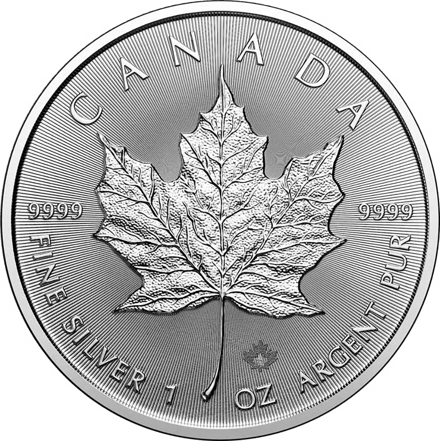
1 Ounce Silver Maple Leaf 2026
£63.80
excl. UK import VAT and shipping
Available in 2–3 business days
 +49 7930-2699

 More than 300,000
 Over 30 years
 Secure shipping
 Google: 4.9/5


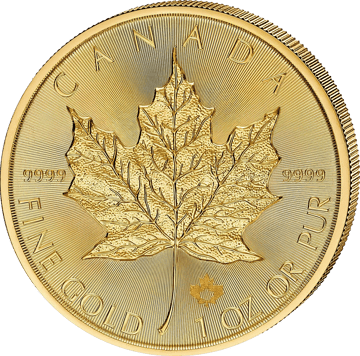
Gold, silver, platinum and palladium carry the same maple leaf. The number on the leaf side gives the fineness: 9999 stands for 999.9/1,000 in gold and silver, 9995 for 999.5/1,000 in platinum and palladium.
Shown: the 1 ounce bullion coins. Dimensions according to the Royal Canadian Mint.
Maple Leafs are legal tender in Canada. On the bullion coins, the face value is on the portrait side, a nominal 50 Canadian dollars on the gold ounce.
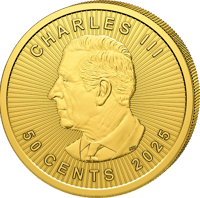 50 cents1 gram8 mm
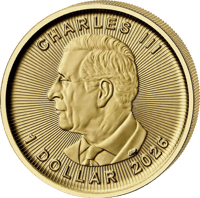 1 dollar1/20 ounce14.1 mm
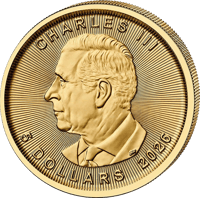 5 dollars1/10 ounce16 mm
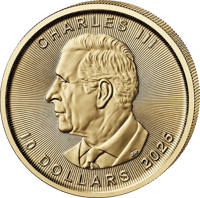 10 dollars1/4 ounce20 mm
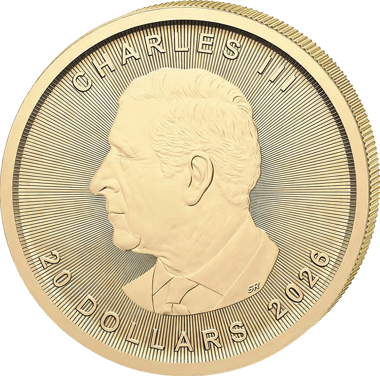 20 dollars1/2 ounce25 mm
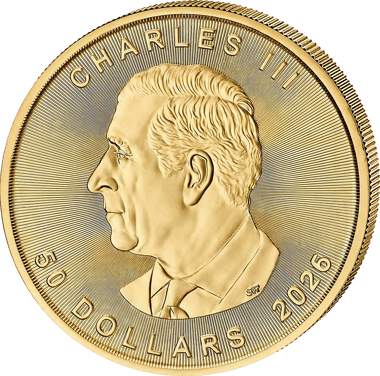 50 dollars1 ounce30 mm
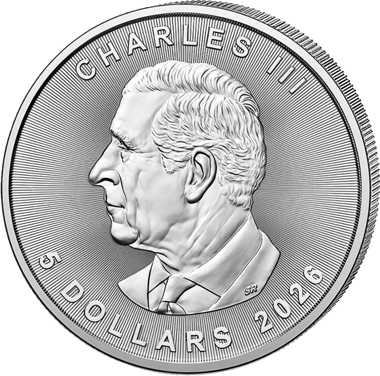 5 dollars1 ounce of silver38 mm
Shown: the 2026 bullion coins, the gram with the year 2025.
The silver ounce is available singly, in a tube of 25 and in a master box of 500 coins.
Alongside the classic bullion coins, there are issues with their own finish, their own design or a fixed mintage. These can currently be ordered, some only in a single year.
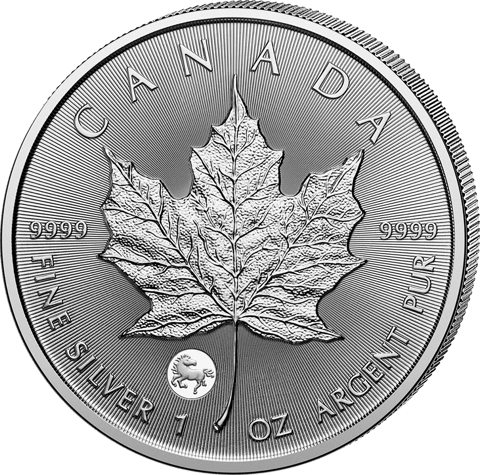 2026 · Silver1 ounce · mintage 25,000 eachTreasured Maple LeafThe silver ounce with a small additional mark below the leaf, the Privy Mark: in 2026 a wolf, a horse or balloons.
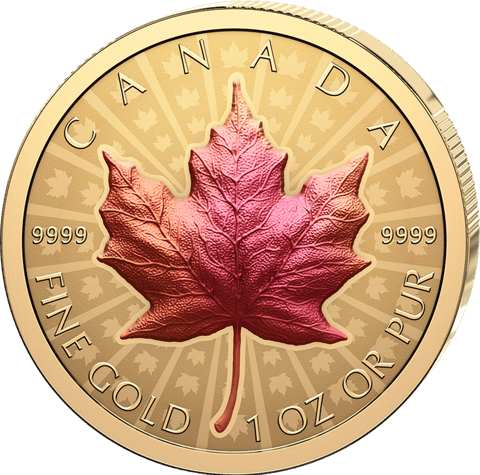 2026 · Gold and silver1 ounceUltra High ReliefThe leaf stands in particularly high relief, in colour in 2026.
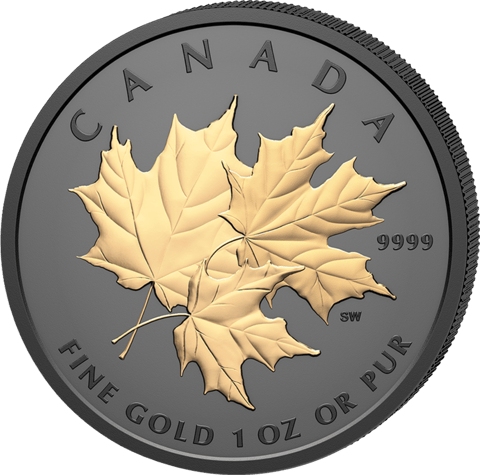 2025 and 2026 · Gold and silver1 and 5 ouncesTriple MapleA design of its own by the Royal Canadian Mint with three maple leaves, since 2025.
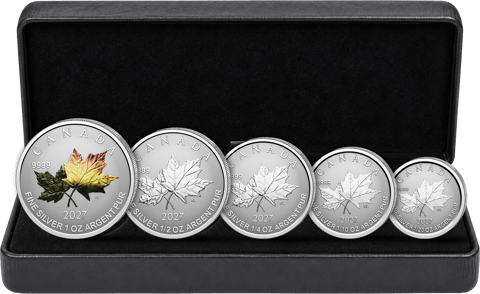 2027 · Silver5 coins · mintage 3,500 setsFractional SetFive silver coins from 1/20 to 1 ounce in one case, the ounce with coloured leaves.
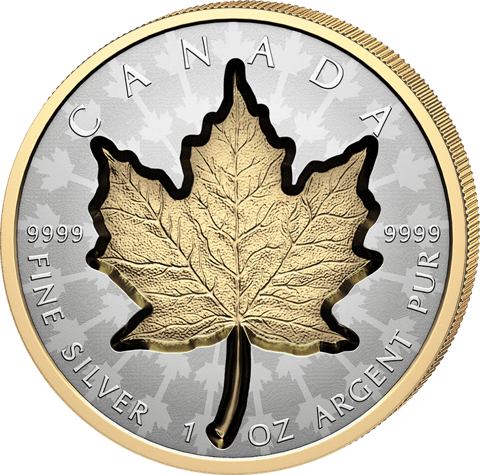 2022 to 2024 · Silver1 ounceSuper IncuseThe maple leaf is struck deep into the coin instead of standing out, partly gold‑plated or finished with rhodium depending on the year.
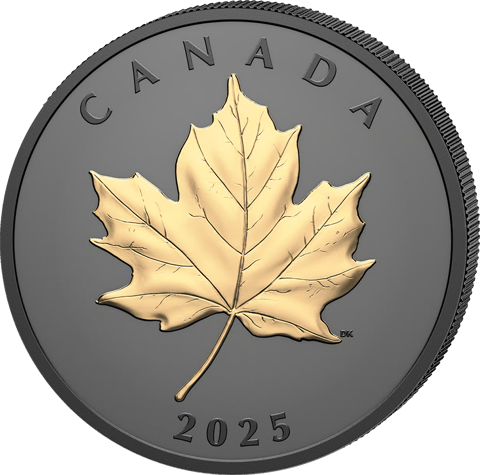 2025 · Silver1 ounce · mintage 5,500Black ElegantA gold‑plated maple leaf on black rhodium.
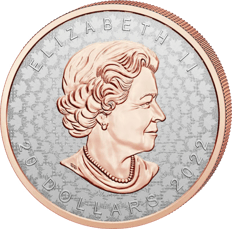
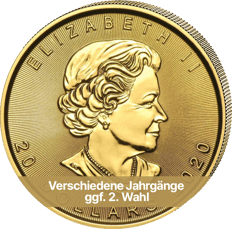
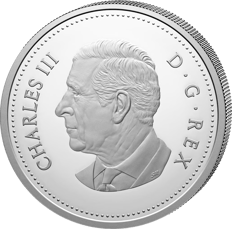
Up to the 2023 issues, the bullion coins show Queen Elizabeth II. The 2023 issues carry the years 1952 and 2022 to the left of her portrait, with four pearls between them, one for each of her four effigies on Canadian coins. From the 2024 issues on, the bullion coins show King Charles III. Some collector issues from 2024 still carry the queen with the years 1952 and 2022.
The “Year of minting” filter shows which years are available.
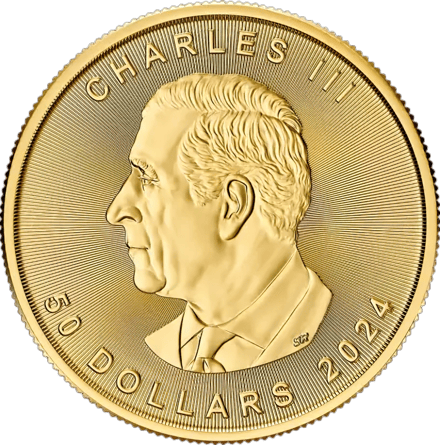
Hardly any other bullion coin combines the finest gold with such a distinctive symbol as the Maple Leaf. Since 1979, the Royal Canadian Mint has struck the Canadian maple leaf in pure precious metal, creating a classic that today ranks alongside the Krugerrand among the world's most widely traded bullion coins. This guide covers the history, denominations, fineness, authenticity features, tax considerations and proper storage of the Maple Leaf coin in gold and silver.
The Maple Leaf gold coin is one of the most famous gold coins in the world. Its name refers to the maple leaf, in English Maple Leaf, of the Canadian sugar maple, which also adorns the country's national flag. Anyone who holds the coin in their hand immediately recognises its clear, almost minimalist design: a single leaf, the inscription CANADA, and the fineness. Over the decades, this simplicity has made the bullion coin a worldwide symbol of valuable gold.
The series is produced by the state mint Royal Canadian Mint in Ottawa. What began in 1979 with a single 1 oz gold coin is today a diverse family of Gold Maple Leaf coins, plus silver, platinum and palladium issues. As a global investment asset class, the Maple Leaf thus stands on a par with classics such as the Krugerrand or the Vienna Philharmonic.
More than 30 million Maple Leaf coins have been sold worldwide since the first strike. This enormous distribution makes it one of the most liquid bullion coins in existence; it can be traded virtually anywhere in the world without complication. Anyone starting out with gold bullion coins will hardly be able to avoid this Canadian classic.
The Maple Leaf is available in an unusually wide range of denominations. From the tiny 1/20 oz coin to the full ounce, it covers almost every investment budget. The fineness for every size is 999.9/1,000; this has only been the case since 1982, as the first three years of issue still had a fineness of 999/1,000.
| Denomination | Diameter | Thickness | Weight | Face value |
|---|---|---|---|---|
| 1/20 oz | 14.0 mm | 0.92 mm | 1.555 g | 1 CAD |
| 1/10 oz | 16.0 mm | 1.13 mm | 3.110 g | 5 CAD |
| 1/4 oz | 20.0 mm | 1.78 mm | 7.776 g | 10 CAD |
| 1/2 oz | 25.0 mm | 2.23 mm | 15.552 g | 20 CAD |
| 1 oz | 30.0 mm | 2.87 mm | 31.103 g | 50 CAD |
The 1 oz gold coin is the classic choice for long-term wealth building: the percentage premium on the material value is lowest here. The smaller denominations such as 1/10 oz or 1/20 oz are more expensive per gram of gold, but offer flexible divisibility, a practical advantage if only a small part of the precious metal holdings needs to be converted into cash at some point. The small formats are also popular as a gift of gold. Those who want to invest continuously will find suitable options in the savings plan products section.
The Maple Leaf silver coin is classically available in the 1 oz version, with a diameter of 38 mm and a face value of 5 CAD. It is an ideal entry point into the silver market and is also in demand in larger quantities, for example in Monster Boxes. The full range can be found under Silver Maple Leaf.
When the Royal Canadian Mint launched the first gold coin with a fineness of 999.9/1,000, known in English as Four Nines Fine, in 1982, it was something of a sensation. Until then, such purity had been considered almost unattainable. The Maple Leaf consists of pure gold without the copper alloy that, for instance, gives the Krugerrand its reddish tone. The result is a brilliant, warm yellow hue that is equally prized by collectors and investors.
The coin's design has always been characterised by a quiet elegance. The design side shows the delicate maple leaf with the inscription CANADA and the fineness. The coin is inscribed bilingually in English and French, reflecting Canada's two official languages. For decades, the value side has carried the portrait of Queen Elizabeth II, along with the face value in Canadian dollars and the year of issue. The portrait of the monarch has been carefully revised several times over the years.
The maple leaf was not chosen by chance. The sugar maple is Canada's most widespread tree, and its leaf had already established itself as a symbol of the country's nature as early as the 18th century. Since 15 February 1965, it has officially adorned the national flag. A charming side note: the stylised leaf on the flag has only eleven points, while a real sugar maple leaf has 23; the slimmer shape simply proved the most aesthetically pleasing in wind-tunnel tests.
With its fame comes the risk of counterfeiting, and the Maple Leaf is indeed a target for forgers. The Royal Canadian Mint has therefore significantly raised its security standards over the years. Two steps were decisive here:
These precise microstructures are almost impossible to replicate with conventional means, making the coin particularly resistant to counterfeiting. Reputable dealers also inspect every coin before shipping. At Kettner Edelmetalle, this ISO-compliant authenticity verification is carried out as standard before the goods leave the high-security vault. Those who want to delve deeper into the subject will find further background in the encyclopedia entry on the troy ounce.
The price of a Maple Leaf is primarily based on the current daily gold price or silver price. On top of this comes a premium on the pure material value, typically in the range of 5 to 10 percent, which covers minting, logistics and storage, among other things. A simple rule of thumb almost always applies:
The larger the denomination and the higher the spot price, the lower the percentage premium per gram of gold.
Prices are adjusted to the market several times a day, both for buying and selling. Investment gold such as the Maple Leaf is therefore considered a particularly transparent form of investment. For building up a broader holding, investor packages in gold are also a good option.
Tax note
Investment gold is exempt from VAT in Germany under § 25c UStG, meaning the Gold Maple Leaf is traded without VAT. Silver coins, on the other hand, are subject to the margin scheme. After a holding period of more than one year, capital gains on physical precious metal are generally tax-free (private disposal transactions, § 23 EStG). This is general information and does not replace tax advice.
Although the Maple Leaf is primarily a bullion coin, the Royal Canadian Mint regularly releases special editions with added collector's appeal. While collector's value plays a secondary role for pure investment purposes, these editions are a real highlight for enthusiasts:
The Big Maple Leaf from 2007 is legendary: a gold coin the size of a manhole cover, weighing 100 kg, with a fineness of 99,999/100,000 and a face value of one million Canadian dollars. Only six specimens were ever struck. One of them was spectacularly stolen from the Bode Museum in Berlin in 2017 and remains missing to this day, presumably melted down. Anyone interested in strictly limited pieces will also find what they are looking for in the rarities section.
Investors value the Maple Leaf above all for its high fineness, its worldwide recognition and its excellent tradability. Physical gold traditionally serves as a hedge against inflation and as a building block for diversifying wealth; especially in uncertain times, a tangible asset gives many people a sense of security. The wide range of denominations makes the coin accessible for almost any budget.
A particular appeal lies in the small formats: should cash ever lose value, small gold coins can be exchanged in partial amounts more easily than a large bar. For the same reason, many investors additionally turn to 1 gram gold bars. Those who want to combine gold and silver will find matching packages in the gold-silver mix. Of course, no general statement about returns can be derived from this: the Maple Leaf is, and remains, a tangible asset whose price follows the precious metals markets.
Pure gold is a soft metal, and this is precisely where the Maple Leaf's small weakness lies: without a protective copper alloy, its surface is sensitive to scratches and fingerprints. Careful storage is therefore essential.
Improvised hiding places are not recommended, no matter how safe they may seem. Thoughtful storage preserves not only the coin's visual condition but also its full resale value. Suitable accessories for protection and organisation can be found together in the accessories section.
The Maple Leaf is made of pure gold with a fineness of 999.9/1,000 and contains no copper alloy. The Krugerrand is alloyed with copper, making it more resistant on the surface and giving it a redder tone. Both contain a full troy ounce of gold in their 1 oz edition.
Since 1982, the fineness has been 999.9/1,000 (24 carats). The first years of issue, from 1979 to 1981, still had a fineness of 999/1,000. Some special editions even reach 999.99/1,000.
The Gold Maple Leaf is classed as investment gold and is exempt from VAT in Germany under § 25c UStG. The Maple Leaf silver coin, on the other hand, is subject to the margin scheme. The current legal situation always applies.
The Gold Maple Leaf is available in 1/20 oz, 1/10 oz, 1/4 oz, 1/2 oz and 1 oz, supplemented by small gram formats and anniversary editions. The classic silver coin is struck in the 1 oz version.
From the 2013 year of issue onwards, the coin carries a micro laser engraving in the shape of a tiny maple leaf with the last two digits of the year. From 2015, radial lines were added, creating a typical light-refraction pattern. Weight, diameter and thickness offer additional means of verification.
Since pure gold is very soft, the coins should remain in their coin capsule and only be touched while wearing gloves. For larger holdings, coin tubes or coin cases are suitable, while a safe or bank safe deposit box is recommended for storage.
Stay informed with product launches, financial news and exclusive offers. Sign up for our free newsletter today.
By entering your email address and clicking the "Submit" button, you give the following consent: "I agree to be informed by email about new products, financial news and exclusive offers, and therefore consent to the processing of my email address for the purpose of sending the newsletter. I can revoke this consent at any time without giving reasons, with effect for the future. The lawfulness of processing carried out prior to revocation remains unaffected."