




Only 2 left to order
1/8 oz Gold 20 Euro - Deutscher Wald (Linde 2015)
£523.18
VAT-free and excl. shipping
Available in 4–5 business days

 More than 300,000
 Over 30 years
 Secure shipping
 Google: 4.9/5
Six trees in gold.
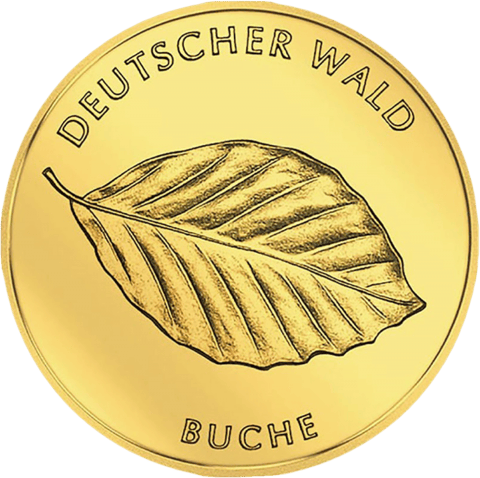
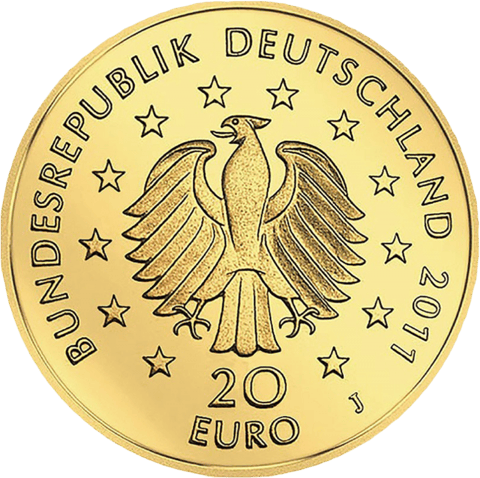
From 2010 to 2015, the Federal Republic of Germany issued a 20‑euro gold coin every year, each with the leaf or twig of a different tree.

The 20-euro gold coin of the Federal Republic of Germany is a great success. Six editions of the Deutsche Wälder coin (gold euro) were issued between 2009 and 2015, each featuring a tree species on the coin's reverse. The gold coins have since risen significantly in value and still hold great potential for collectors of rare coins. Thanks to guaranteed German quality, the Deutsche Wälder coin is internationally renowned.


From oak to linden
Each coin bears a single leaf or twig. Arched across the top is the series name, “German Forest”, and at the bottom the name of the tree.
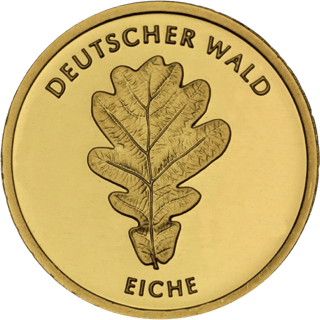
2010
Design: Heinz Hoyer
The Federal Republic’s first 20‑euro gold coin. Its leaf is familiar from small change: the German 1‑, 2‑ and 5‑cent coins show an oak twig.
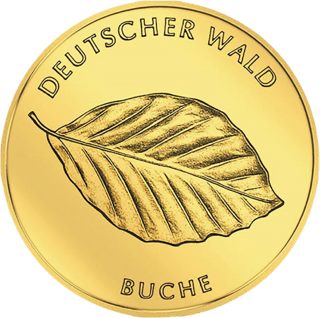
2011
Design: Frantisek Chochola
Without human intervention, the common beech would be the dominant tree on two thirds of Germany’s land area. Two days after the coin was issued, UNESCO added five ancient beech forests in Germany to its World Heritage List.
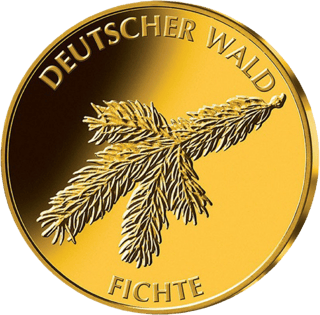
2012
Design: Frantisek Chochola
When the coin was issued in 2012, the spruce was the most common tree in Germany’s forests. Storms, drought and bark beetles have since cost it a great deal of ground, and today it is in second place.
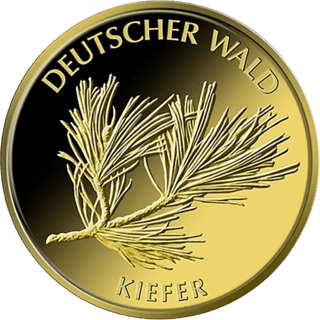
2013
Design: Frantisek Chochola
Today the most common tree in Germany’s forests, at home above all in the lowlands from Lower Saxony to Brandenburg. The coin was unveiled in Bad Freienwalde in Brandenburg.
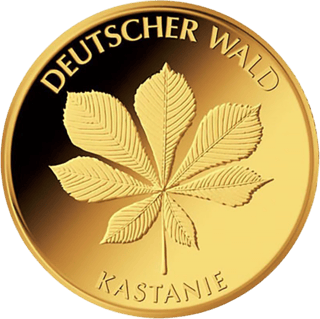
2014
Design: Heinz Hoyer
The leaf with seven fingers belongs to the horse chestnut, which originally comes from the Balkans. Brewers liked to plant it on top of their beer cellars because its large leaves kept the ground above shady and cool.
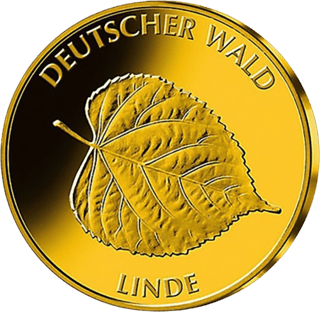
2015
Design: Frantisek Chochola
With it, the series came to an end. In the Middle Ages, justice was administered under court lindens, and linden wood is so easy to work that woodcarvers value it.
All six: 1/8 oz of fine gold (3.89 g, 999.9), 17.5 mm, brilliant uncirculated. Each year’s coin was struck in equal numbers in Berlin, Munich, Stuttgart, Karlsruhe and Hamburg, recognisable by the mint mark A, D, F, G or J.
The main tree species
Just under a third of Germany is forest. Pine, spruce, beech and oak together make up just over 70 per cent of it.
Where the word comes from
The “Sylvicultura oeconomica” by Hans Carl von Carlowitz, head of the Saxon mining authority in Freiberg, appeared in 1713. It is regarded as the first comprehensive work on forestry.
Mines and smelters in the Ore Mountains, including the silver mines around Freiberg, consumed so much wood that it grew scarce. Carlowitz therefore called for felling only as much as grows back.
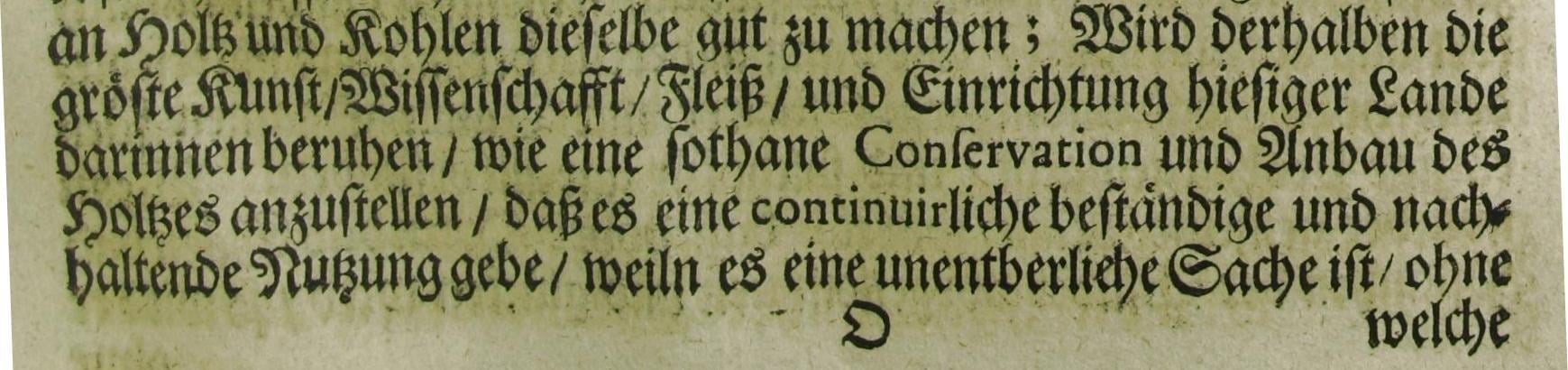
“… daß es eine continuirliche beständige und nachhaltende Nutzung gebe …”
Sylvicultura oeconomica, Leipzig 1713 (“that there be a continuous, steady and sustained use”). Digitised copy: SLUB DresdenThis sentence is regarded as the birth of a term: sustainability.
The coin series also has a mission. According to the Federal Ministry of Finance, it is meant to “help awaken and strengthen feeling and understanding for the protection of our forests”.
From 2016 to 2021, the 20‑euro gold coin showed native birds, from the nightingale to the black woodpecker.
 Gold Euro German Forest
Stay informed with product launches, financial news and exclusive offers. Sign up for our free newsletter today.
By entering your email address and clicking the "Submit" button, you give the following consent: "I agree to be informed by email about new products, financial news and exclusive offers, and therefore consent to the processing of my email address for the purpose of sending the newsletter. I can revoke this consent at any time without giving reasons, with effect for the future. The lawfulness of processing carried out prior to revocation remains unaffected."


