
Only 1 left to order
10 Mexican Peso Centenario Gold
£930.50
VAT-free and excl. shipping
Available in 2–3 business days

 More than 300,000
 Over 30 years
 Secure shipping
 Google: 4.9/5
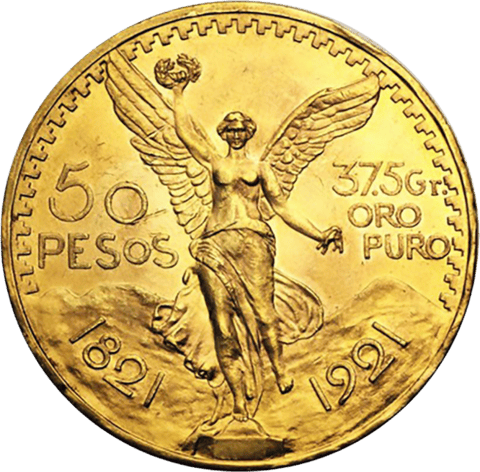
The goddess of victory in front of the volcanoes.
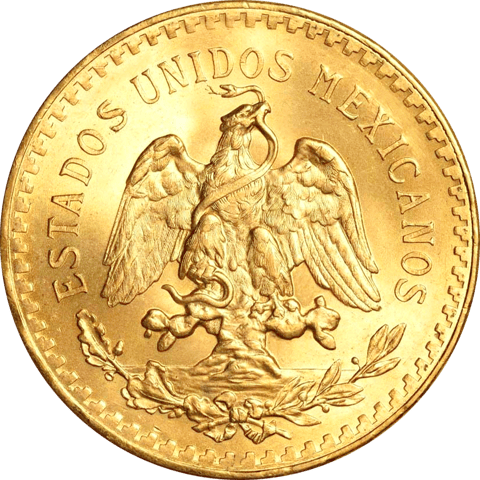
In 1921, Mexico celebrated a hundred years of independence with a gold coin that gave the whole family its name.

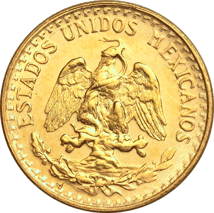
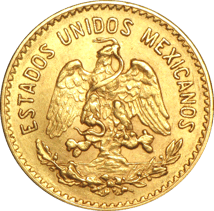
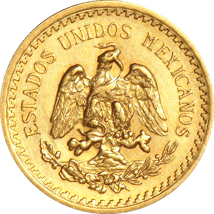
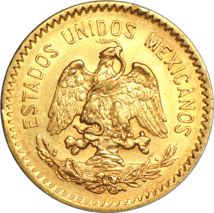
The Mexican Peso Centenario is a famous gold coin that was originally minted in 1921 by the Mexican Mint (La Casa de Moneda de México) to celebrate the centenary of Mexico's independence from Spain. The obverse of the coin features the image of the "Winged Victory", a famous Mexican statue symbolising freedom and independence, as well as the two legendary volcanoes Popocatépetl and Iztaccíhuatl in the background. The reverse features the Mexican coat of arms and an eagle.


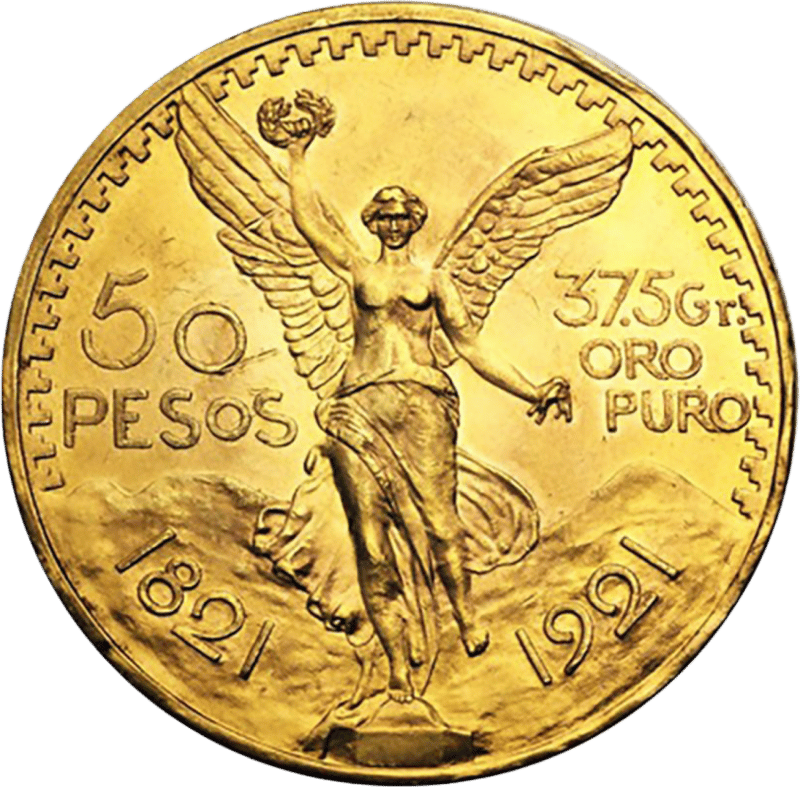
The picture side
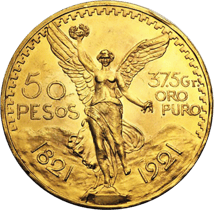
In front stands the winged goddess of victory, behind her two volcanoes.
The laurel wreath
In her raised hand she holds the victor’s wreath.
The broken chains
From her other hand hang broken chains, an image of the end of Spanish rule.
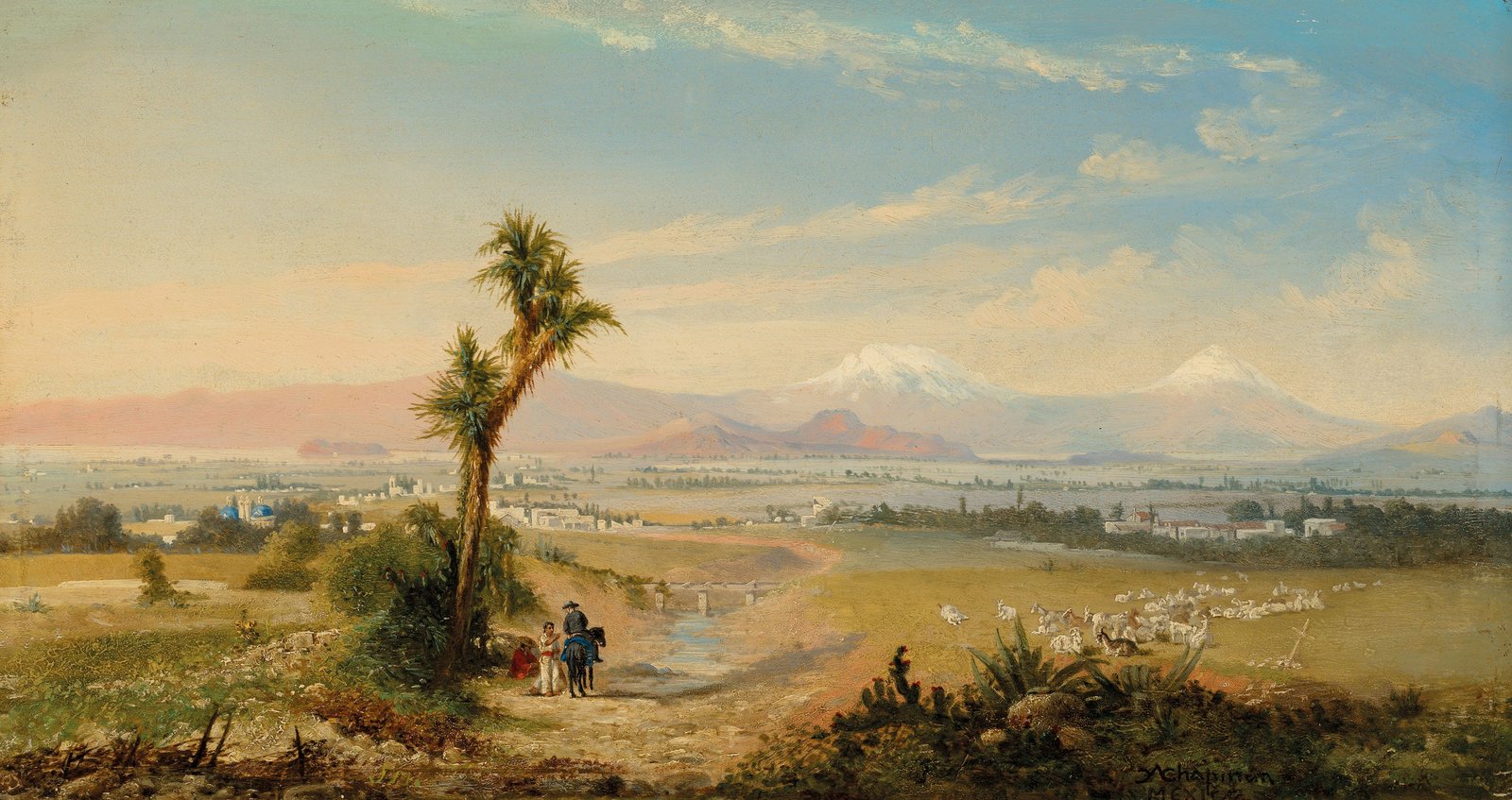
The two volcanoes
In Nahuatl, Popocatépetl means “smoking mountain” and Iztaccíhuatl “white woman”. Both rise on the eastern edge of the Valley of Mexico.
For the centenary celebrations in 1921, Mexico even had a replica of Popocatépetl “erupt” out of a lake in a park, with lights and fireworks.
At the bottom of the picture side
On 27 September 1821, the Army of the Three Guarantees entered Mexico City, and independence was complete. The uprising had begun eleven years earlier. For the hundredth anniversary, this coin appeared in 1921, and on the right is the year it was struck.
The same goddess of victory stands on the Independence Column in Mexico City: the gilded Victoria, popularly known as “el Ángel”. The column was inaugurated in 1910, for the hundredth anniversary of the uprising. In the earthquake of 28 July 1957, the figure fell from the column.
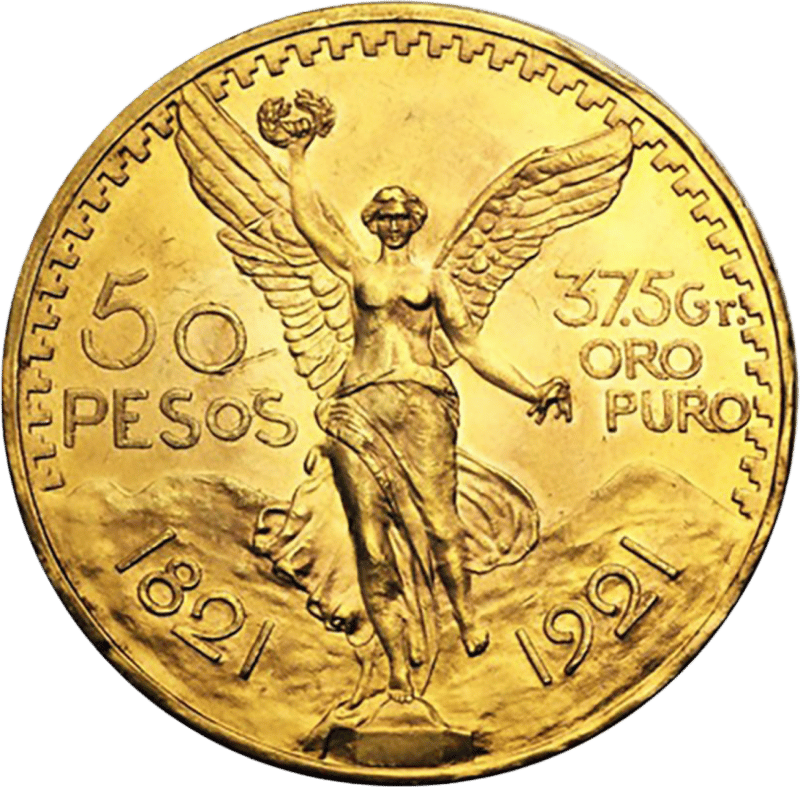
1821Independence is complete.
1921The year this piece was struck.
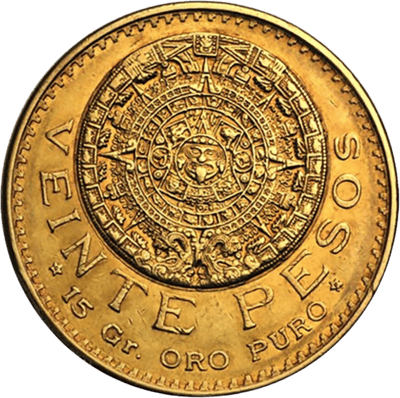
20 pesos “Azteca”
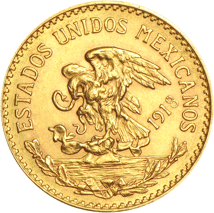
Since it was first struck in 1917, the gold 20 pesos has shown the Piedra del Sol, popularly called the “Aztec calendar”. The basalt stone measures 3.60 metres in diameter and weighs over 24 tonnes.
Workers found it on 17 December 1790 while paving the Plaza Mayor, with the relief facing down. From 1791 it was built into a tower of the cathedral. In 1885 it was moved to the National Museum, which was housed in the old mint building. There, where precious metals had once been melted and minted, it remained until 1964. Since then it has stood in the Museo Nacional de Antropología.
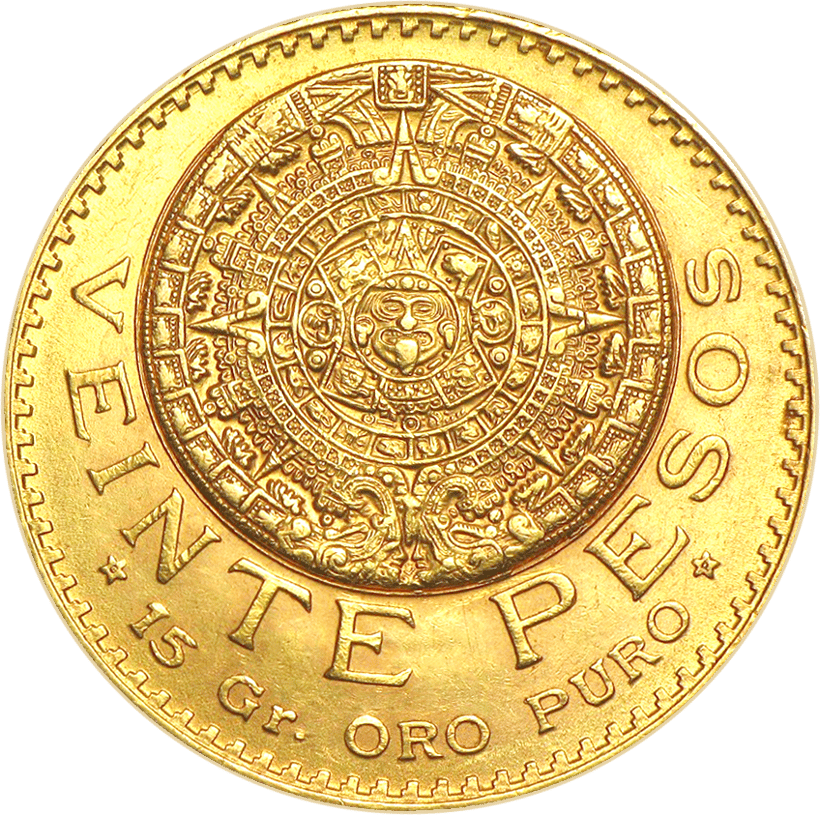
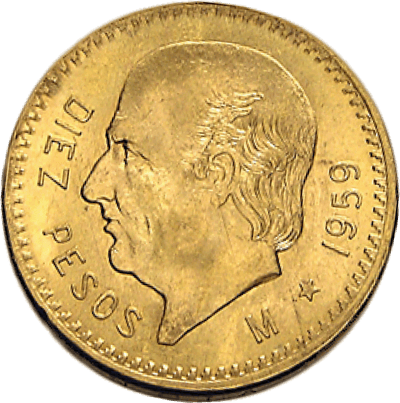
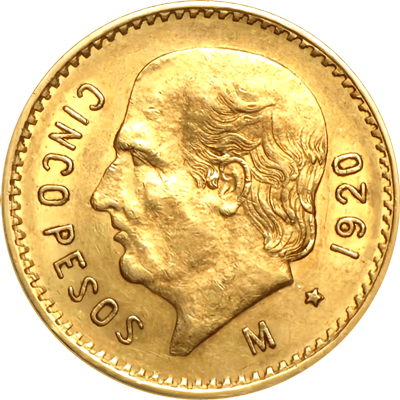
The coinage law of 1905 set the peso at 0.75 grams of fine gold. That is why every coin in the family contains its face value times 0.75 grams, and all are 900 fine.
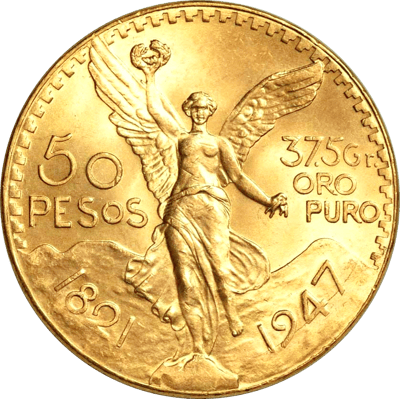
Centenario
50 pesos · 37.5 g fine gold
Victoria before the volcanoes
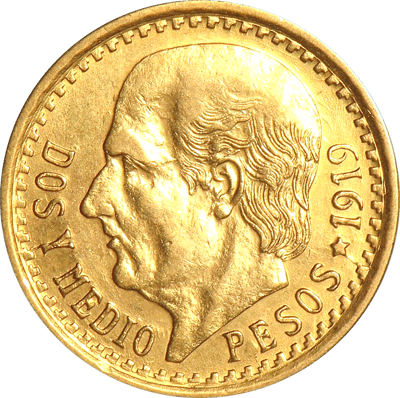
¼ Hidalgo
2.5 pesos · 1.875 g fine gold
Miguel Hidalgo
On 16 September 1810, Miguel Hidalgo called for the uprising. The Hidalgo coins of 1905 were the Republic’s first coins to show a national hero. The smallest is called ⅕ Hidalgo, but does not show him.
The frozen dates
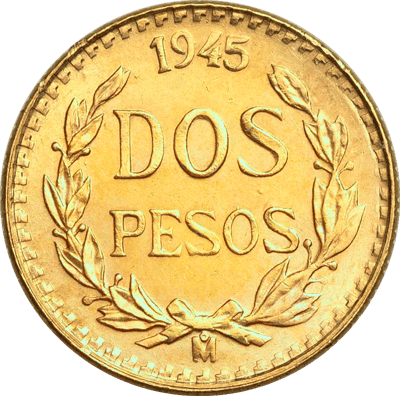
For decades afterwards, Mexico went on restriking the coins with a fixed date: 1947 on the 50 pesos, 1959 on the 20 and 10 pesos, 1955 on the 5 pesos, 1945 on the 2.5 and 2 pesos. A 50 pesos dated 1947 may therefore come from the year 1947 or from a later restrike. These are official strikes, not replicas.
The column has had a new Victoria since 1958.The coin has had the same one since 1921.
Details based on Banco de México (Familia del Centenario), the PCGS coin reports of 22 March and 5 May 2021, a study of the gold standard in Mexico from 1905 to 1910, Arqueología Mexicana and INAH on the Piedra del Sol, UNAM’s Revista de la Facultad de Medicina on the Independence Column, the Spanish-language Wikipedia for the dates of 1791, 1957 and 1958, the Mexican Ministry of Defence on 27 September 1821, a contribution by Michael J. Gonzales on the 1921 celebrations published by the University of London, a geological study of the Sierra Nevada, UNAM’s Gran Diccionario Náhuatl and photographs of the pieces shown. Image: Conrad Wise Chapman, The Valley of Mexico with the Volcanoes Popocatépetl and Iztaccíhuatl, undated.
 Centenario
Stay informed with product launches, financial news and exclusive offers. Sign up for our free newsletter today.
By entering your email address and clicking the "Submit" button, you give the following consent: "I agree to be informed by email about new products, financial news and exclusive offers, and therefore consent to the processing of my email address for the purpose of sending the newsletter. I can revoke this consent at any time without giving reasons, with effect for the future. The lawfulness of processing carried out prior to revocation remains unaffected."