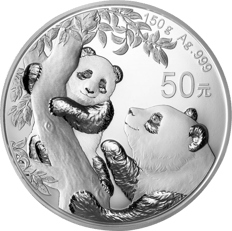
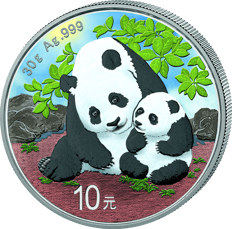
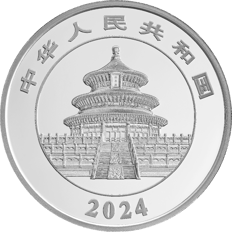
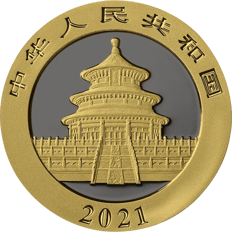
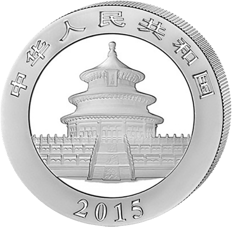
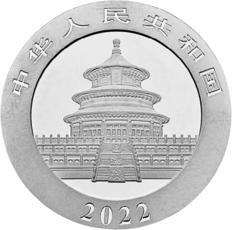
30g Silver China Panda 2027
£51.81
excl. UK import VAT and shipping
Ships from 28/12/2026

 More than 310,000
 Over 30 years
 Secure shipping
 Google: 4.9/5
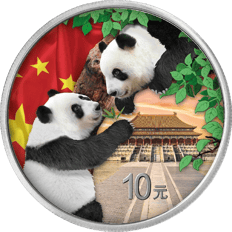
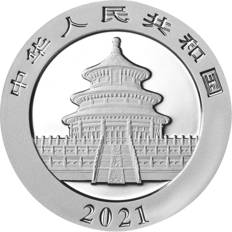
The China Panda is a true investment legend. The China Panda bullion coin has been produced by the China Mint since 1983. The silver coin with a fineness of 999/1000 fine silver features a new design every year. While the Temple of Heaven on the reverse always remains the same, the obverse always shows an alternating design of one or more pandas. Here you can find the China Panda in gold.


Hardly any bullion coin combines collector's passion and precious metals investment as charmingly as the China Panda in silver. Minted since 1983 by the state-owned China Mint, the silver coin surprises year after year with a new Panda design, a clumsy bear that has won the hearts of millions of people worldwide. This guide sheds light on the history, the denominations in grams, authenticity features, the sought-after years of issue, and the tax particulars of this extraordinary Chinese fine silver coin.
The China Panda is one of the most popular silver bullion coins in the world. Issued by the People's Republic of China and minted by the China Mint, the coin combines two worlds: the sober value of pure fine silver and the emotional appeal of a national symbol. In China, the giant panda is regarded as a symbol of peace and happiness, and it is precisely this cultural appeal that makes the coin fascinating for investors and collectors alike.
Originally conceived as a response to established bullion coins, the silver Panda has long since come into its own. While many classics such as the Maple Leaf or the Vienna Philharmonic carry the same design every year, a rare rule applies to the Panda: no year of issue resembles another. This uniqueness sets it apart from the rest of the range of silver coins and gives every issue its own appeal.
The story begins in 1982: that year, the China Mint launched a Panda gold coin for the first time, intended to compete with the established Krugerrand. The success was so great that the first silver version followed as early as 1983. This early issue weighed 27 grams and had a fineness of 900/1,000, a detail that makes it particularly sought after among collectors today.
The silver Panda played a decisive role in putting the People's Republic on the numismatic world map. Since 2006, the coin has been officially issued by the China Gold Coin Incorporation. It is closely related to the China Panda gold coin: the Panda gold coin appeared a year earlier and laid the foundation for the entire series. Those interested in this sister issue will find it in the category China Panda in gold. Panda designs also exist in copper, evidence of the enormous popularity of this design across all precious metals.
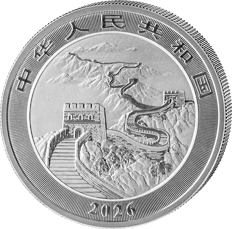
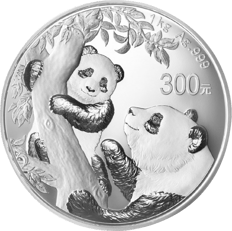
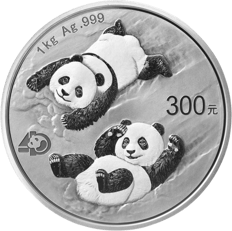
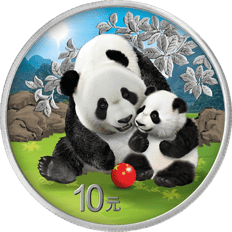
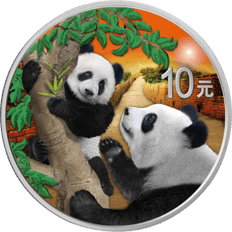
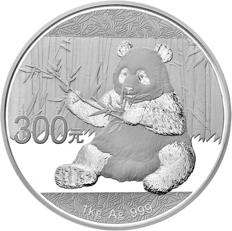
The defining feature of the China Panda is its design, which changes annually. Since 1983, the design side has always shown one to three pandas in their natural habitat, sometimes eating bamboo, sometimes playing, sometimes resting. The only exception: the 2001 and 2002 years of issue carry the same image. This design diversity makes the Panda one of the most elaborate bullion coins of all.
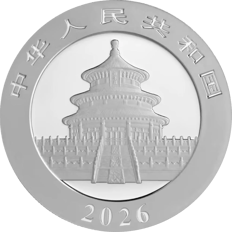
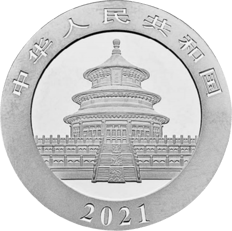
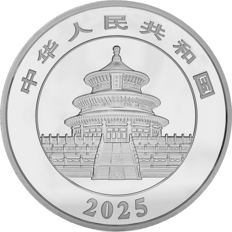
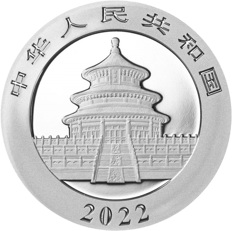
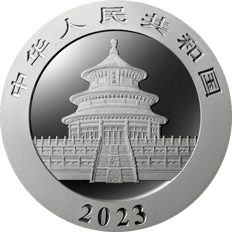
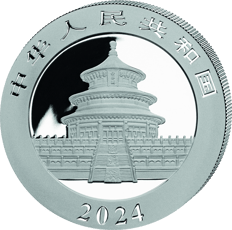
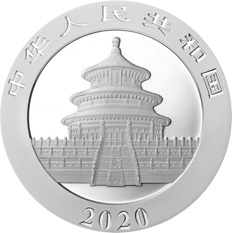
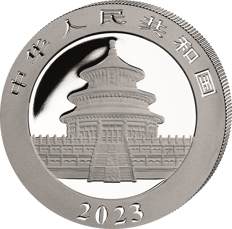
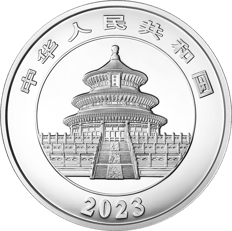
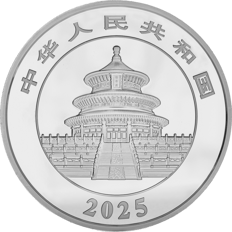
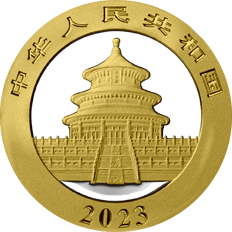
On the opposite side, the Temple of Heaven in Beijing remains unchanged, one of China's most famous landmarks, where harvest offerings were made for centuries. Above it, in Chinese characters, is the name of the People's Republic of China, supplemented by the year of issue. On the Panda side are the fineness, the face value in yuan, and the fine weight.
The edge of the coin is reeded. As standard, the Panda is issued in Mint State (MS); for collectors, additional issues are struck in Proof. For years, the China Mint has used elaborate minting techniques to bring out the fine fur structure of the bear in relief.
There is a special feature of the Panda in the world of precious metals: since 2016, the coins have no longer been minted in troy ounces but in grams. Since then, the standard issue has weighed 30 grams and carries a face value of 10 yuan; previously, one ounce corresponded to around 31.1 grams. The slightly lower silver content makes the 30-gram issue usually somewhat cheaper compared with the classic 1-ounce coin.
Smaller denominations are recommended for beginners and for gradual accumulation; suitable ranges can be found under savings plan products. Those wishing to stock up on larger quantities should bear in mind the lower unit costs of the larger units, as is also the case with silver bars.
In the early minting years from 1983 to 1985, the silver Panda had a fineness of 900/1,000, with the pure silver weight at around 27 grams. From 1987, the China Mint raised the fineness to the now standard 999/1,000. Since then, it has been a classic fine silver coin, as is standard for other bullion classics.
The change in weight in 2016 from ounces to grams changed nothing about the high fineness or the face value in yuan. Those seeking a direct comparison will find numerous other fine silver coins with an identical degree of purity among the silver bullion coins.
Good to know
A fineness of 999/1,000 means that a 30-gram coin contains almost 30 grams of pure silver. The small remainder is made up of production-related traces of other metals, a value that puts the Panda on a par with the world's best-known fine silver coins.
The year of issue plays an exceptionally important role with the Panda. The individual years of issue of the China Panda differ not only in design but also considerably in mintage. As early as the first year of issue, 1983, the coin became a bestseller, and the collector value of early years of issue rose significantly, not least because of the low mintages. While mintage figures around the turn of the millennium were still a few hundred thousand pieces, the mintage of the 1-ounce issue was sharply increased from 2010 onwards and reached around eight million pieces in 2012.
The Panda coins are produced at various mints, without, unlike in Germany, there being consistent mint marks. Instead, the mints can often only be identified by fine details, such as the thick or thin typeface of the year. A regular mint mark was only used in exceptional cases, for example in 2001 with the mark D for the Chinese domestic market.
It is precisely the collector aspect that sets the Panda apart from purely speculation-neutral bullion coins. Those wishing to bridge the gap from investment to numismatics will find further offerings under collector's coins.
With the Panda, you buy not just silver but a piece of living minting history that wears a new face every year.
Precisely because early years of issue are sometimes traded at a considerable premium, there are unfortunately numerous counterfeits of the China Panda in circulation. Some consist of inferior silver, but many are made of silver-plated copper or iron alloys with none of the promised fineness at all. Purchases should therefore only be made from a verified specialist dealer.
Kettner Edelmetalle checks all incoming goods with an ISO-compliant authenticity verification process and sources them directly from established manufacturers. For your own checks, a few simple verification steps help:
For safe storage, suitable coin capsules are recommended, which protect the sensitive surface from scratches and tarnishing.
Unlike investment gold, which is exempt from VAT in Germany, silver coins are generally subject to VAT. However, since the China Panda is manufactured outside the European Union, it can usually be sold under the margin scheme. Under the margin scheme, only the trading margin is taxed, not the full value of the goods, giving buyers a noticeable price advantage over regularly taxed silver coins.
Those wishing to compare the treatment with other metals will find the VAT-exempt alternative under gold. For combining both worlds, the gold-silver mix packages are a good option.
Fine silver is more sensitive than gold: it can tarnish and reacts to moisture as well as sulphur compounds in the air. For the long-term preservation of value of a Panda collection, proper storage is therefore crucial. Airtight capsules that individually enclose the coin and minimise contact with the surrounding environment have proven effective.
For larger holdings, coin cassettes or coin tubes are suitable, bundling several coins neatly and securely. Those collecting an entire series of years of issue will appreciate the clear presentation in a coin case. As a general rule: store cool, dry and dark, and avoid direct contact with bare fingers.
In direct comparison with other silver classics, the Panda plays to its strengths. The annual change of design creates a collector's incentive that permanent designs, such as the American Eagle, do not offer. At the same time, it shares with the Koala and the Kookaburra the concept of an animal design series with a changing design.
Investors who favour pure bullion classics with a stable design and high liquidity often choose the Maple Leaf or the Vienna Philharmonic. Those seeking the combination of precious metal and numismatic appeal, on the other hand, will find a rare combination in the Panda. A sensible portfolio structure often combines both approaches; suitable combinations are offered by the silver investor packages.
Since 1983, the China Mint has redesigned the Panda side every year, usually with one to three pandas in different scenes. Only the years of issue 2001 and 2002 carry the same image. This change of design makes the series particularly worth collecting, as no issue resembles another.
Since 1987, the China Panda has had a fineness of 999/1,000, that is 99.9 percent pure silver. The early years of issue from 1983 to 1985 were still struck with 900/1,000 and are now considered particularly sought-after collector's items.
The background is a Chinese law that mandates the exclusive use of the metric system within the country. Since 2016, the standard issue has therefore weighed 30 grams instead of one troy ounce. The fineness of 999/1,000 and the face value of 10 yuan remained unchanged.
Since the China Panda is minted outside the European Union, it can usually be traded under the margin scheme. In this case, only the trading margin is subject to VAT, not the full value of the goods. This can mean a price advantage compared with regularly taxed silver coins.
Important features include the exact weight, the matching diameter, a razor-sharp strike of the fur structure, and the lack of magnetism of genuine silver. Since many counterfeits of the Panda are in circulation, purchases are recommended exclusively from a verified dealer with professional authenticity verification.
Above all, the early years of issue up to shortly after the turn of the millennium had small mintages and are now traded at a significant premium over the pure material value. Officially coloured issues as well as anniversary editions released in limited quantities are also in demand.
 China Panda
Stay informed with product launches, financial news and exclusive offers. Sign up for our free newsletter today.
By entering your email address and clicking the "Submit" button, you give the following consent: "I agree to be informed by email about new products, financial news and exclusive offers, and therefore consent to the processing of my email address for the purpose of sending the newsletter. I can revoke this consent at any time without giving reasons, with effect for the future. The lawfulness of processing carried out prior to revocation remains unaffected."