


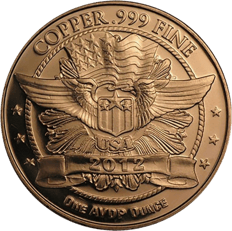
1 Ounce Copper Coin China Panda
£8.31
excl. UK import VAT and shipping
Available in 2–3 business days

 More than 300,000
 Over 30 years
 Secure shipping
 Google: 4.9/5
Hardly any coin design inspires as much affection as the Giant Panda: China's cuddly national emblem has featured since 1982 on one of the world's most popular bullion series, and for some years now it has also been available in copper. China Panda copper coins combine the annually changing cult design with an affordable entry price, making them ideal for collectors who enjoy beautiful coinage without having to invest in gold or silver straight away. This guide sheds light on the origin, designs, denominations, authenticity, tax particulars and proper storage of these charming coins.
The China Panda series is one of the world's best-known coin programmes. It is issued by the state-owned China Mint, which first struck the panda on gold coins in 1982. The Giant Panda is not only a national symbol of China but also the logo animal of the conservation organisation WWF, a connection that gives the design worldwide appeal and recognition. Originally established in gold and later in silver as the China Panda, the copper version adds a particularly affordable edition to the family.
The Giant Panda lives mainly in the mountainous bamboo forests of central China. Its main food, bamboo, appears as a design element on many issues. It is precisely this closeness to nature and species conservation that turns the series, beyond its pure material value, into an emotionally charged collectable. Anyone interested in the copper editions will find further designs in the broad range of copper coins.
The panda is one of the few coin designs that is retold anew every year: no year of issue resembles another.
What makes the China Panda special is its design side, which changes every year. Unlike many other bullion coins whose design remains the same for decades, the China Mint redesigns the panda year after year. This variety of designs makes each issue a piece in its own right and encourages collectors to build an ongoing year set.
The design side shows the panda in ever new situations: sometimes playful, sometimes calm, sometimes as a tender family scene. Typical designs include:
On the value side, the China Mint traditionally depicts the Temple of Heaven in Beijing, complemented by Chinese characters as well as details of weight and year of issue. This combination of a changing animal design and a constant architectural symbol gives the series its unmistakable character. Anyone wishing to keep track of current years of issue will regularly find the latest editions at China Panda 2025.
China Panda copper coins are offered in various weights, usually stated in troy ounces or grams. The most common version is the 1 oz copper coin, which combines a convenient format with an attractive minted surface. Copper is particularly attractive for beginners: it can be collected even on a small budget.
Alongside the classic strike, individual issues appear in more elaborate variants, as is also known from the silver pandas:
When choosing a coin, it is worth looking at the grade. Regularly struck issues usually achieve Mint State or Brilliant Uncirculated quality, while elaborate collector issues appear in Proof. Both features significantly influence the appearance and collector price: Brilliant Uncirculated pieces are the affordable standard, Proof strikes the more exclusive choice.
Anyone wishing to own the design in precious metal as well will also find the panda as a China Panda gold coin. This makes it possible to build a themed collection across several metals. As a pure material investment in the same material, copper bars are also an option.
China Panda copper coins are especially sought after when it comes to a limited edition. Small mintages sell out quickly, which is why it is worth keeping an eye on release dates. The value of a collector's coin is made up of two components: the pure material value of the copper and a collector premium, which can rise over the years for rare designs and low mintages.
Precisely because the panda design changes every year, a natural scarcity arises for older years of issue: sold-out editions cannot be re-struck. Collectors who get in early and complete their year sets without gaps benefit most in the long run from this dynamic. For building a more broadly diversified collection, related designs from copper commemorative coins or further copper series are also worth considering.
Tip for Collectors
Anyone wishing to build a complete year set should secure new issues soon after release. Older years of issue with low mintages are often difficult to obtain later, and only at higher prices.
As with all collector's and bullion coins, authenticity plays a central role. China Panda copper coins carry clearly defined features by which originals can be recognised:
Kettner Edelmetalle checks all goods as part of an ISO-compliant authenticity verification before they reach fully automated and insured shipping. Buyers thus receive a verified coin in flawless condition. Anyone wishing to delve deeper into the subject will find basic information on the material in the copper section.
In Germany, copper coins, unlike investment gold, are subject to standard VAT, as copper is not a tax-privileged investment precious metal. For private collectors, the one-year holding period is particularly relevant: if a coin is resold at a profit within one year of purchase, tax may be due on the profit.
Tax Note
An annual tax-free allowance of 1,000 euros applies to private disposal transactions (up to 2023: 600 euros). Only once total profits from private sales exceed this threshold do they become taxable. After the one-year holding period has elapsed, a sale is generally tax-free. This is general information and does not replace tax advice.
Anyone focusing primarily on tax-advantaged investment can additionally look to the bullion coins section or small gold bars. Copper coins, on the other hand, are more suited to the collecting and entry-level segment.
Copper is a reactive metal and can develop a natural patina on contact with air and moisture. Careful storage is recommended to preserve the minted lustre. The following have proven effective:
Important: copper coins should, if possible, not be touched on the minted surface with bare fingers, as skin oils can leave stains. Suitable accessories can be found under coin capsules and coin cases. This way, the collector value is preserved for years to come.
The China Mint has deliberately redesigned the panda's design side every year since the 1980s. This creates an ongoing series of designs in which no year of issue resembles another, a key appeal for collectors who want to build a complete year set.
The design is identical across all three metals; the difference lies in the material and the price. Copper pandas are the most affordable version and are suitable as an entry point, while the silver panda and the gold panda have a higher precious metal value.
Copper coins are primarily collector's items and entry-level coins. Their value derives from the material value and a possible collector premium for rare designs. For a classic precious metals investment, bullion coins made of gold or silver are more suitable.
Proof denotes a high-quality minting standard with mirrored surfaces and a frosted design. Such issues appear in smaller mintages and are usually supplied with a certificate and protective packaging.
Best stored in acid-free coin capsules in a dry, dark place. As copper can develop a patina over time, the minted surface should not be touched with bare fingers.
If sold within one year of purchase, profits may be taxable if the annual tax-free allowance for private disposal transactions is exceeded. After the one-year holding period has elapsed, a sale is generally tax-free. This does not replace individual tax advice.
 China Panda
Stay informed with product launches, financial news and exclusive offers. Sign up for our free newsletter today.
By entering your email address and clicking the "Submit" button, you give the following consent: "I agree to be informed by email about new products, financial news and exclusive offers, and therefore consent to the processing of my email address for the purpose of sending the newsletter. I can revoke this consent at any time without giving reasons, with effect for the future. The lawfulness of processing carried out prior to revocation remains unaffected."