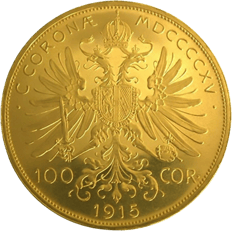
100 Gold Crowns Austria
£3,046.72
VAT-free and excl. shipping
Available in 2–3 business days

 More than 310,000
 Over 30 years
 Secure shipping
 Google: 4.9/5
As a gold investor, are you always on the lookout for something special? Holding the up to 100-year-old crowns from Austria in your hands gives you the feeling of directly participating in European history.
The portrait of Emperor Franz Joseph I of Austria is impressive and represents on the gold coin the qualities of the 68-year head of state: wealth, power and influence.


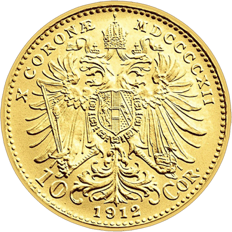
Austria: 10, 20 and 100 Kronen
Franz Joseph I reigned for almost 68 years, from 1848 to 1916. The portrait on these three coins is the work of the medallist Stefan Schwartz, and his name appears in small letters below the neck.
The 100 Kronen coin was not added until 1908, for the 60th anniversary of the emperor’s reign.
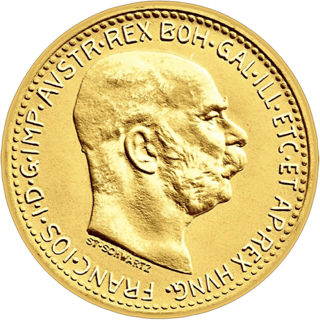
19 mm
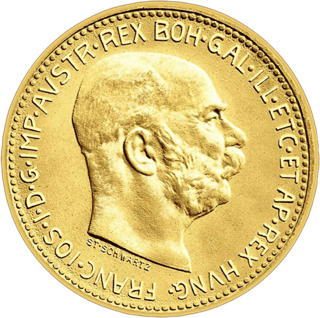
21 mm
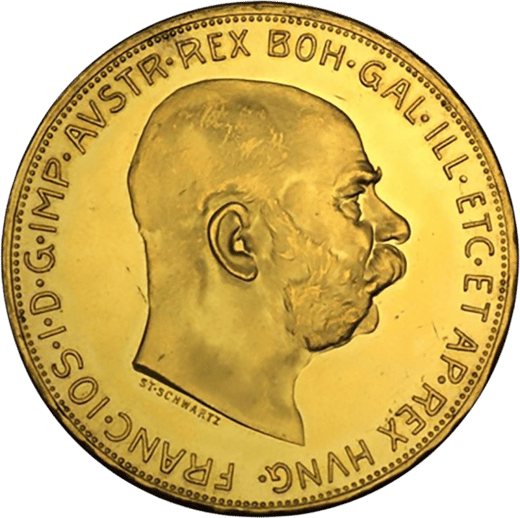
37 mm
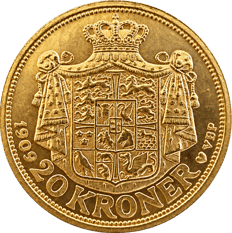
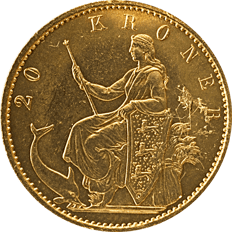
Denmark: 20 Kroner
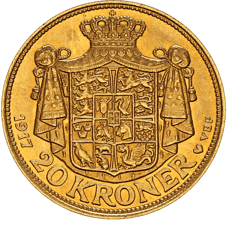
The Danish 20‑krone coins show grandfather, son and grandson: Christian IX, Frederik VIII and Christian X.
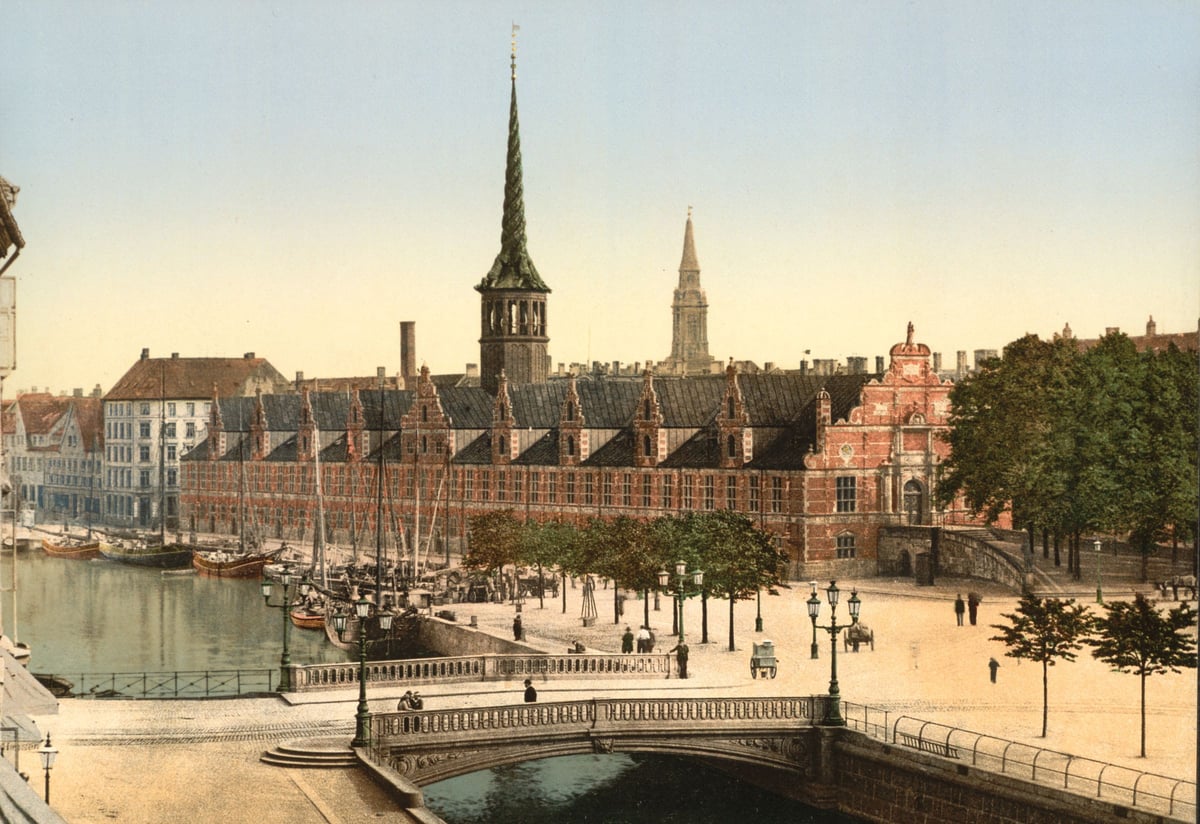
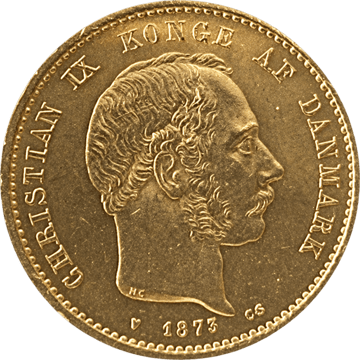
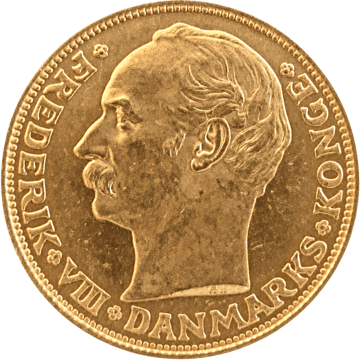
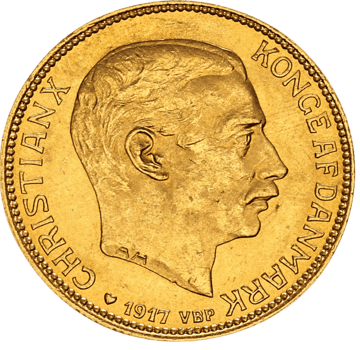
This is what Christian IX was called. His children became:
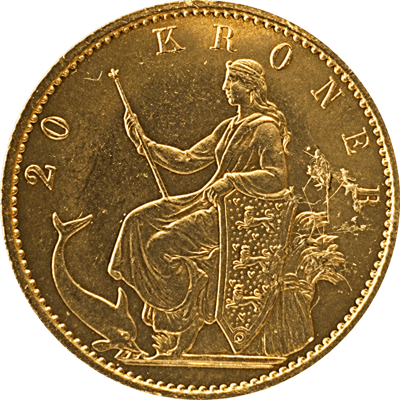
1873 and 1892
Its name comes from the Latin “corona”. Long before, coins bearing the image of a crown were already known by that name. In the 19th century the crown twice became a new currency, and both times gold replaced silver.
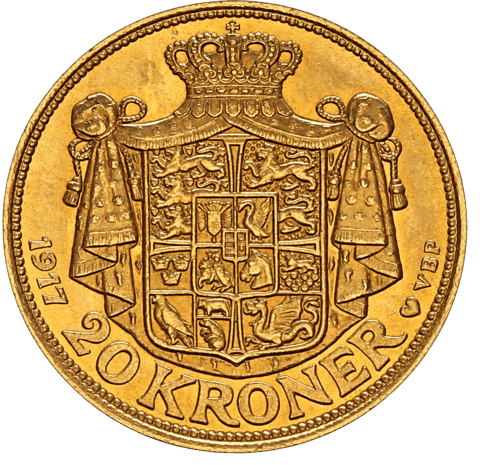
Copenhagen
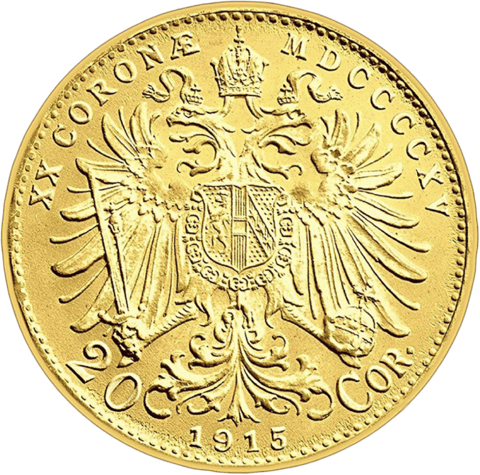
Vienna
| Country and year | Conversion |
|---|---|
| Denmark1873 | 1 rigsdaler2 kroner |
| Sweden1873 | 1 riksdaler1 krona |
| Norway1875 | 1 speciedaler4 kroner |
| Austria‑Hungary1892 | 1 gulden2 kronen |
Denmark, Sweden and Norway formed a monetary union. Their crowns had the same gold value, and the coins of each country were legal tender in all three.
Sources: Danmarks Nationalbank, Norges Bank, Store norske leksikon, Reichsgesetzblatt No. 126/1892, Wien Geschichte WikiSame name, different weight
The coinage laws laid down how many coins were to be made from one kilogram of fine gold. For the 20‑krone coins, that meant 124 pieces in Scandinavia and 164 pieces in Austria‑Hungary.
A Scandinavian crown therefore contained about a third more gold than an Austrian one: 0.403 instead of 0.305 grams.
You can tell by looking at the coins. The Danish 20‑krone coin measures 23 mm and contains 8.06 g of fine gold, the Austrian one 21 mm and 6.10 g.
Sources: Reichsgesetzblatt No. 126/1892, Article IV; Norwegian Act on the Monetary System of 17 April 1875, § 2; Store norske leksikonIn Austria, the schilling replaced it in 1925. But the name lives on in five European currencies.
Anyone holding a gold Krone from old Austria holds a piece of European history: the profile of Emperor Franz Joseph I, who ruled a multi-ethnic empire for 68 years, struck in warm, slightly reddish gold. The Kronen are among Europe's most popular historical bullion coins: low in premium, rich in history and still available in large numbers today. This guide examines their origin, denominations, design, fineness, tax treatment and the question of why these circulation coins are so sought-after among collectors and investors alike.

The history of the Krone currency begins with a monetary reform: in 1892, the Krone replaced the gulden in Austria-Hungary and brought the monarchy onto the international gold standard. The Krone was thus the first modern gold currency of the Danube monarchy, intended to place trade and credit on a stable metallic foundation.
Franz Joseph I appears on the coins; he assumed the imperial title in 1848 at the age of 18 and ruled until his death in 1916. He was also Apostolic King of Hungary and King of Bohemia, a ruler whose long reign shaped the second half of the 19th century and who, as the husband of Empress Elisabeth (Sisi), still lives on in the collective memory today. The end of his reign was overshadowed by the outbreak of the First World War.
The gold Kronen were issued not only in Austria but also in the Hungarian part of the empire, where the currency was known as corona or korona. They were minted in Vienna, the mint that still exists today as the Münze Österreich and later also produced the schilling and euro coins. A broader overview of the issues of this era can be found in the range of coins of the German Empire, which date from the same period of the gold standard.
The Austrian gold Kronen were issued in three face values that differ markedly in weight, fine weight and format. All three share a uniform fineness of 900/1,000, i.e. 90 percent gold and 10 percent copper.
The smaller denominations can be resold more easily if needed, while the 100 Kronen offers the lowest price per gram. Anyone wishing to compare the Kronen with a classic bullion coin will find in the Vienna Philharmonic the modern counterpart from the same mint, albeit with 999.9 fine gold instead of the historical alloy.
| Face value | Weight | Fine weight | Fineness | Diameter |
|---|---|---|---|---|
| 10 Kronen | 3.387 g | 3.045 g | 900 | 19.0 mm |
| 20 Kronen | 6.775 g | 6.090 g | 900 | 21.1 mm |
| 100 Kronen | 33.875 g | 30.480 g | 900 | 37.0 mm |
The design of the gold Kronen reflects the self-image of a monarchy. The obverse shows the profile portrait of Franz Joseph I, unmistakable for its full sideburns, clean-shaven chin and purposeful gaze. On the 10 Kronen pieces, the emperor wears a laurel wreath, a symbol of ancient sovereign dignity.
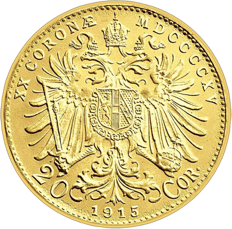
The reverse features the Austrian double eagle, the Habsburg heraldic animal with two heads and a shared crown above, bearing the national coat of arms on its breast. The year appears below it. The slightly raised, finely beaded coin rim protects the relief from wear, a detail that also distinguishes other historical coinages such as the Gold Mark of the German Empire.
Anyone who looks at the double eagle sees more than a coat of arms: they see the symbol of an empire that united half a dozen peoples under a single crown.
The typical reddish hue of the gold is no coincidence: it comes from the copper alloy mixed into the gold. This combination of 90 percent gold and 10 percent copper makes the coin harder and more durable, which was essential since the Kronen actually circulated as currency in the emperor's time. The same effect can be seen in the Krugerrand from South Africa, whose reddish shimmer is likewise due to a copper admixture.
One point often causes confusion for beginners: the vast majority of gold Kronen available today bear the year 1915, even though they were produced much later. These are official restrikes by the Münze Österreich, which adopt the last regular year of issue for the respective denomination as a fixed date.
These official restrikes are indistinguishable from the original in weight, fineness and design, and are treated as trade gold coins. The actual regular year of minting cannot be read from them, which is irrelevant to their investment value, since the price is calculated solely on the basis of their gold content. Anyone looking for genuine, year-accurate circulation pieces is more likely to find them among historical German gold coins or other collector issues. As a compact store of value, the Kronen are comparable to the classic Ducat from the same region.
The Kronen are classic circulation coins: coins that were once in circulation as full-value legal tender and whose value is defined primarily by the precious metal they contain. As a means of payment they no longer play any role today, but because of their high gold content they are readily bought back in the trade.
For investors they are attractive for several reasons: the price per gram is often lower for historical circulation coins than for modern bullion coins, and the premium above the pure material value stays low. Since no flawless collector's condition is required, storage is also uncomplicated; many people simply keep larger holdings in capsules, tubes or cases. Suitable accessories can be found under coin capsules and coin cases.
Why historical gold coins are in demand
Circulation coins combine tangible gold value with historical character. Especially in uncertain times, investors value physical gold in small, divisible form, an idea that is also reflected in the crisis protection packages.
Anyone who views Kronen primarily as a store of value places them within the broader category of gold bullion coins. For building wealth in stages, savings plan products offer a useful complement, while a holding can be rounded out with classic bar formats from the gold bars range.
Gold Kronen are classed as investment gold under the German VAT Act. Investment gold in Germany is exempt from VAT under §25c UStG, a significant advantage over many silver coins. In addition, if physical gold is held for longer than one year, any capital gain is free of income tax after the one-year holding period. This information is general in nature and does not replace tax advice.
When buying, it is worth looking at a few criteria:
Kettner Edelmetalle carefully inspects all coins, so that the pieces delivered are well preserved and the designs stand out clearly. Anyone wishing to diversify their portfolio internationally will find further historical gold coins of comparable character and low premium in the Swiss Vreneli or the British Sovereign.
Most Kronen traded today are official restrikes by the Münze Österreich. They adopt the last regular year of minting as a fixed date, which for the 20 and 100 Kronen is 1915. The actual time of production is often decades later and cannot be read from the coin itself.
All three denominations consist of a 900 alloy, that is, 90 percent gold and 10 percent copper. The copper admixture makes the coins harder and gives them their characteristic reddish gold tone.
That depends on your goal. The 20 Kronen is the most widely traded classic with a balanced ratio of gold value to premium. The 10 Kronen offers a small, easily divisible unit, while the 100 Kronen delivers the lowest price per gram and bundles larger amounts of gold compactly.
Yes. As investment gold, the Kronen are exempt from VAT in Germany under §25c UStG. After a holding period of more than one year, any capital gain is also free of income tax. This is general information and does not constitute tax advice.
The obverse shows Emperor Franz Joseph I of Austria in profile, with a laurel wreath on the 10 Kronen. The reverse shows the Habsburg double eagle with the national coat of arms. Franz Joseph reigned from 1848 to 1916 and was the husband of Empress Elisabeth, known as Sisi.
Yes. Within the Austro-Hungarian monarchy, the Krone was also valid in the Hungarian part of the empire, where it was known as corona or korona. The gold Kronen served empire-wide as full-value legal tender based on the gold standard.
 Crowns
Stay informed with product launches, financial news and exclusive offers. Sign up for our free newsletter today.
By entering your email address and clicking the "Submit" button, you give the following consent: "I agree to be informed by email about new products, financial news and exclusive offers, and therefore consent to the processing of my email address for the purpose of sending the newsletter. I can revoke this consent at any time without giving reasons, with effect for the future. The lawfulness of processing carried out prior to revocation remains unaffected."