Only 1 left to order
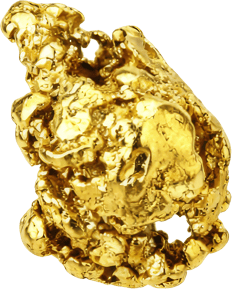
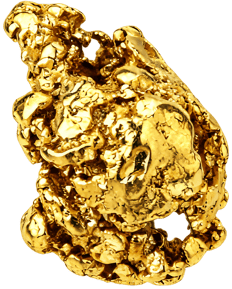
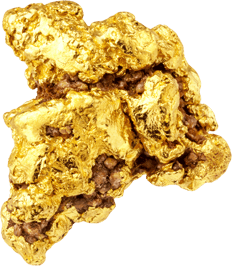
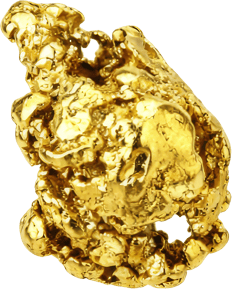
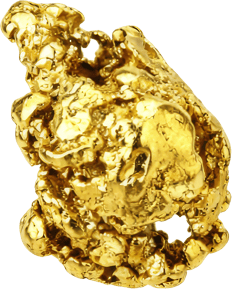
Australia Gold Nugget (Real Nuggets 275.00g)
£84,495.60
excl. UK import VAT and shipping
Available in 2–3 business days

 More than 310,000
 Over 30 years
 Secure shipping
 Google: 4.9/5

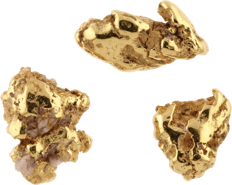
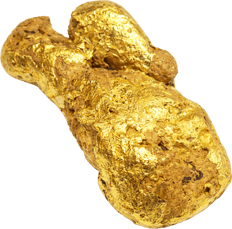
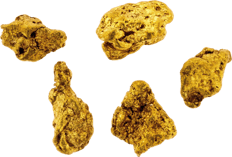
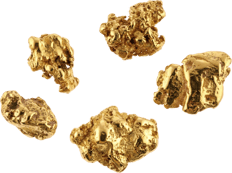
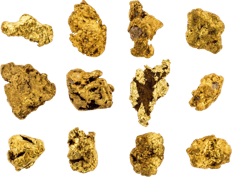
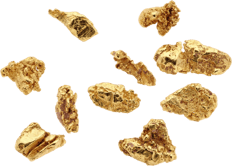
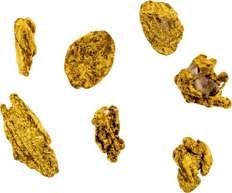
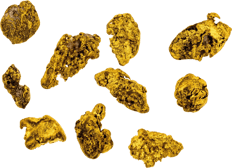
Australian gold nuggets are characterised by their smoother, more rounded shape – polished by wind and water over millions of years. Macherey & Söhne discover these treasures with metal detectors in the red Outback sand.


No coin press. No prescribed shape. Just natural gold, with edges, hollows and branches that hold your gaze.
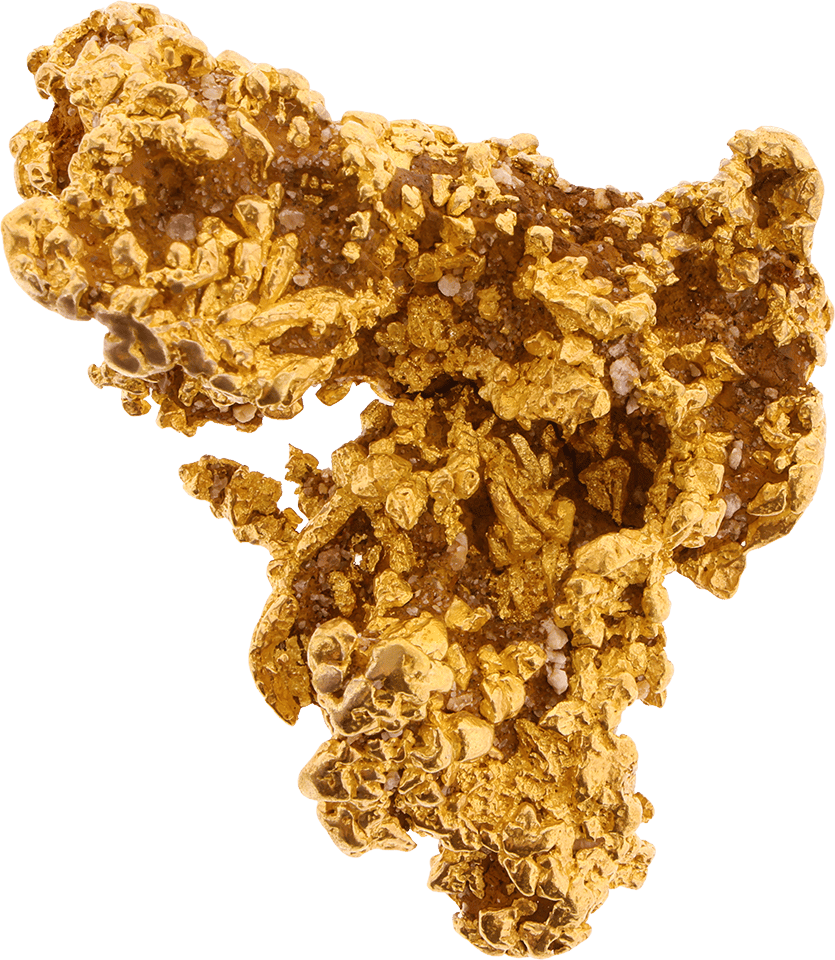
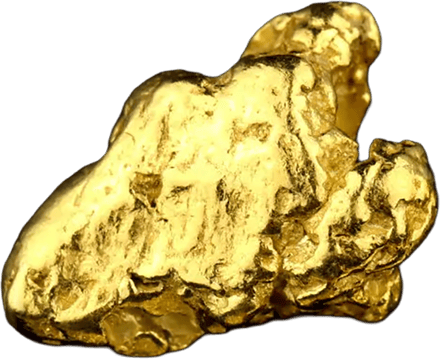
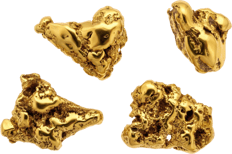
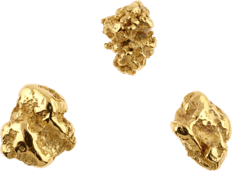
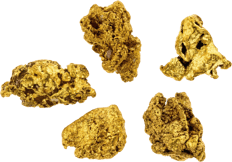
A smoother surface here, delicate branches there. Two shapes of natural gold. Shape alone cannot reveal how an individual piece formed.
Illustrative photographs from our range, not to scale. The shape and surface of the delivered piece may differ.
Released from rock, carried by water: one common path takes gold into the hollows of a streambed.
Hot fluids can deposit gold in cracks in rock, often alongside quartz.
Weathering releases the gold. Water moves it.
Heavy gold particles remain in hollows.
Schematic illustration of one common formation pathway. Not to scale and not a determination of the origin of the pieces shown.
John Deason finds the Welcome Stranger in Victoria. With Richard Oates, he recovers the nugget from beneath tree roots. The find is later broken up to fit the bank scales. It has not survived as a whole.

The discovery at what became Bonanza Creek sets off the Klondike gold rush. Keish (Skookum Jim Mason), George Carmack, Shaaw Tláa and Káa Goox are part of its story. Accounts differ on who first saw the gold.
These historic discovery sites tell stories of natural gold. Origin descriptions of pieces sold today do not establish that they were found at these exact sites.
Discover natural gold in all its shapes. Return to the gold nuggets.
No two pieces are alike: gold nuggets from Australia are pure natural products, shaped over millions of years by the interplay of water, pressure and time. Where a bar is created in the melt, a nugget is found: from the gold-rich soils of Victoria, Western Australia and New South Wales. This guide sheds light on the origin, formation, purity, value determination and storage of these natural gold pieces, and shows what distinguishes them from minted bullion coins.
A gold nugget is native gold that occurs in nature in solid form: not enclosed in quartz or as fine dust, but as a coherent piece. It is precisely this rarity that creates the appeal: worldwide, only around two per cent of mined gold ever reaches nugget form. Australia has been considered one of the most productive regions on earth since the Gold Rush of 1851, and remains home to spectacular finds to this day.
Unlike an industrially manufactured gold bar, every nugget carries its own history: irregular contours, a warm, deeply glowing surface and a shape that exists nowhere else. For collectors, this is where the emotional value lies: you hold a piece of untouched nature in your hand. Natural gold of this kind should not be confused with the minted Australian Nugget gold coin from the Perth Mint: those who prefer minted classics will find the machine-made alternative from the same region in the range of Australian gold coins.
A nugget is not produced, but found: therein lies its unmistakable character.
The Australian goldfields are among the most legendary in the world. The famous Golden Triangle around the towns of Ballarat and Bendigo in the state of Victoria produced some of the largest nuggets ever discovered. The most famous specimen, the Welcome Stranger, was found near Moliagul in 1869 and weighed over 70 kilograms in its raw state: to this day, the largest documented gold nugget find in history.
Natural nuggets are also found beyond Australia. Those wishing to compare pieces from other regions will find an exciting comparison in the range of gold nuggets from Alaska: Alaskan nuggets are considered paler and are shaped by the cold climate, while Australian finds often appear richer in colour and more compact.
Gold nuggets form over geological time spans. Originally, the gold was finely distributed and enclosed within gold-bearing quartz rock. Through weathering and erosion, it detached from the host rock and entered river courses. There, the water carried the heavy gold particles, deposited them in depressions and, over thousands of years, compacted them into solid lumps: the so-called placer gold deposits.
Because the precious metal in this natural form barely fuses with other minerals, Australian nuggets often achieve very high purity levels. This natural concentration fundamentally distinguishes them from smelted investment gold, as known in the form of gold bars, whose fineness is precisely set to 999.9 during the smelting process.
The value of a gold nugget is made up of several factors, and is almost always above the pure material value of the gold it contains. Natural gold is typically traded with a premium, because shape, rarity and collector's value are also factored in.
Those who are primarily interested in pure gold content and a price close to the spot market, on the other hand, often get a better deal with classic investment gold in coin form: natural nuggets are more collector's and enthusiast's pieces than pure investment vehicles.
Note on performance
The price of a natural nugget follows the gold price, but is additionally influenced by rarity and collector demand. An increase in value cannot be guaranteed: natural gold is primarily an emotional collector's item with material value, not investment advice.
Trust is particularly crucial with a natural product. Reputable dealers supply every gold nugget with a certificate of authenticity documenting weight and origin. At Kettner Edelmetalle, every precious metal product undergoes an ISO-compliant authenticity verification before leaving the fully automated high-security logistics centre.
What to look out for when buying:
Gold is chemically extremely stable and does not tarnish: a gold nugget therefore requires no elaborate care. More important is protection against mechanical damage, since the fine, naturally grown surface is part of its appeal. Padded coin cases or suitable coin capsules are suitable for storage, keeping the piece free of dust and scratches.
For larger holdings, a safe or a bank safe deposit box is recommended. Those who also want to display their natural gold can turn to transparent collector's solutions from the collector's accessories range. This way, the nugget remains protected while still being visible.
Both forms consist of gold, but address different needs. A small gold bar or a minted bullion coin scores points with standardised fineness, clear pricing and high resaleability. A natural nugget, on the other hand, is a one-of-a-kind piece with character: ideal as a gift, collector's item or special keepsake.
Those who view precious metal primarily as a store of value will sensibly complement their portfolio with classic gold coins and bars. Those seeking the fascination of natural material, on the other hand, will find in the nugget something no industrial product can offer. A gift featuring a genuine piece of Australian natural gold also leaves a lasting impression.
Yes. This is native gold that has grown in nature and has not been melted down or shaped. Australian nuggets often reach purity levels between 92 and 99 per cent. A reputable dealer also supplies a certificate of authenticity stating weight and origin.
Because, in addition to material value, rarity, shape and collector demand also factor into the price. Natural nuggets are usually traded with a premium over the pure gold price, since every piece is unique and only a small proportion of mined gold exists in nugget form at all.
A gold bar is industrially smelted and brought to an exact fineness, usually 999.9. A nugget, by contrast, is a naturally grown, one-of-a-kind piece with an individual shape and purity. Bars are better suited as a standardised store of value, while nuggets are primarily collector's and enthusiast's pieces.
Gold does not tarnish and requires no special care. The key factor is protecting the naturally grown surface from mechanical damage. Padded coin cases or coin capsules are recommended, and for larger holdings, a safe or bank safe deposit box.
The most productive discovery sites are located in Victoria around Ballarat and Bendigo, as well as in Western Australia near Kalgoorlie. The largest documented find, the Welcome Stranger, was discovered in Victoria in 1869 and weighed over 70 kilograms in its raw state.
Very much so. A genuine piece of Australian natural gold is a one-of-a-kind item with history and, at the same time, possesses real material value. This combines emotional and lasting value, a combination that an industrially manufactured product cannot offer in this form.
 Gold Nuggets Australia
Stay informed with product launches, financial news and exclusive offers. Sign up for our free newsletter today.
By entering your email address and clicking the "Submit" button, you give the following consent: "I agree to be informed by email about new products, financial news and exclusive offers, and therefore consent to the processing of my email address for the purpose of sending the newsletter. I can revoke this consent at any time without giving reasons, with effect for the future. The lawfulness of processing carried out prior to revocation remains unaffected."