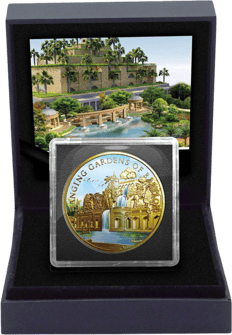
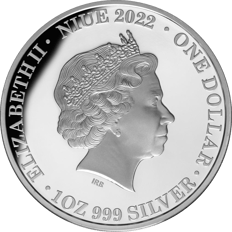
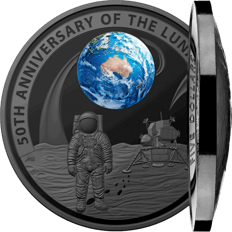
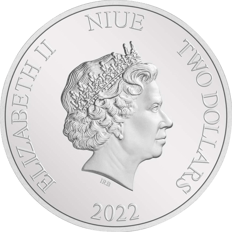
Only 7 left to order
Polar Animals Silver Set 2026 (Mintage: 50 | Partially Gilded)
£671.24£839.26
excl. UK import VAT and shipping
Ships from 18/12/2026

 More than 300,000
 Over 30 years
 Secure shipping
 Google: 4.9/5
Collectors around the world are always on the lookout for exceptional coins to expand their collection. Coloured silver coins are absolute collector's items that also make the perfect gift for various occasions. We carry silver coins enhanced with various techniques: hologram, photorealistic, ruby dust, or with ruthenium.


The Perth Mint has described how colour gets onto its coins. At the start there is a camera, at the end a cabinet with UV light.
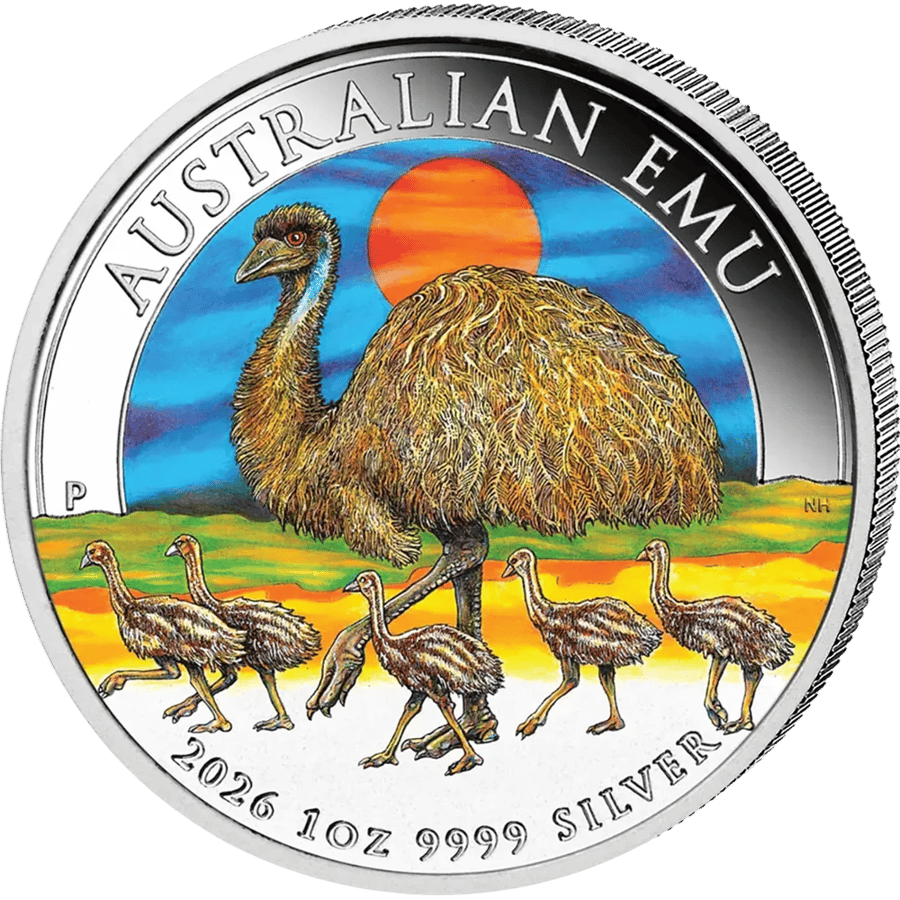
The mint used to apply the colour by pad printing; today it uses an LED UV printer developed specifically to colour coins. First, a digital camera records the areas of the design that receive colour. Then the printer applies a primer, on top of it white and then the colours. After that, the coins go into a UV cabinet for a set time.
Any coins which are blemished are melted back down, cast back to blocks of metal, ready to begin the process again until perfection is reached.
The Perth Mint, “How are coins coloured?”, 16 November 2022
The elephant is the same on all three coins. What changes is the gold: from stage to stage, more of it lies on the silver.

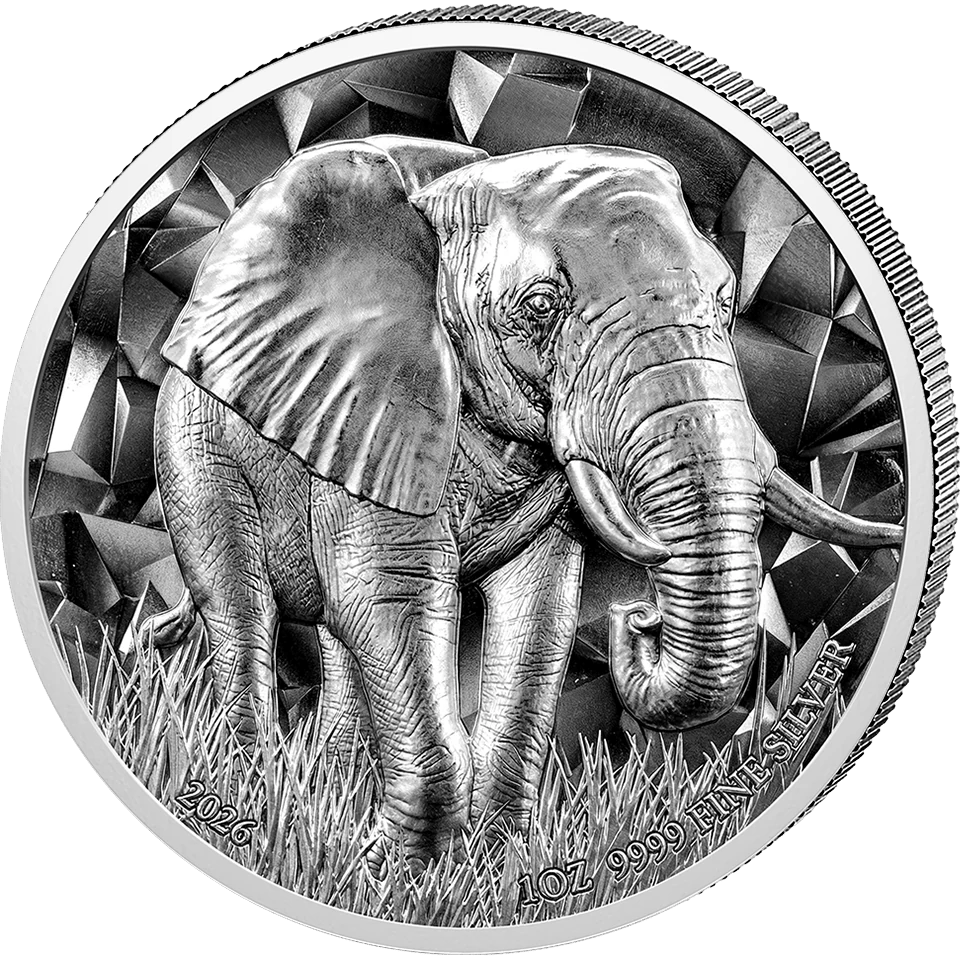
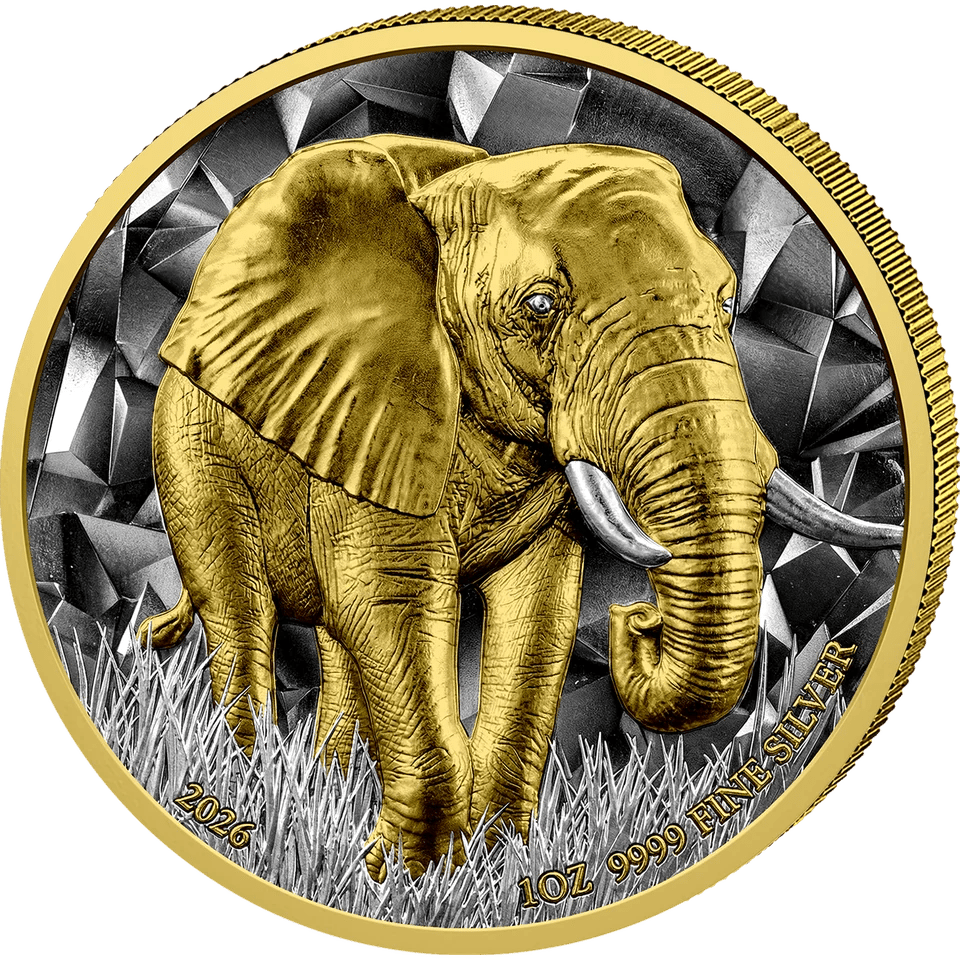
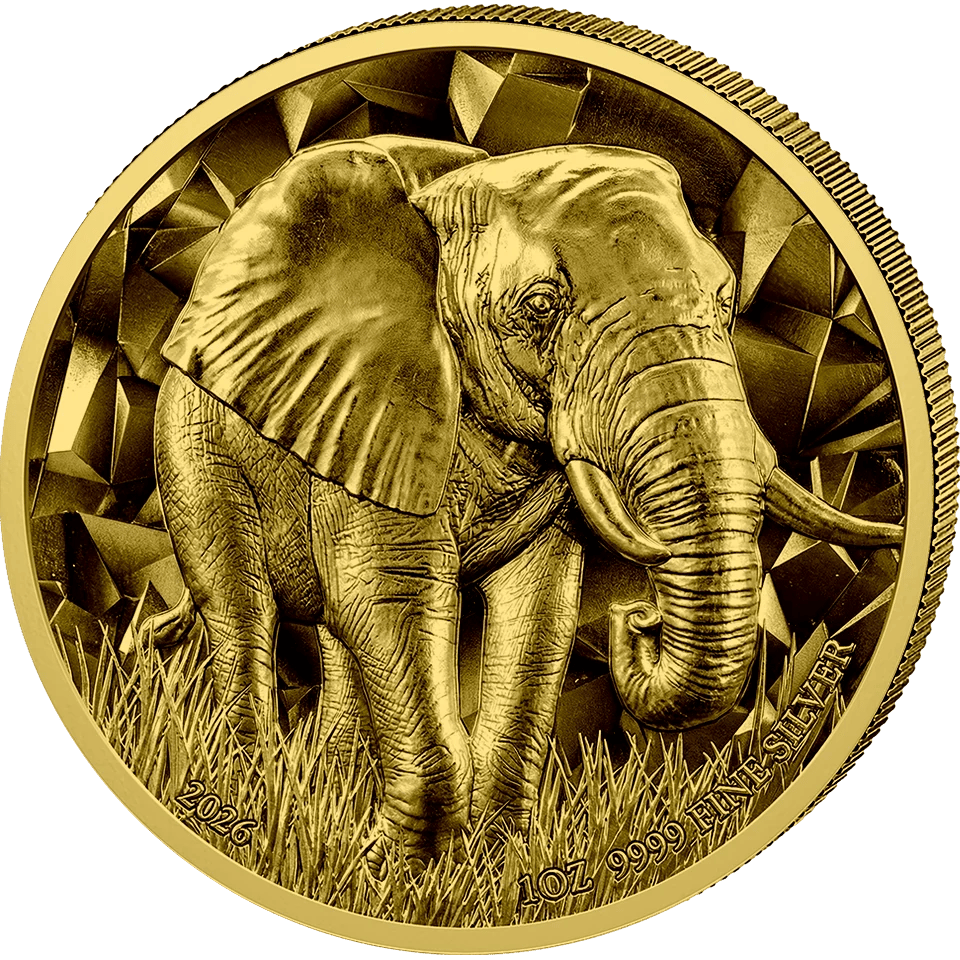
All three come from Kettner Edelmetalle: country of issue Liberia, face value 20 dollars, 1 ounce (31.1 g) of silver with a fineness of 999.9/1,000, 40 mm in diameter. On the first, the whole coin stays silver. On the second, the elephant and the rim are golden, and the crystal field behind them looks dark. On the third, the whole surface is golden. The photos are on the same scale, so ears, trunk and rim can be compared directly.
The case of the two golden elephants holds a card. Three details are on it.
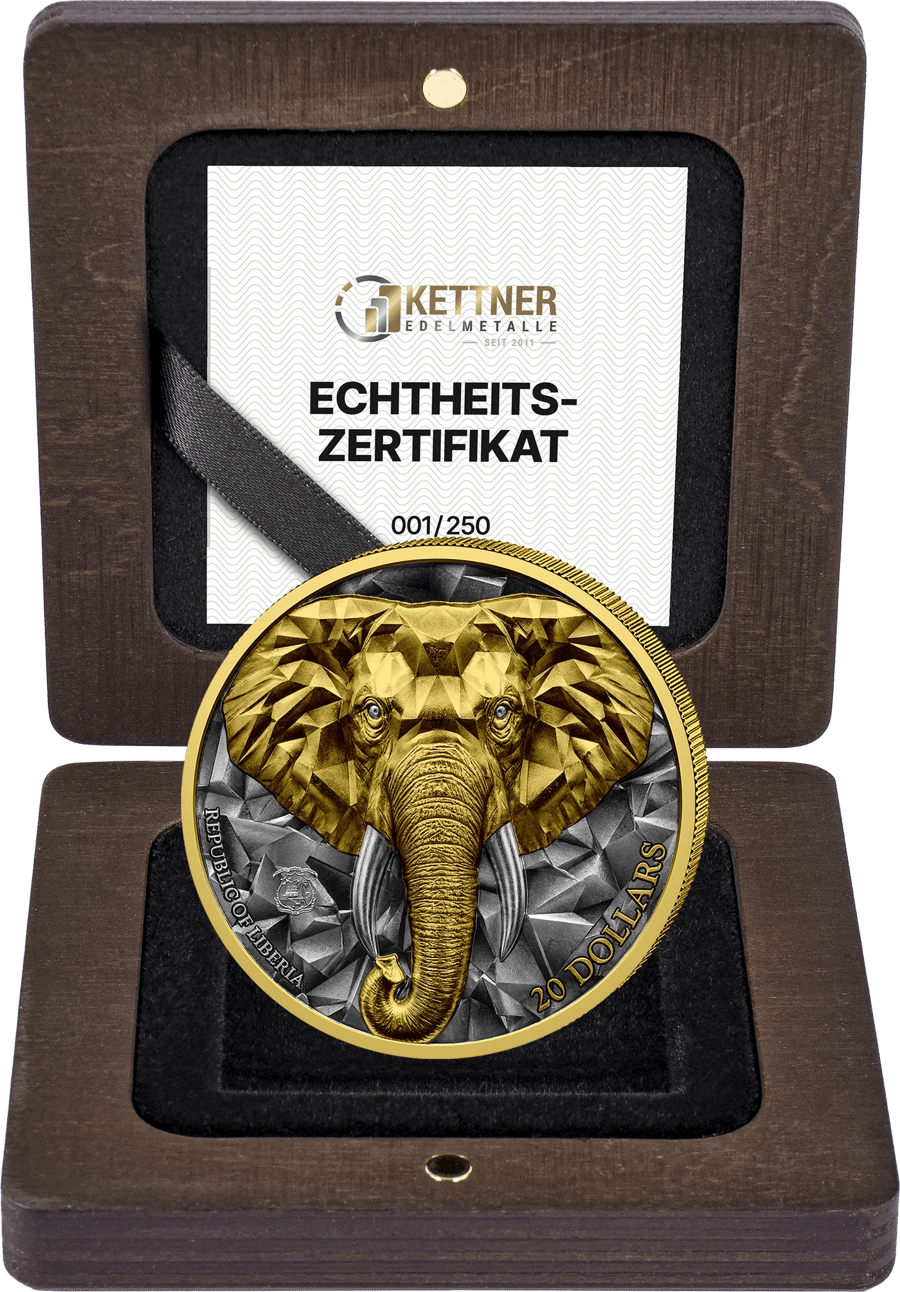
The number after the slash corresponds to the mintage of 250 pieces. The card does not say how thick the gold or colour is, or who applied it.
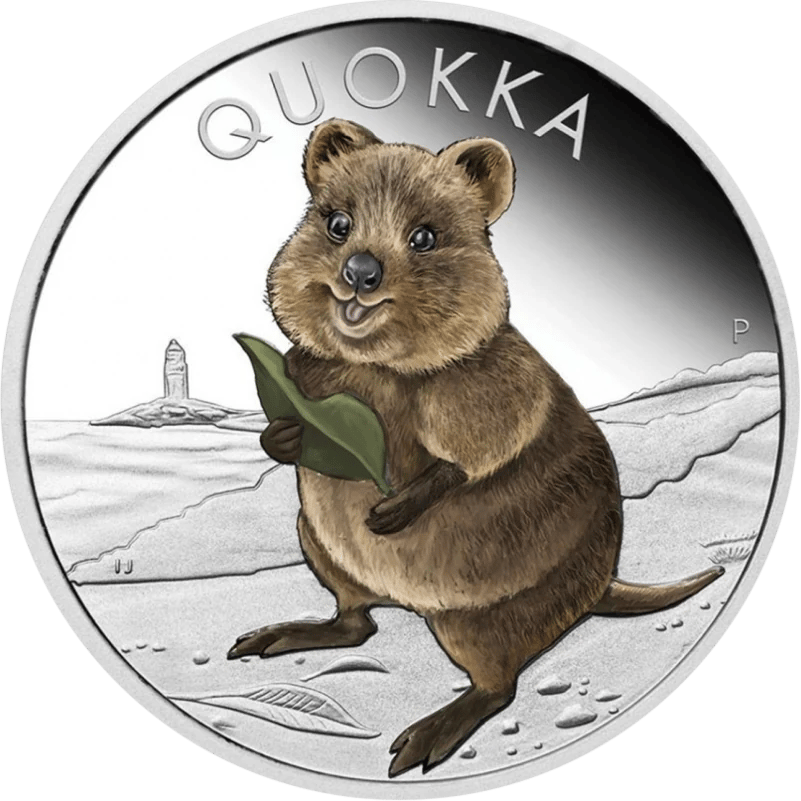
Mints keep figures as well. In its list, the Perth Mint distinguishes between the “Maximum Mintage” and the “Declared Mintage”. On its product page for the coloured 2021 Quokka in proof, it gives the maximum mintage and a numbered certificate.
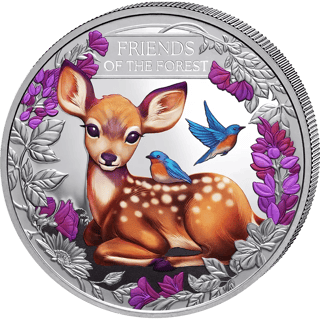 Fawn 2026FawnNiue, numbered certificateNumbered certificate
Quokka 2021 1oz Silver Proof Coin
SKU 21H49BAA
- Maximum Mintage
- 5,000
- Finish
- Proof, Coloured
Accompanied by a numbered certificate of authenticity, the coin is housed in a classic display case with a clear lid.
No mint whose information we have read states how thick the gold on a coin is. A report from 1946, however, shows the order of magnitude.
At the time, the American National Bureau of Standards described how gold layers on jewellery, watch cases and insignia can be measured. One example from the report: 0.00025 mm of gold, that is 250 nanometres. One square centimetre with this layer contains 0.49 mg of gold.
Our own calculation for comparison: 250 nanometres is one four‑hundredth of a sheet of paper. That is about 750 gold atoms stacked one on top of another.
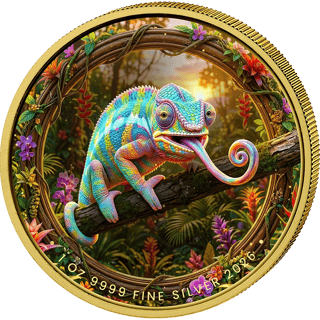 Chameleon 2026ChameleonColoured, gold rimGold rim
For a long time, metal was gilded in fire. In the 19th century, people learned to do it with electricity.
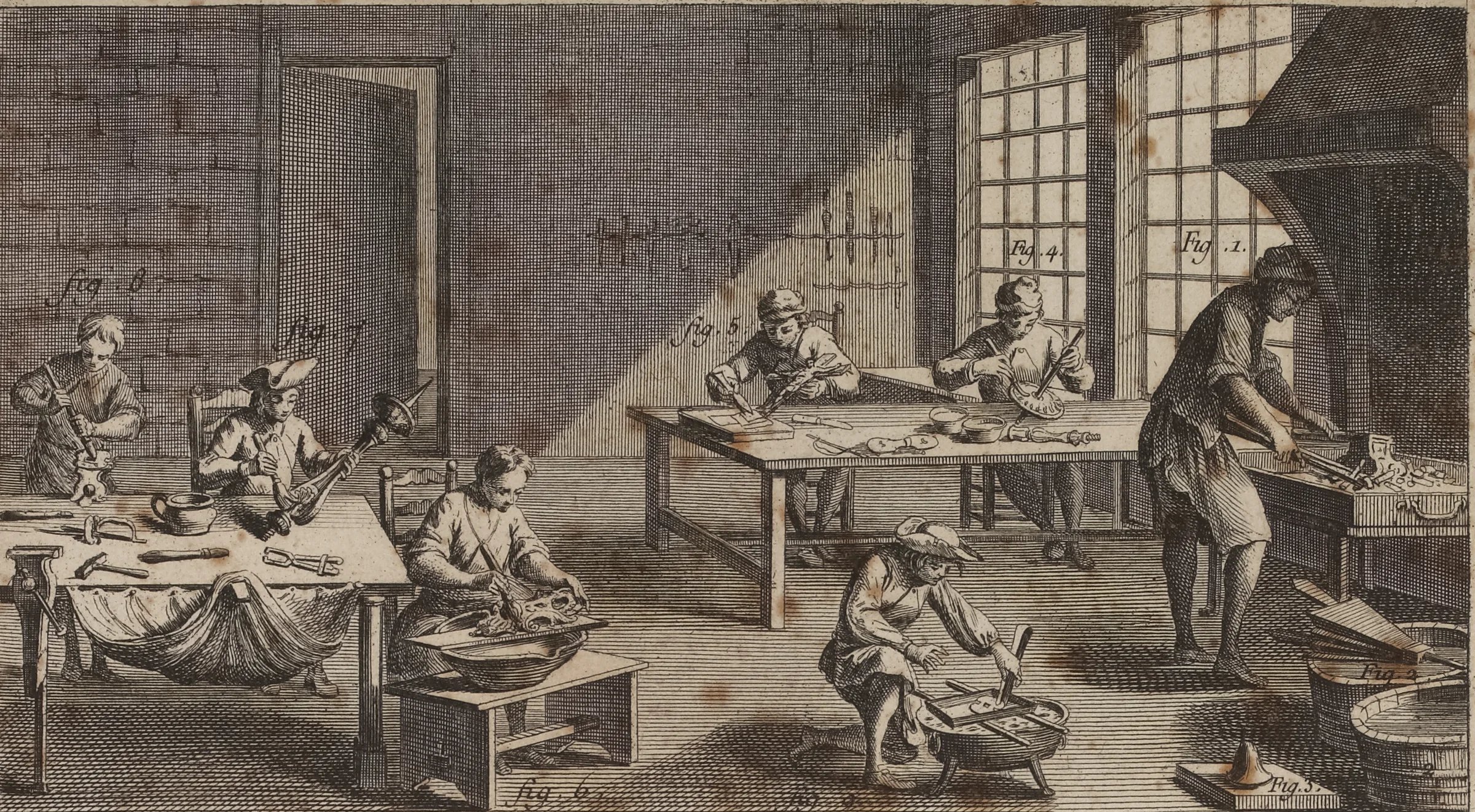
In fire gilding, an amalgam of gold and mercury was brushed onto the piece, which was then heated carefully until only the gold remained.
Up to 1840 plated silver goods were made only by rolling or soldering thin sheets of silver upon copper.
Dictionary of National Biography, 1889, vol. 17, “Elkington, George Richards”
From 1836 the Elkingtons applied for patents. The liquid best suited to electroplating with silver and gold was found by John Wright, a surgeon from Birmingham.
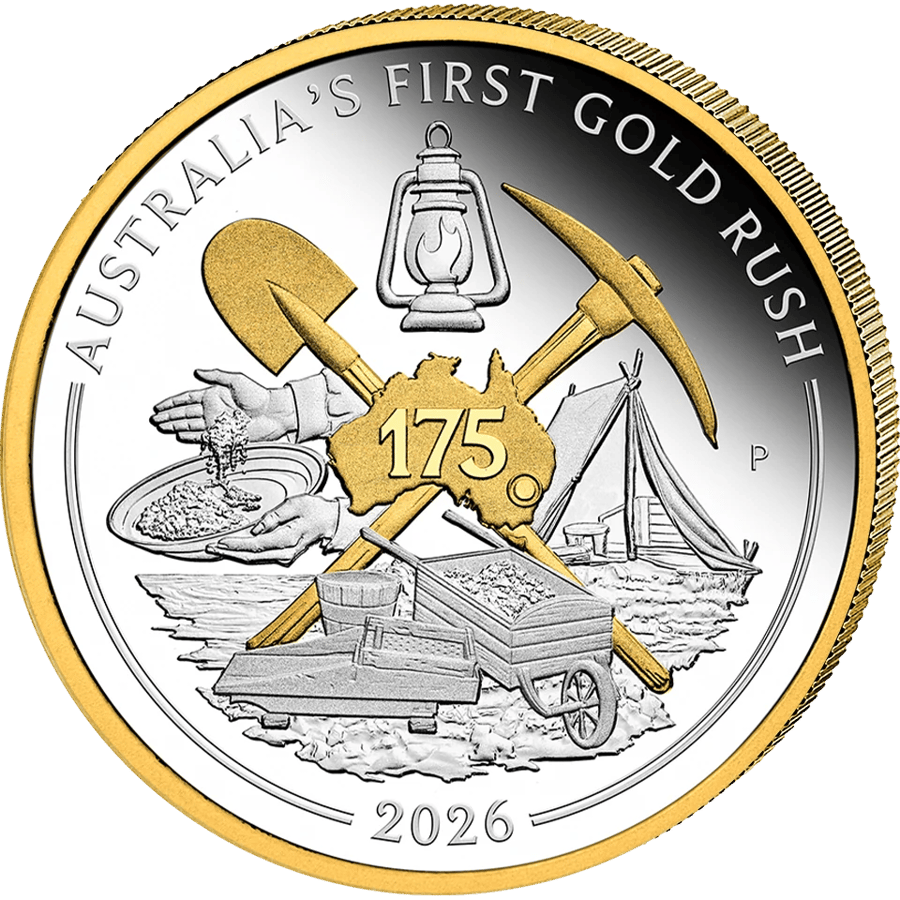
For gilding, the Perth Mint in most cases dips the coin into a liquid containing gold; the current carries the gold onto the exposed silver. Its article from 2023 does not describe how only some areas become golden.
The duration of the electric current determines how many microns of gold are applied to the coin.
The Perth Mint, “Finishing touches make all the difference to coins”, 3 August 2023
Gold and colour lie on the surface of the coin. What harms it is described by two mints and a government institute for conservation.
The Royal Canadian Mint advises anyone who is not a specialist not to clean coins; even wiping them with a soft cloth can damage the surface. Coins should always be held by the rim, and one should talk over them as little as possible, because tiny droplets of saliva can leave spots that no longer come off. According to the Perth Mint, proof, coloured and gilded coins need a protective acrylic capsule. So that they do not rub inside it, the rim must be the thickest part of the coin.
Polishes will damage gilding.
Canadian Conservation Institute, CCI Note 9/7, care of silver
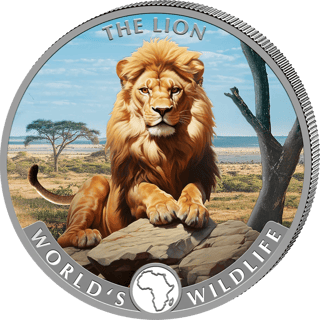 Lion 2025LionColoured, 20 francsColoured
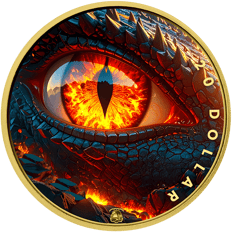
There is that moment when a coin is lifted from its capsule and the design seems to spring to life: the glowing red of a dragon's eye, the deep blue of a sea creature, the rich green of a jungle leaf. It is precisely this effect that makes coloured silver coins one of the most emotional collecting categories of all. They combine the lasting precious metal silver with a colour design that turns every motif into an eye-catcher. The following sections explain how coloured coins are made, what matters when collecting them, how mintage, collector's value and tax are handled, and what distinguishes genuine strikes from questionable aftermarket treatments.
Coloured silver coins are collector's coins made of fine silver in which individual design elements or the entire image field are given colour. In specialist jargon this is referred to as a colour application, while international trade uses the terms coloured or colored coins. Unlike classic bullion strikes, the focus here is not on pure material value but on the interplay of minting craftsmanship, design and colour. A coloured coin brings variety to an otherwise strictly limited design spectrum, since traditional coin motifs are confined to the metallic shine of high polish, matting and relief.
Colour is usually applied sparingly: often only one central element receives colour, while the rest of the coin gleams in the typical silver shine. The contrast between the cool precious metal and the vivid splash of colour creates the depth so many collectors appreciate. The classic one-ounce denomination in 999/1,000 fine silver is by far the most common, though individual motifs also appear as half-ounce pieces or in heavier multi-ounce editions. Anyone wanting an overview of the full range will find numerous further series and versions in the parent category of silver coins. Coloured editions sit thematically between pure bullion pieces and classic collector's coins.
When the first colour coins came onto the market in the early 1990s, outrage within numismatic circles was considerable. Many regarded the colouring as a disfigurement of a classic strike. Collectors, however, responded with enthusiasm: motifs from the animal and plant kingdoms in particular took on a completely new effect in colour. A Swiss company was among the early pioneers, and other mints and private manufacturers soon followed suit.
Demand was especially enormous in Asia. The China Mint was quick to enhance its famous Panda with colour. In North America, the Royal Canadian Mint took a widely noted step in 2004, releasing almost 29 million coloured 25-cent pieces to mark the anniversary of the Normandy landings. In Germany, by contrast, the colour coin long remained taboo: it was not until 2019, to mark the anniversary of the Weimar Constitution, that the first official German collector's coins in colour appeared, followed by the coloured Baron von Münchhausen commemorative coin.
What was once dismissed as a mere commercial product has become its own distinct collecting field with a loyal fan base.
Today the spectrum ranges from colourful animal motifs through the Lunar series with the Chinese zodiac signs to licensed themes from film, television and comics. Anyone wanting to browse by theme will find countless starting points for their own collection among the animal motifs or in the world of TV and comics.
Colouring is an additional production step carried out after the actual striking. Over the decades several techniques have become established, differing considerably in effort and effect:
Modern minting machines manage only around 300 coloured coins per hour, a fraction of the volume achieved with classic circulation strikes. This extra effort is one of the reasons why coloured editions almost always appear in low mintages. Mints frequently combine the colour with an elegant surface finish such as Proof or an antique finish, which further underlines the collector's character. Related finishes can also be found on partially gilded silver coins, which achieve a similar effect through a partial gold layer rather than colour.
The appeal of coloured silver coins lies in their thematic variety. Because the target audience extends well beyond the classic collecting community, mints are keen to adopt popular motifs that also delight fans and newcomers.
Fish, birds, reptiles and predators are among the classics of colouring, since colour truly brings out their natural splendour. Related editions can be found, for example, in the Somalia Elephant or in the vibrant world of the Wildlife Canada series.
The Chinese zodiac signs are an enduring favourite. Be it dragon, snake or horse, the Lunar series repeatedly appears in special coloured editions, often in several colour variants of the same year of issue. The China Panda is also among the early pioneers of colour design.
Licensed themes from cinema and television strike a chord with a young, passionate audience. The range of coloured collector's pieces extends from superheroes to cartoon characters, as found thematically under Disney or in the Star Wars category.
Many coloured silver coins show a stable or rising collector's value. The decisive factor is almost always the combination of low mintage and a theme that finds broad appeal. If a motif matches the taste of a large fan base while also being strictly limited, editions are often sold out shortly after release, and the value on the secondary market climbs.
Nevertheless, a colour application is no guarantee of an increase in value. There are coloured coins that trade for barely more than their material price. Collectors should therefore carefully weigh theme, minting quality and mintage against one another. Coloured editions are understood primarily as a collector's object, not as a pure investment in the sense of a classic bullion strike. Those seeking pure preservation of value through the precious metal itself are better served by a silver bullion coin or silver bars. The following overview summarises the key purchasing criteria:
A key issue when buying coloured silver coins is distinguishing between official editions and strikes that have been enhanced afterwards. Official colour coins are coloured by the issuing mint itself and can be verified via the certificate of authenticity or the information provided by the respective central bank.
Caution is warranted, however, with private aftermarket treatments: if a classic bullion piece such as a Maple Leaf or a Vienna Philharmonic is subsequently painted by a third party, it is strictly speaking no longer an original coloured collector's coin, such coins often fetch only a fraction of the purchase price on resale. Pure bullion strikes are, as a rule, never given an official colour application by the mints. A careful look at provenance and certificate is therefore always worthwhile. Anyone wishing to store their struck pieces safely should also choose suitable coin capsules to protect the delicate colour layer from abrasion.
Tax note
Unlike investment gold, silver coins are subject to VAT in Germany. Coloured collector's strikes are frequently traded under the margin scheme pursuant to § 25a UStG, meaning that only the trading margin is taxed. The specific treatment depends on the individual coin, this is general information and not tax advice.
Because the colour layer is more delicate than a bare silver surface, correct storage is particularly important. Direct contact, friction and aggressive cleaning agents can damage the colour and reduce the collector's value. The following points have proven effective:
For larger collections, coin cases and presentation boxes are recommended, keeping several pieces neatly and safely together. This way, the collection remains over the years in a condition that preserves both its sentimental and material value.
Because of their striking appearance and the emotional connection to a particular motif, coloured silver coins make an excellent gift for special occasions. A vibrant animal motif for a birth, the personal zodiac sign from the Lunar series, or a licensed edition featuring a favourite film, the combination of genuine precious metal and individual visual language makes such coins a present with lasting character. Anyone looking for suitable ideas will find them in the gift ideas section. As a German family business, Kettner Edelmetalle places great importance on verified authenticity and insured shipping for every delivery.
The colour is applied after striking, in an additional production step. Common methods include foil application, direct printing and modern printing onto the struck relief. With Austrian niobium coins, the colour effects are produced by a chemical reaction within the metal rather than by lacquer.
Coloured coins are primarily collector's items. Their value depends heavily on mintage and the popularity of the theme. Strictly limited editions of popular motifs can increase in collector's value, but a colour application alone is no guarantee of a rise in value. For pure value preservation through the precious metal, classic bullion coins or bars are better suited.
Official colour coins are coloured by the issuing mint itself and are documented via the certificate of authenticity as well as the information provided by the respective central bank. Bullion coins that have subsequently been privately painted lack this official legitimacy, which significantly reduces their resale value.
The coins should remain in their capsule, be stored dry and dark, and should never be cleaned or polished. The colour layer is more delicate than bare silver. For several pieces, coin cases and presentation boxes that protect against abrasion and moisture are suitable.
Silver coins are subject to VAT in Germany. Coloured collector's strikes are frequently traded under the margin scheme pursuant to § 25a UStG, under which only the trading margin is taxed. The exact treatment depends on the individual coin. This is general information and does not replace tax advice.
Colouring is an elaborate additional production step, and modern machines manage only around 300 coloured coins per hour. This is why coloured editions almost always appear in low mintages. If a motif matches the taste of a large fan base, it is correspondingly sold out quickly.
 Colourised
Stay informed with product launches, financial news and exclusive offers. Sign up for our free newsletter today.
By entering your email address and clicking the "Submit" button, you give the following consent: "I agree to be informed by email about new products, financial news and exclusive offers, and therefore consent to the processing of my email address for the purpose of sending the newsletter. I can revoke this consent at any time without giving reasons, with effect for the future. The lawfulness of processing carried out prior to revocation remains unaffected."