Only 5 left to order
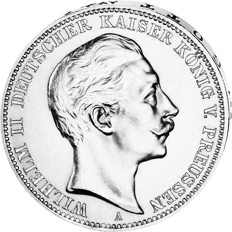
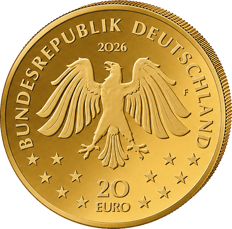
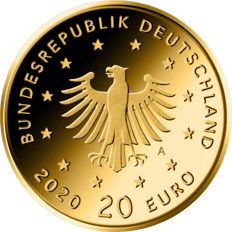
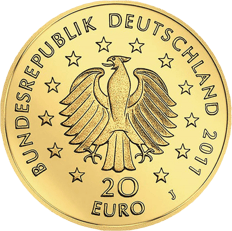
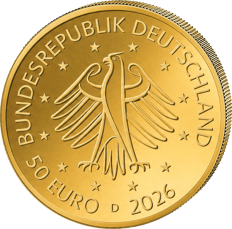
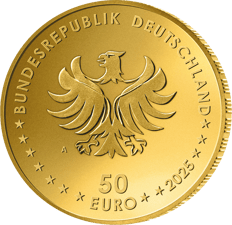
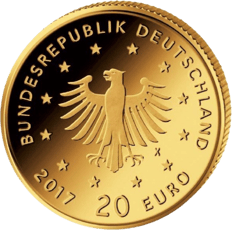
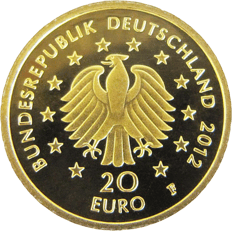
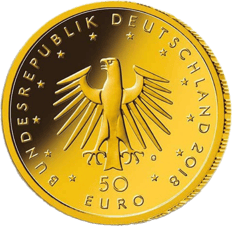
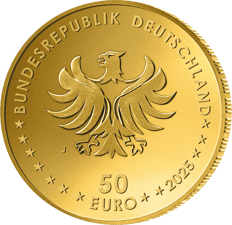
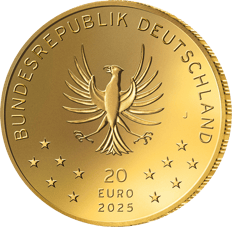
1/4 oz Gold Kaiser Wilhelm I 155 Years of the Gold Standard 2026 (Mintage: 99 | Proof)
£1,668.15£2,087.28
VAT-free and excl. shipping
Ships from 18/12/2026

 More than 310,000
 Over 30 years
 Secure shipping
 Google: 4.9/5
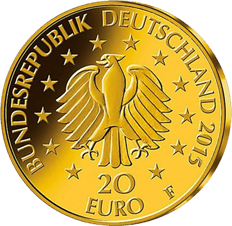
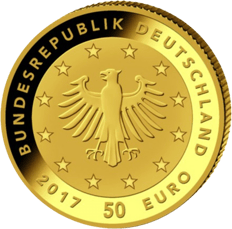
EURO commemorative coins made of gold are considered the most popular collector's coins in Germany. They commemorate native animal species, architectural landmarks and events, such as the FIFA World Cup.
The coins impress with their high production quality, mostly manufactured in Germany, and offer a particularly high collector's value due to their widespread recognition.


Hardly any collecting field combines national sentiment, craftsmanship and genuine precious metal value as impressively as German euro commemorative coins. They tell of cathedrals and castles, of native wildlife, great personalities and historical events such as the 2006 FIFA World Cup, carrying these stories forward in finely chased gold and silver. The following sections cover origin and designs, the individual face values from 2 to 1,000 euros, minting quality and authenticity, the tax treatment, and proper storage, so that a collection can be built with both meaning and substance.
Euro commemorative coins are official issues of the Federal Republic of Germany, released on the occasion of special anniversaries, buildings, nature themes or social events. Unlike ordinary circulation coins, they are collector's items with a legal face value, ranging from the popular 2 euro commemorative coin made of copper-nickel to the large-format gold issue with a face value of 1,000 euros. Their particular appeal lies in the combination of numismatic significance and material content: gold and silver issues combine a design with collector's value and a tangible material value.
These issues are distributed in Germany through Münze Deutschland, a brand of the Federal Office of Administration (Bundesverwaltungsamt). It does not strike the coins itself, but coordinates minting orders, procures the coin blanks, and handles distribution and marketing of German collector's and commemorative coins. Anyone wishing to get an overview of the full range of issues will find a suitable starting point in the Euro Coins category, while classic Collector's Coins cover the entire numismatic spectrum beyond that.
The variety of designs is at the heart of this collecting field. Over the years, entire thematic worlds have emerged that can be completed piece by piece, an appeal that experienced numismatists value just as much as newcomers. Particularly well known are the series devoted to native nature and architectural heritage.
Anyone enthusiastic about animal and nature-related designs will find related themes among the German Forest Animals and the Anniversary Commemorative Coins. Fans of portrait designs should take a look at the collecting world of Musician Designs, which immortalises great composers.
Germany is not alone in issuing commemorative coins: other countries in the eurozone, from France and Italy to Spain and Belgium to Luxembourg and Greece, also mint their own 2 euro commemorative coins, often for national anniversaries or shared European themes. Collectors in Germany tend to focus on domestic issues, valued for their minting quality and material content. Those who collect across themes can supplement the German issues with historical coinage from, for example, the German Empire or the D-Mark era, building an exciting collecting field in the process.
Anyone wishing to collect coins does well to settle early on a collecting theme, such as a particular series, a face value or a thematic field. An orderly coin album or case creates clarity and documents progress, while a carefully kept inventory listing year of issue, mint mark and condition keeps everything organised. In this way, a collection grows according to a plan rather than by chance, and every missing issue becomes an appealing challenge.
The particular appeal lies in the double safeguard: reliable material value plus collector's value on top.
The classic collector's coins of 10 euros, 20 euros and 25 euros are predominantly made of silver and are frequently issued in Proof quality, the highest minting standard, with a mirror-like background and matte relief. The widely available 2 euro commemorative coin made of copper-nickel, on the other hand, makes an affordable entry point into collecting. The individual denominations can be accessed directly: 2 euros, 10 euros, 20 euros and 25 euros.
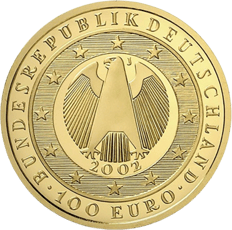
Among the gold issues, the 50, 100 and 200 euro coins dominate. The 100 euro gold coin contains half a troy ounce of fine gold and is widely regarded as a German bullion coin with a low premium over the material value. Larger formats such as 200, 500 and 1,000 euros appeal to collectors who place value on special mintages. The face values can each be reached individually: 50 euros, 100 euros, 200 euros and 500 euros. Anyone focusing purely on the precious metal will find further investment classics among the Gold Coins.
The particular appeal lies in the double safety net: a safeguard of at least the material value, plus a collector's value besides.
Condition and minting quality are decisive for the collector's value of a commemorative coin. Two terms come up again and again: Mint State (MS) describes the regular, lustrous finish, while Proof, with mirrored surfaces and contrasting relief, represents the more demanding collector's quality. Scratches, fingerprints or edge damage noticeably reduce value, which is why careful handling pays off from the very start.
German coins carry a mint mark that reveals the place of origin. Five letters stand for the active mints:
Some collectors deliberately put together complete sets with all five mint marks, a sporting ambition that gives a collection extra depth. For the tidy presentation and storage of such sets, coin cases and matching coin capsules are ideal.
Official euro commemorative coins are produced to a high standard by the state mints and are usually delivered with a certificate of authenticity and a case. These documents are an essential part of the coin and should be kept permanently, as they confirm mintage, year of issue and fineness. Several straightforward features help with checking:
At Kettner Edelmetalle, precious metal purchases undergo an ISO-compliant authenticity verification, so collectors can rely on verified goods. Those seeking further verified German coinage will find it among the German gold coins.
One important distinction concerns VAT. Investment gold, and therefore also gold commemorative coins with the corresponding fineness, is exempt from VAT in Germany under the rules for investment gold. Silver coins, by contrast, are generally subject to VAT, often under the margin scheme. For precious metals held privately, it also applies that after the one-year holding period has elapsed, capital gains on physical gold are generally tax-free.
Note on tax
The tax treatment depends on the metal, the fineness and the individual situation, and does not constitute tax advice. For binding information, consulting a tax advisor is recommended. Pure investment gold remains VAT-free when purchased as gold bars or bullion coins.
Condition determines the long-term value of a collection. Commemorative coins should always be handled by the edges and only with clean hands or gloves, never on the design surface. Moisture, temperature fluctuations and harsh cleaning attempts should be avoided, a cleaned coin often loses more value than the shine supposedly gains.
Suitable accessories, from the coin box to the collector's accessories, help preserve condition over the years. Anyone storing larger holdings will find suitable solutions throughout the accessories range.
Euro commemorative coins serve several motivations at once. For the collector, what matters is the completeness of a series, the design and the condition. The investor values, in the case of gold issues, the closeness to the precious metal value, with the 100 euro gold coin and its half troy ounce of fine gold regarded here as a solid classic. And as a gift, a commemorative coin carries a story that goes far beyond its pure value.
Anyone looking to get started is best advised to combine a personally appealing design with solid minting quality. Inspiration can be found among the gift ideas as well as the gifts made of gold. For building up a regular holding, the savings plan products are also a good fit.
Commemorative coins are issued on the occasion of special themes and are aimed at collectors. Although they carry a legal face value, they are minted to a higher quality and are often made of gold or silver, which gives them a collector's and material value beyond their pure function as a means of payment.
Proof is the highest minting quality. It is characterised by mirrored, smooth surfaces and a matte, high-contrast relief. Such coins are produced with particular care and should be stored exclusively in capsules to protect the delicate finish.
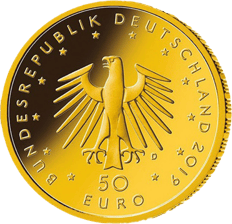
The letters identify the mint: A stands for Berlin, D for Munich, F for Stuttgart, G for Karlsruhe and J for Hamburg. Coins struck in Berlin bearing the mark A are particularly sought after by collectors and are often traded at a somewhat higher price.
Gold commemorative coins that meet the criteria for investment gold are exempt from VAT in Germany. Silver coins, by contrast, are generally subject to VAT. For a precise tax classification, seeking personal advice is recommended.
For an affordable entry point, the 2 euro commemorative coin made of copper-nickel is a good choice. Those focused on material value tend to opt for the 100 euro gold coin with half a troy ounce of fine gold, which trades close to the gold price and suits both collectors and investors.
No. Cleaning can cause fine scratches and damage the original surface, which significantly reduces collector's value. Coins should only be handled by the edge and stored in capsules or cases. The natural patina is often more valuable to collectors than a polished surface.
 Commemorative Coins
Stay informed with product launches, financial news and exclusive offers. Sign up for our free newsletter today.
By entering your email address and clicking the "Submit" button, you give the following consent: "I agree to be informed by email about new products, financial news and exclusive offers, and therefore consent to the processing of my email address for the purpose of sending the newsletter. I can revoke this consent at any time without giving reasons, with effect for the future. The lawfulness of processing carried out prior to revocation remains unaffected."