Only 3 left to order
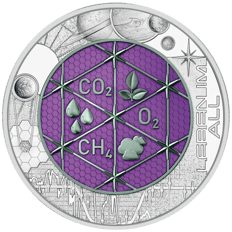
2 Dollar Niobium Global Warming 2023 (Mintage: 65,000)
£58.37
excl. UK import VAT and shipping
Available in 2–3 business days

 More than 300,000
 Over 30 years
 Secure shipping
 Google: 4.9/5


The 25 Euro commemorative coins represent one of the most technically demanding mintings in European collector coin history: the Austrian silver-niobium series from the Münze Österreich. Since 2003, this coin type has combined a silver ring with a colourfully shimmering niobium core, creating a globally recognised special form of bimetallic coin. This guide examines the history, production, designs, material characteristics, tax classification and storage of the 25 euro mintings, and places them within the broader field of euro commemorative coins.
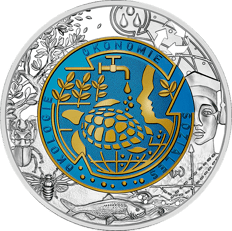
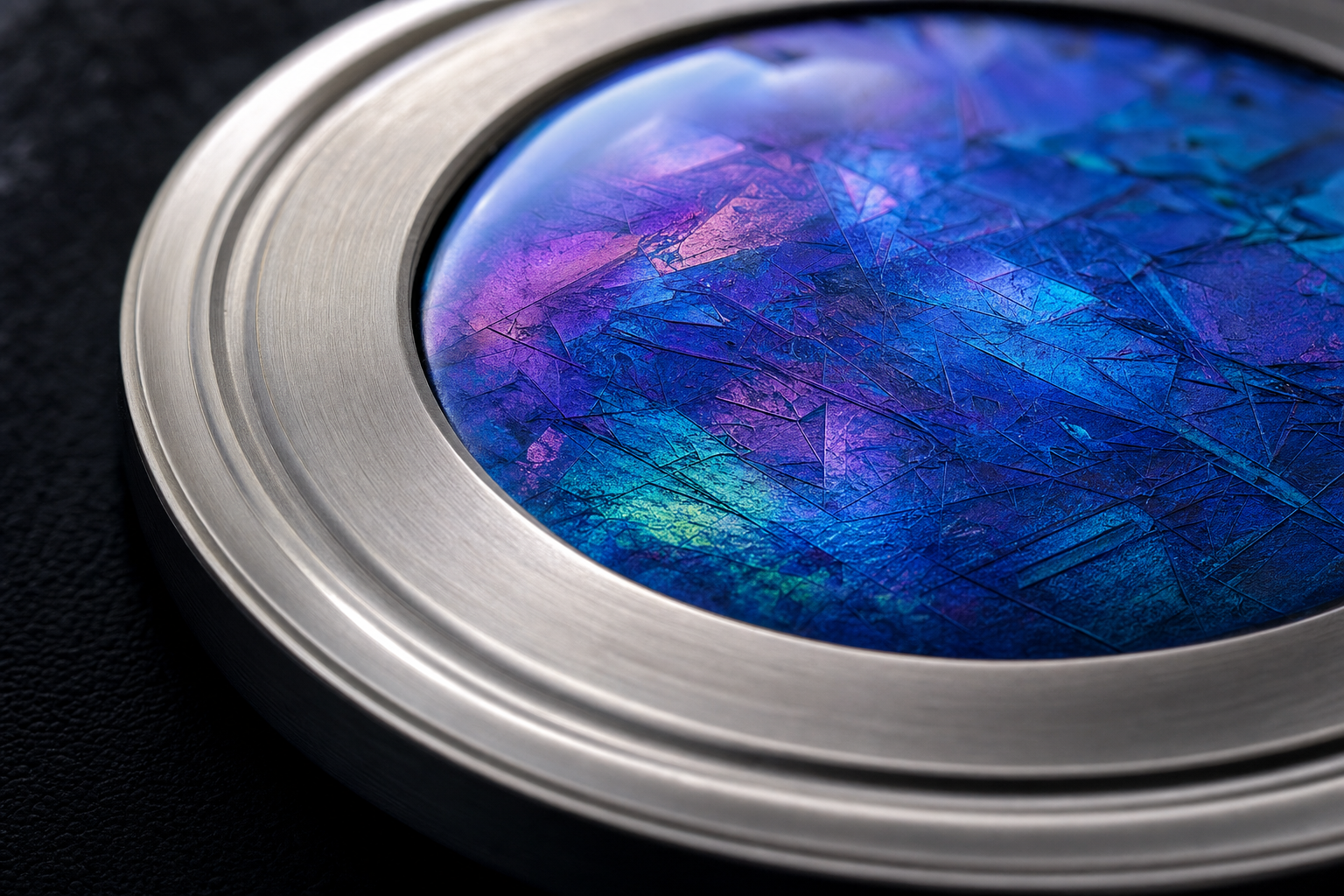
In German-speaking countries, the face value of 25 euro is closely associated with the niobium series from the Münze Österreich. Unlike classic bullion coins, these mintings are not made from a single precious metal but combine an outer ring of silver (900/1,000) with an inner pellet made of the refractory metal niobium. The niobium is coloured through electrolytic oxidation, giving it its characteristic blue, green, violet or gold tones without any colour pigments being applied. Each colour results solely from the thickness of the oxide layer, which refracts the incoming light.
These coins are explicitly collector's items rather than pure investment products. Their appeal lies in the combination of a scientific theme, limited mintage and a production technique that, to this day, only a few mints worldwide have mastered. Anyone interested in a broader range of euro mintings will find the full spectrum of face values, from the small 2 euro coin to the heavy large-format coin, in the overarching range of euro commemorative coins.
Niobium is a bluish-grey transition metal that only melts at around 2,470 degrees Celsius and is extremely corrosion-resistant. In coin minting, it serves less as a store of value and more as a design element: the coloured core pellet makes every issue visually distinctive. The surrounding silver ring provides the familiar precious metal character and carries the edge lettering as well as the technical specifications. Anyone wishing to put the pure silver element into the context of classic white metal mintings will find numerous comparable pieces in 999 and 900 fine silver among the silver coins.
The Münze Österreich introduced the 25 euro face value in 2003 with the issue 700 Years of the Town of Hall in Tirol, making it the first mint worldwide to combine silver and niobium in a commemorative coin suitable for circulation. Hall in Tirol was historically an important centre of coin minting, which is why the choice of design deliberately referenced this minting tradition.
In subsequent years, a new issue appeared annually, each addressing a technical, scientific or social theme, ranging from timekeeping to astronomy and robotics to questions of renewable energy. This thematic framework turned the series into a kind of numismatic chronicle of technological development. Similar series concepts with a fixed annual rhythm can also be found among international classics such as the Vienna Philharmonic, which is likewise produced by the Münze Österreich.
The Münze Österreich in Vienna is one of Europe's most tradition-rich mints and is the issuer of both the niobium series and numerous bullion classics. Its experience in bimetallic minting and surface finishing formed the basis for the technically demanding niobium production process. An overview of this mint's products can be found in the manufacturer overview for the Münze Österreich.
The design follows a consistent guiding idea: making progress and science visible. Over the years, thematic focal points have emerged that can be roughly divided into the following areas:
The colouring of the niobium core is deliberately matched to the design: an issue on the subject of space often receives a deep blue, while earth-related designs appear in green or brown tones. This close interplay between colour and content distinguishes the series from purely coloured mintings, such as those found among the coloured silver coins, where the colour is applied afterwards.
The production of a silver-niobium coin takes place in several steps. First, the silver ring and niobium core are manufactured separately, after which the core is electrolytically coloured and the two components are struck together. The result is an inseparable bond between the two metals. These issues are usually produced in "Special Uncirculated" quality, a grade between standard minting and Proof.
Key technical specifications of the classic Austrian 25 euro issue:
| Feature | Specification |
|---|---|
| Face value | 25 euro |
| Total weight | approx. 16.5 g |
| Silver content (ring) | 900/1,000, approx. 9 g |
| Core | Niobium, colour oxidised |
| Diameter | 34 mm |
| Grade | Special Uncirculated |
Since every colour nuance depends on the oxidation process, the cores show minimal colour variations, which is one reason why many collectors regard each issue as unique. Precision scales and calipers, such as those offered in the collector's accessories section, are suitable for properly checking weight and dimensions.
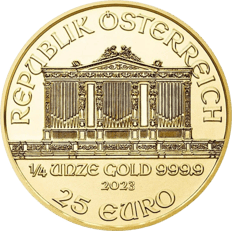
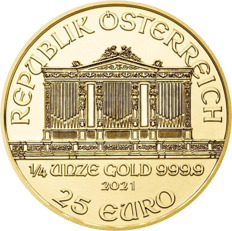
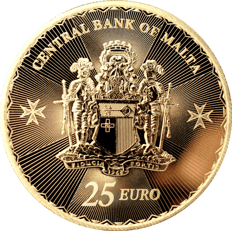
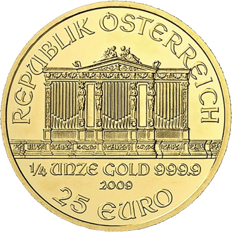
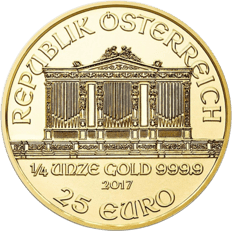
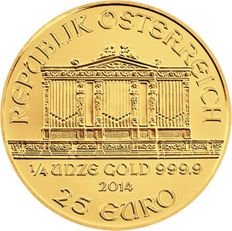
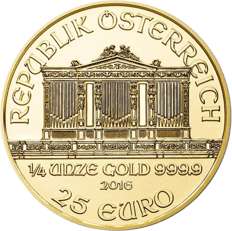
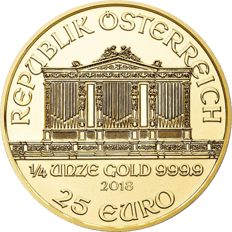
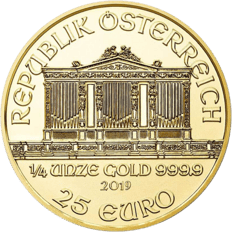
The 25 euro face value is not limited to Austria. Various European countries have used this amount for their own commemorative issues, for example on the occasion of religious anniversaries or national commemorative events. Mints outside Europe also issue collector coins with comparable converted face values. Consequently, issues from other countries occasionally appear in this category, classified here due to their theme or format, such as 1/4 oz gold coins whose face value is denominated in the respective national currency.
For collectors focusing on the yellow precious metal, it is worth looking at the overarching category of gold coins as well as individual classics such as the Maple Leaf. Those wishing to compare thematically related face values, on the other hand, will find direct neighbours among the 20 euro commemorative coins and the 50 euro commemorative coins.
Silver-niobium coins are classified for tax purposes as silver coins and are therefore not covered by the VAT exemption that applies to investment gold. In practice, such collector's items are often traded under the margin scheme pursuant to § 25a UStG, whereby tax is only charged on the trading margin rather than on the full selling price.
Tax note
Unlike silver mintings, gold coins with a fineness of 900/1,000 or higher are exempt from VAT in Germany as investment gold under § 25c UStG. The 1/4 oz gold issues included in this category benefit from this, while the classic silver-niobium mintings are traded as collector's coins subject to tax. This information does not replace tax advice.
For private sales in Germany, the one-year speculation period also applies: if a coin is held for longer than twelve months, any capital gain remains tax-free. Those wishing to expand their collection with VAT-exempt bullion classics will find what they are looking for among the gold bullion coins.
The coloured niobium core is sensitive to scratches and fingerprints, which makes proper storage particularly important. Coins should always be handled by the edges and ideally with cotton gloves. The following measures have proven effective for long-term protection:
The included certificate of authenticity documents the mintage and year of issue and should be kept together with the coin. A comprehensive range of products for protection and presentation can be found in the accessories section.
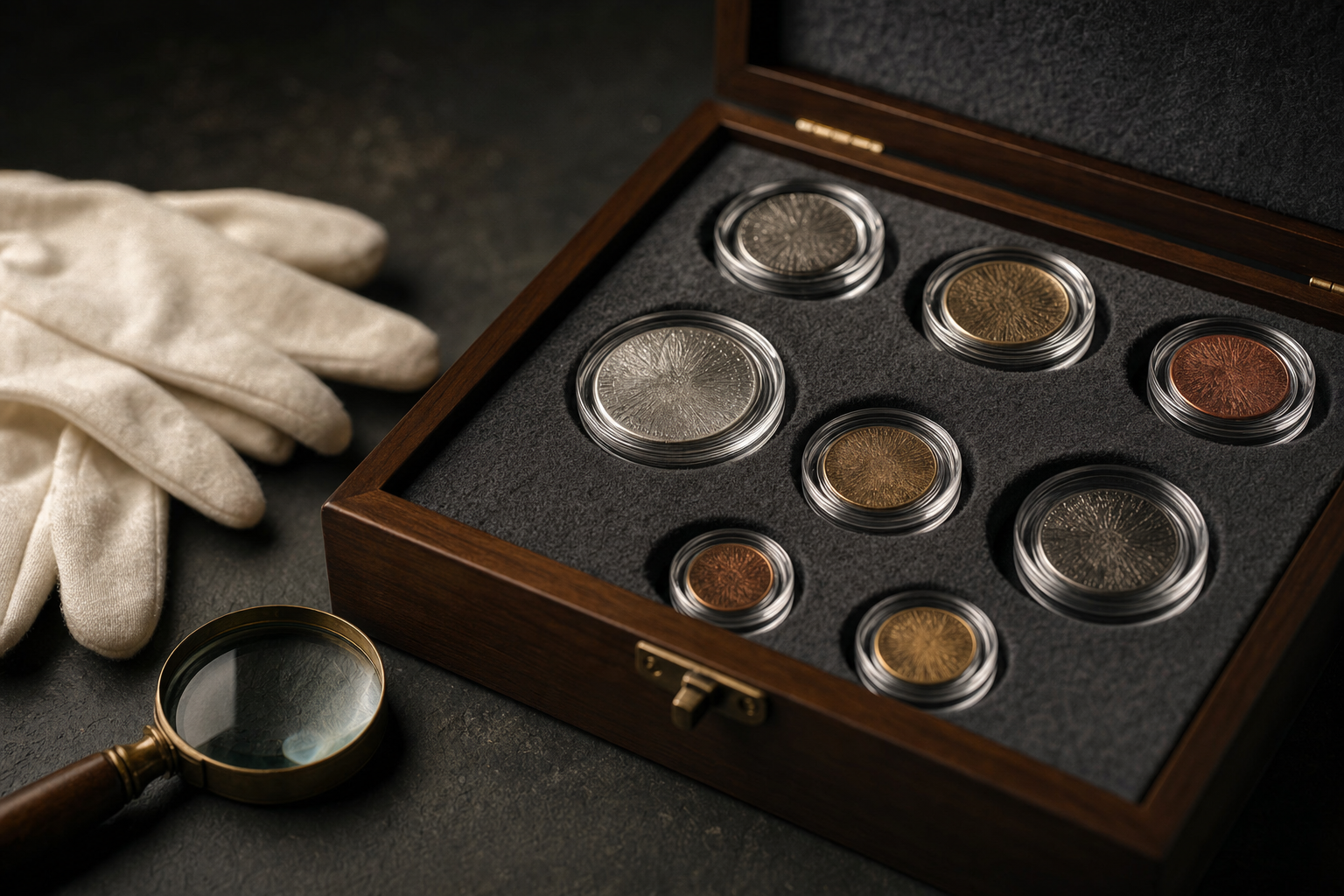
The value of a 25 euro niobium coin is made up of the material value of the silver ring and an often significantly higher collector's premium. The decisive factors are the limited mintage, the condition and the popularity of the respective design. Early years of issue and editions with particularly successful colouring regularly achieve higher prices on the secondary market than issue years with larger mintages.
A niobium coin combines precious metal with a production technique that turns every specimen into a small physics experiment.
It remains important to classify these as collector's items: unlike a bullion coin, the focus is not on the pure quantity of precious metal but on numismatic appeal. For investors primarily focused on physical precious metal, bars or bullion coins from the silver bars range are often the more cost-effective choice. As a German family business with ISO-compliant authenticity verification, Kettner Edelmetalle ensures verified provenance and documented quality for all the mintings it offers.
They combine an outer ring made of 900 fine silver with an inner core made of the metal niobium. The niobium is electrolytically oxidised, giving it its characteristic colouring without any colour pigments being applied.
The colour is not an applied coating but the result of electrolytic oxidation. Depending on the thickness of the resulting oxide layer, light is refracted differently, producing blue, green, violet or gold tones.
The classic silver-niobium issues are treated as silver coins and are generally traded under the margin scheme pursuant to § 25a UStG. Only gold issues with sufficient fineness are exempt from VAT as investment gold under § 25c UStG.
The Münze Österreich introduced the 25 euro face value in 2003 with a silver-niobium issue, making it the first mint worldwide to use this material combination in a commemorative coin.
Precisely fitting coin capsules and a dry, temperature-stable environment are recommended. The coin should only be handled by the edges, and the original case and certificate should be kept, as they influence collector's value.
They are primarily collector's items. The material value of the silver ring is limited, and the appeal lies in their numismatic value. Those who primarily focus on physical precious metal will usually find bars or classic bullion coins to be the more cost-effective solution.
 Commemorative Coins25 Euro
Stay informed with product launches, financial news and exclusive offers. Sign up for our free newsletter today.
By entering your email address and clicking the "Submit" button, you give the following consent: "I agree to be informed by email about new products, financial news and exclusive offers, and therefore consent to the processing of my email address for the purpose of sending the newsletter. I can revoke this consent at any time without giving reasons, with effect for the future. The lawfulness of processing carried out prior to revocation remains unaffected."