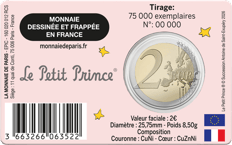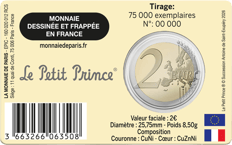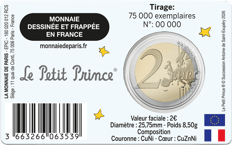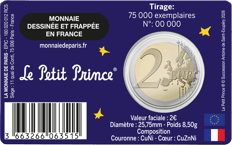
2 Euro Caring Guardian Angel
£19.88
excl. UK import VAT and shipping
Available in 2–3 business days

 More than 300,000
 Over 30 years
 Secure shipping
 Google: 4.9/5


2 euro commemorative coins are the only commemorative coins in the eurozone that are valid as official legal tender in all member states. Since the first year of issue in 2004, the countries of the eurozone have minted hundreds of designs commemorating historical events, anniversaries and personalities. This guide explains the history of these coins, their production and issue formats, the most coveted rarities, the significance of mint marks, and what to look out for when collecting and valuing them.
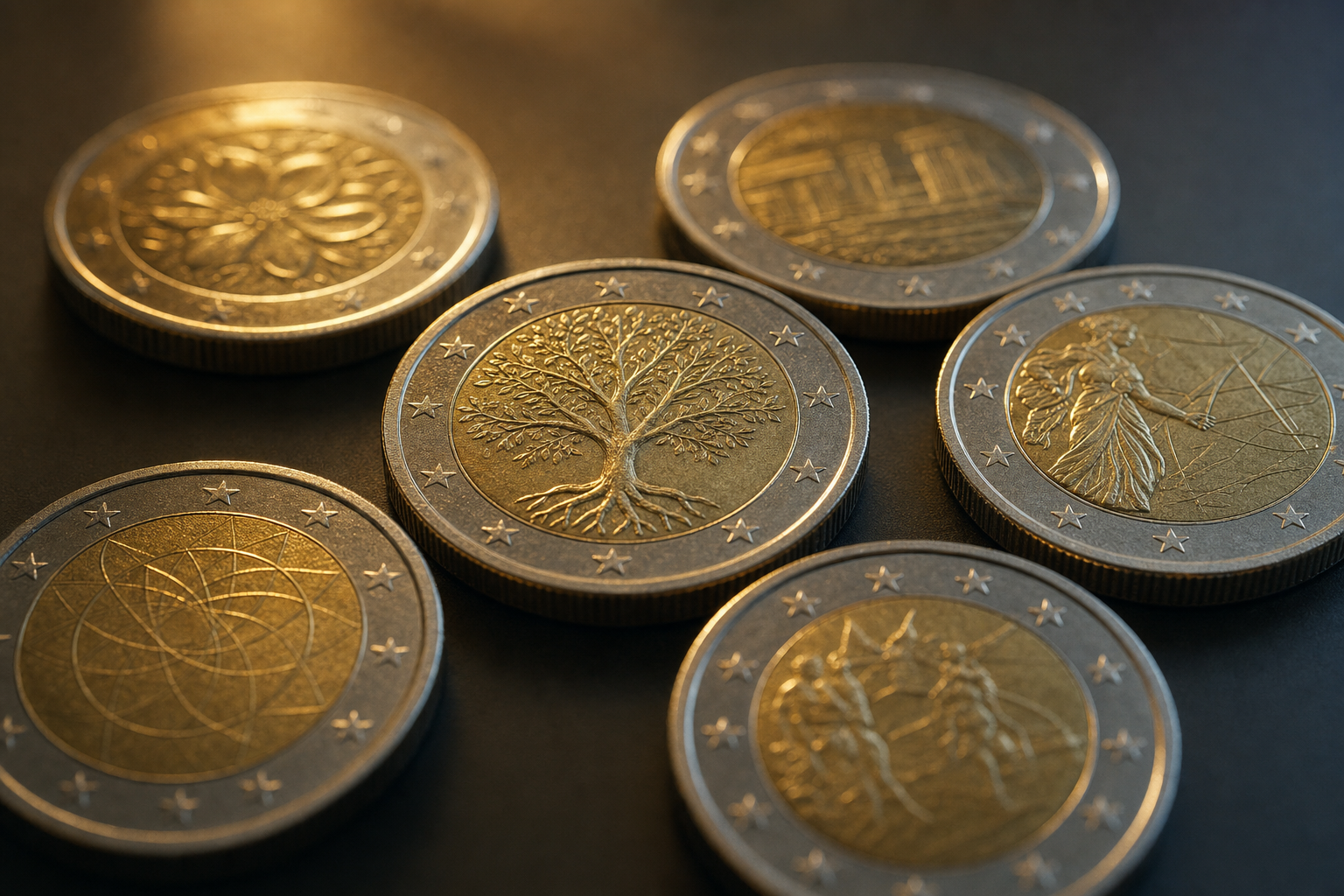
With the introduction of euro cash in 2002, only the minting of circulation coins was initially planned. From 2004 onwards, the European Union allowed member states to issue one 2 euro coin per year with a special national design. The first issue came from Greece and was dedicated to the Olympic Summer Games in Athens. Since then, the commemorative coin has become the most widely collected area of European numismatics.
The appeal lies in the combination of official legal tender and collector's item: every coin remains valid throughout the entire eurozone while also telling a story about the issuing country. Anyone interested in other euro denominations will find complementary issues among the other euro commemorative coins as well as the regular euro coin sets.
The EU Commission sets clear rules for issuance. Each country may generally mint two commemorative coins per year; in addition, there are rare joint issues released simultaneously by all countries. Only the outer ring design with the twelve stars remains uniform, while the obverse design is freely chosen.
All 2 euro coins are made of a bimetallic alloy: the outer ring is copper-nickel, the inner core has a three-layer structure of nickel and brass. The mint mark, a small letter or symbol, reveals the mint of origin and is an important distinguishing feature for collectors. Germany, for example, mints coins at five locations, identifiable by the letters A, D, F, G and J.
Because the total mintage of a design is spread across several mints, variants occur in different quantities. Collectors aiming for a complete set of all mint marks drive up demand for the rarer letters. A careful comparison of the issues is therefore always worthwhile. Related modern collector's coins made of precious metal can be found in the collector's coins category.
The same design frequently appears in several quality grades, which is decisive for the collector's value. The most common formats are the circulation condition from regular payment transactions and specially prepared collector's issues.
Proof issues in particular achieve significantly higher prices on the secondary market than uncirculated pieces. Anyone wishing to store their collection in an orderly way will find suitable solutions in the coin capsules section, and for entire series in the coin cassettes.
Note on quality grade
The state of preservation is often more important than the year of issue when collecting 2 euro commemorative coins. An uncirculated coin and the same design in Proof quality can differ considerably in collector's value.
The collector's value of a 2 euro commemorative coin is determined above all by its mintage. Issues from sparsely populated microstates are naturally scarce and therefore particularly sought after.
The 2004 Monaco coin commemorating Princess Grace Kelly is considered one of the best-known rarities of all and trades on the collector's market for a multiple of its face value. The early issues from San Marino and the Vatican are also coveted due to their low mintages. Anyone who generally appreciates numismatic rarities will find further limited pieces under Limited.
Besides the microstates, designs with popular occasions are highly valued. Significant buildings, historical anniversaries, as well as cultural and literary themes, are frequently honoured. Anyone interested in similar themed issues will find what they are looking for among the commemorative coin themes as well as under art and culture.
Among the euro commemorative coins, the 2 euro issues are the only ones that circulate in normal payment transactions. Higher denominations, on the other hand, are usually minted purely as collector's or precious metal coins and are not put into circulation.
Anyone wishing to take the step from collector's coin to pure precious metal investment will find classic investment products among the gold coins and silver coins. The value of these coins is primarily determined by their metal content, whereas 2 euro commemorative coins derive their value from mintage and collector demand.
2 euro commemorative coins are legal tender and are treated differently from pure investment precious metals. Since they consist predominantly of base-metal bimetal, the VAT exemption applicable to investment gold under §25c UStG does not apply here: the collector's value is purely numismatic in nature.
For investors wishing to take advantage of the tax benefits of physical investment gold, bars are the classic choice. The gold bars in various weight classes offer an overview. Anyone wishing to invest small amounts on a regular basis will find suitable options under savings plan products.
The value of a 2 euro commemorative coin is not measured by its metal, but by its rarity and state of preservation.
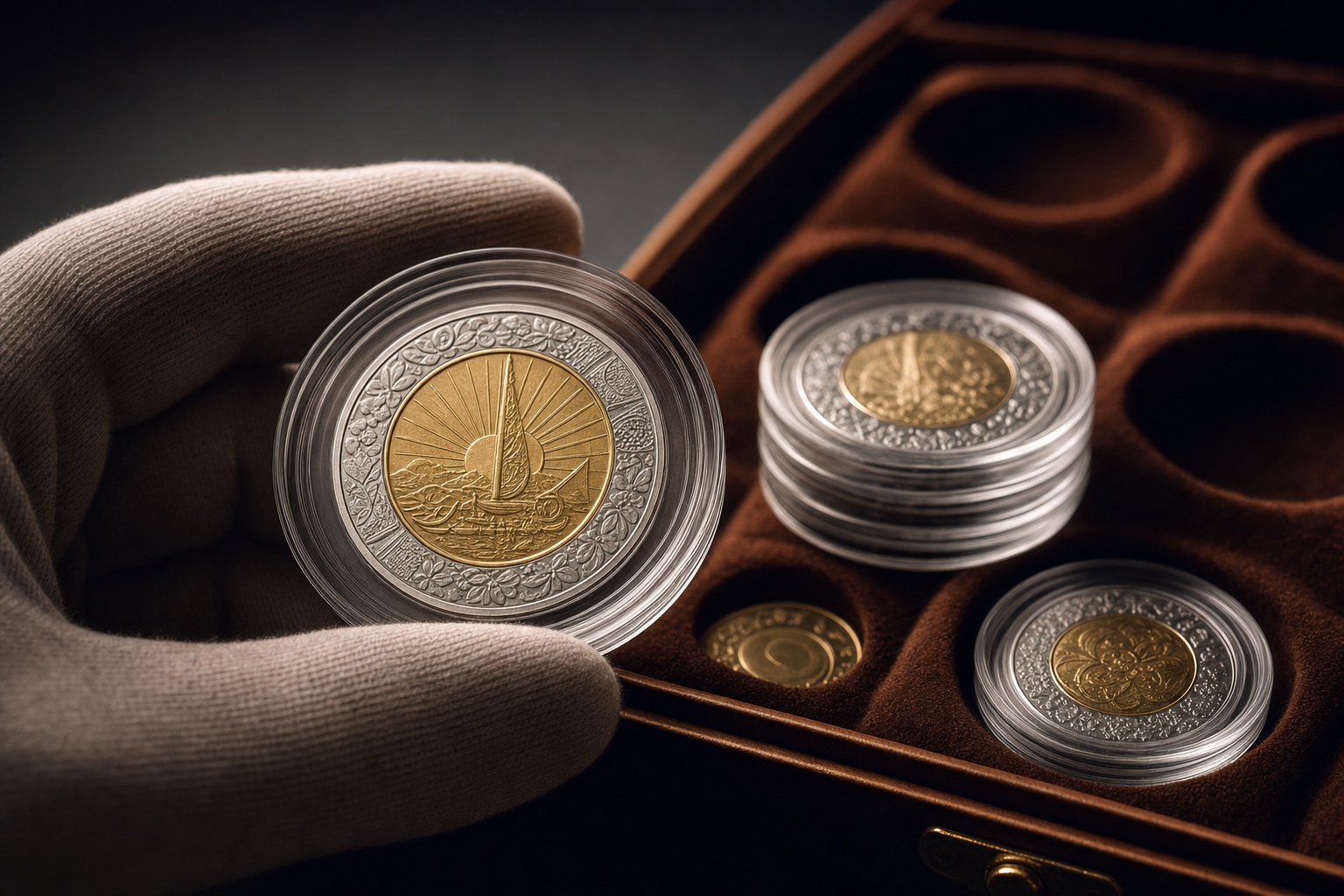
To preserve the state of preservation over the long term, commemorative coins should be protected from fingerprints, moisture and friction. Uncirculated and Proof pieces quickly lose collector's value through scratches or tarnishing.
As a general rule: handle coins only by the edges and never clean them, as even careful polishing damages the surface and reduces the value. Further useful equipment for collectors can be found under collector's accessories.
Yes. 2 euro commemorative coins are official legal tender in all eurozone countries and can be used like a regular 2 euro coin. However, due to their collector's value, many issues are not spent but kept instead.
Among the best-known rarities is the 2004 Monaco issue with a very low mintage. In general, issues from the microstates such as Monaco, San Marino and the Vatican are the most coveted due to their low mintages.
The mint mark is a small letter or symbol identifying the mint. In Germany, the letters A, D, F, G and J stand for Berlin, Munich, Stuttgart, Karlsruhe and Hamburg. For collectors, a complete set of all mint marks is a popular goal.
A Coincard is a designed fold-out card in which a commemorative coin is set. This format is often offered as a collector's issue or gift and is more sought after for certain designs than the loose coin.
No. The VAT exemption applicable to investment gold under §25c UStG does not apply to bimetallic commemorative coins. Anyone wishing to take advantage of the tax benefit of physical investment gold will find suitable products in the gold bars category.
Ideally in airtight coin capsules, protected from moisture and touch. Coins should only be handled by the edges and never cleaned, as this damages the surface and reduces collector's value.
 Commemorative Coins2 Euro
Stay informed with product launches, financial news and exclusive offers. Sign up for our free newsletter today.
By entering your email address and clicking the "Submit" button, you give the following consent: "I agree to be informed by email about new products, financial news and exclusive offers, and therefore consent to the processing of my email address for the purpose of sending the newsletter. I can revoke this consent at any time without giving reasons, with effect for the future. The lawfulness of processing carried out prior to revocation remains unaffected."