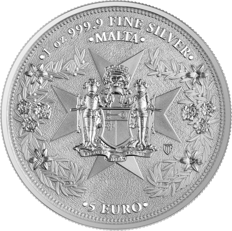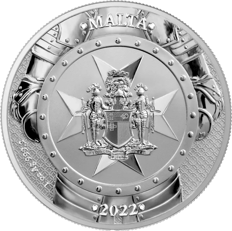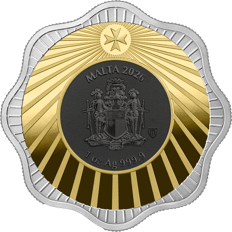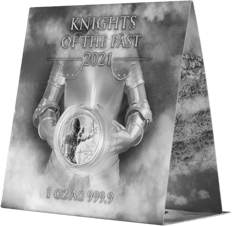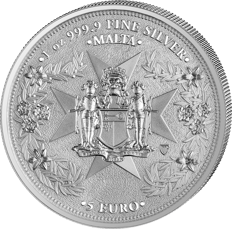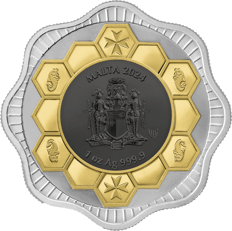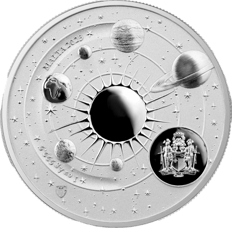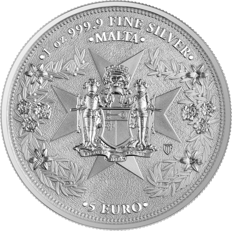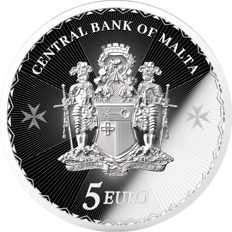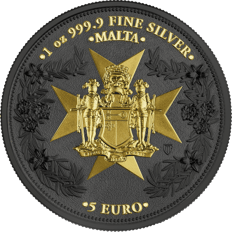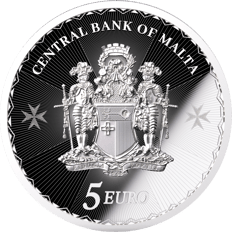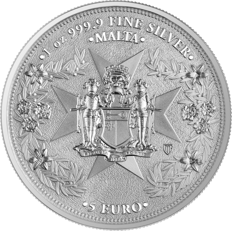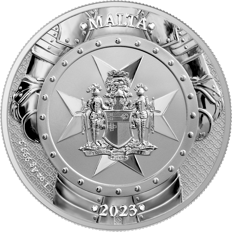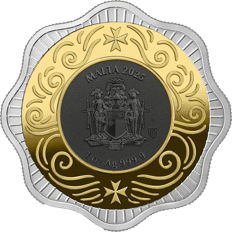
1 oz Silver Malta 5 Euro Maltese Ox 2025 (Mintage: 1,000 | partly gilded | Ruthenium)
£377.13
excl. UK import VAT and shipping
Available in 2–3 business days

 More than 300,000
 Over 30 years
 Secure shipping
 Google: 4.9/5


The 5 euro commemorative coin holds a special place among European collector's coins: it combines a face value of five euros with elaborate minting technology, limited mintages and thematic variety. While Germany attracted international attention with its series featuring the blue polymer ring, smaller states such as Malta mint high-quality silver issues in troy ounce weight. This guide examines the history, material variants, minting qualities, tax particulars, as well as the collecting and storage aspects surrounding 5 euro commemorative coins, and places them within the broader field of euro commemorative coinage.
The term 5 euro commemorative coin covers several very different types of coinage. On one hand, the German collector's coins with the characteristic translucent ring, issued since 2016 and following a fixed thematic cycle. On the other hand, international silver and gold issues with a face value of 5 euros, such as those minted in Malta. What they have in common is their official status as legal tender in the issuing country, as well as the clearly limited mintage, which significantly determines their collector's value.
For beginners, it is worth looking at the entire range of euro commemorative coins, as face values range from small copper-nickel coins to substantial gold pieces. Those wishing to explore a broader thematic range will find further inspiration on designs, series and years of issue in the collector's coins category.
Unlike everyday euro coin sets, commemorative coins are not minted for payment transactions but specifically for collectors. They are issued in special minting qualities, often feature elaborate reliefs, and are issued only in a fixed number of pieces. This makes them collector's items whose market price detaches from the pure face value.
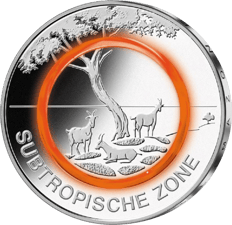
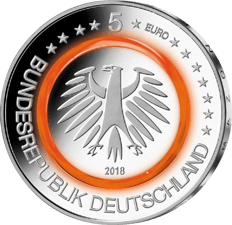
In 2016, Germany introduced an internationally noted innovation with the Planet Earth coin: an embedded, translucent polymer ring that encloses the inner copper-nickel disc. The ring also serves a security function, as it is technically difficult to replicate. The individual issues follow thematic cycles such as the Earth's climate zones.
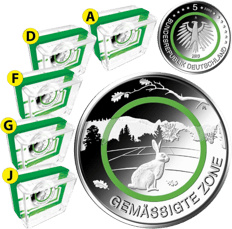
The colour design of the ring varies by year and theme and serves for quick identification. The mints are the five German mints, identifiable by the mint marks A, D, F, G and J. A complete set therefore comprises five specimens per design.
These issues consist of a combination of base metals and plastic and are therefore primarily collector's items, not a precious metal investment. Those focused on material value will find more suitable alternatives among silver coins or gold coins.
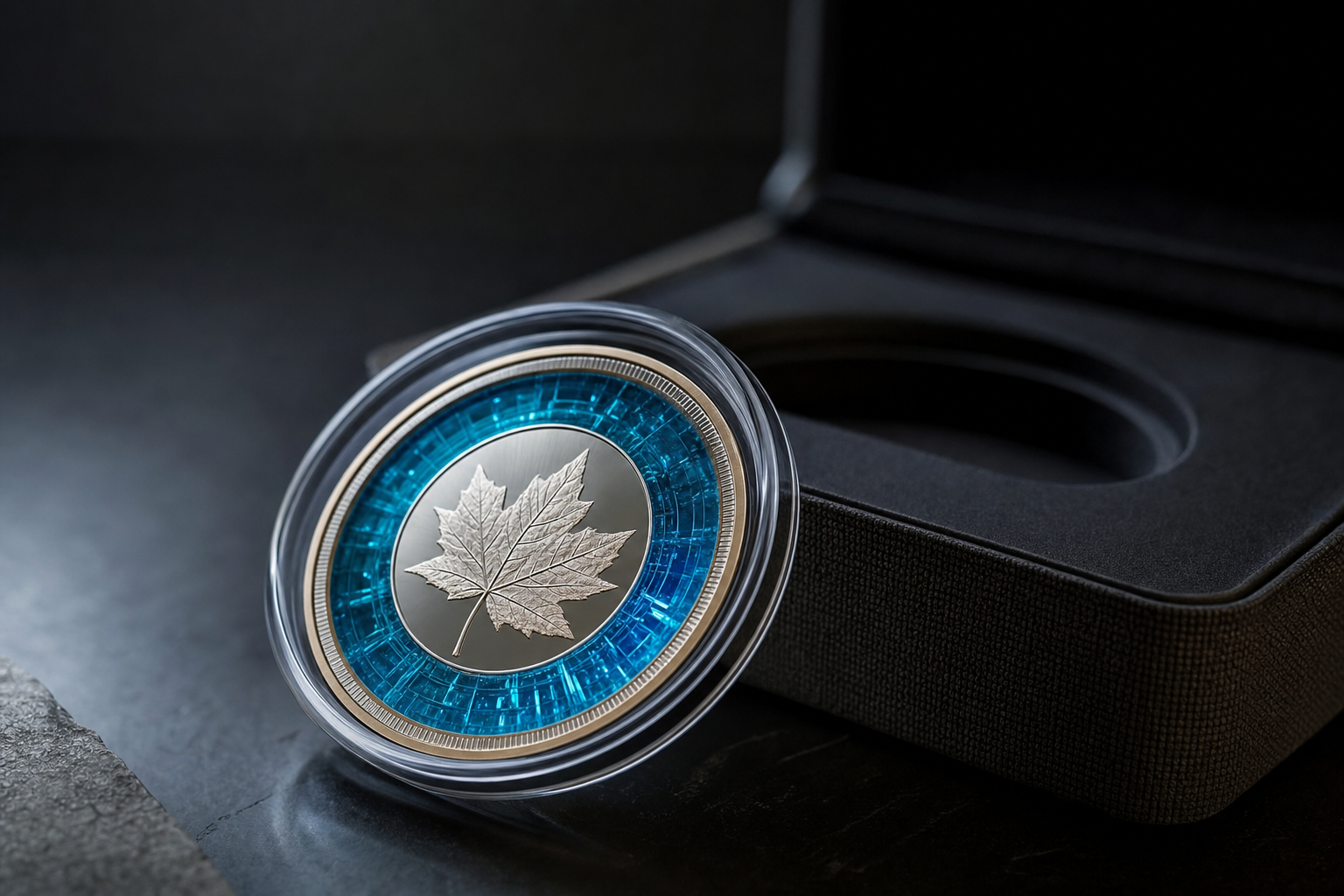
The Maltese 5 euro issues form a chapter of their own. For several years, Malta has been minting silver coins weighing one troy ounce with a face value of 5 euros. Designs such as the Golden Eagle, the Maltese ox or the Maltese cross draw on the history and symbolism of the island state. Characteristic are very low mintages, sometimes only 100 to 10,000 pieces, as well as finishes such as partial gilding or a ruthenium coating.
Since these coins are made of 999 fine silver, they combine collector appeal with a genuine precious metal content. They complement classic investment favourites such as the Vienna Philharmonic or the Maple Leaf, but differ through their strong limitation and commemorative character.
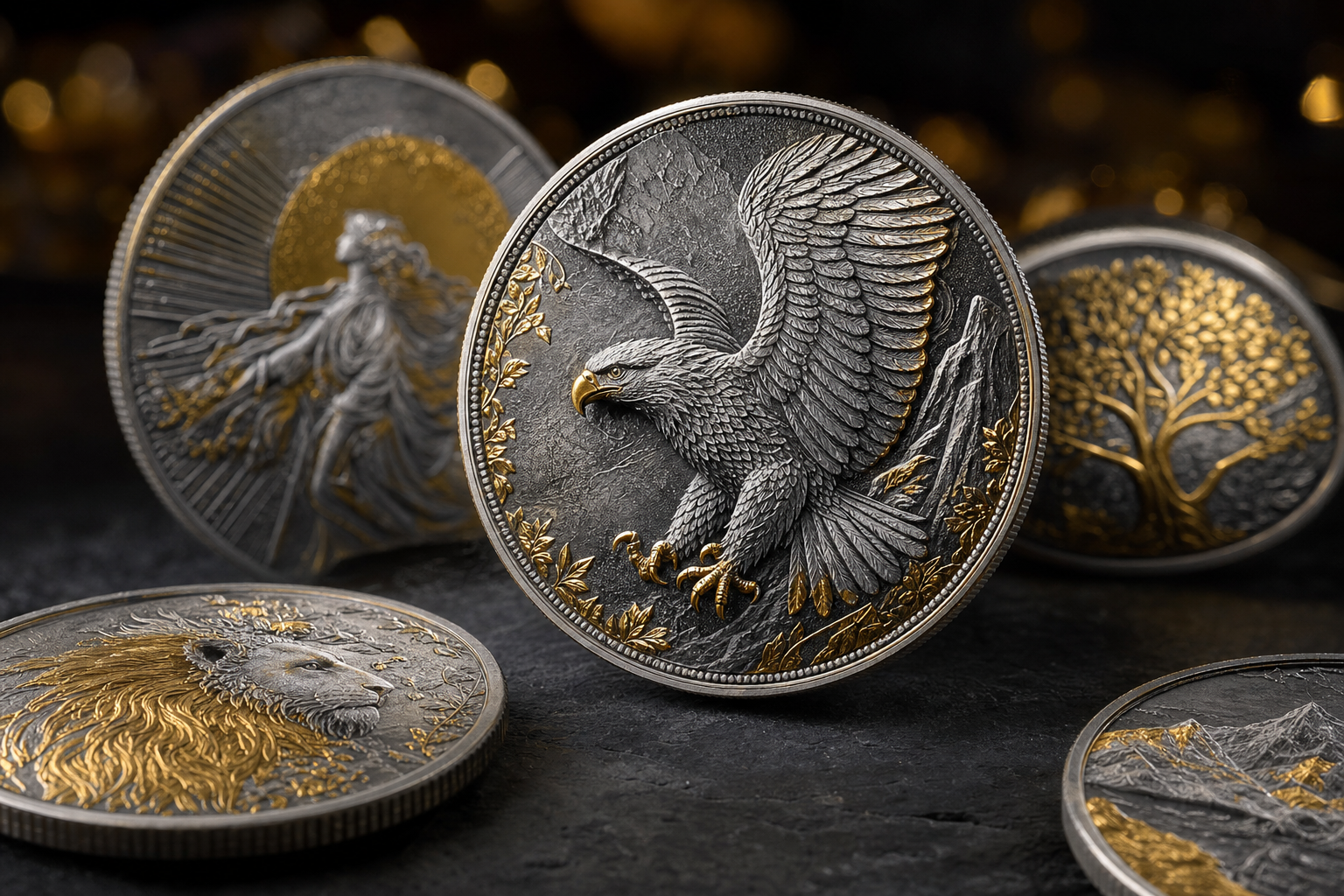
Partially gilded designs highlight individual pictorial elements in gold, thereby emphasising the relief. Ruthenium-plated issues acquire a dark, elegant base tone. Those specifically interested in such effects will find further examples in the partially gilded silver coins category. Due to the small number of pieces, well-preserved specimens are particularly sought after among collectors.
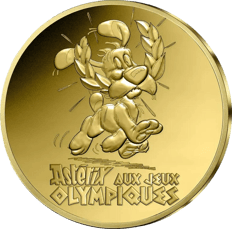
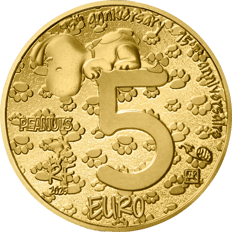
In addition to silver, there are also 5 euro gold coins in small weights, such as 0.5 grams in Proof quality. Such minuscule mintings combine a popular design with a low entry price and are suitable as a gift or as a first step into the world of gold coins. The material value at these weights is low; the collector's and emotional value takes centre stage.
Those who regard gold primarily as a wealth-building component should weigh the premium of such design coins against classic Krugerrand gold coins or standard 1 gram gold bars. For pure value preservation, the premium on standardised investment products is generally lower.
The minting quality significantly affects appearance, availability and price. With 5 euro commemorative coins, collectors mainly encounter two finishes:
The Proof quality requires special care in handling, as fingerprints and scratches reduce the value. Such pieces should only be touched by the edge and ideally with gloves. Suitable protective material can be found in the coin capsules category.
The tax classification depends on the material. In Germany, investment gold is exempt from VAT in accordance with §25c UStG, provided the legal criteria are met. For silver coins, however, the margin scheme often applies, under which VAT is only charged on the trading margin and not on the full selling price.
Tax note
Silver coins taxed under the margin scheme are traded without VAT shown separately. For private sales, the one-year speculation period may also be relevant. This is general information and does not replace tax advice.
Those wishing to delve deeper into the VAT-exempt acquisition of gold will find further ranges in the gold bullion coins. For silver, it is worth looking at the silver bullion coins.
The state of preservation plays a decisive role in the later value of collector's coins. For 5 euro commemorative coins, the following applies: air, moisture and skin contact should be avoided. Silver issues tend to tarnish if stored incorrectly, and the German polymer ring coins are sensitive to mechanical stress on the plastic ring.
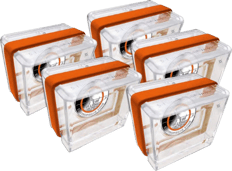
For an organised collection, coin cases are suitable, while individual pieces are kept safe for transport in coin pouches. High-quality accessories can be found collected in the accessories category.
The value of a 5 euro commemorative coin is derived from several factors: the mintage, the minting quality, the state of preservation and the popularity of the design. Low-mintage issues with fewer than a thousand pieces regularly achieve higher prices on the collector's market than widely distributed series coins. For German issues, a particular mint can also be rarer and therefore more sought after.
Collectors pursue different approaches: completing entire series, concentrating on a single design theme, or selecting particularly rare pieces. Related face values such as 2 euro commemorative coins, 10 euro commemorative coins or the precious-metal-containing 20 euro gold coins offer starting points for expanding a thematically coherent collection.
A commemorative coin always tells a story: its collector's value grows with the rarity and the cultural context of its design.
The German series features a translucent plastic ring between the inner and outer metal parts. It serves both as a security feature and as a design element, the colour of which changes by year and theme. International issues such as the Maltese 5 euro coins, by contrast, are made of fine silver.
The German polymer ring coins are made of base metals and are primarily collector's items. Maltese silver issues, by contrast, have a genuine precious metal value. Those who prioritise material value should consider classic bullion coins or bars.
Proof refers to a particularly elaborate minting with a mirror-finish background and frosted designs. This quality is produced in smaller quantities and is sensitive to fingerprints. Mint State, by contrast, is the standard minting quality for regular circulation or collecting needs.
Small minting countries such as Malta deliberately issue special editions in very low mintages, sometimes only 100 pieces. The limitation increases demand among collectors and makes well-preserved pieces particularly sought after. The mintage is therefore a key criterion for collector's value.
In Germany, silver coins are often subject to the margin scheme, under which VAT is only calculated on the trading margin. Investment gold, by contrast, is exempt from VAT in accordance with §25c UStG. Individual tax advice is recommended for specific cases.
Ideal is dry, temperature-stable storage in precisely fitting capsules or cases. Direct skin contact and moisture should be avoided, as they can impair the state of preservation and thus the collector's value. For entire series, organised coin cases are recommended.
 Commemorative Coins5 Euro
Stay informed with product launches, financial news and exclusive offers. Sign up for our free newsletter today.
By entering your email address and clicking the "Submit" button, you give the following consent: "I agree to be informed by email about new products, financial news and exclusive offers, and therefore consent to the processing of my email address for the purpose of sending the newsletter. I can revoke this consent at any time without giving reasons, with effect for the future. The lawfulness of processing carried out prior to revocation remains unaffected."