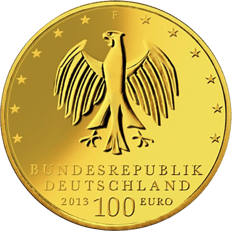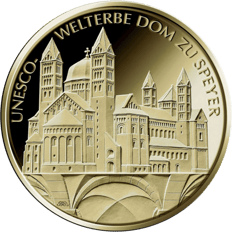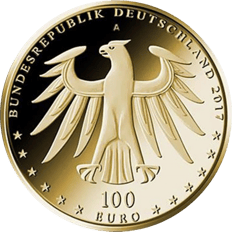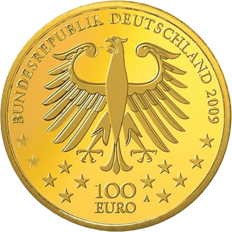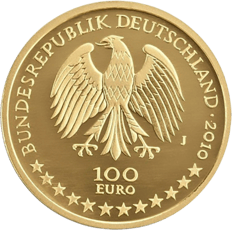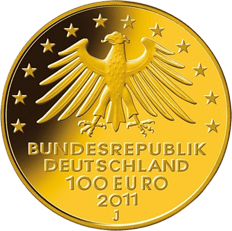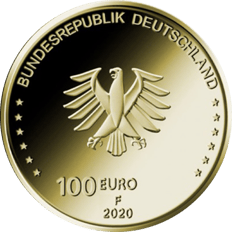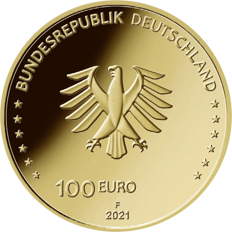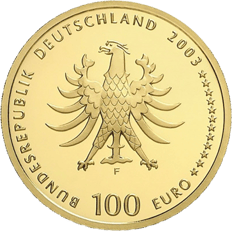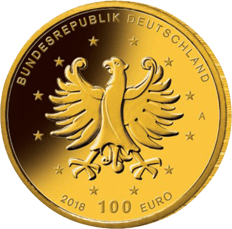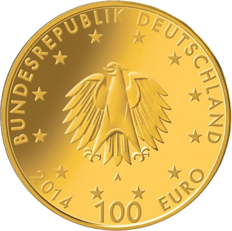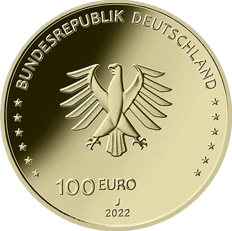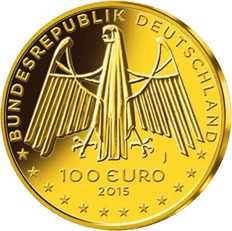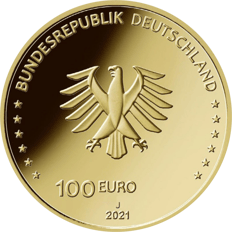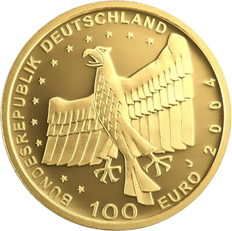
1/2 oz Gold 100 Euro 2004 Bamberg
£1,819.18
VAT-free and excl. shipping
Available in 2–3 business days

 More than 300,000
 Over 30 years
 Secure shipping
 Google: 4.9/5


The 100-euro gold coin is one of the best-known state-issued bullion and collector coins in the eurozone. It combines an official face value of 100 euro with a fixed fine gold content and, in most cases, a strictly limited mintage. This guide looks at the countries of origin and mints, fineness and weight, the most important design series such as Germany's UNESCO World Heritage series, authenticity features, tax treatment and sensible storage. The aim is to give a complete picture of this face-value class within the euro commemorative coins.

The term 100-euro gold coin refers to state-issued gold coins bearing a face value of 100 euro. They are legal tender in the issuing country, but their actual value lies far above the face value and depends on the fine gold content and the current gold price. The face value mainly serves to classify the coin legally as an official coin, not as a price indication.
This face-value class is particularly widespread in Germany, where the 100-euro gold coin has been issued annually since 2002. Other eurozone countries also issue coins with this face value. Within the broader range of commemorative coins, the 100-euro issue holds a special position because it is usually made of pure gold rather than silver or base metals, as is the case with many smaller face values.
The difference between the face value stamped on the coin and the real material value is key. A German 100-euro gold coin typically contains half a troy ounce of fine gold, the metal value of which significantly exceeds the face value of 100 euro. Anyone who prefers to buy based purely on gold weight will find a complementary product group without a collector's premium in classic gold bullion coins.
The face value of 100 euro is used by several mints within the eurozone. The best-known issuers are Germany, Austria and Malta. Each mint pursues its own thematic focus and its own mintage concept.
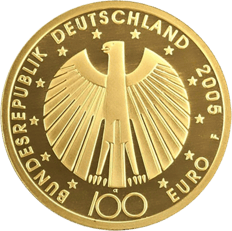
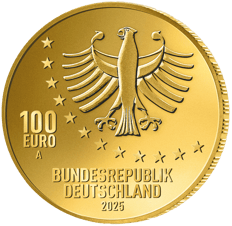
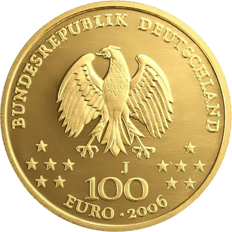
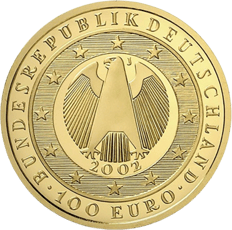
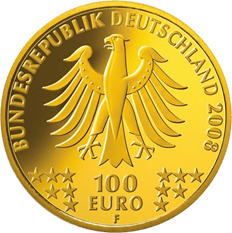
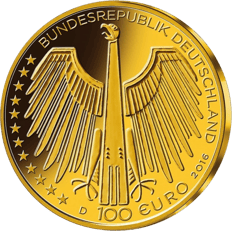
German 100-euro gold coins have been issued in fixed series since 2002. For many years, the focus was on UNESCO World Heritage, with designs such as Bamberg Cathedral, Wartburg Castle or the island of Reichenau. Later series were dedicated to themes such as pillars of democracy or masterpieces of German literature. They are struck at the five German mints and issued by Münze Deutschland. A fineness of 999.9/1,000 and a weight of half a troy ounce are characteristic.
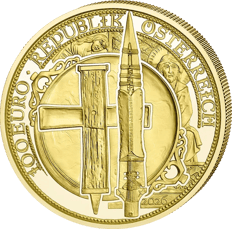
Austria also issues 100-euro gold coins, for instance as part of historical and cultural-historical series from Münze Österreich. Malta, working together with international mints, likewise issues 100-euro gold coins, often with very small mintages that emphasise their collector character. Anyone looking for related state-issued gold coins will also find what they need among the German gold coins and the gold euro issues.
100-euro gold coins differ in weight and fineness depending on the issuing country. The following overview summarises typical specifications:
Fineness is a key purchasing criterion: German issues are made of 999.9 gold, which makes it easy to calculate the pure gold value. Anyone wishing to compare the 100-euro face value with other euro denominations will find context in the 50 euro and 200 euro issues.
Within the euro commemorative coins, the 100-euro coin marks the threshold above which issues are regularly made of pure gold. Smaller face values such as 20 euro or 25 euro are more often made of silver, while higher face values such as 500 euro and 1,000 euro contain larger gold weights.
The appeal of 100-euro gold coins lies in the combination of gold value and design. The German series follow a fixed annual rhythm, allowing collectors to plan their additions. The mintage is a key factor: the smaller it is, the more the collector's premium can exceed the pure material value.
Several aspects come into play when assessing value:
Anyone searching for designs by thematic focus will find related state-issued coins among the German gold coins or within the euro commemorative coins. As state-issued collector's coins, the 100-euro issues also form part of the wider range of collector's coins.
State-issued 100-euro gold coins have several features that facilitate authenticity verification. These include precisely defined dimensions, a fixed weight and a precise edge design. Since the fineness and weight are officially specified, any deviations can be detected using simple means.
At Kettner Edelmetalle, precious metal products undergo an ISO-compliant authenticity verification before they are shipped. For the safe handling of sensitive collector's items, suitable coin capsules are recommended, as they protect the relief from touch and scratches.
Gold coins with a face value of 100 euro regularly fall under the regulations for investment gold in Germany. Under the applicable rules, the purchase of investment gold is exempt from VAT in accordance with §25c UStG, provided the statutory fineness criteria are met. German 100-euro gold coins with a fineness of 999.9 generally fulfil this requirement.
Tax notice
Investment gold is generally exempt from VAT in Germany in accordance with §25c UStG. For private disposals, a one-year holding period may be relevant under current law. This is general information, not tax advice: the individual situation is always decisive.
The VAT exemption is a key difference from many silver issues, which are subject to the margin scheme. Anyone wishing to make use of the tax advantage of investment gold in other product groups will find corresponding ranges among the gold bars and in the bullion coins section.
Proper storage preserves both the collector's value and the material value of a 100-euro gold coin. Because gold is very soft, scratches and pressure marks occur easily, which can reduce the condition and thus the collector's value. Storage in the original case, supplemented by protective sleeves for transport, is recommended.
Coin cases are suitable for the orderly storage of complete year sequences, while matching capsules are ideal for protecting individual coins. Further accessories for collectors can be found in the collector's accessories category.

The price development of 100-euro gold coins follows two factors: the gold price as the basis for the material value, and the collector's premium, which depends on mintage, design and condition. Historically, gold has preserved its purchasing power over long periods, which is why gold coins are often viewed in the context of asset protection. No specific performance can be derived from this, and it does not constitute investment advice.
Compared to pure investment products, 100-euro commemorative coins offer an additional numismatic aspect. Anyone wishing to focus more strongly on the pure precious metal can consider classic gold coins or gold bars. Thematically related state-issued coins can also be found among the euro coin sets.
German 100-euro gold coins are made of fine gold with a fineness of 999.9/1,000 and typically weigh half a troy ounce (15.55 grams). International issues may have different weights.
The face value of 100 euro serves the legal classification as official legal tender. The actual value depends on the fine gold content and the current gold price, and significantly exceeds the face value.
Gold coins that meet the statutory criteria for investment gold are exempt from VAT in Germany in accordance with §25c UStG. German 100-euro gold coins with a fineness of 999.9 regularly fulfil this requirement. This is general information and does not replace tax advice.
The best known is Germany with its annual series. Austria and Malta also issue 100-euro gold coins, often with very small mintages and their own thematic focus.
Storage in the original case is recommended, supplemented by coin capsules to protect the surface. Coin cases are suitable for complete series, while a safe or bank safe deposit box is recommended for long-term value preservation.
Bullion coins are oriented almost entirely towards the material value and are traded with a small premium. Commemorative coins such as the 100-euro issues combine the gold value with a numismatic collector's value that depends on mintage, design and condition.
 Commemorative Coins100 Euro
Stay informed with product launches, financial news and exclusive offers. Sign up for our free newsletter today.
By entering your email address and clicking the "Submit" button, you give the following consent: "I agree to be informed by email about new products, financial news and exclusive offers, and therefore consent to the processing of my email address for the purpose of sending the newsletter. I can revoke this consent at any time without giving reasons, with effect for the future. The lawfulness of processing carried out prior to revocation remains unaffected."