Only 5 left to order
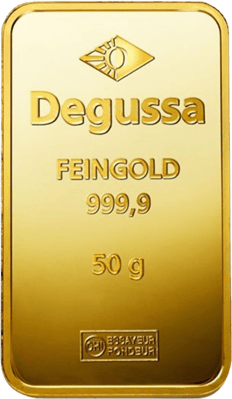
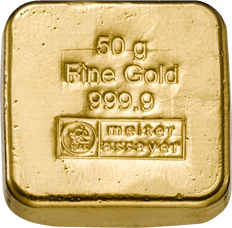
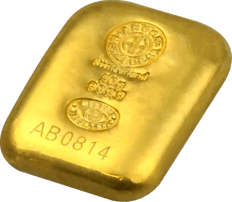
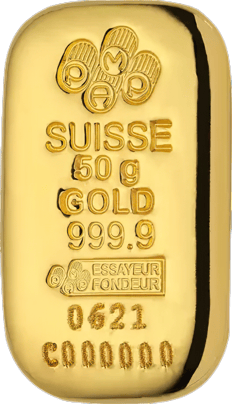
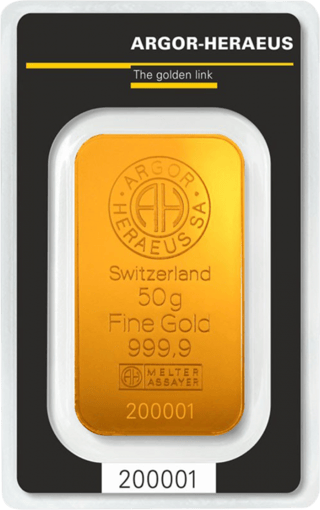
50g Gold Bar Heraeus
£5,116.13
VAT-free and excl. shipping
Available in 2–3 business days

 More than 300,000
 Over 30 years
 Secure shipping
 Google: 4.9/5

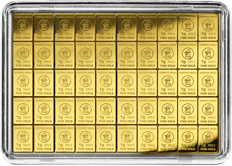
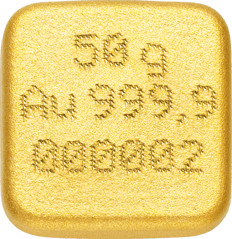
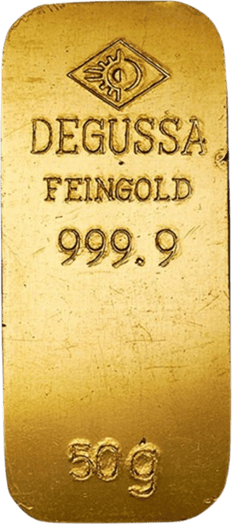
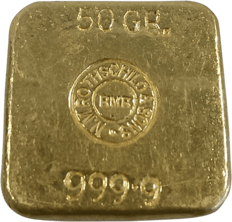
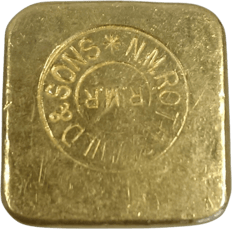
Gold enthusiasts are delighted by the versatility of the 50 gram gold bars. Starting from a fine weight of 50g, both different manufacturing methods become available: minted and cast. The sealed gold bars frequently win over our buyers due to their excellent price-to-performance ratio. Of course, we will not withhold the cast bars with their fine, rounded edges from you.


Gold bars between 5 and 50 grams come in two units, in grams and in ounces. One ounce of gold weighs 31.1 grams. At the large refineries, both sizes have stood in the same range for decades.
“[Argor] is generally acknowledged as the first LBMA-accredited refiner to have manufactured a range of minted bars, in 1952.”
Gold Bars Worldwide on Argor‑Heraeus, 2014
Argor is based in Switzerland and is now called Argor‑Heraeus. Its first range of 1952 ran from 5 to 100 grams. In 1979, the ounce, the half ounce and the quarter ounce were added to it.
At PAMP, also in Switzerland, seven rectangular minted bars came out in 1979: 5, 10, 20, 50 and 100 grams, plus one ounce and half an ounce. There, gram and ounce stood in the same range.
The gram range of 5, 10, 20 and 50 lies on the same grid as the weights used to test scales: 1, 2 and 5, then ten times each. This is laid down in the international recommendation OIML R 111 for weights. At 31.1 grams, the ounce lies beside this grid.
On this scale, ten times as much always takes the same space: from 1 to 10 grams is as far as from 10 to 100 grams. Grid according to OIML R 111‑1 of 2004, section 4.2. The ounce calculated at 31.1035 grams.
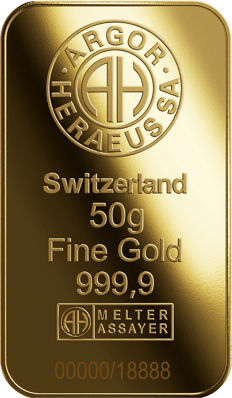
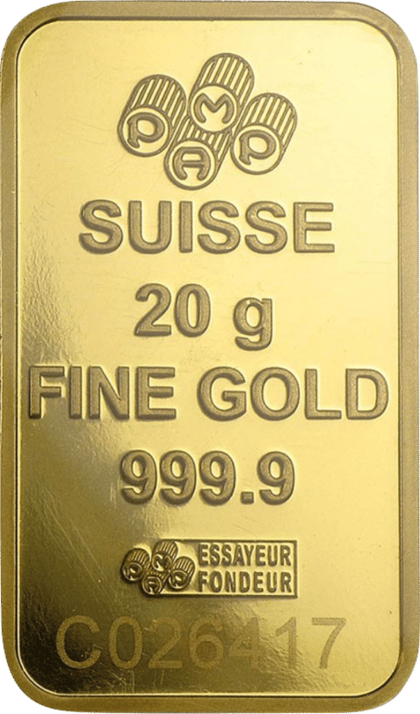
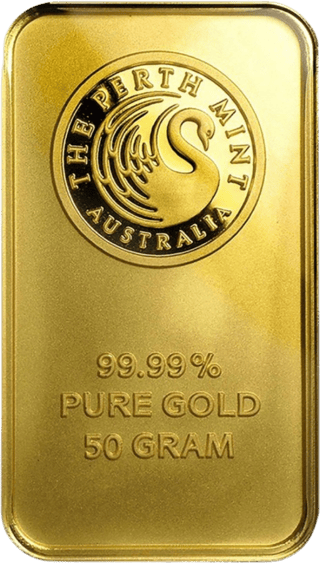
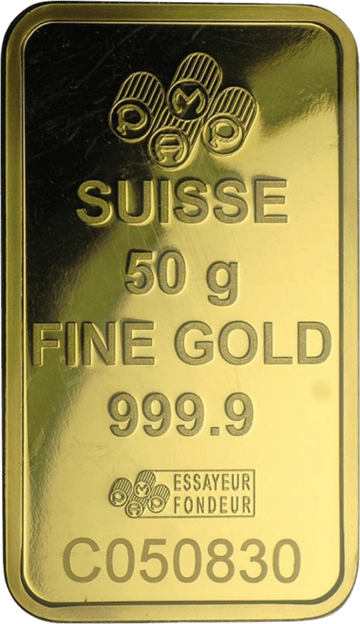
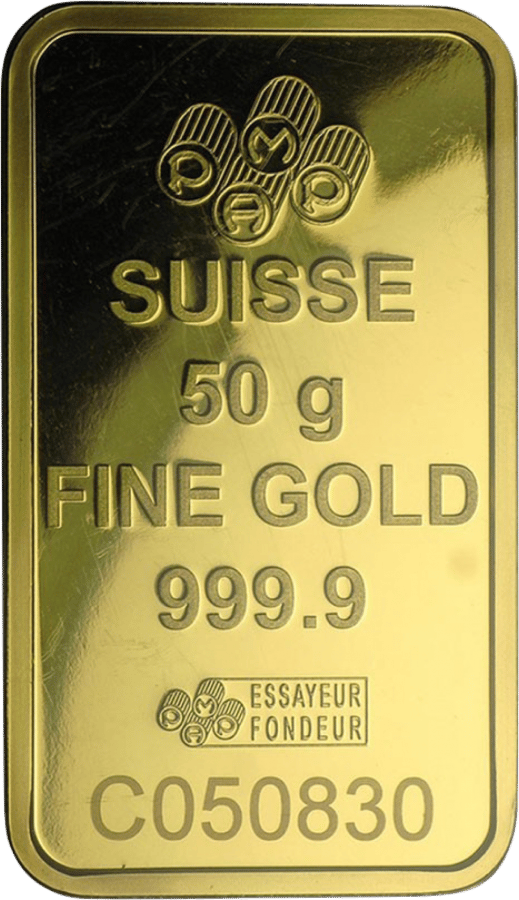
The front carries what a bar must say: who made it, how heavy it is, how fine its gold is and who assayed it. Today a number is usually added. The back may carry a picture.
“Obverse and reverse bar design can be customised according to a client’s wishes, provided that the compulsory marks are ensured …”
Valcambi, website “Minted bars”
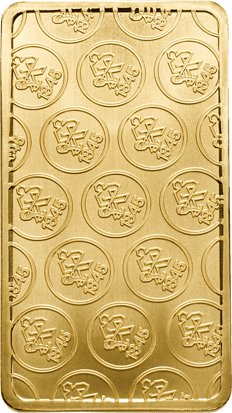
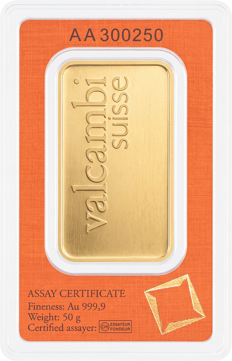
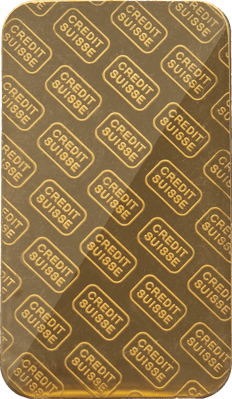
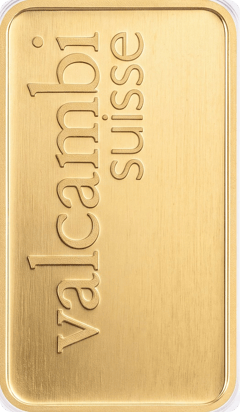
Product photos from the shop: the front of a bar of 20 grams, the backs of bars of 10 grams, for Valcambi the back of a bar of 50 grams in its card. Not at the same scale.
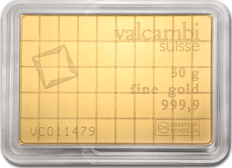
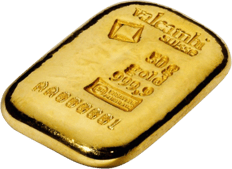
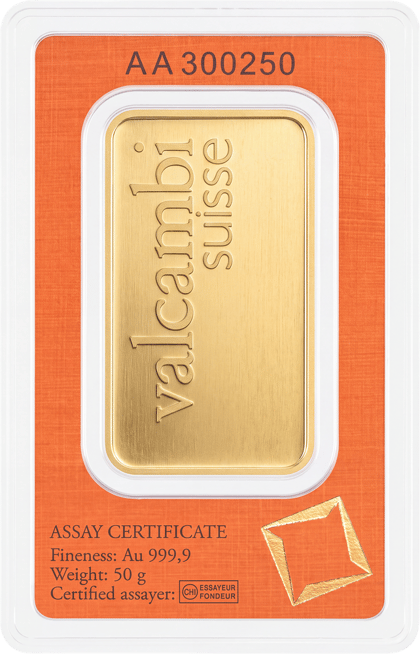
At Valcambi, the front of a standard minted bar shows the logo, the weight, the metal, the fineness, the mark “Essayeur Fondeur” and the bar number. The back reads “Valcambi Suisse”.
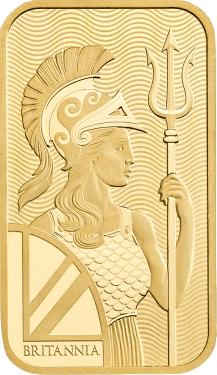
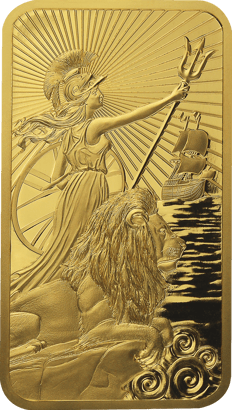
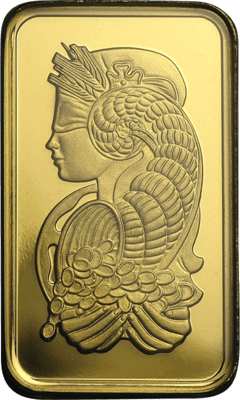
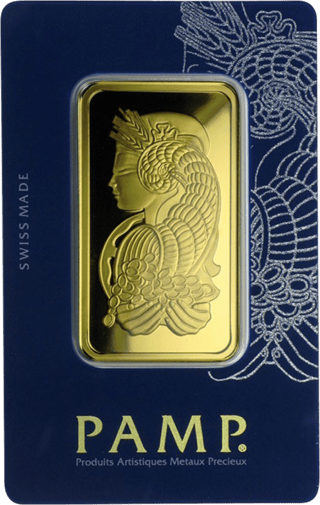
Since 1979, PAMP has struck a motif on the back of its minted bars. The first was Fortuna, a figure from Roman antiquity. By 2014, more than 50 motifs had been added to choose from.
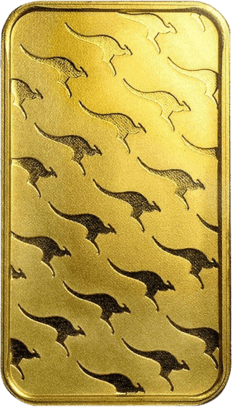
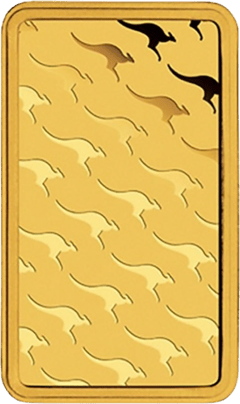
The Perth Mint in Australia showed the figure “Oriana” on its first standard minted bars of 2008. Since 2010, its standard minted bars have carried kangaroos on the back.
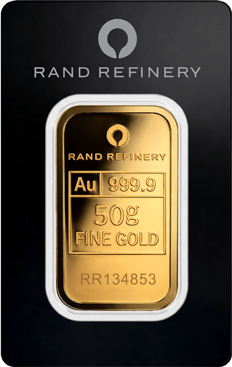
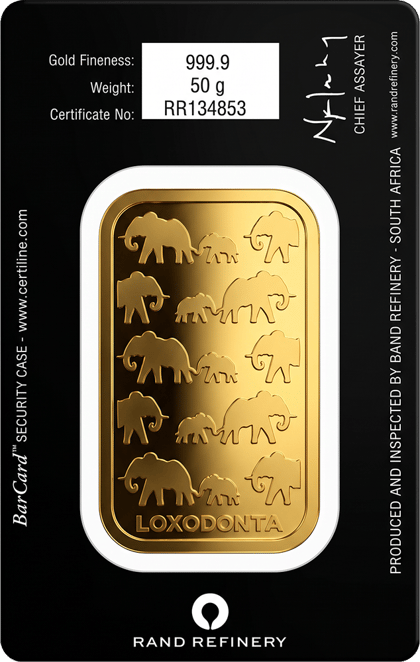
On the shop’s bars from the Rand Refinery in South Africa, elephants walk across the back. Beneath them is LOXODONTA, the genus name of African elephants.
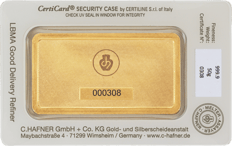
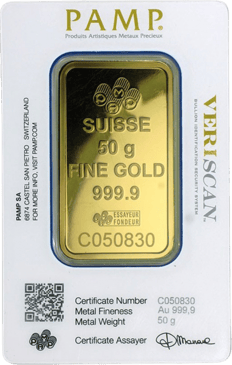
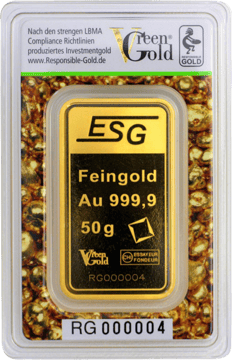
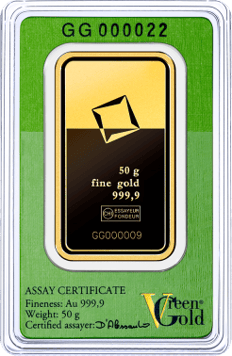
A minted bar between 5 and 50 grams usually sits in a sealed card. On it, the maker confirms what the bar weighs and how fine it is, under a number that usually also appears on the bar.
“Each bar is packed individually in a sealed blister. … 100 g and less: certificates are sealed within the blister.”
Gold Bars Worldwide on Valcambi, 2014
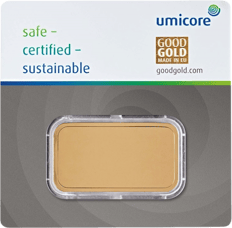
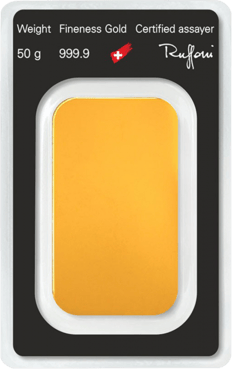
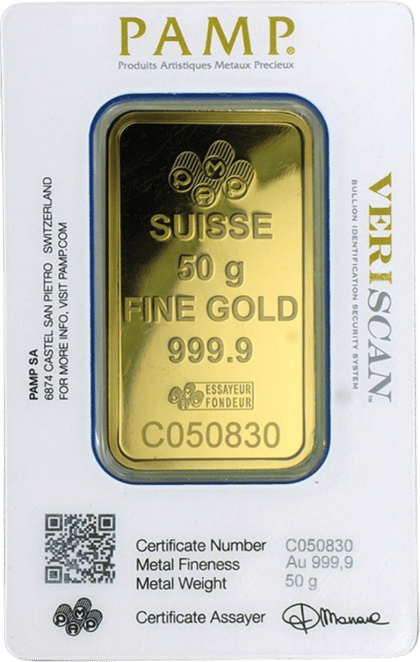
Four details appear on each of these three cards, however different they look: the number, the fineness, the weight and the assayer. The cards of Argor‑Heraeus, the Perth Mint and Umicore show the same four on their product photos in the shop.
At PAMP and at the Rand Refinery, an assayer of the house signs, at the Rand Refinery as “Chief Assayer”. Valcambi needs no signature: there, the licence as assayer and melter is held by the house and not by an individual, the company writes. The card of the bar of 50 grams therefore carries only the assayer’s mark. The cards of 10 and 20 grams and of the ounce still bear a signature on their product photos in the shop.
The card stays with the bar. By its own account, Argor‑Heraeus does not issue a second certificate, and it cannot confirm the authenticity or origin of a bar from a serial number alone.
Product photos from the shop, cards of bars of 50 grams. At the Rand Refinery and at Valcambi, the bar in the window shows its back; its number cannot be seen here.
Under the microscope, the surface of a bar is a fine landscape of peaks and hollows. For bars with the VERISCAN mark, PAMP records this landscape as early as manufacture and stores it in a database.
“VERISCAN is a free mobile app enabling the instant, secure and confidential authentication of any PAMP precious metals product bearing the VERISCAN logo on the product’s packaging or certificate.”
App Store, entry “VERISCAN Bullion Security” by PAMP SA
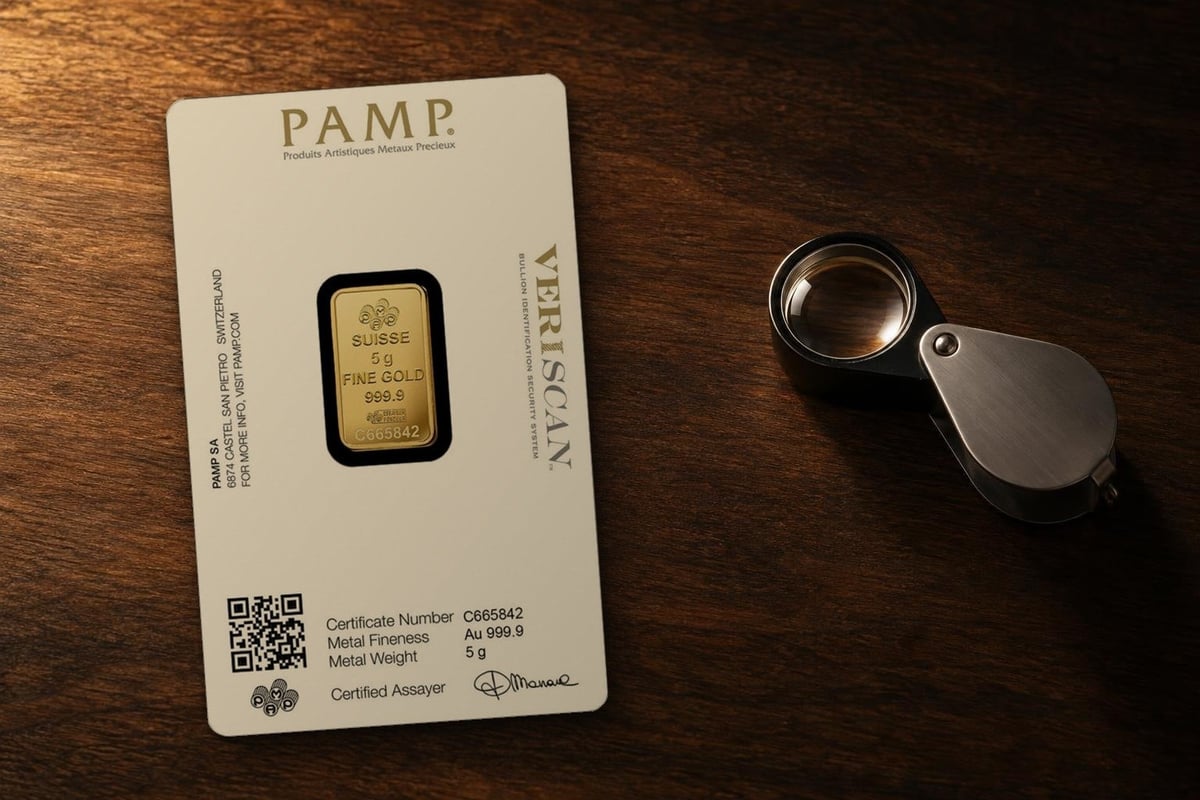
The app compares the surface with the stored data, and the packaging can stay closed while it does so. That is how PAMP itself describes it, in the app’s entry and in an announcement from 2023.
The cards of the PAMP bars of 5, 10, 20 and 50 grams in the shop carry the VERISCAN lettering and a QR code, as their product photos show.
From 1984 to 2012, PAMP regularly stamped serial numbers only into its large bars of 400 and 100 ounces; other bars received them only on request. Since 2012, almost every smaller bar from the house has carried a letter and a serial number. At Valcambi, many standard minted bars bore a rose on the back from 2005 to 2012, and these bars received no serial number.
The contour lines are drawn, not a microscope image. Bar: product photo from the shop, PAMP, 50 grams.
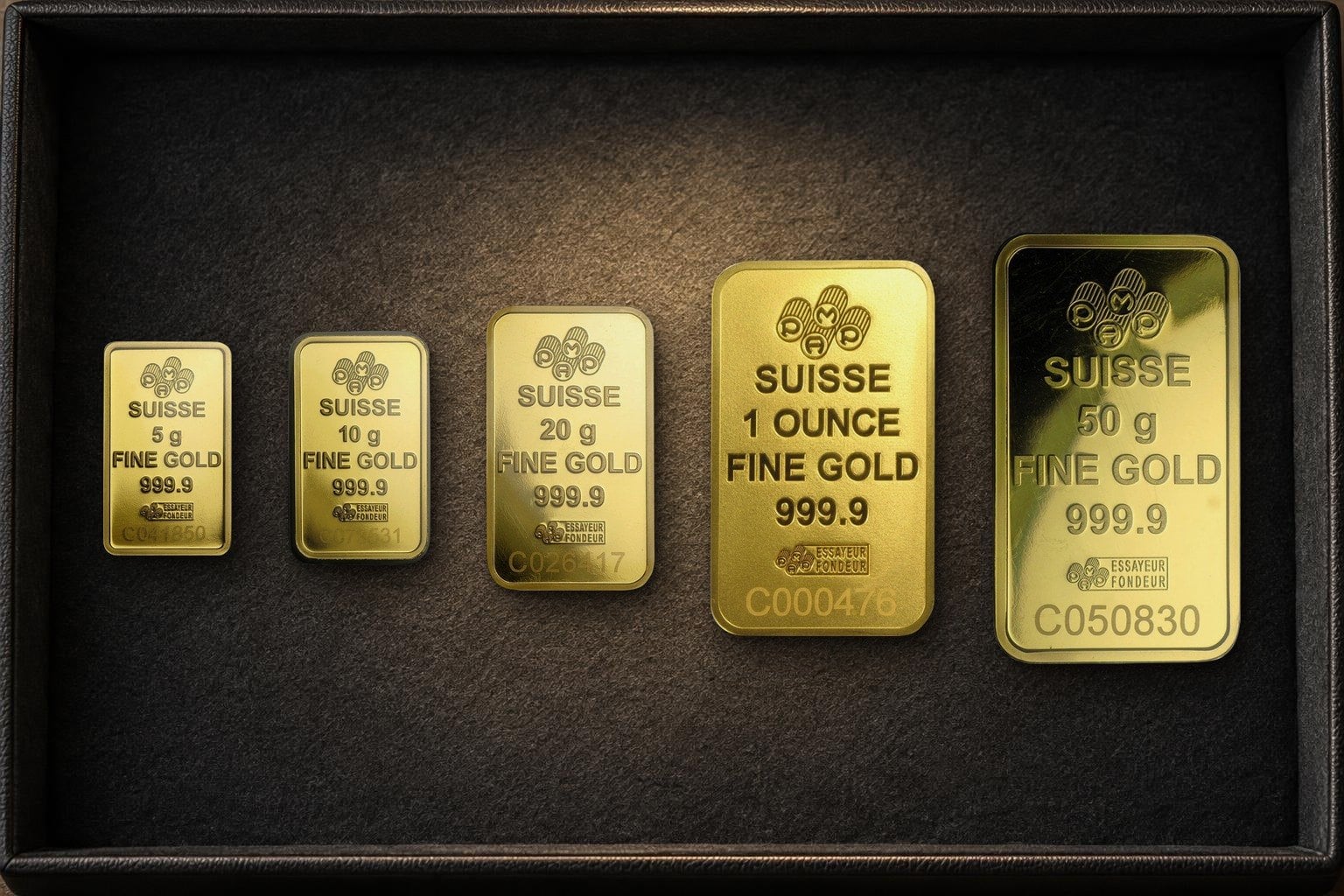
A minted bar is thin. A single PAMP bar of 5 grams is 0.83 millimetres thick, one of 50 grams 2.06 millimetres. By these measurements, it is above all the face that grows with the weight.
Dimensions according to PAMP, product information from 2019: length and thickness at the same scale. The width cannot be seen from the side.
At PAMP, the ounce is thinner than the bar of 20 grams, although it weighs more. It measures 41 by 24 millimetres and is 1.66 millimetres thick. The bar of 20 grams is smaller at 31 by 18 millimetres and thicker at 1.88 millimetres.
Many houses mint almost the same formats. PAMP, Valcambi and Degussa give the bar of 20 grams as 31 by 18 millimetres, the Perth Mint as at most 31.8 by 18.8. For the ounce, the formats differ: PAMP states 41 by 24 millimetres, Valcambi 38 by 22. The houses name no common standard.
Between 5 and 50 grams, a gold bar is usually minted, sealed and precisely described: a small piece with two sides, a card and a number.
 50 g Gold Bar
Stay informed with product launches, financial news and exclusive offers. Sign up for our free newsletter today.
By entering your email address and clicking the "Submit" button, you give the following consent: "I agree to be informed by email about new products, financial news and exclusive offers, and therefore consent to the processing of my email address for the purpose of sending the newsletter. I can revoke this consent at any time without giving reasons, with effect for the future. The lawfulness of processing carried out prior to revocation remains unaffected."