

Only 5 left to order
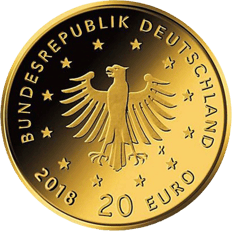
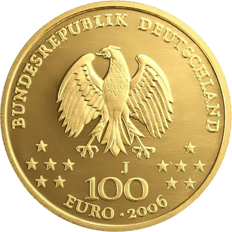
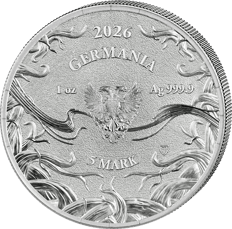
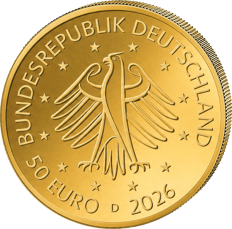
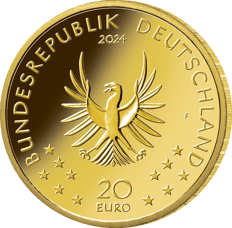
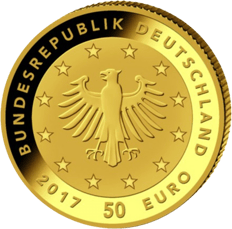
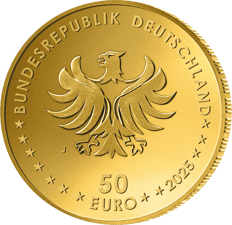
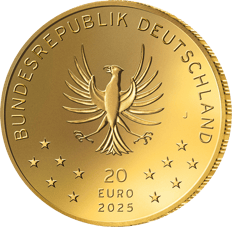
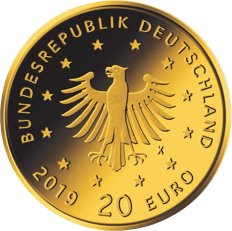
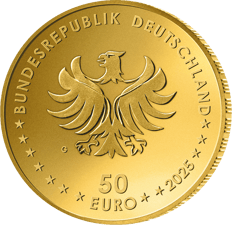
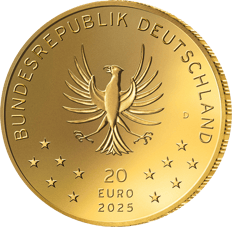
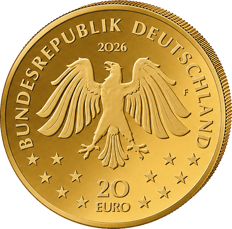
1/8 Ounce Gold 20 Euro Return of Wildlife Bison 2026 (Mintage: 57,000 | various letter)
£553.85
VAT-free and excl. shipping
Available in 2–3 business days

 More than 300,000
 Over 30 years
 Secure shipping
 Google: 4.9/5


Authenticity
Every coin comes from one of the five German mints. Before it goes out to you, we check it ourselves.
 Germany
The coins are struck in Berlin, Munich, Stuttgart, Karlsruhe and Hamburg. The gold for the gold coins comes from the Deutsche Bundesbank.
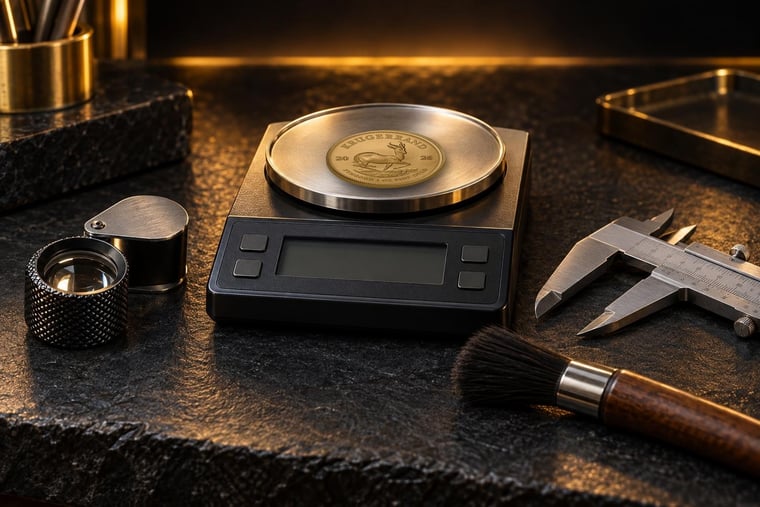
In our CCTV-monitored high-security area, two specialists check every order following the four-eyes principle, including its weight and, by X-ray, its authenticity.
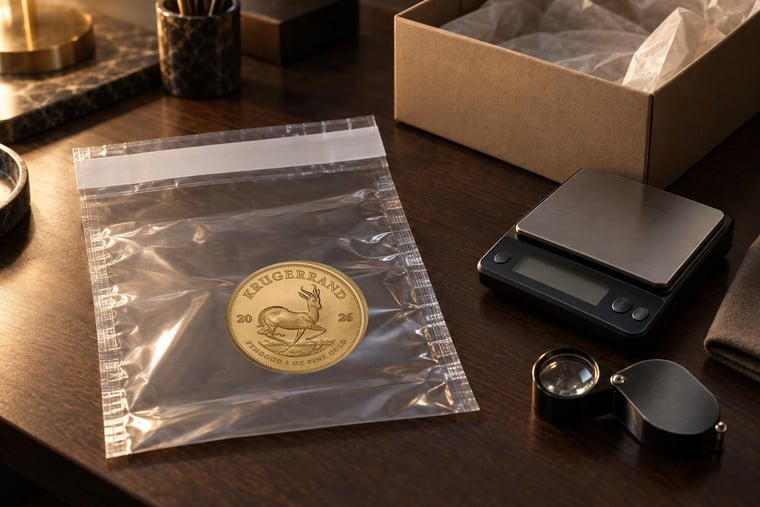
We then seal your order in a security bag that can only be opened once. You will be the first to open it.
Our testing methods
The house
Münze Deutschland is the sales brand of the German Federal Office of Administration. On behalf of the Federal Ministry of Finance, it issues Germany’s collector coins, including the gold coins. They are struck at the five state mints in Berlin, Munich, Stuttgart, Karlsruhe and Hamburg, and the gold for them comes from the Deutsche Bundesbank.

Sources: manufacturer’s details, as of 14 November 2026
The term Münze Deutschland stands for the official distribution organisation for German collector and commemorative coins on behalf of the Federal Republic. Behind every coin issued are the five state German mints, identifiable by their letters A, D, F, G and J, which look back on centuries of minting tradition. This guide examines the history and mints, the key series from the Goldmark through the gold euro issues to the silver programmes, the tax treatment, authenticity features as well as sensible purchasing criteria and storage.

German collector and commemorative coins are issued in the name of the Federal Republic of Germany and carry an official face value in euro. Issuance has taken place on a fixed statutory basis since the introduction of the euro; before that, the programmes ran in Deutsche Mark. Unlike pure investment products, these coins combine a state-guaranteed face value with high-quality minting artistry and a mostly limited mintage.
What makes the German system special is the distribution across several mints. Both historical and current issues come from an association of five mints, whose letter documents the origin. Anyone interested in classic bullion coins will find a broader overview in the gold coins category, while special editions are grouped under collector's coins.
Every German euro coin bears a small letter mark that identifies the mint:
For collectors, this letter is a key feature: the same issue often appears with different mint marks, meaning a complete set of all five letters becomes a collecting goal in its own right. Anyone wishing to delve deeper into the Bavarian minting tradition will find products under Bayerisches Hauptmünzamt.
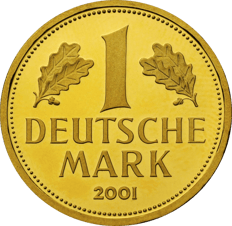
In 2001, to mark the farewell to the Deutsche Mark, Germany issued a 1-DM gold coin, the so-called Goldmark. It weighs twelve grams of fine gold and features the classic design of the former circulation mark. As the first German gold commemorative coin of the post-war era, it marked a symbolic transition and remains a sought-after piece among collectors to this day.
The Goldmark combines commemorative value with material value and is considered an entry point into the field of German gold issues. A dedicated overview of these coins is available in the Goldmark category. Anyone wishing to look at the historical German Empire instead will find the classic imperial gold coins under German Empire.
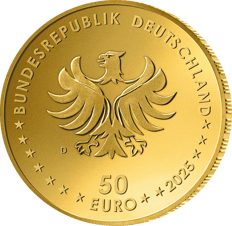
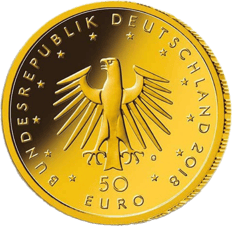
The heart of the German gold programme is formed by the gold euro issues. They are legal tender with a stamped euro face value and consist of pure fine gold. Two programmes shape the picture: the 100 euro series in half an ounce and the 20 euro series in an eighth of an ounce.
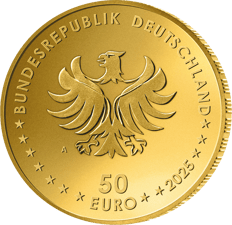
Germany's best-known gold series has been dedicated for many years to the UNESCO World Heritage sites in Germany. Cities such as Bamberg, Weimar, Lübeck, Würzburg, Goslar and Aachen have been featured as designs, as have special occasions such as the Football World Cup. Each issue contains half an ounce of fine gold and appears in a limited mintage distributed across the five mints. A combined overview of these coins is offered by the Gold euro category.
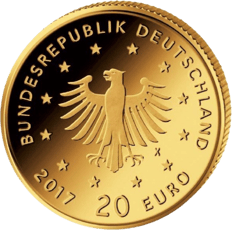
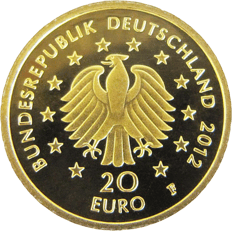
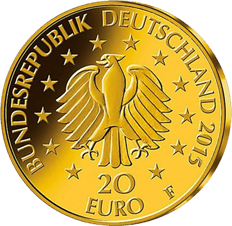
The 20 euro series appears in a smaller denomination with an eighth of an ounce of fine gold. The focus here is thematically on German nature and wildlife: the German Forest series features native tree species such as lime, oak or beech, while later programmes such as Native Birds and The Return of Wildlife take up designs like the eagle owl, lynx, beaver or grey seal. The specialised editions are grouped under Gold Euro German Forest and Native Birds. The smaller denomination makes these issues a comparatively affordable entry into German collector's gold; anyone looking for general euro commemorative issues will find them under Euro commemorative coins.
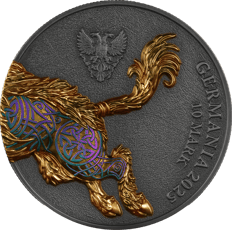
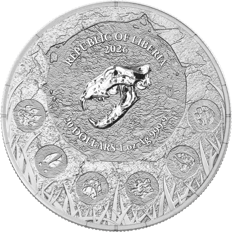
Alongside gold, the German range also includes silver coins. These include modern series from the private Germania Mint in Poland, which are thematically based on Nordic mythology and history, such as the Germania programmes with their allegorical designs and the accompanying Beasts and Megafauna issues. These silver issues often appear in denominations of one or two ounces and sometimes feature special finishes such as partial gilding or a ruthenium finish.
Collectors value the low mintages and elaborate design of these coins. A wide selection of modern designs can be found under Germania silver coins as well as in the collection category Other silver coins. Anyone focusing primarily on classic bullion products will find an overview under Silver coins.

Tax information
Investment gold is exempt from VAT in Germany pursuant to §25c UStG; this also applies to German gold euro issues. Silver coins, on the other hand, are subject to VAT, and the margin scheme is often applied to collector's items. This information does not replace tax advice.
The tax classification depends on the precious metal. German gold euro coins and the Goldmark are considered investment gold and are exempt from VAT on purchase. Silver coins, on the other hand, are subject to VAT; for collector's items, the margin scheme is often applied, meaning only the trading margin is taxed.
For private sales, the one-year speculation period also applies: if a precious metal item is held for longer than twelve months, any capital gain is tax-free under current law. Investors who wish to make deliberate use of this aspect will find relevant ranges under Gold bullion coins. The specific tax treatment should be clarified with a tax adviser on a case-by-case basis.
German coins are among the most forgery-proof in the world, as they are issued by state mints with clear standards. Key features include the exact mint mark, the defined weight, the precise diameter and the sharp edge design. For gold issues, authenticity can additionally be verified via the fineness and the standardised weight.
In terms of minting quality, a distinction is made between Mint State (the standard, uncirculated finish) and Proof with mirror-like fields and frosted designs. Key grades of preservation at a glance:
An ISO-compliant authenticity verification is standard practice among established dealers. For the safe handling of verified pieces, suitable accessories from the coin capsules category are recommended.
When buying German collector's and bullion coins, it is worth looking at several factors: mintage size, minting quality, grade of preservation, the completeness of case and certificate, and the desired mint mark. Low mintages and the sought-after Proof quality can shape the collector's value, while investors focus mainly on the material value and low premiums.
As for storage: precious metals should be kept dry, at a stable temperature and protected from scratches. Original cases, capsules and cassettes protect the design and the edge. Orderly storage of multiple pieces is achieved with coin cassettes or a coin case. Anyone considering topics such as inflation protection and long-term wealth preservation will find further information under Inflation protection.
A coin with a state face value combines minting artistry, material value and collecting pleasure in a single object.
German coins serve two different interests. The investment aspect is at the forefront with the VAT-exempt gold euro issues and the Goldmark, as the fine gold content forms the core of the value here. The collector aspect dominates with limited silver issues, complete mint-mark sets and coins struck in Proof quality.
Both approaches can be combined, for example by deliberately building up a thematic series such as the UNESCO World Heritage designs. Anyone wishing to pursue the collecting idea over fixed periods will find suitable offers under Savings plan products, while newcomers to physical precious metal can get an overview of the parent group under Manufacturers.
The letter identifies the mint: A stands for Berlin, D for Munich, F for Stuttgart, G for Karlsruhe and J for Hamburg. The same issue can appear with different letters, which represents a collecting goal in its own right for collectors.
Yes. As investment gold, the gold euro issues and the Goldmark are exempt from VAT pursuant to §25c UStG. Silver coins, on the other hand, are subject to VAT, often in the form of the margin scheme for collector's items.
Mint State refers to the standard, uncirculated finish. Proof is the highest collector quality, with mirrored fields and frosted designs, and is usually issued in a significantly smaller mintage.
The 100 euro series is predominantly dedicated to the UNESCO World Heritage sites in Germany, with designs featuring Bamberg, Weimar, Lübeck, Würzburg, Goslar or Aachen, among others. Each issue contains half an ounce of fine gold.
The Goldmark was a 1-DM gold coin made of twelve grams of fine gold, issued to mark the farewell to the Deutsche Mark. It is considered the first German gold commemorative coin of the post-war era and remains a sought-after collector's item to this day.
A dry, temperature-stable storage in the original case or coin capsule, which protects the design and edge from scratches, is recommended. Coin cassettes or a coin case are suitable for collections.
 Coin Germany

Personal advice
Our client advisers know the range of Münze Deutschland and help you choose, by phone or at an appointment that suits you.
Monday to Friday, 8 am to 8 pm
Stay informed with product launches, financial news and exclusive offers. Sign up for our free newsletter today.
By entering your email address and clicking the "Submit" button, you give the following consent: "I agree to be informed by email about new products, financial news and exclusive offers, and therefore consent to the processing of my email address for the purpose of sending the newsletter. I can revoke this consent at any time without giving reasons, with effect for the future. The lawfulness of processing carried out prior to revocation remains unaffected."