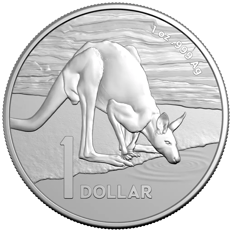
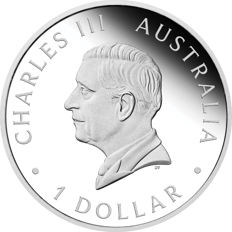
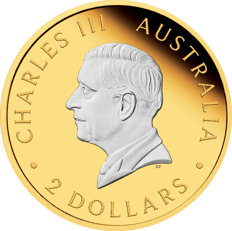
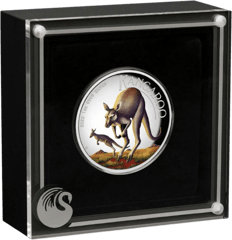
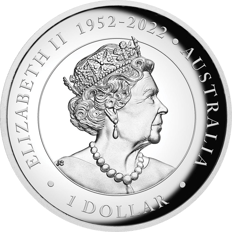
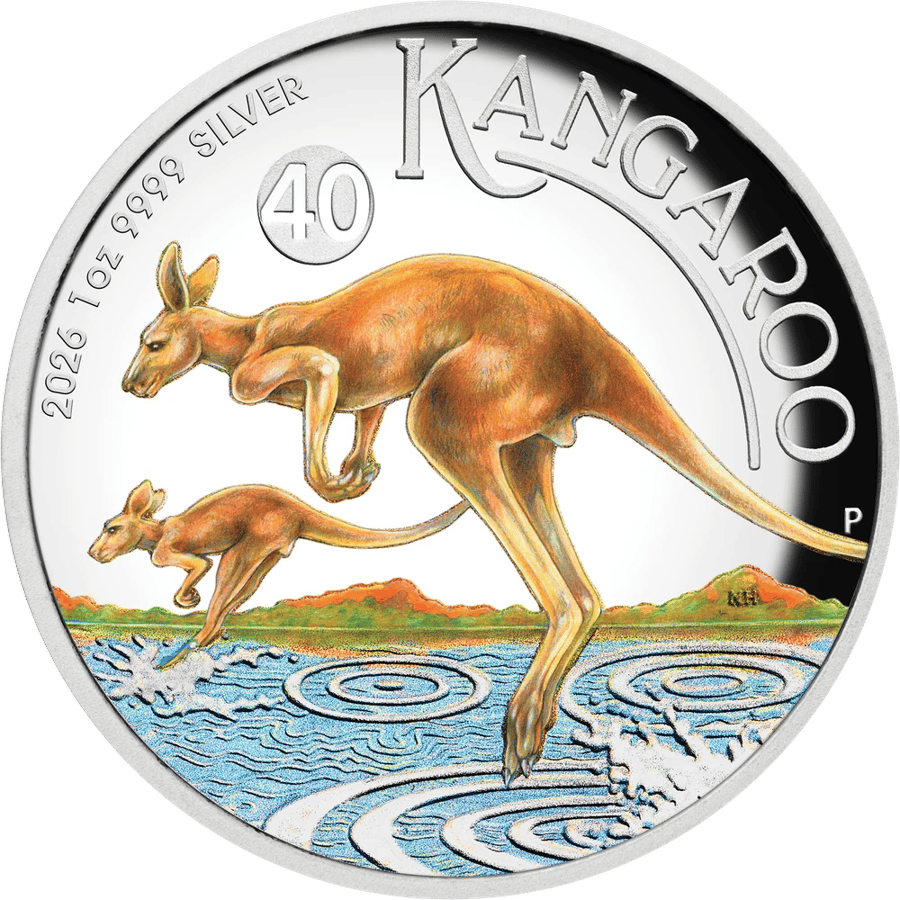
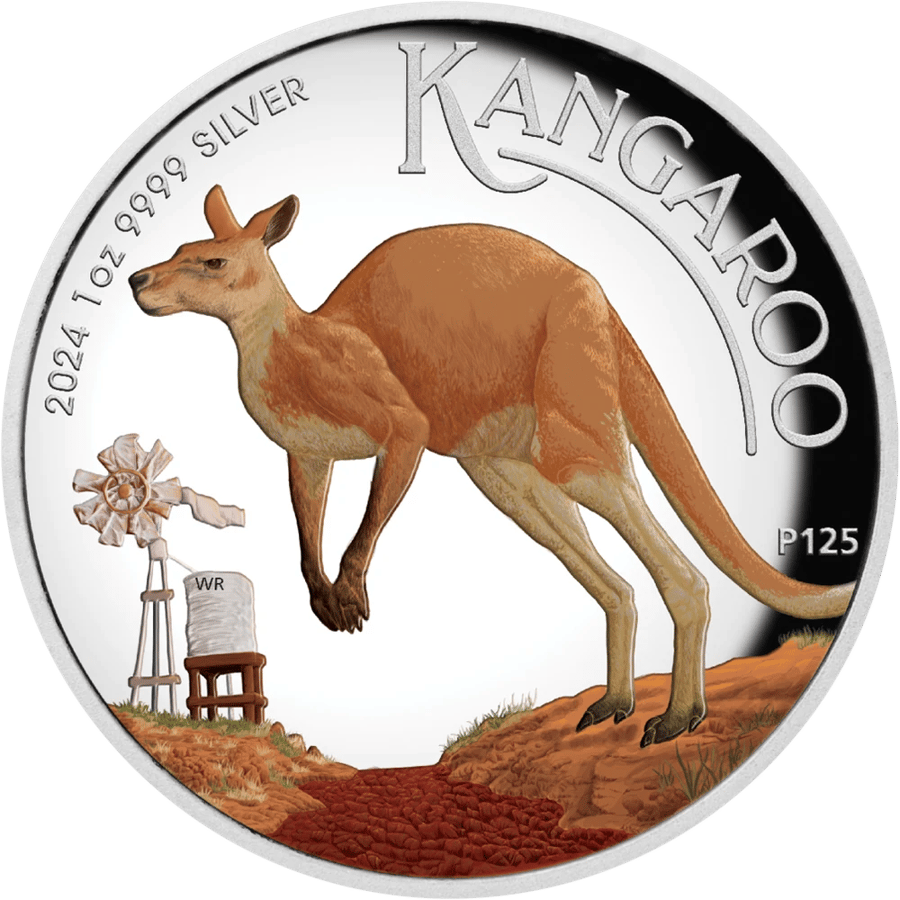
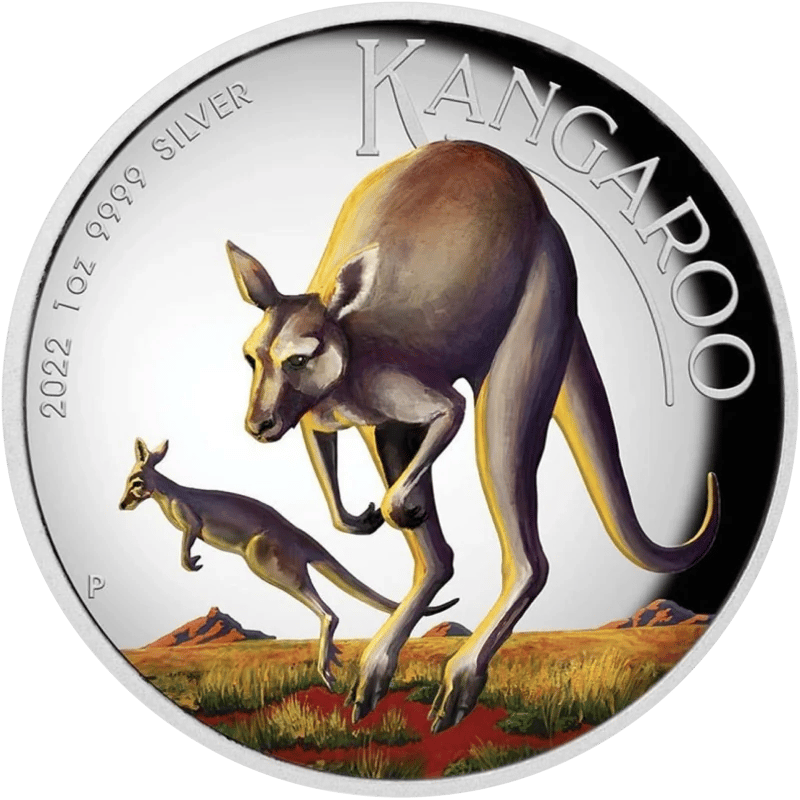
1 Ounce Silver Kangaroo Nugget 2026
£55.90
excl. UK import VAT and shipping
Available in 2–3 business days

 More than 300,000
 Over 30 years
 Secure shipping
 Google: 4.9/5
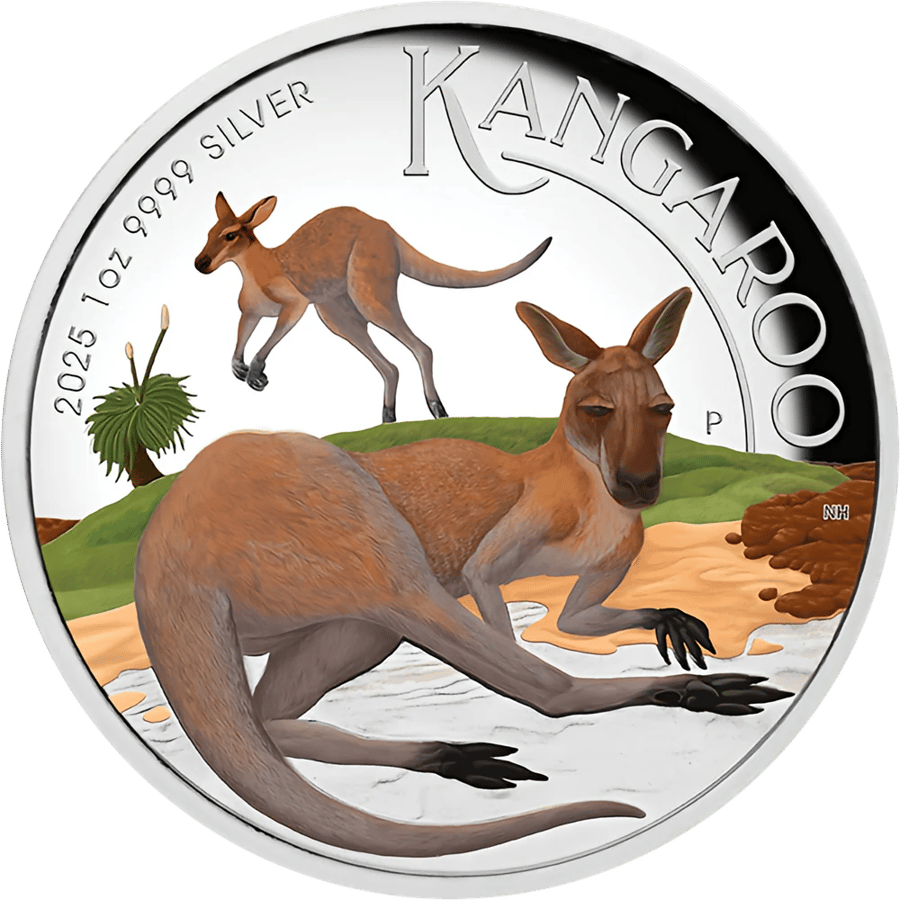
The Silver Kangaroo is one of the favourite pieces among buyers of Australian silver coins. With annually new designs featuring one or more kangaroos, the always limited coin is a valuable collector's item whose collector's value is highly likely to increase further. Here you will find the Kangaroo in gold.


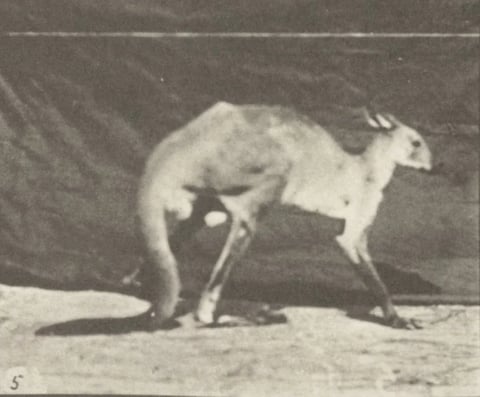
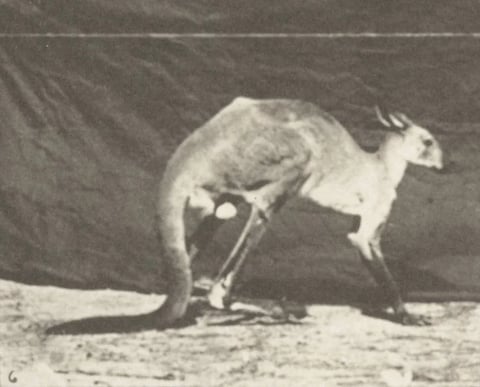
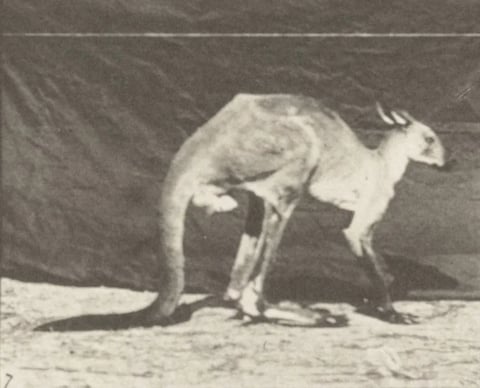
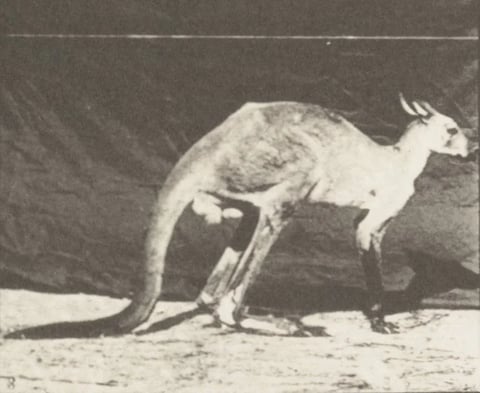
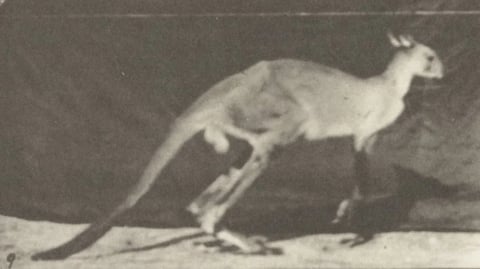
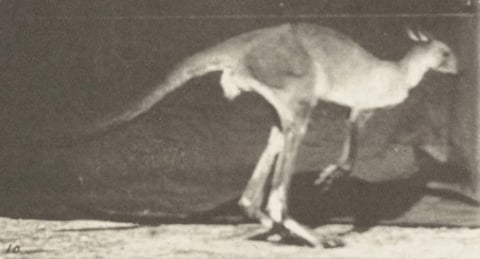
In Eadweard Muybridge’s series of photographs from 1887, a kangaroo first walks on all fours and then changes to jumping. Researchers later measured how much effort hopping takes in red kangaroos.
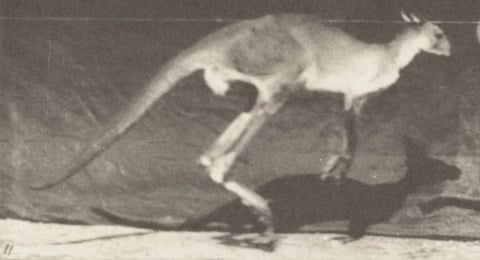
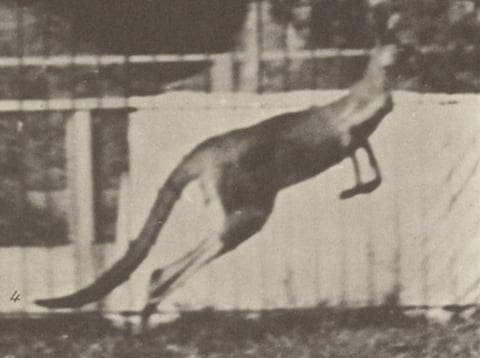
As red kangaroos hop faster over level ground, their rate of oxygen consumption (indicating metabolic energy consumption) remains nearly the same.
Kram and Dawson, 1998
This is explained by the long, elastic tendons of the legs: they store energy and release it again. The Australian Museum compares them to sprung ropes. The faster red kangaroos hop, the less energy they need for each metre. Even so, they mostly choose a rather leisurely pace that spares their tendons.
When a kangaroo walks slowly, it puts its tail on the ground like a fifth leg. In 2014, O’Connor, Dawson, Kram and Donelan measured what the tail contributes in red kangaroos.
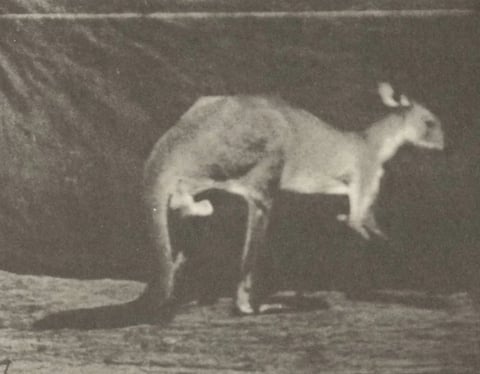
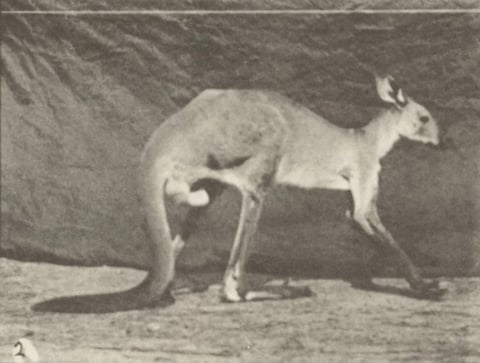
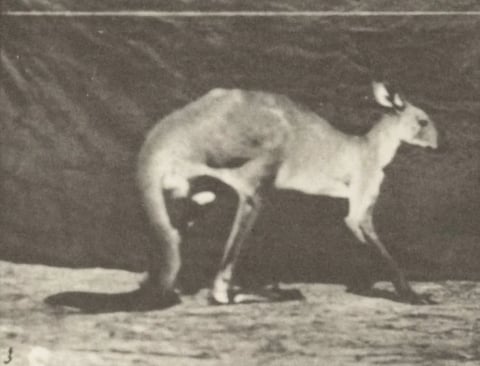
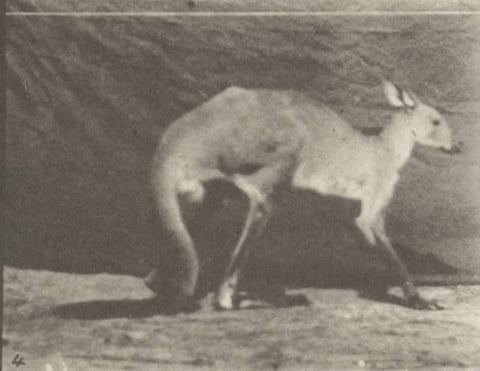
We found that the tail is responsible for as much propulsive force as the front and hind legs combined.
O’Connor, Dawson, Kram and Donelan, 2014
The researchers call this gait “pentapedal”, meaning five‑legged. In this gait the tail almost only pushes and hardly brakes. Per kilogram of body weight, it does as much work as a human leg walking at the same speed. As early as 1971, Windsor and Dagg described this gait: kangaroos use it mainly when grazing, and they are fastest when hopping on their hind legs. The tail then keeps the balance; that is how the Australian Museum describes it for the eastern grey kangaroo.
Even the head sets the red kangaroo apart from the eastern grey kangaroo. The colour of the fur alone is not reliable, because red kangaroo females are often blue‑grey.
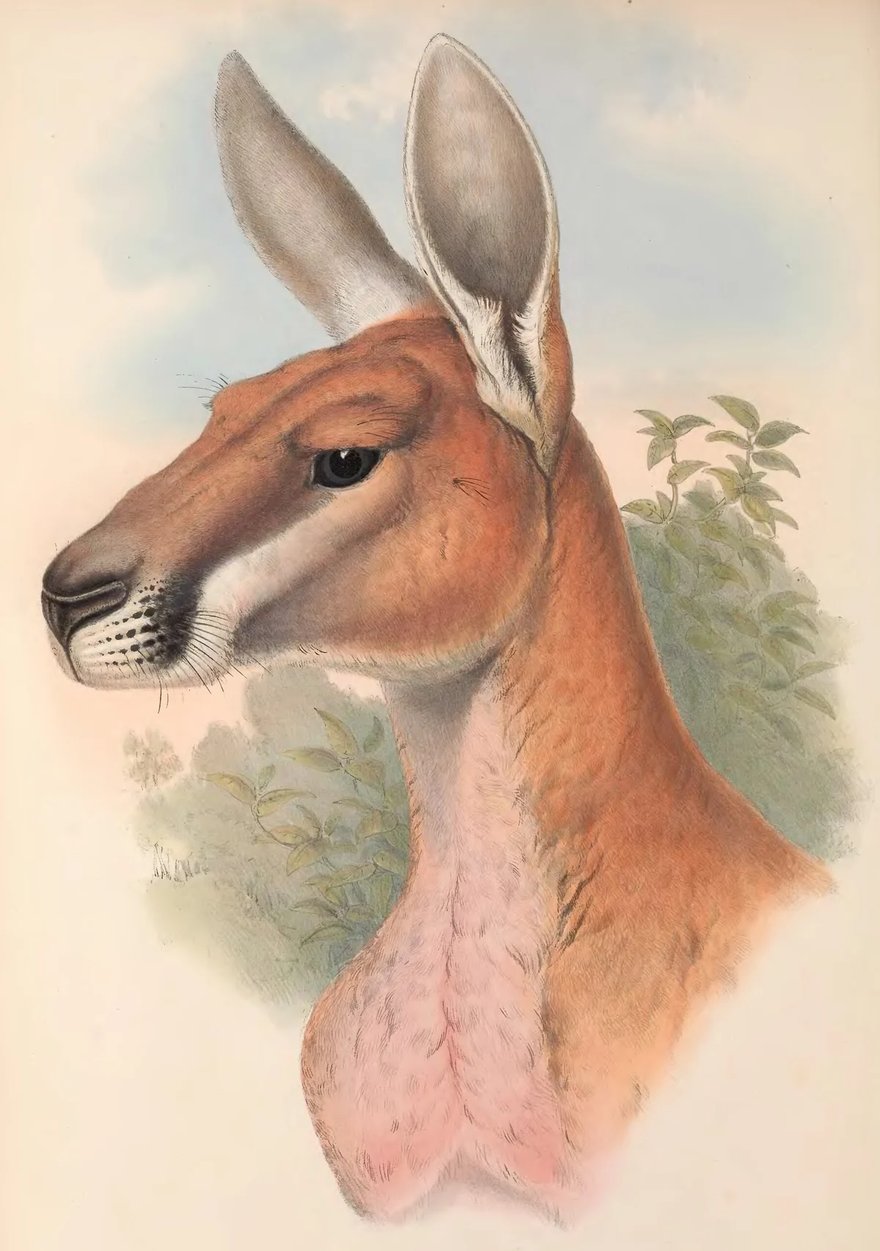
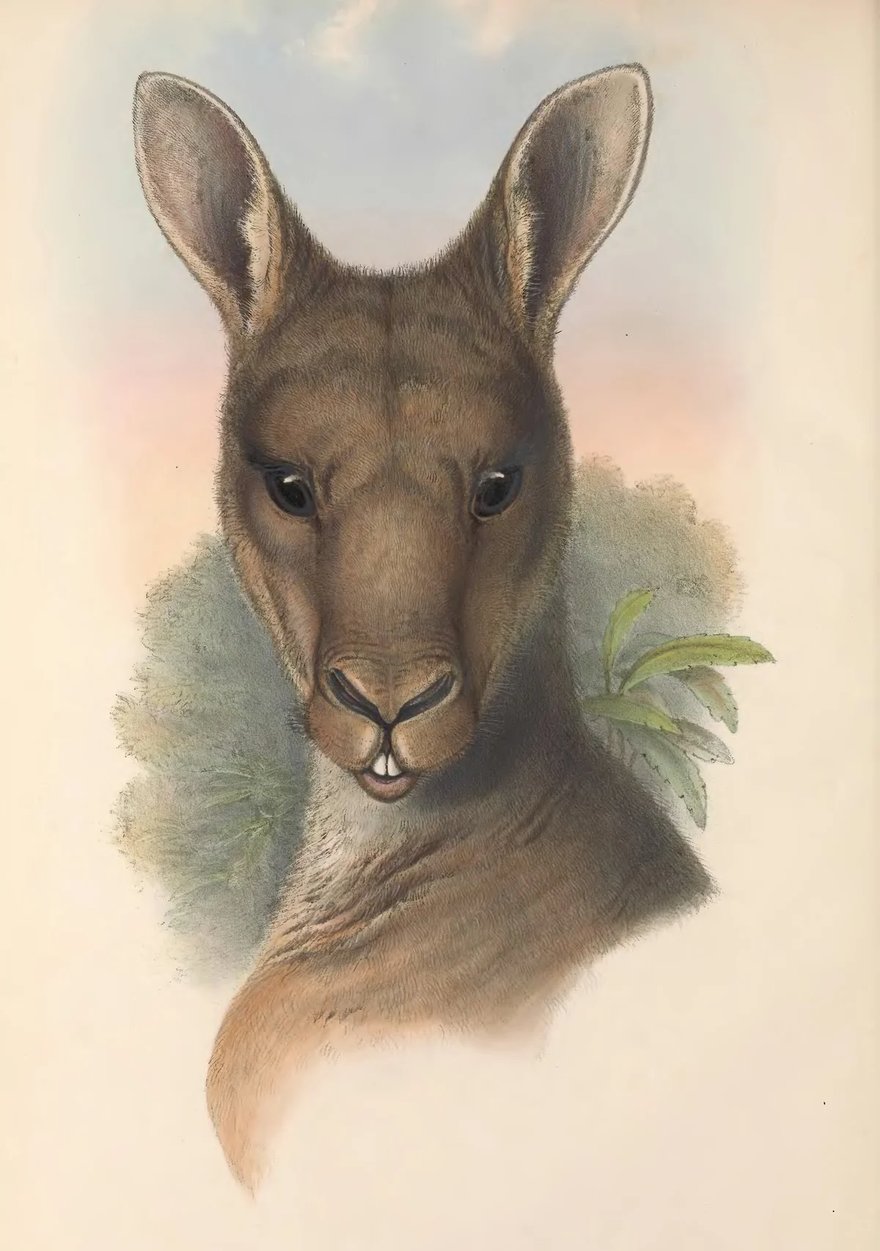
John Gould and H. C. Richter, The Mammals of Australia, volume 2, 1863, public domain
| Red kangaroo | Eastern grey kangaroo |
|---|---|
| What do the cheeks look like? | |
| Patches and a white stripe, features 1 and 2 | The face is darker, feature 4 |
| What colour is the fur? | |
| Males mostly orange‑red, females often blue‑grey | Light grey and woolly, the tail tip dark |
| Where does it live? | |
| In semi‑arid and arid areas of the mainland | From the inland plains to the coast, where more than 250 mm of rain falls a year |
What do the cheeks look like?
What colour is the fur?
Where does it live?
Today their scientific names are Osphranter rufus and Macropus giganteus. On John Gould’s plate, the grey is still called Macropus major.
Australian Museum, pages “Red Kangaroo” and “Eastern Grey Kangaroo”
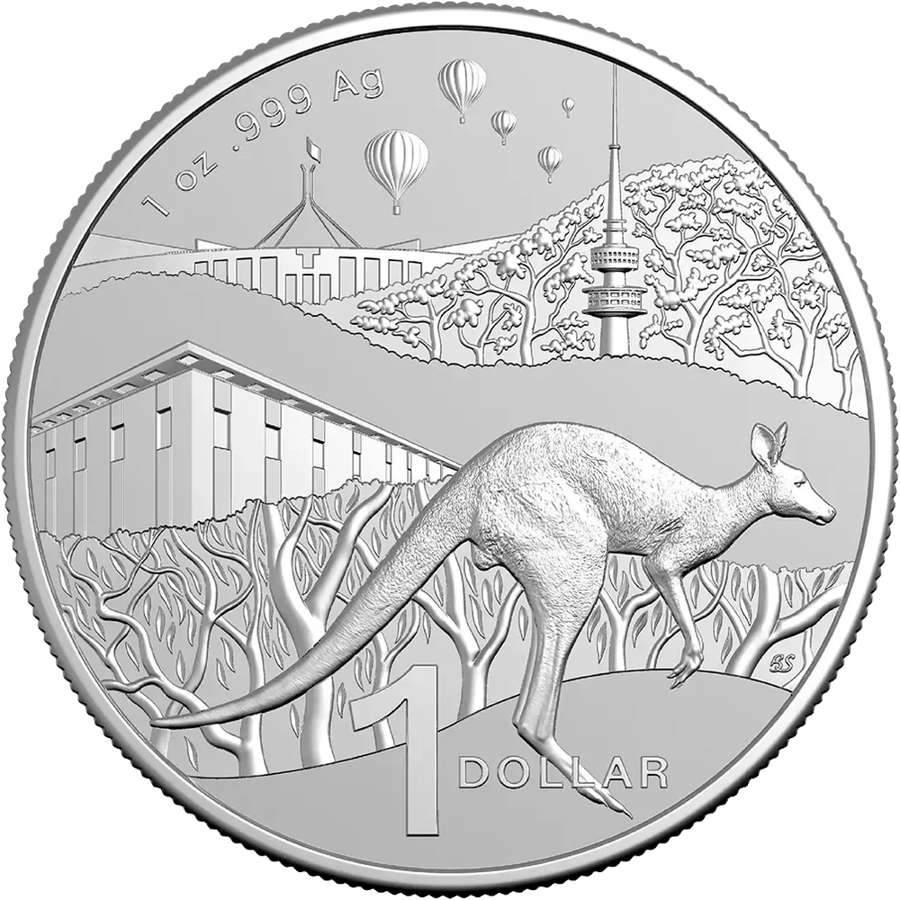
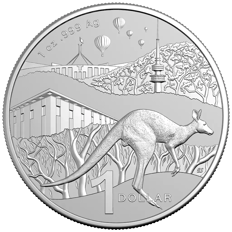
On this coin, the Royal Australian Mint shows an eastern grey kangaroo jumping, in front of the skyline of Canberra. That is how it describes the design in its press release of 6 August 2025.
Two studies measured how much water kangaroos turn over and how they cool down in the heat.
Free‑living animals in summer, north‑western New South Wales (Dawson and others, 1975). The study kangaroos: red kangaroos and euros, kangaroos of the hill country.
Shares of heat loss by evaporation (Dawson and others, 2000). “Calculated” means: 100 minus the share in the study.
The Red Kangaroo has the ability to survive when water is scarce.
Australian Museum, page “Red Kangaroo”
It takes in a large part of its water with its food. In summer in north‑western New South Wales, Dawson and others measured the water turnover of free‑living animals in 1975. It did not differ between red kangaroos and euros, kangaroos of the hill country. Feral goats turned over three times as much water, domestic sheep four times as much.
At 45 °C the air is warmer than the body. Red and eastern grey kangaroos then cool themselves by evaporation: they pant and lick their forearms. In both, the greater part of the heat lost this way went through breathing. In the red, a greater part went through the skin than in the grey, apparently mainly through licking.
Whether red kangaroos have young depends on the weather, because the weather determines the food.

All females bred when green herbage was abundant after good rains.
Newsome, 1965
In drought, when food was scarce, many females stopped breeding. The Australian Museum describes a further adaptation: the female can delay birth until the previous joey has left the pouch.
 Kangaroo
Stay informed with product launches, financial news and exclusive offers. Sign up for our free newsletter today.
By entering your email address and clicking the "Submit" button, you give the following consent: "I agree to be informed by email about new products, financial news and exclusive offers, and therefore consent to the processing of my email address for the purpose of sending the newsletter. I can revoke this consent at any time without giving reasons, with effect for the future. The lawfulness of processing carried out prior to revocation remains unaffected."