Only 5 left to order
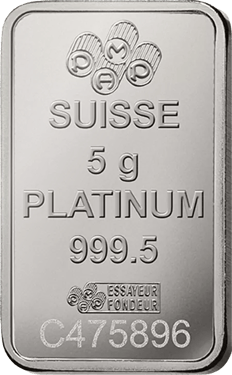
5g Platinum CombiBar
£341.99
excl. UK import VAT and shipping
Ships from 24/11/2026

 More than 300,000
 Over 30 years
 Secure shipping
 Google: 4.9/5

For a long time, platinum was considered the quiet precious metal in the shadow of gold and silver: rarer, harder to mine, and yet surprisingly affordable when you look at the small denominations. The 5 g platinum bar is exactly this understated entry point: compact, affordable and at the same time a genuine tangible asset made from one of the rarest investment metals in the world. This guide explains what makes the 5-gram bar special, which manufacturers and shapes are available, how authenticity is guaranteed, what the tax rules are, and what matters when comparing prices.
Platinum is considerably rarer than gold: annual production is only a fraction of gold output, and most of it comes from just a few deposits in southern Africa. This scarcity makes the silvery-white metal attractive to investors who deliberately want to broaden their platinum bar portfolio alongside gold and silver. The small 5-gram bar noticeably lowers the entry hurdle: instead of a four-figure sum for a large bar, a modest amount is enough to hold physical platinum in your own hands.
It is precisely this tangibility that many investors value. A 5 g platinum bar fits into any case, can be stored discreetly and forms a solid foundation that can be expanded at any time. Anyone wanting to get to know the metal before moving on to larger units such as the 50 g platinum bar or the 100 g platinum bar will find this the ideal first step.
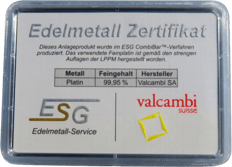
A key advantage of small units is their flexibility. Anyone who owns five grams can sell precisely that small amount if needed, without having to touch a larger bar. This is solved particularly cleverly with the so-called CombiBar: here, five one-gram units are minted and perforated in such a way that they can be separated individually, turning a 5 g platinum bar effectively into five separate one-gram pieces.
Divisibility is an argument that large units such as the 500 g platinum bar or the 1 kg platinum bar cannot offer. Those score with a lower premium per gram, but cannot be divided. Anyone seeking maximum flexibility therefore likes to combine several small pieces, for example the 5-gram bar with a 10 g platinum bar or a 20 g platinum bar.
With platinum, it is particularly worth looking at the manufacturer. Renowned refineries have their products tested according to the standards of the LBMA (London Bullion Market Association), the authoritative body whose Good Delivery list sets globally defined requirements for weight, workmanship and fineness. A bar from a listed refinery is internationally recognised and can be resold without any problems.
In the 5-gram segment, high-quality bars come, among others, from Valcambi of Switzerland, whose hallmark is one of the best known in the industry, as well as from Umicore, Heraeus and the long-established Degussa. Argor-Heraeus, with the minting mark "AH", and PAMP also enjoy great trust. A fineness of 999.5/1,000 is standard, meaning near-pure platinum that meets the international investment standard.
A platinum bar from an LBMA-listed refinery speaks a language that every precious metals dealer worldwide understands.
Physical precious metal requires trust, and that trust is built through verifiable authenticity features. Reputable 5 g platinum bars carry several security features at once, which together are virtually impossible to forge:
Anyone wanting to be on the safe side should buy from an established dealer with documented authenticity verification. Kettner Edelmetalle relies on ISO-compliant testing and supplies only goods of certified origin. For subsequent storage, suitable accessories are recommended, for example coin capsules or a coin case system that protects the bar from scratches and moisture.
This is where a decisive difference from the yellow metal lies: while investment gold is exempt from VAT under §25c UStG, platinum is subject to the standard VAT rate of 19%. For tax purposes, platinum does not count as investment gold and is treated like silver and palladium. Some platinum coins may be subject to the margin scheme, but for bars the full rate is the rule.
Tax notice
When purchasing a platinum bar, 19% VAT is charged in Germany. A later private sales profit, however, is tax-free after the one-year speculation period (§23 EStG) has elapsed. This is general information and does not replace tax advice.
This tax aspect should be factored into any price comparison, as VAT noticeably increases the purchase price. Anyone who prioritises VAT-free precious metal will find the more favourable starting position with gold bars, while platinum scores with rarity and diversification.
The value of a 5 g platinum bar is based on the platinum price, which is traded internationally and primarily fixed on the London market. Since bars made of nearly pure platinum are close to the spot price, it is above all the premium that determines how attractive an offer is. This spread consists of minting costs, distribution and trading margin, and is proportionally higher for small units than for large ones.
When comparing prices, it is worth looking at the overall package of authenticity guarantee, secure logistics and transparent terms. Kettner Edelmetalle, a family business founded in 2011 with over 200,000 customers, delivers precious metals 100% insured and securely packaged.
Within a broadly diversified precious metals portfolio, platinum fulfils its own role. It combines the function of a store of value with strong industrial demand, above all from the automotive and hydrogen technology sectors. This dual role makes the metal's price development independent of silver bars and gold.
Investors frequently combine several metals to avoid one-sided dependencies: palladium bars as a related platinum group metal, classic silver coins for smaller budgets, and gold coins as a proven anchor. In this interplay, a 5 g platinum bar is the rare but manageable building block that adds depth to a tangible-asset portfolio.
Standard investment bars have a fineness of 999.5/1,000, which corresponds to near-pure platinum and is the internationally recognised standard for investment platinum.
Yes. Unlike investment gold, platinum is not exempt from VAT, 19% VAT applies in Germany when purchasing. A private sales profit, however, is tax-free after a one-year holding period.
A CombiBar consists of several pre-minted and perforated one-gram sections that can be separated individually. A 5 g CombiBar thus corresponds to five separate 1 g pieces and offers maximum divisibility.
Recognised refineries include Valcambi, Umicore, Heraeus, Argor-Heraeus, PAMP and Degussa. What matters is a listing under the LBMA standards, which ensures international recognition and easy resale.
Small units carry a proportionally higher premium per gram, but in return offer flexibility and a low entry hurdle. Anyone who values divisibility and an affordable entry point is well served by the 5-gram format.
It is advisable to store it in its original blister packaging or in a coin capsule, protected from moisture and mechanical stress. Coin cases are suitable for several pieces; larger holdings are often kept in a safe or bank safe-deposit box.
 5 g Platinum Bars
Stay informed with product launches, financial news and exclusive offers. Sign up for our free newsletter today.
By entering your email address and clicking the "Submit" button, you give the following consent: "I agree to be informed by email about new products, financial news and exclusive offers, and therefore consent to the processing of my email address for the purpose of sending the newsletter. I can revoke this consent at any time without giving reasons, with effect for the future. The lawfulness of processing carried out prior to revocation remains unaffected."