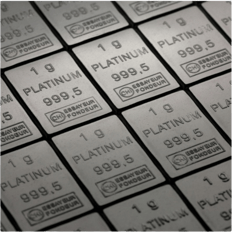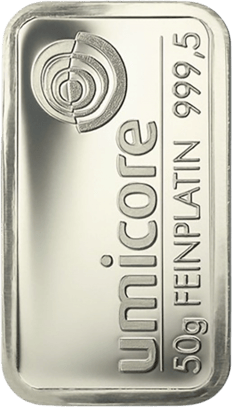
50g Platinum Bar Umicore, Degussa
£2,951.76
excl. UK import VAT and shipping
Available in 2–3 business days

 More than 300,000
 Over 30 years
 Secure shipping
 Google: 4.9/5

Platinum is regarded as the precious metal of connoisseurs: rarer than gold, unmistakable in its cool, silvery-white lustre and deeply rooted in modern industry. The 50 g platinum bar hits a point that many investors appreciate: large enough to add noticeable weight to a portfolio, yet compact enough to remain flexible. The following sections cover origin and production, the typical manufacturers such as Umicore and Heraeus, the fineness of platinum, the tax treatment, proper storage, and the question of who this format is worthwhile for.
A 50 g platinum bar is among the mid-range denominations in the platinum segment and represents, for many, the first serious entry into this precious metal. It combines a tangible material value with a comparatively moderate premium per gram. Anyone familiar with smaller formats such as the 10 g platinum bar or the 5 g platinum bar knows that the smaller the bar, the higher the percentage mark-up on the pure metal price. With the 50-gram format, this mark-up is spread across more substance, making the ratio of price to fineness more attractive.
Investors often regard platinum as an addition to their holdings, a third pillar alongside gold and silver. The reason lies in the metal's special character: its price is heavily driven by industrial demand and therefore does not always move in step with the classic investment metals. This independence makes platinum interesting for anyone who wants to broaden their precious metals portfolio. A look at the entire range of platinum bars shows how the individual weight classes complement one another.

50 g platinum bars are predominantly produced using the minting process. A prepared metal blank is worked under high pressure with a minting die, which stamps the manufacturer's logo, weight and fineness details, and an individual serial number into the surface. The result is a bar with crisp contours and a smooth, glossy surface. There is also the casting process, in which liquid platinum is poured into a mould; such cast bars look more rustic and are used less often for smaller weights.
Most platinum bars traded on the market come from a manageable number of established refineries. In the trade, they are often offered as products from various manufacturers, since the bars from these houses hardly differ in fineness and quality. The best known include:
Bars from these houses generally carry the LBMA (London Bullion Market Association) hallmark, which serves as the quality benchmark for global trade. A so-called Good Delivery certification confirms that the manufacturer and the material meet the market's strict requirements.
The fineness of a 50 g platinum bar is usually 999.5/1,000, in other words 99.95 per cent pure platinum. This figure is deliberately below the 99.99 per cent fineness common for gold and silver, but it corresponds to the internationally recognised standard for investment-grade platinum. The term fine platinum refers precisely to this high-purity material.
Platinum is a remarkable metal. With a density of around 21.45 g/cm³, it is considerably heavier than gold, which is why a 50-gram bar turns out surprisingly compact. It is extremely resistant to corrosion and tarnishing, chemically inert and highly heat resistant. These properties make it not only a durable store of value but also a sought-after industrial metal.
Platinum does not tarnish, barely reacts with acids and retains its lustre for decades: a metal that stands the test of time.
A large share of global platinum demand comes from industry. The metal is an excellent catalyst and is used in vehicle catalytic converters, where it converts toxic exhaust fumes into less harmful components, particularly in diesel engines. The chemical industry also uses platinum, for example in the production of nitric acid, as does the manufacturing of laboratory equipment, medical implants and jewellery. This broad industrial foundation is the reason why the platinum price is closely tied to economic developments and technological trends such as hydrogen technology.
An important difference from investment gold: in Germany, platinum bars are subject to the standard VAT rate of 19 per cent. While investment gold is exempt from VAT under statutory provisions, platinum, like palladium, is treated as an ordinary good for tax purposes. This fact should always be factored into the calculation, as it noticeably affects the effective purchase price.
The price of a 50 g platinum bar consists of the current daily platinum price, the manufacturer-related premium and VAT. Since platinum is a comparatively thinly traded market, the price range between buying and selling, the so-called spread, is often wider than for gold or silver. A price comparison before purchase is therefore particularly worthwhile.
Tax notice
Platinum bars are subject to the full VAT rate of 19 per cent in Germany. However, a sale after a holding period of more than one year may be exempt from income tax. This does not constitute tax or investment advice; expert advice should be sought in individual cases.
A 50 g platinum bar is compact and can be stored in a space-saving way. A bank safe-deposit box, a home safe or insured storage are all suitable options for secure storage. Anyone keeping the bar at home should ensure adequate home contents insurance. To protect the sensitive surface, a suitable protective capsule or a storage case from the accessories range is recommended.
Original bars from reputable manufacturers come with several verification features. Investors typically pay attention to:
As a German family business with ISO-compliant authenticity verification, Kettner Edelmetalle places great importance on offering exclusively goods from certified manufacturers. Anyone wishing to add classic investment products to their precious metals portfolio will find suitable alternatives, for example among the 50 g gold bars or in the platinum coins section.
Within the platinum bar family, every weight has its place. The 50-gram bar positions itself between the small entry-level formats and the heavy investment bars:
Many consider the 50 g platinum bar a balanced compromise: enough substance for a lower price per gram, but without the full capital outlay of a 1 kg platinum bar. Anyone wanting to invest regularly and in smaller steps might also take a look at the savings plan products.
A 50 g platinum bar generally has a fineness of 999.5/1,000, meaning 99.95 per cent pure platinum. This figure is the internationally recognised standard for fine platinum and is deliberately below the 99.99 per cent fineness common for gold.
Yes. Unlike VAT-exempt investment gold, platinum bars in Germany are subject to the standard VAT rate of 19 per cent. This mark-up should be taken into account when calculating the purchase price.
Bars from Umicore, Heraeus, Argor-Heraeus and Valcambi are particularly common on the market. These refineries enjoy international standing and their products usually carry the LBMA hallmark.
Platinum is traded on a considerably smaller market than gold or silver. The lower trading liquidity means that the difference between the buying and selling price, the so-called spread, tends to be wider. A price comparison before purchase is therefore advisable.
The 50-gram format is aimed at investors who want to acquire a noticeable quantity of platinum without tying up the capital required for a large bar. It offers a lower premium per gram than small bars while remaining more flexible than a 500-gram or kilo bar.
A bank safe-deposit box, a home safe or insured storage are all suitable. To protect the sensitive surface, a protective capsule or a storage case is recommended. Keeping the original condition with blister pack and certificate makes a later resale easier.
 50 g Platinum Bars
Stay informed with product launches, financial news and exclusive offers. Sign up for our free newsletter today.
By entering your email address and clicking the "Submit" button, you give the following consent: "I agree to be informed by email about new products, financial news and exclusive offers, and therefore consent to the processing of my email address for the purpose of sending the newsletter. I can revoke this consent at any time without giving reasons, with effect for the future. The lawfulness of processing carried out prior to revocation remains unaffected."