Only 1 left to order
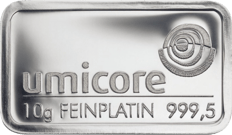
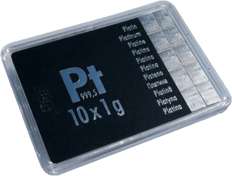
10g Platinum CombiBar
£641.25
excl. UK import VAT and shipping
Available in 2–3 business days

 More than 300,000
 Over 30 years
 Secure shipping
 Google: 4.9/5

The 10 g platinum bar combines two things that are often mutually exclusive: the value density of a rare precious metal and a denomination that stays manageable, affordable and easy to sell at any time. Platinum is considered one of the rarest and most sought-after industrial precious metals in the world: only a fraction of the amount of gold is mined each year. This guide explains what distinguishes a 10 gram bar, what matters in terms of fineness, manufacturer and storage, how platinum is treated for tax purposes, and which types of investors this size is particularly suited to.
Platinum is a precious metal with two faces: it is both a store of value and an industrial raw material. It is precisely this combination that makes it so appealing, and the 10 g platinum bar is the size in which this appeal can be experienced in the most balanced way. It is large enough to noticeably bundle value, yet small enough to remain flexible. Anyone looking to get started on the subject without committing straight away to a heavy bar will find the natural middle ground here.
Compared with very small denominations such as the 5 g platinum bar, the percentage premium per gram falls while liquidity remains high. Compared with heavier units such as the 100 g platinum bar or the 1 kg platinum bar, the capital tied up stays manageable. Anyone wanting to build an investment in stages can combine several small units and so retain the option of selling off partial amounts individually, a clear advantage over a single large bar, which can only be sold as a whole.
Platinum bars of investment quality are minted with a fineness of 999.5 out of 1,000, occasionally also 999. This means they consist of practically pure platinum. A characteristic feature is the metal's high density: platinum is considerably heavier than gold, which is why a 10 gram bar appears surprisingly compact. Each bar carries an embossed weight, the fineness, the manufacturer's mark and, as a rule, an individual serial number.
Buyers can choose between classic minted bars and the so-called CombiBar. The latter consists of several pre-perforated one gram units that can be broken off from one another like a bar of chocolate, ideal for passing on small individual amounts at a later date. An overview of all available sizes can be found in the main category platinum bars.
Quality begins with the producer. Only certified refineries and mints meet the internationally defined requirements for purity and processing. Frequently represented are the works of Umicore, Heraeus, Degussa and Valcambi. Bars from these manufacturers carry the quality seal of the recognised Good Delivery standards and are therefore tradeable internationally, a detail that makes the difference when it comes to a later resale.
Anyone who has already invested in gold or silver adds a third pillar with platinum, one that follows different market forces. While the gold price is strongly driven by central banks and crisis sentiment, the platinum price is additionally closely tied to industrial demand. This independence can broaden a portfolio, since the three metals do not always move in lockstep.
In addition to bars, it is also worth looking at platinum coins, such as the Platinum Maple Leaf. Coins tend to appeal more to collectors, while bars are the most cost-effective way to acquire pure investment platinum.
Unlike gold, platinum is predominantly consumed by industry. The most important applications lie in vehicle exhaust catalysis, in the chemical industry, in medical technology and increasingly in hydrogen technology, where platinum serves as a catalyst in fuel cells. In addition, there is jewellery manufacturing, particularly in Asia.
This broad industrial use means that demand for platinum is linked to the global economic cycle. Periods of scarce mining output, the bulk of world production comes from South Africa, can noticeably tighten supply. For investors, this means that platinum moves according to its own rules and offers a diversification that a pure gold bar portfolio cannot provide.
When buying platinum bars, a tax difference compared with gold should be noted. Investment gold is exempt from VAT in Germany, whereas physical platinum is subject to VAT, similar to silver bars. Anyone looking for the more tax-efficient option will therefore find it with classic investment gold, for example in the form of gold bars; with platinum, VAT should be factored into the calculation of the entry price.
Note on storage in a bonded warehouse
If a platinum bar is held in a bonded warehouse and not physically delivered, VAT may not apply. At the same time, the warehouse takes over secure storage, so no additional costs for a safe or bank safe deposit box arise. This information does not replace tax advice.
Anyone holding precious metals as private assets for longer than one year can benefit from the tax treatment of private disposal transactions upon a later sale. As the rules depend on the individual case, it is advisable in case of doubt to consult a tax advisor.
A 10 gram bar is small, yet its value is considerable, so storage should be handled with corresponding care. Three approaches have proven effective:
It is important to protect the flawless surface, as scratches can reduce the resale value. Suitable accessories such as coin capsules or coin cassettes keep bars dust-free and secure. Anyone building up precious metals on a regular basis will find the right storage solution in the accessories range.
The 10 g platinum bar is the ideal size for anyone who wants to deliberately expand their precious metals portfolio beyond gold and silver. It is suitable both for gradual wealth building and as an addition that makes a portfolio more resilient against one-sided market movements. A platinum bar also has its appeal as a lasting-value gift, a piece of rarity that can be held in the hand.
Platinum is the precious metal of quiet tones: rarer than gold, indispensable for industry, and precisely for that reason a fascinating insider tip for many investors in their own portfolio.
For a planned build-up over several months, it is worth taking a look at the savings plan products. Anyone who views platinum specifically as a building block for inflation hedging combines several denominations and metals into a balanced whole.
Investment platinum bars are generally produced with a fineness of 999.5 out of 1,000 and therefore consist of practically pure platinum. Weight, fineness and the manufacturer's mark are embossed directly into the bar.
Unlike investment gold, physical platinum is not exempt from VAT in Germany. However, if it is held in a bonded warehouse without physical delivery, VAT may not apply. For a binding assessment, a tax advisor should be consulted.
A CombiBar consists of several pre-perforated one gram units that can be broken off from one another like a bar of chocolate. This allows individual gram pieces to be passed on flexibly at a later date, without having to sell the entire bar.
Platinum is considerably rarer than gold and only mined in smaller quantities each year. In addition, there is high industrial demand. However, the platinum price fluctuates independently and can at times also lie below the gold price.
A certified home safe, a bank safe deposit box or storage in a bonded warehouse are all recommended. The original packaging together with the certificate, as well as suitable coin capsules, protect the surface and preserve the resale value.
Yes. The 10 gram size offers a good compromise between moderate capital outlay, a low percentage premium and high saleability. It is well suited to entering the platinum market gradually and expanding the portfolio beyond gold and silver.
 10 g Platinum Bars
Stay informed with product launches, financial news and exclusive offers. Sign up for our free newsletter today.
By entering your email address and clicking the "Submit" button, you give the following consent: "I agree to be informed by email about new products, financial news and exclusive offers, and therefore consent to the processing of my email address for the purpose of sending the newsletter. I can revoke this consent at any time without giving reasons, with effect for the future. The lawfulness of processing carried out prior to revocation remains unaffected."