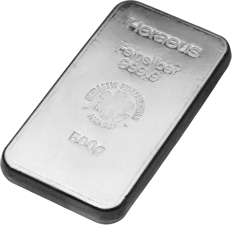
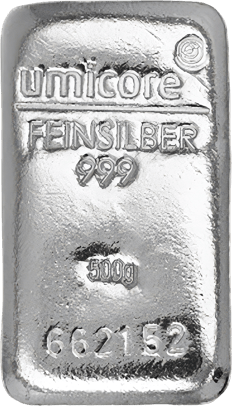
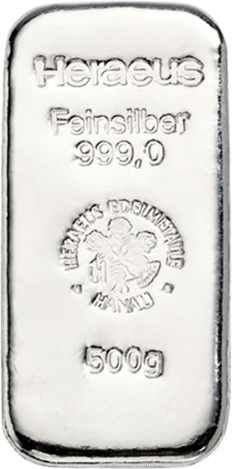
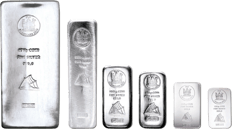
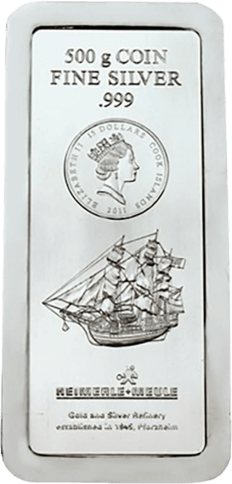
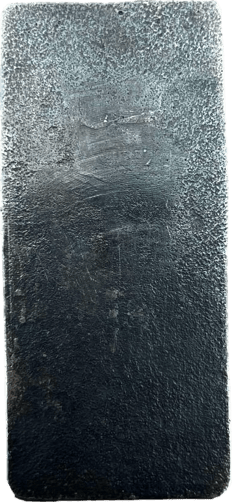
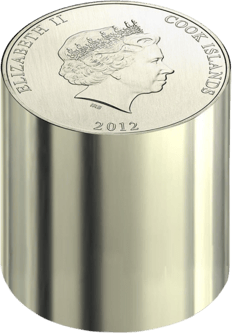
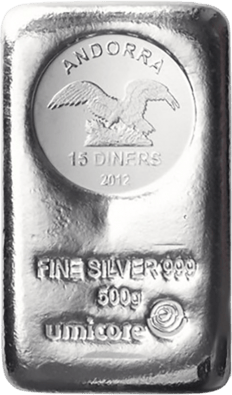
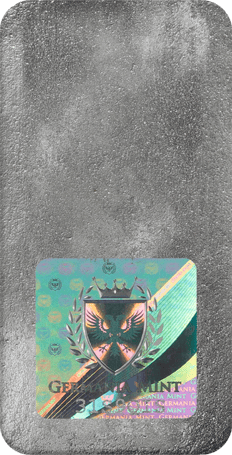
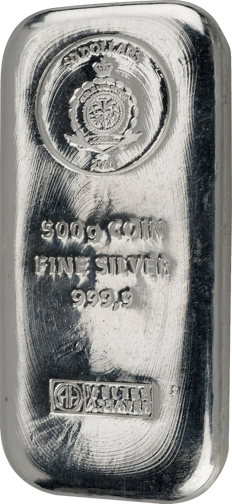
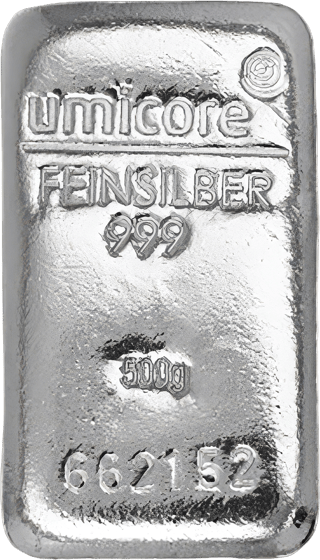
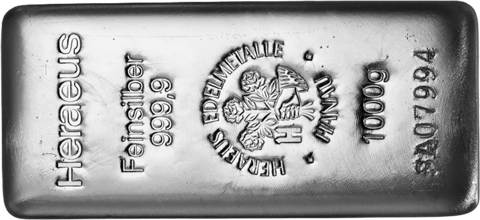
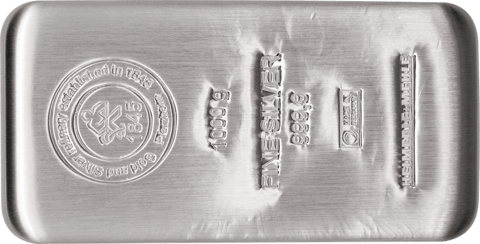
500g Silver Bar Heimerle und Meule (cast)
£957.92
excl. UK import VAT and shipping
Ships from 27/11/2026

 More than 300,000
 Over 30 years
 Secure shipping
 Google: 4.9/5
Silver bars with a denomination of 500 g could represent a good compromise between liquidity and size. They are easier to sell than larger bars, as they have a handy size. These bars are easier to store and transport than larger units, which increases security and convenience. Depending on the manufacturer and design, 500 g silver bars can also have collector's value.


Silver bars range from a few grams to about 31 kilograms. Between 10 grams and 15 kilograms, the small ones are usually minted and the large ones cast. Where one stops and the other begins, each house decides for itself.
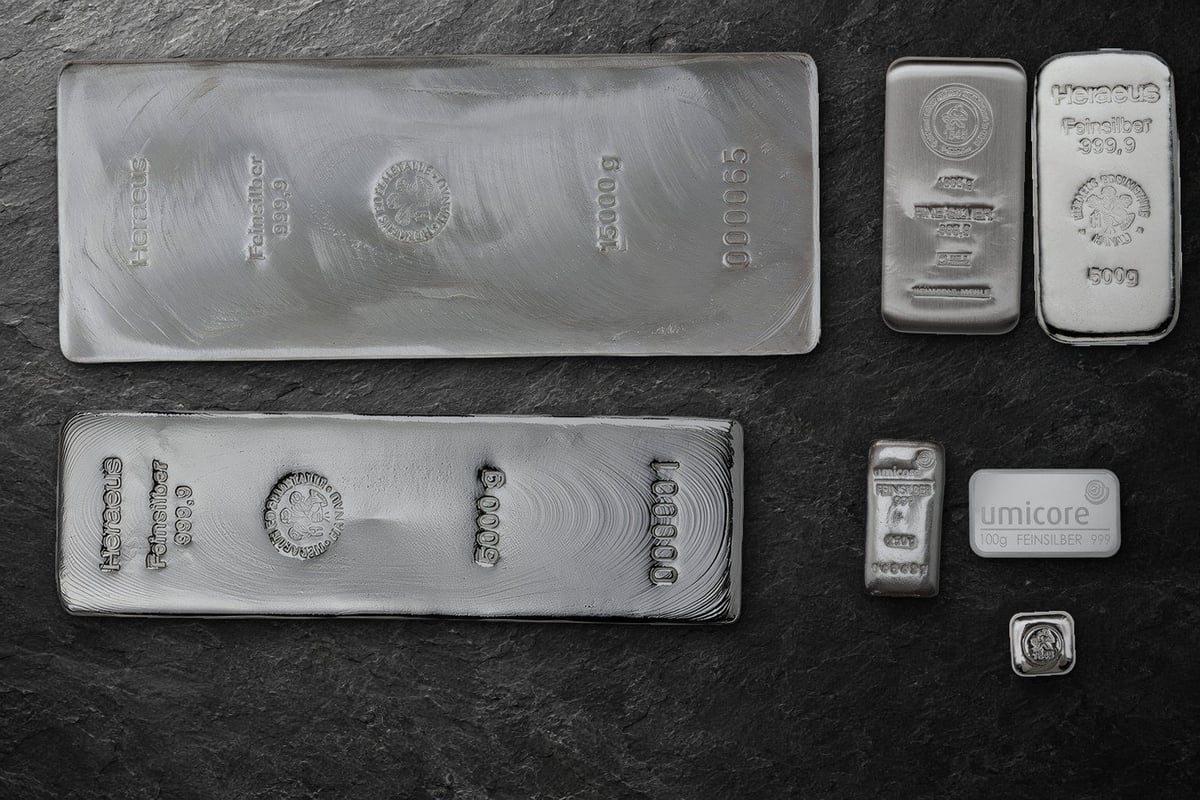
Umicore mints its silver bars from 10 to 100 grams. From 250 grams on, the house casts them, right up to 15 kilograms.
At Heraeus, the line falls in the same place. There, the ounce and 100 grams are minted, while 250 and 500 grams and 1, 5 and 15 kilograms are cast.
Other houses draw the line somewhere else entirely. Heimerle + Meule already casts the ounce, a small square with sides of 23.5 millimetres. Valcambi still mints the kilo, 130 millimetres long and 11.2 millimetres thick.
The larger the bar, the more likely it is cast.
Sizes according to the makers, for Heraeus only the sizes the house itself lists; the minted ounce from Heimerle + Meule according to its bar in the shop. On the axis, it is as far from 10 to 100 grams as from 100 grams to 1 kilogram.
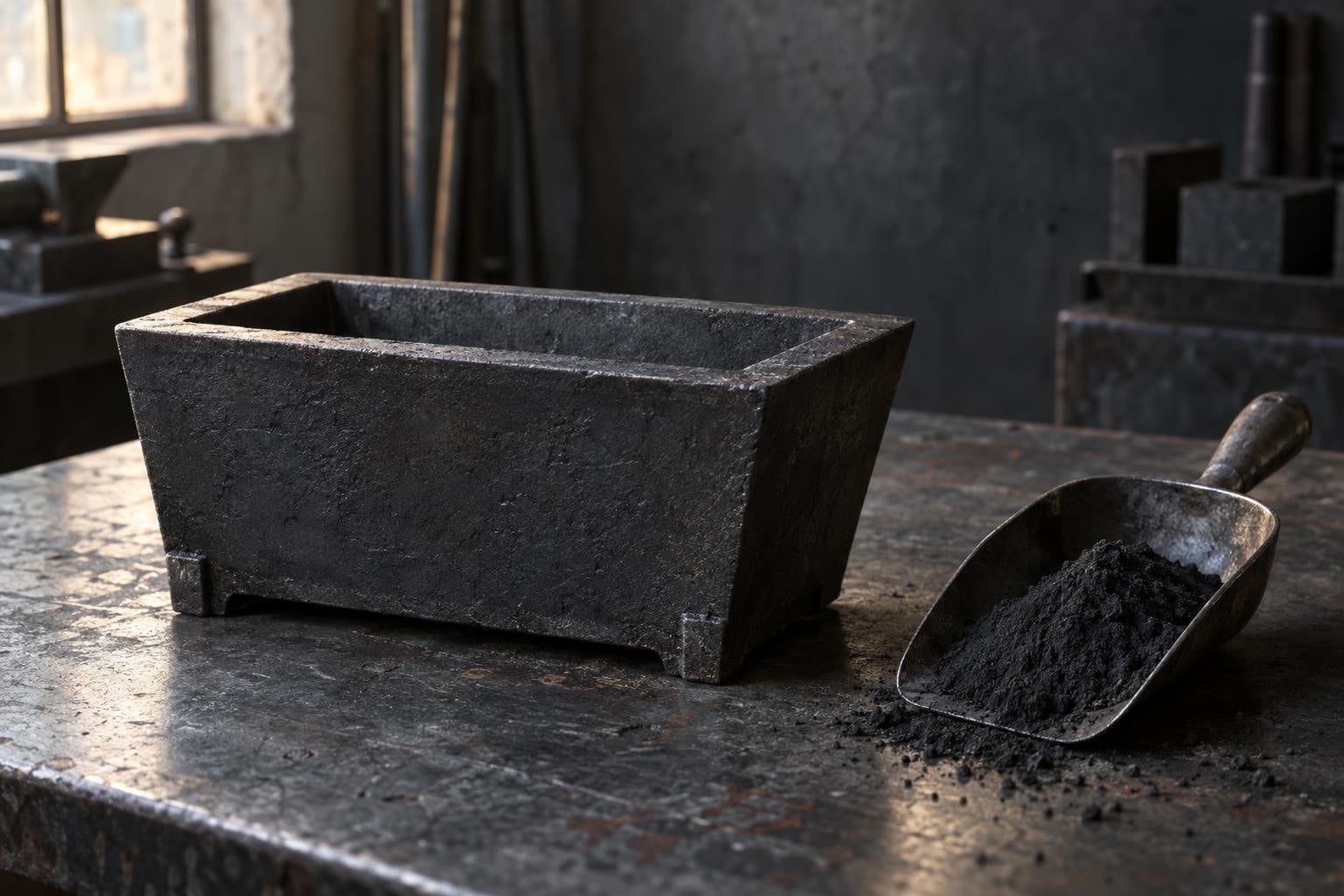
When pure silver melts, it takes up oxygen from the air. As it solidifies, the oxygen escapes again, and that can happen violently. Old encyclopaedias call it spitting.
“When melted in contact with air, pure silver absorbs a great deal of oxygen, which, however, escapes at the moment of solidification …”
Pierer’s Universal‑Lexikon, volume 16, 1863, entry “Spratzen”, translated
In doing so, the oxygen breaks through the crust that has already set and drives out the silver that is still liquid, into a spongy mass from which beads of silver leap. That is how Pierer’s encyclopaedia describes it.
The chemist Gay‑Lussac caught the oxygen under a bell jar filled with water. He obtained twenty to thirty times the volume of the silver, Pierer reports. In 1911, the Encyclopaedia Britannica gives twenty times. These are figures from encyclopaedias of 1863 and 1911, not present-day measurements.
The remedy is given in the same article: stir while the silver solidifies, “but best of all” sprinkle charcoal powder on it before it sets. According to Pierer, silver with 1 to 2 per cent copper does not spit, but pure silver does.
The oxygen is not entirely out of the picture. When a refinery on the London list assays its silver with a spectrograph today, oxygen and nitrogen expressly count as silver.
Diagram after the description in Pierer’s Universal‑Lexikon of 1863, not to scale.
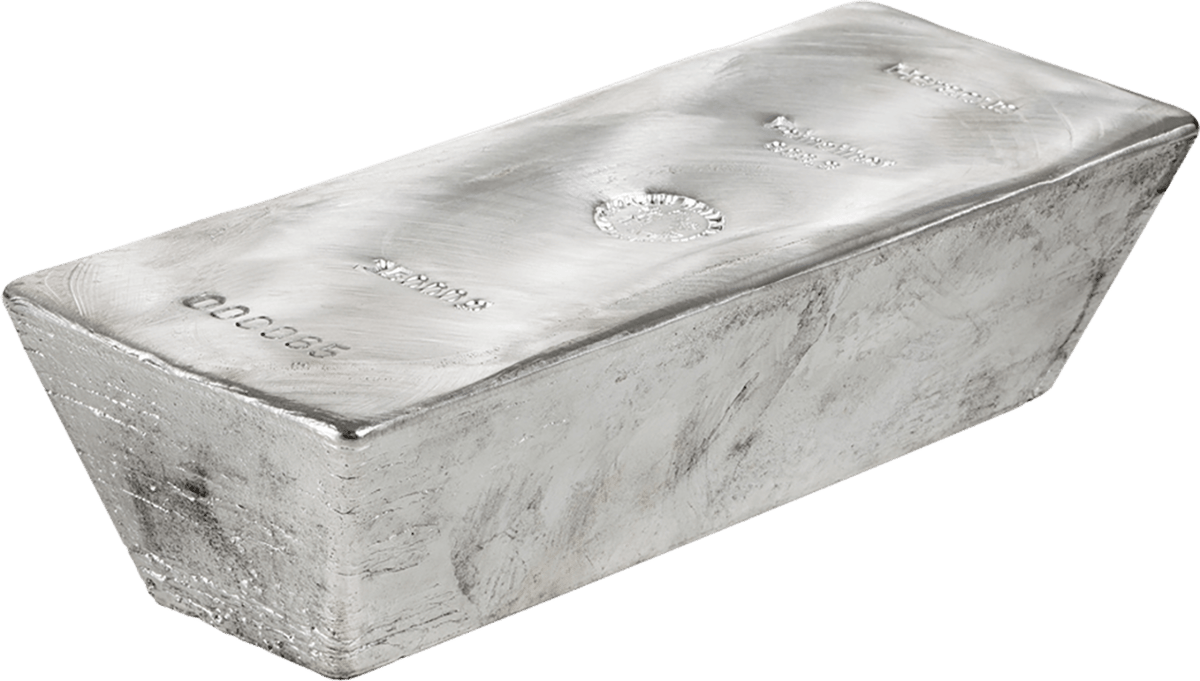
Silver contracts strongly as it solidifies, the Meyers encyclopaedia of 1909 writes. On a cast bar, this shows on top: the top face can sink slightly in the middle, and rings from cooling can appear as well.
“Excessive shrinkage (i.e. the concavity of the top face of the Bar and any concentric cooling rings) must not significantly affect the clarity of the Bar marks or the safe stacking of the Bars.”
LBMA, Good Delivery Rules, Technical Specifications, section 2.1.4
The LBMA is the association of the London precious metals market. Its rules are written for the large bars of this market. They show what happens when silver is cast.
Silver has rules of its own there. A little hammering of the surface is allowed; for gold, at most the smoothing of a sharp burr. And closed moulds have been banned for silver since 2008, mainly because hidden cavities can form in them.
Cast bars are wider at the top than at the bottom. On the 15‑kilogram bar from Umicore, the top face measures about 235 by 100 millimetres and the bottom 210 by 80, with a height of 75 millimetres. For its silver bars, the LBMA requires a slope of 5 to 15 degrees, so that they are easy to grip.
Calculated from Umicore’s dimensions, the sides of its cast bars slope at about 6 to 10 degrees.
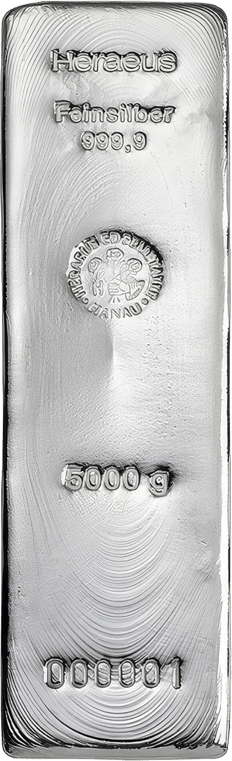
A cast bar shows on its top face how it solidified.
Dimensions from Umicore. In gold, the top face, the dip in it only suggested: its depth has not been measured. The slope is calculated from the top and bottom widths and the height.
For gold, the LBMA requires its referee laboratory to carry out the fire assay, at least six times. For silver, the laboratory measures what is not silver and subtracts it from 1,000 parts.
“In the case of silver, the Referee will normally use one or other spectrographic analysis method and determine the silver assay by difference (with dissolved gases such as oxygen counting as silver).”
LBMA, Good Delivery List Rules, January 2026, Annex D, section 2.3
These are the rules for the refineries on the London list. They show how differently the two metals are assayed.
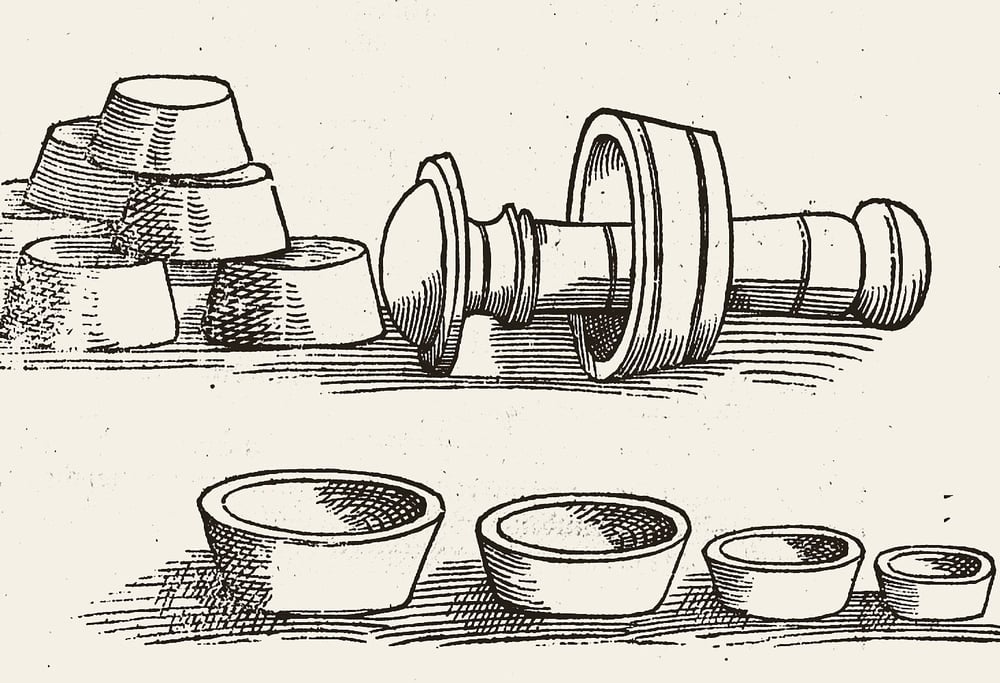
For a long time, silver was assayed in fire, in small dishes called cupels. In 1832, the French mint commission published instructions by Gay‑Lussac, the same man who had caught the oxygen in silver. After that, it could also be done “by the wet way”: the silver is precipitated with a solution of common salt instead of being assayed in fire in the cupel.
In 1874, Jacob Volhard described another wet method, with thiocyanate instead of common salt.
The common salt assay lives on in the standards. ISO 13756 determines silver in jewellery and precious metals with sodium or potassium chloride, ISO 11427 with potassium bromide, both today in the edition of 2024 and for silver contents of 100 to 999 parts per thousand. For higher contents, both name spectroscopy by difference.
With silver, the rest is what counts: 1,000 parts minus everything foreign.
According to the LBMA rules of January 2026. The foreign share is drawn greatly enlarged.
Stamping the weight onto the bar is an old practice. The silver treasure of Kaiseraugst in Switzerland includes a bar from shortly after AD 350. Punched into it is P III, three Roman pounds.
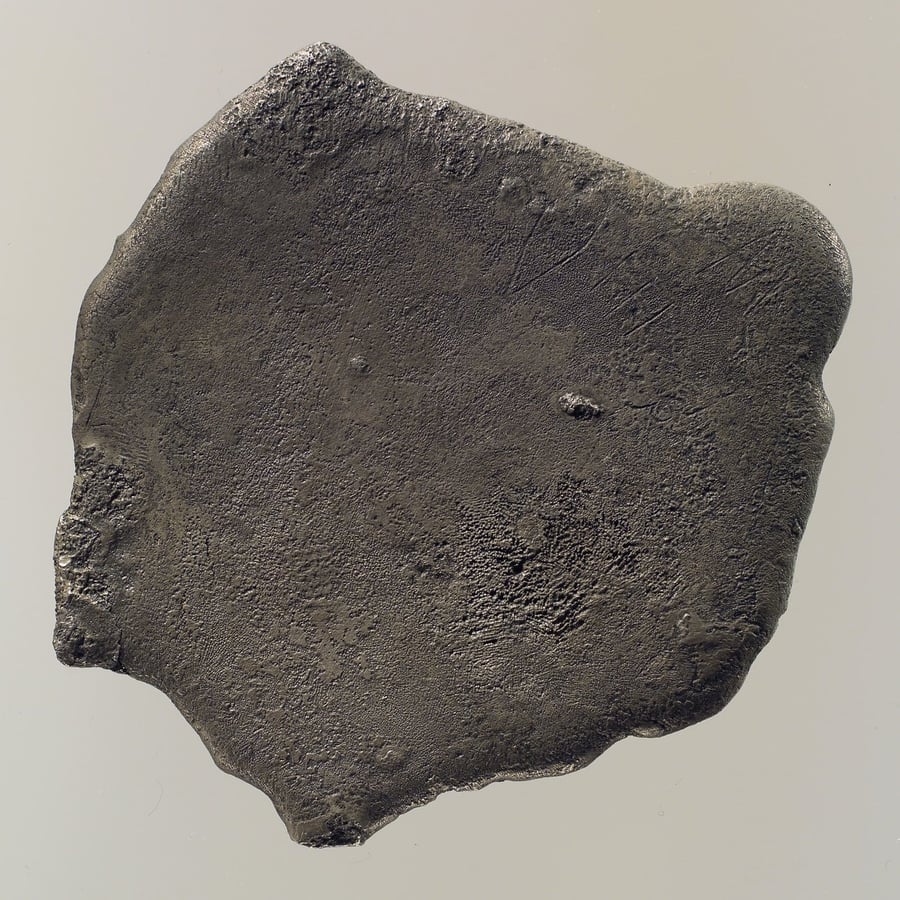
The bar measures 12.3 by 7.8 centimetres and is 1 centimetre thick. It weighs 947.8 grams, which corresponds to three Roman pounds.
Beside it are two small stamps reading GRONOPI, probably the name of the official in charge, and a round stamp with the bust and name of the Emperor Magnentius.
A kilo bar of today weighs almost the same, yet has a different shape. The cast kilo bar from Heraeus measures 111 by 51 millimetres and is 21 millimetres thick, more than twice as thick as the Roman bar.
Much older still is a silver bar with Hittite hieroglyphs in the Metropolitan Museum in New York, from the 14th to 13th century BC.
More than 1,650 years ago, the weight was already on the bar.
Dimensions: Augusta Raurica, Augster Blätter zur Römerzeit 10, and the makers. All three from above at the same scale, the kilo bars as product photos from the shop, the Roman bar drawn as an outline to its dimensions.
Holding half a kilogram of pure silver in your hand has something both down-to-earth and fascinating about it: softly gleaming, pleasantly heavy, a stable store of value. The 500 g silver bar is considered a popular middle ground between small entry-level sizes and the large kilo and multi-kilo bars. Anyone who wants to bundle a noticeable amount of silver without going straight for a five-kilo bar will find an attractive balance between material value and premium in this size. The following sections cover fine silver, production, manufacturers, the tax particularities of silver, proper storage and the question of who a 500-gram bar is suitable for.

When buying silver bars, a simple rule of thumb applies: the heavier the bar, the lower the premium per gram. Since silver has a significantly lower price level compared to gold, the premium weighs proportionally heavier on small units, it is only with larger sizes such as the half kilo that the ratio improves noticeably. A 500-gram bar is therefore one of the price-efficient entry points into physical fine silver, without immediately requiring a very high total outlay.
Half a kilogram of silver is particularly suitable for investors who want to build up a tangible silver position and broaden their precious metals portfolio. Instead of many small units, the value is concentrated in a single, manageable piece that is easy to stack and store. Those who want to stay more flexible often combine the 500-gram bar with smaller units such as the 100 g silver bar or the 250 g silver bar.
Within the silver bar family, the half kilo sits in the upper middle range. Those who want to bundle even more weight opt for the 1 kg silver bar or, for very large positions, the 5 kg silver bar. This gradation allows the silver holding to be built up step by step and in line with one's own budget.
A 500 g silver bar is generally made of fine silver with a fineness of 999/1,000. Both minted and cast bars can be found in this size. Minted bars look smooth and modern with clearly defined edges, while cast bars, also called casting bars, show an irregular, often rustic surface that many collectors particularly value for its original character.
The surface of a 500-gram bar usually bears the manufacturer's name, the fineness mark 999, the weight and, depending on the version, an individual serial number. Minted bars are usually delivered in sealed protective packaging (blister), while cast bars often come loose or wrapped in foil. Special forms also include minted coin bars and coin bars, which combine the status of an official coin with the shape of a bar.
Silver has been cast for thousands of years, long before the first coin was ever struck. The plain bar is therefore one of the oldest forms of storing value in metal.
With the 500-gram silver bar, it is worth paying attention to the manufacturer: bars from established refineries and mints are recognised worldwide and can later be resold without difficulty. The best-known producers include:
Anyone who attaches importance to a particular name can choose a specific mint, for example via the manufacturer pages of Heraeus, Umicore or Argor Heraeus. For the pure material value, the manufacturer hardly plays a role, but for later resale and personal confidence it certainly does.
With silver too, the assurance of authenticity is a central issue. The manufacturer's name, the fineness mark and, where present, a serial number document the origin and make identification easier. Mints work with precisely controlled weight and defined dimensions, so that any deviation would immediately be noticeable upon inspection.
When buying from an established dealer, verification is already covered: Kettner Edelmetalle uses an ISO-compliant authenticity verification process, so that every bar delivered is checked. Anyone who passes bars on privately or wants additional verification can rely on non-destructive methods such as precision scales, dimensional checks and, with the right equipment, ultrasonic measurement. Suitable accessories for safe storage and handling make everyday life with physical silver easier.
This is where the key difference to gold lies: silver is not exempt from VAT. While investment gold is traded VAT free, silver is in principle subject to VAT. For many silver bars, however, the so-called margin scheme taxation applies, in which the tax is only levied on the dealer's margin and not on the full value of the goods, which has a noticeably more favourable effect on the final price than regular taxation.
Tax note
In Germany, unlike investment gold, silver is subject to VAT. Many silver bars are offered under the margin scheme, meaning the tax only applies to the dealer's margin. In addition, for silver held privately: if it is sold again after a holding period of more than one year, any profit is, under current law, exempt from income tax. This does not replace professional tax advice.
Because of this tax particularity, it is worth taking a close look at the price labelling when buying silver. Anyone wishing to weigh up the pros and cons of silver against other precious metals will find a good overview of bars and coins in the overarching silver range.
For the same value, silver requires considerably more space than gold, one reason why larger units such as the half kilo score well in terms of storage: the value is concentrated in a single piece rather than spread across many small units. Several options are generally available for safekeeping:
A practical note specifically for silver: the metal reacts with air over time and can tarnish. The original packaging protects the surface, which is why dry, cool storage is recommended. For smaller silver pieces or collector's coins in the same holding, coin capsules are a good option.
Bars and coins meet different needs. A silver bar scores with the lowest premium and maximum value density per euro invested, while silver coins additionally offer collector's value, official state minting and finer divisibility. With coins, popular designs and years of issue can justify a surcharge, whereas for pure material accumulation, the bar pays off.
For efficient wealth building in silver, the 500-gram bar is the more cost-effective choice. Anyone who values worldwide recognition and fine denominations is welcome to supplement it with well-known bullion coins such as the Maple Leaf or the Vienna Philharmonic. This creates a balanced portfolio of concentrated bar silver and liquid coins.
The price of a 500 g silver bar closely follows the current silver price and is adjusted several times a day by reputable dealers. Silver is considered a comparatively volatile precious metal, as it is also in strong demand from industry in addition to its investment function, which is why prices often fluctuate more sharply than with gold. Anyone who monitors the market can use price charts to choose a favourable entry point, although no conclusions about future price movements can be drawn from this.
Traditionally, silver is valued as a building block for wealth protection and as a complement to gold. A 500-gram bar is particularly suitable for a long-term horizon, complemented by smaller units such as the 50 g silver bar for greater divisibility if needed.
The premium, i.e. the surcharge on the pure material value, is spread over more grams in the case of a large bar. Especially with silver, which has a low price level per gram, the premium weighs proportionally more heavily on small units. Around the 500-gram mark, the ratio improves noticeably, which is why the half kilo is one of the price-efficient options.
Standard 500-gram silver bars consist of fine silver with a fineness of 999/1,000. Depending on the manufacturer, they are minted or cast and bear the manufacturer's name, fineness mark and often a serial number.
No. Unlike investment gold, silver is not exempt from VAT in Germany. However, many silver bars are offered under the margin scheme, meaning the tax only applies to the trading margin and the final price turns out more favourable than with regular taxation. For individual tax questions, expert advice is recommended.
Both variants contain the same material value. Minted bars look smooth and modern and are often delivered in sealed blister packaging. Cast bars have a rustic, individual surface that many collectors value. For pure value preservation, it comes down to personal taste, while for resale, a recognised manufacturer matters most.
Options include a certified home safe with suitable insurance, a bank safe deposit box or external high-security storage. Silver can tarnish over time, so the original packaging protects the surface. Dry, cool storage is recommended to avoid discolouration.
Both have their merits. The 500-gram bar offers the lowest premium and highest value density and is suitable for efficient wealth building. Silver coins such as the Maple Leaf or Vienna Philharmonic score with fine divisibility, worldwide recognition and a certain collector's appeal. Many investors combine both for a balanced portfolio.
 500 g Silver Bars
Stay informed with product launches, financial news and exclusive offers. Sign up for our free newsletter today.
By entering your email address and clicking the "Submit" button, you give the following consent: "I agree to be informed by email about new products, financial news and exclusive offers, and therefore consent to the processing of my email address for the purpose of sending the newsletter. I can revoke this consent at any time without giving reasons, with effect for the future. The lawfulness of processing carried out prior to revocation remains unaffected."