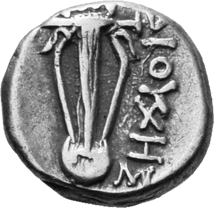

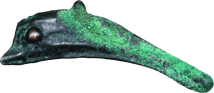
Bronze Dolphin Money (ca. 5th century BC | Greek Black Sea colony Olbia)
£43.76
incl. VAT and plus shipping costs
Available in 2–3 business days

 More than 280,000
 Over 30 years
 Secure shipping
 Google: 4.9/5
Money with gods and heroes.
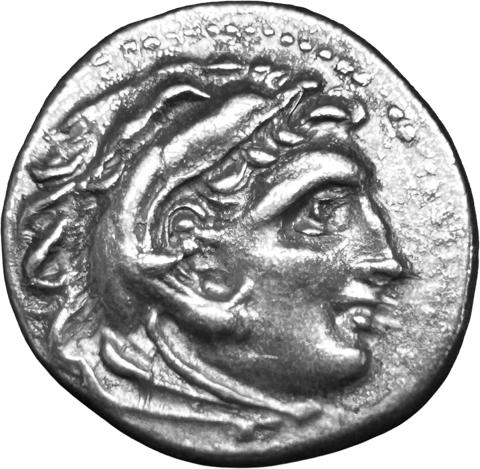
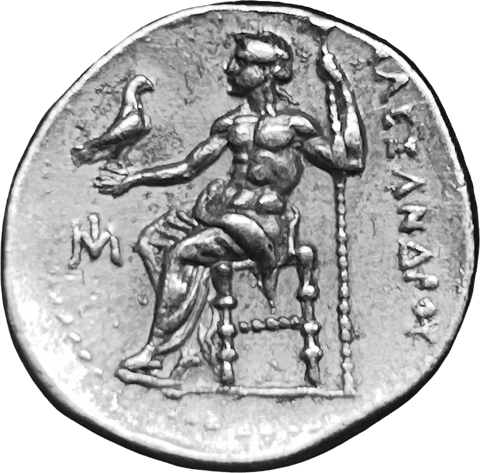
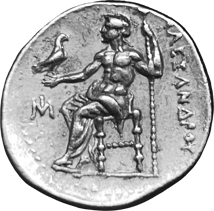
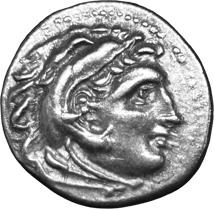
This drachm shows Herakles and Zeus and bears the name of Alexander the Great.


Reading a coin
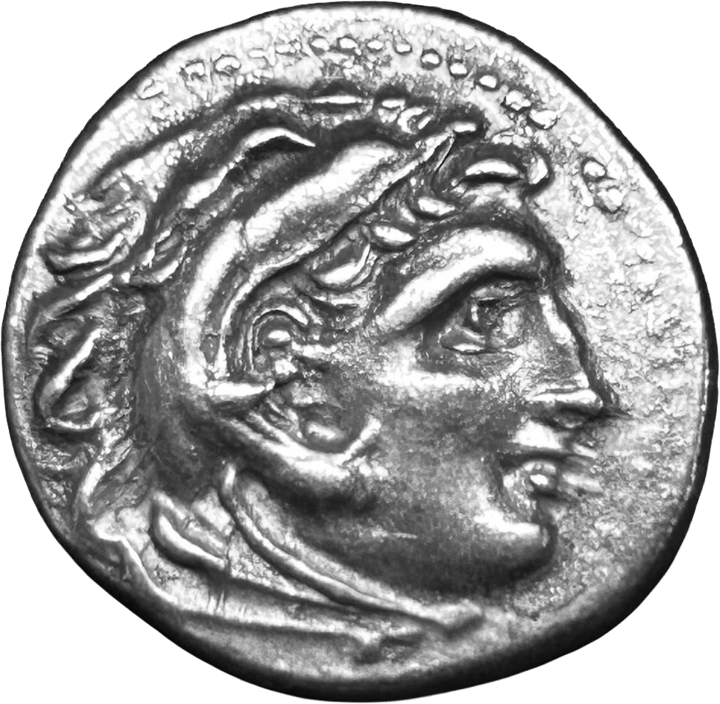
Herakles in the lion skin
The head of Herakles, covered by the skin of a lion. This side counts as the obverse: during striking, its die usually sat at the bottom, fixed in the anvil.
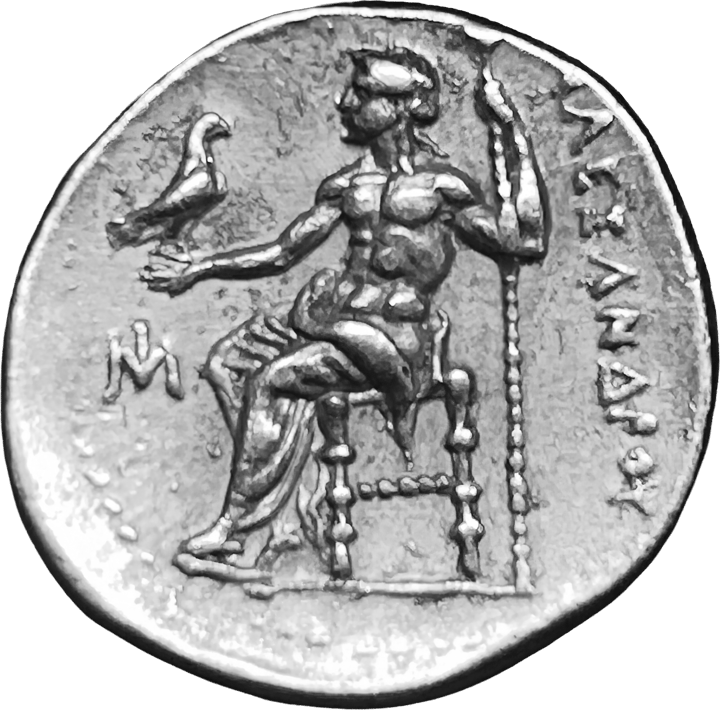
Zeus on his throne
Zeus sits on a throne, an eagle on his outstretched right hand, the sceptre in his left. Down the right runs ΑΛΕΞΑΝΔΡΟΥ, “of Alexander”. The small M on the left marks the mint or the issue.
The name is not a date. Alexander reigned from 336 to 323 BC. After his death, his successors and later cities too went on striking coins with these images and his name. A drachm like this one may therefore date from his reign or have been struck long after his death.
View the drachmThe units
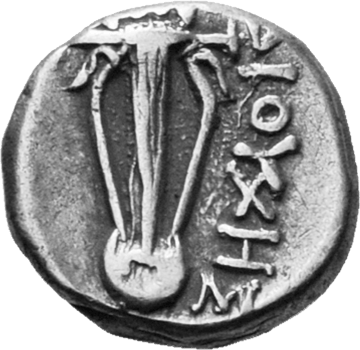
Diobol
2 obols
A third of a drachm. That is exactly what Charon the ferryman asks for the crossing in Aristophanes’ comedy “The Frogs” of 405 BC.
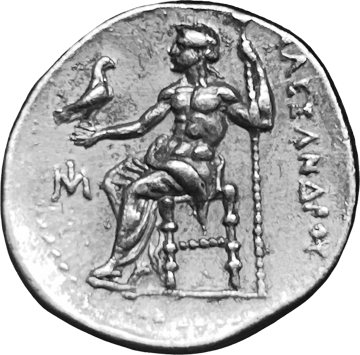
Drachm
6 obols
On the Attic weight standard, about 4.3 grams of silver. The drachms bearing Alexander’s name follow the same standard.
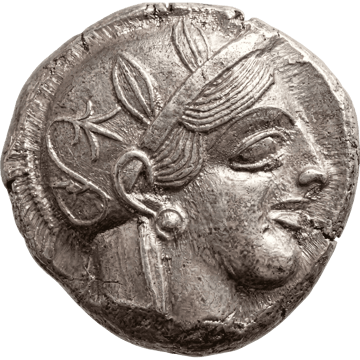
Tetradrachm
4 drachms
About 17.2 grams, roughly the size of a 1‑euro coin and more than twice as heavy. For centuries it was the foundation of Athenian coinage.
One drachm: a day’s work on the Acropolis.
That is what the building accounts of the Erechtheion from 408/7 BC record: the architect and the workmen, skilled and unskilled alike, received one drachm a day or a piece rate apparently based on it. At the Erechtheion, a tetradrachm was therefore four days’ wages.
Athens
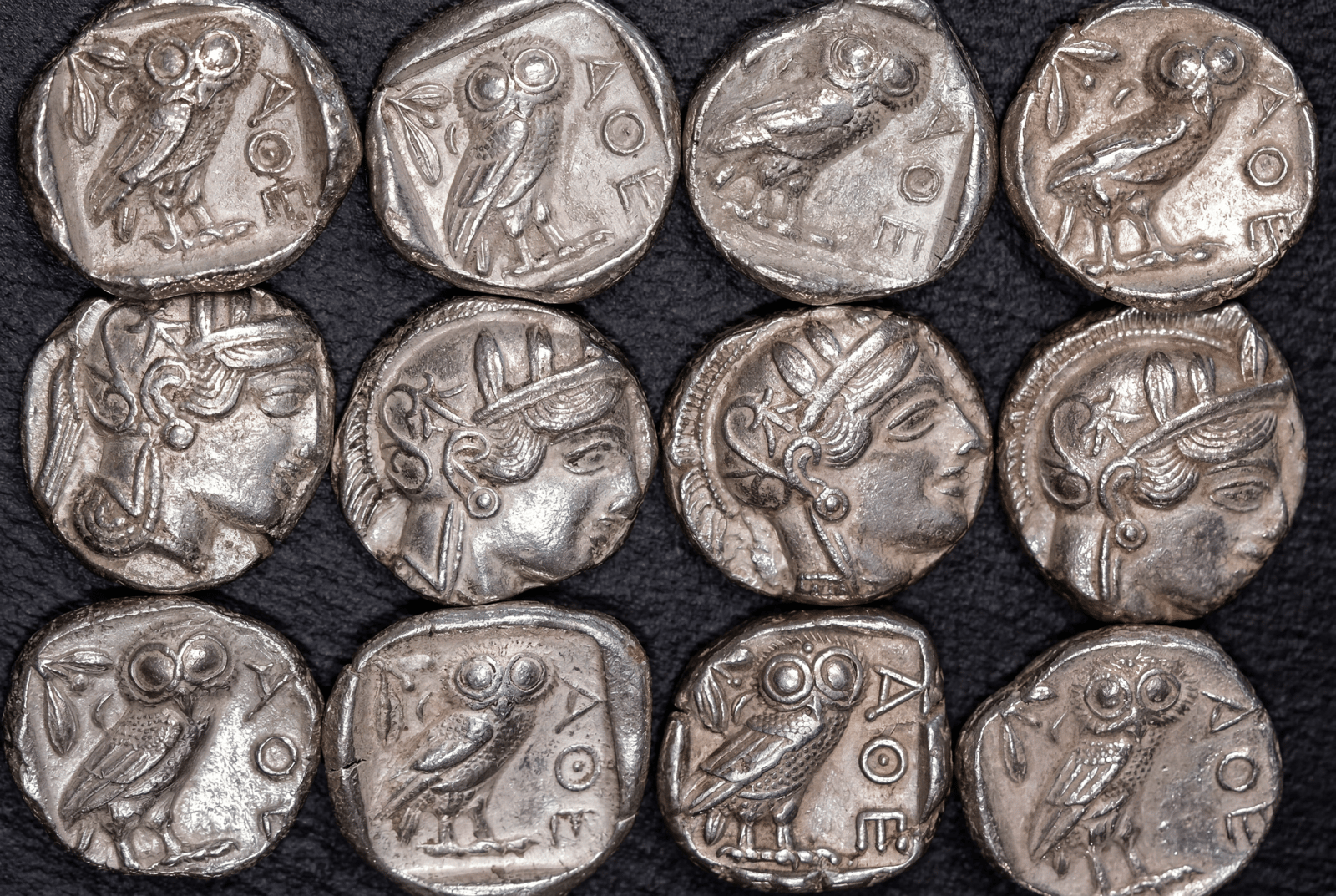
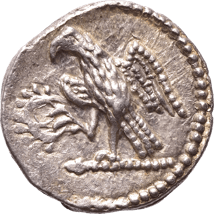
In Aristophanes’ comedy “The Birds” of 414 BC, someone asks: “Who brought an owl to Athens?” He means a real bird. The coins show Athena on the front and on the back her owl with ΑΘΕ, short for “of the Athenians”. The silver for the classical owls came from the mines of Laurion.
From Athens to the Black Sea: who appears on the pieces in this category, and who issued them.
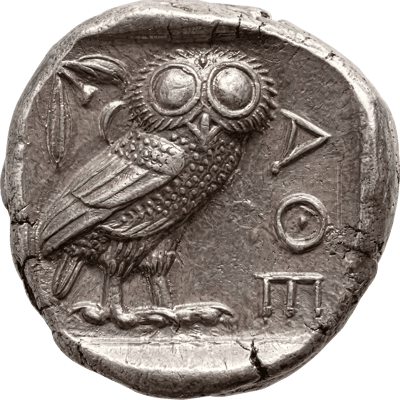
The owl of Athens
Tetradrachm, Athens
Athena in her helmet and her owl. One of the most widely circulated coins of the ancient world.
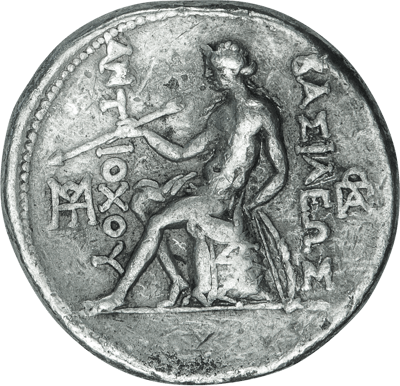
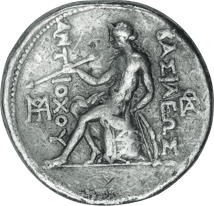
King Antiochus
Tetradrachm, Seleucid Empire
Apollo sits on the omphalos, the “navel of the world” from Delphi, and tests an arrow. Beside him, ΒΑΣΙΛΕΩΣ ΑΝΤΙΟΧΟΥ, “of King Antiochus”.
View the item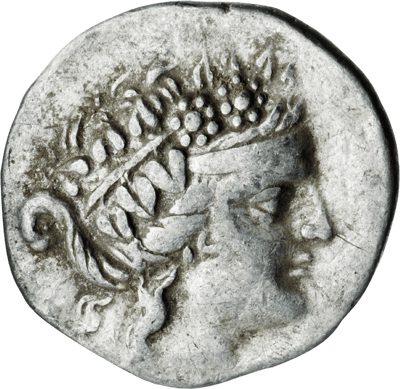
Dionysus and Herakles
Tetradrachm of the Thasian type
Dionysus wreathed in ivy, on the reverse Herakles, “the Saviour”. Celts on the Danube struck imitations of this type.
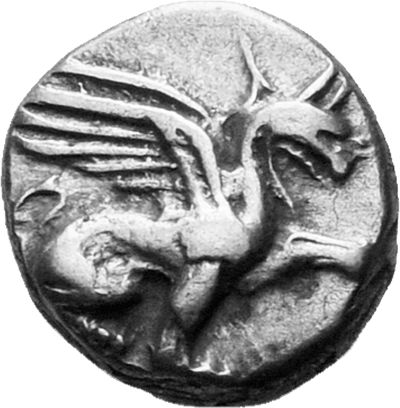
The griffin of Teos
Diobol, Teos in Ionia
The emblem of the city. Around 545 BC, emigrants from Teos took it with them to Abdera in Thrace.
View the item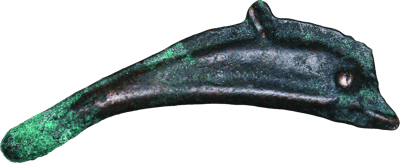
The dolphin of Olbia
Bronze, Olbia on the Black Sea
Money and votive offering in the shape of a dolphin, cast rather than struck. The dolphins appeared together with the cult of Apollo Delphinios, guardian god of the mother city, Miletus.
View the item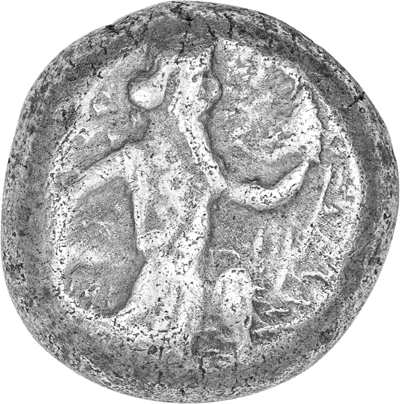
Gaugamela, 331 BC
A set of a drachm and a siglos
A drachm in Alexander’s name and a Persian siglos showing an archer. The year is the theme of the set, not the year of striking.
View the item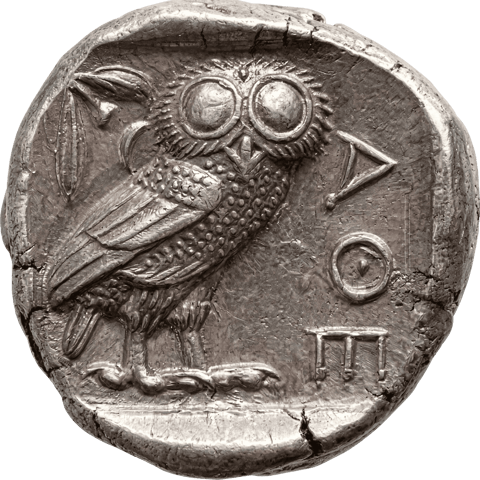
The owl of Athens is more than 2,400 years old.Today it sits on the Greek 1‑euro coin.
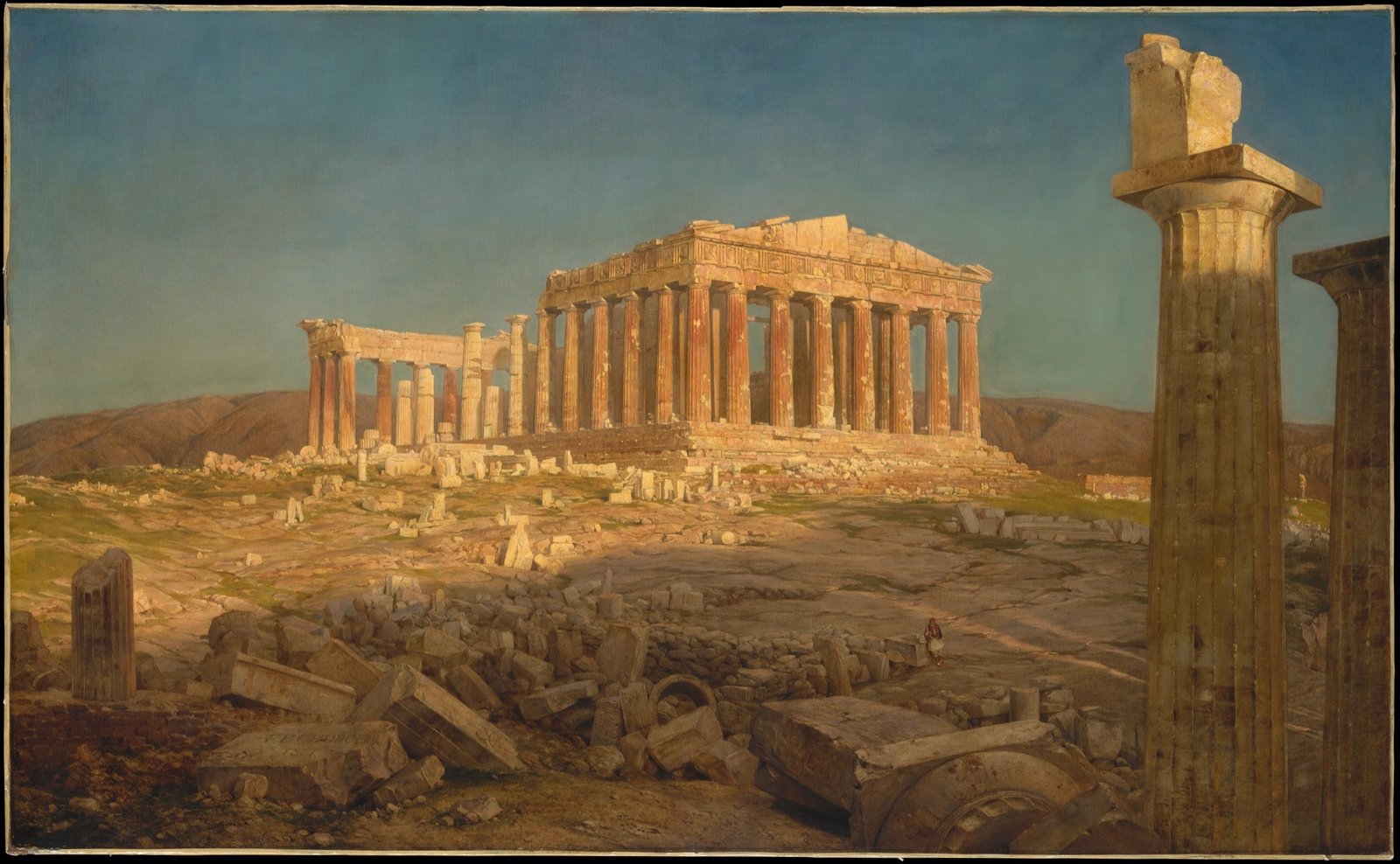
Details based on the American Numismatic Society, the Cleveland Museum of Art, the British Museum, the Yale University Art Gallery, Brown University, Attic Inscriptions Online and the Acropolis Museum on the Erechtheion, A. S. Rusjaeva on Olbia, I. Prokopov on the Thasian type, B. V. Head (Historia Numorum) on Teos and Abdera, Herodotus, Aristophanes, the Deutsches Bergbau-Museum Bochum and a 2025 study on the silver of Laurion, the Victoria and Albert Museum, the European Central Bank and the photos of the pieces shown. Image: Frederic Edwin Church, “The Parthenon”, 1871, The Metropolitan Museum of Art, public domain.
Stay informed with product launches, financial news and exclusive offers. Sign up for our free newsletter today.
By entering your email address and clicking the "Submit" button, you give the following consent: "I agree to be informed by email about new products, financial news and exclusive offers, and therefore consent to the processing of my email address for the purpose of sending the newsletter. I can revoke this consent at any time without giving reasons, with effect for the future. The lawfulness of processing carried out prior to revocation remains unaffected."