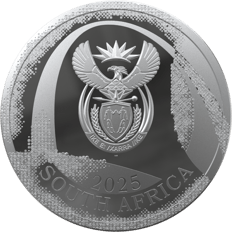
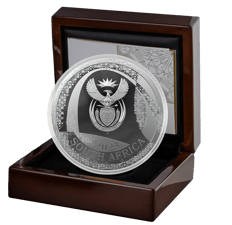
Only 1 left to order
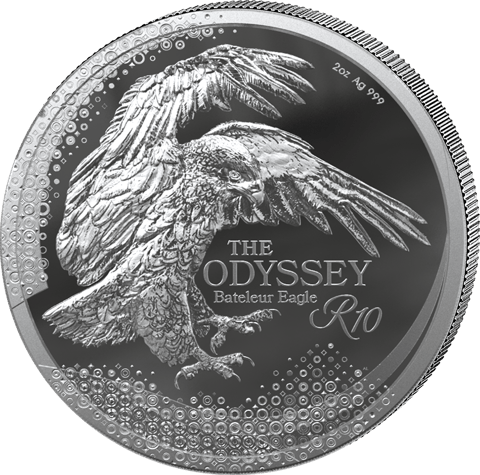
1 oz Silver Odyssey of the Sky Bateleur Eagle 2025 (Mintage: 5,000 | Proof)
£209.15£293.15
excl. UK import VAT and shipping
Available in 2–3 business days

 More than 300,000
 Over 30 years
 Secure shipping
 Google: 4.9/5


Paris, 1799
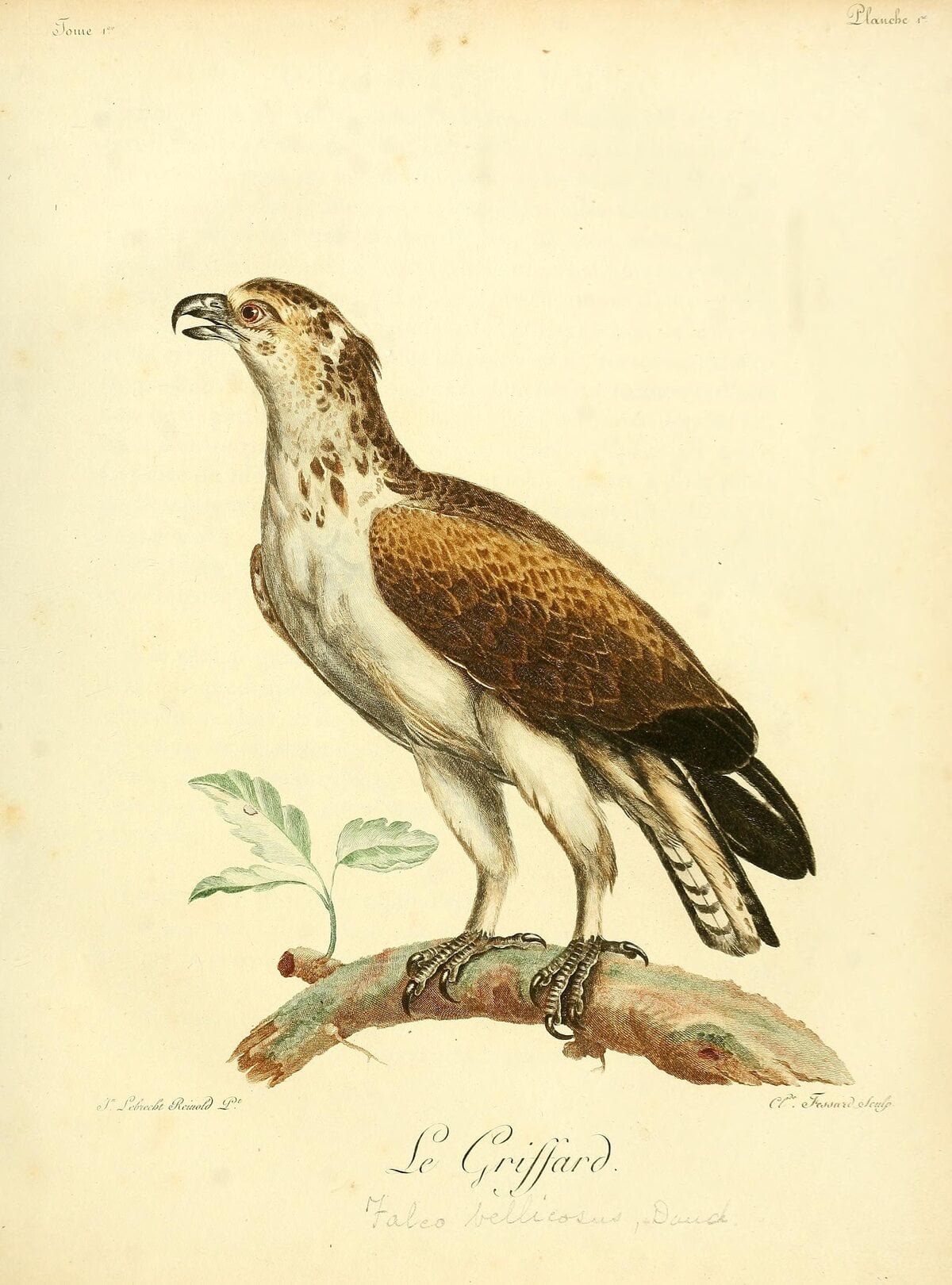
The naturalist François Levaillant was at the Cape from 1781 to 1784 and brought back more than 2,000 specimens, mostly birds. His work on the birds of Africa appeared in instalments from 1796, with copperplate engravings printed in colour. In it, he explains the Bateleur’s name himself.
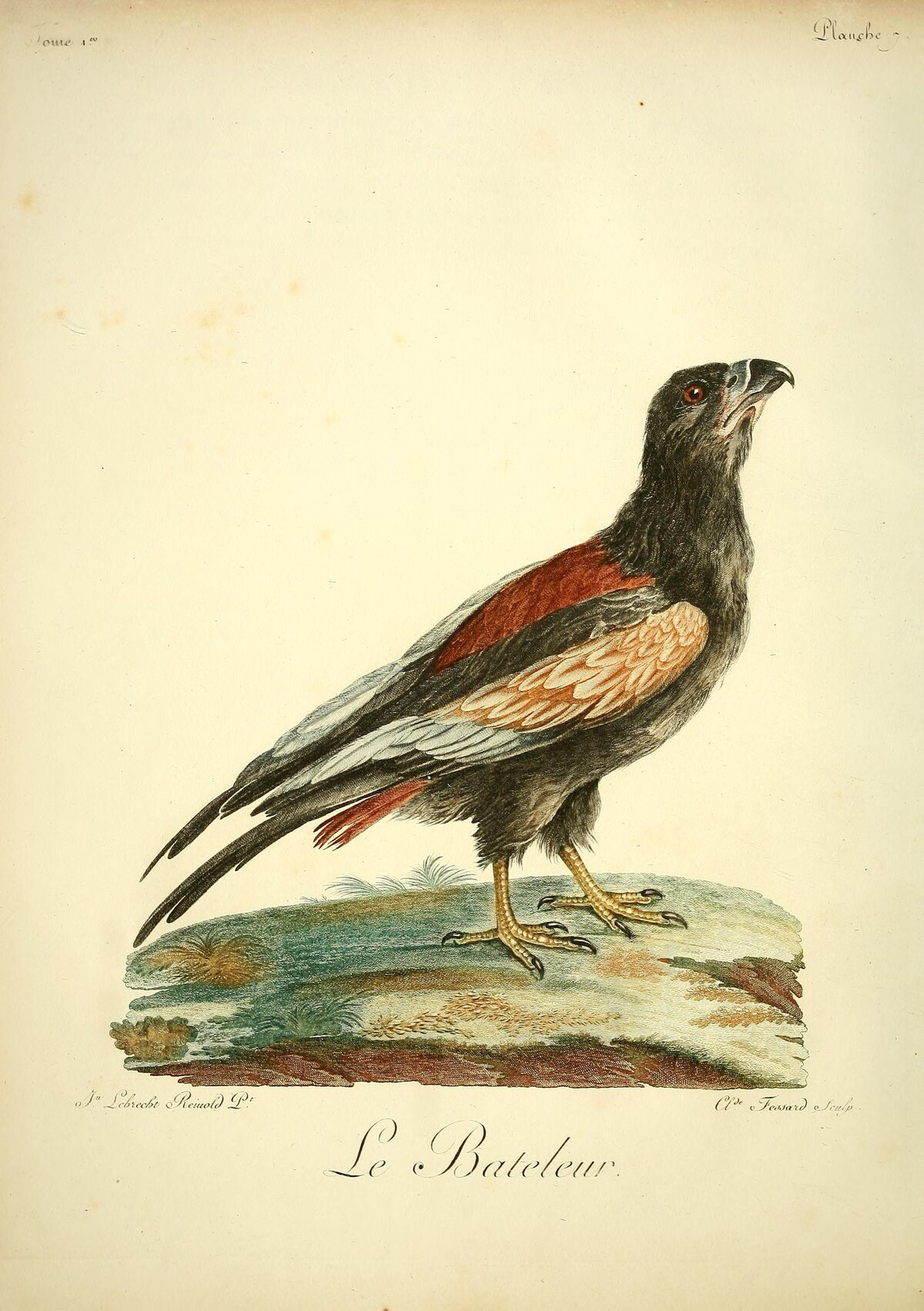
François Levaillant, Histoire naturelle des oiseaux d’Afrique, Volume 1, Paris 1799“I took the name of this bird from its way of playing in the air. One would indeed take it for an acrobat performing feats of strength to amuse the spectators.”
“J’ai tiré le nom de cet oiseau de sa manière de se jouer dans les airs: on diroit, en effet, un bateleur qui fait des tours de force pour amuser les spectateurs.”
He also saw the bird suddenly drop, as if it had broken a wing. Today BirdLife International describes its gliding flight like this: it tilts its wings from side to side, as if trying to find its balance.
Levaillant writes that it is about the size of the Golden Eagle but has longer legs and stronger talons. The zoologist François Marie Daudin described the species in 1800 based on Levaillant’s work and gave it the name bellicosus, Latin for warlike.
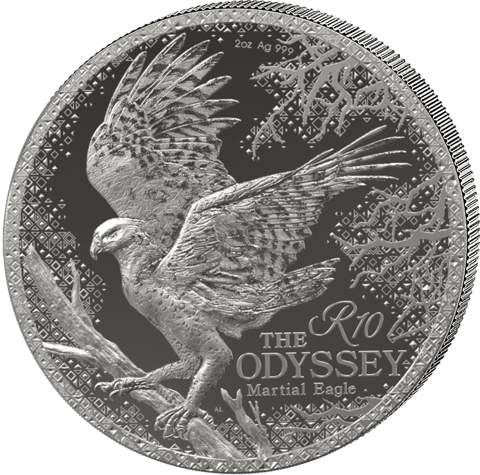
The coat of arms side
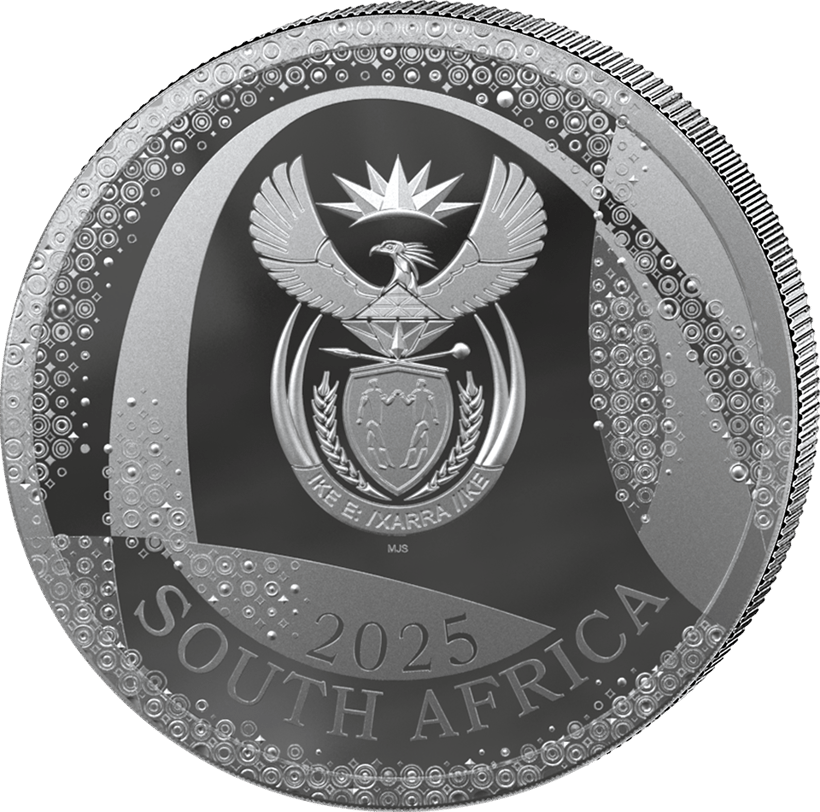
On the other side is the national coat of arms of South Africa, official since 27 April 2000. Above the shield, a secretary bird, itself a bird of prey, spreads its wings. According to the government, its raised wings stand for the rise of the nation and at the same time offer it protection.
Both sides of the 2025 coins carry a pattern modelled on Isishweshwe, a cotton print, originally indigo blue, with small white motifs. With it, the mint wants to show the bond between people and nature.
According to the South African National Gallery in Cape Town, German missionaries and traders brought their blue-printed cloth to the Eastern Cape in the middle of the 19th century.
The gold coins
In gold, the series shows the birds’ heads, as close up as in a portrait.
Terathopius ecaudatus
The scientific name means “marvellous face, tailless”.
Black plumage, a chestnut back, face and legs bright red. The mint chose it for its shape and its colourful plumage.
Polemaetus bellicosus
The scientific name means “war eagle, warlike”.
One of Africa’s largest eagles: dark brown above, pale below with brown spots, the eyes yellow. The females are considerably larger than the males.
Since 2020, both species have been considered endangered worldwide. Fewer than 1,000 mature Bateleurs live in South Africa, and BirdLife South Africa named it Bird of the Year 2024.
Sources: The Peregrine Fund, BirdLife International, BirdLife South Africa, San Diego Zoo Wildlife Alliance, South African MintSeven coins per year
The 2025 and 2026 issues came out in the same seven sizes, all in proof quality. The heaviest coins are the scarcest: 50 coins of 5 ounces of gold, 100 of one kilogram of silver.
| Available from us | |||
|---|---|---|---|
| Coin | Mintage | Bateleur2025 | Martial Eagle2026 |
| 1/4 ounce goldR50, 22 mm, 1,000 coins | 1,000 coins | not available | not available |
| 1 ounce goldR100, 32.69 mm, 500 coins | 500 coins | not available | not available |
| 5 ounces goldR200, 50 mm, 50 coins | 50 coins | not available | not available |
| 1 ounce silverR5, 38.725 mm, 5,000 coins | 5,000 coins |  | 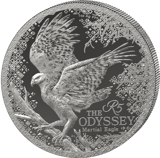 |
| 2 ounces silverR10, 50 mm, 5,000 coins | 5,000 coins | 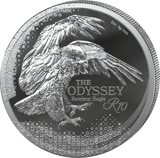 | 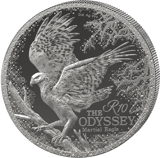 |
| 5 ounces silverR20, 64 mm, 500 coins | 500 coins | not available | not available |
| 1 kilogram silverR50, 100 mm, 100 coins | 100 coins | not available | not available |
Face value in rand, figures from the South African Mint for 2025 and 2026
For 2026 the mint is issuing two sets, each pairing an Odyssey coin with a Krugerrand: 1,000 in silver, 500 in gold. The Krugerrand in each set bears a small Martial Eagle as a Privy Mark, and this Krugerrand is only available in the sets. A Privy Mark is an additional mark on an otherwise unchanged coin design.
The first Krugerrand was made jointly by the South African Mint and the Rand Refinery on 3 July 1967.
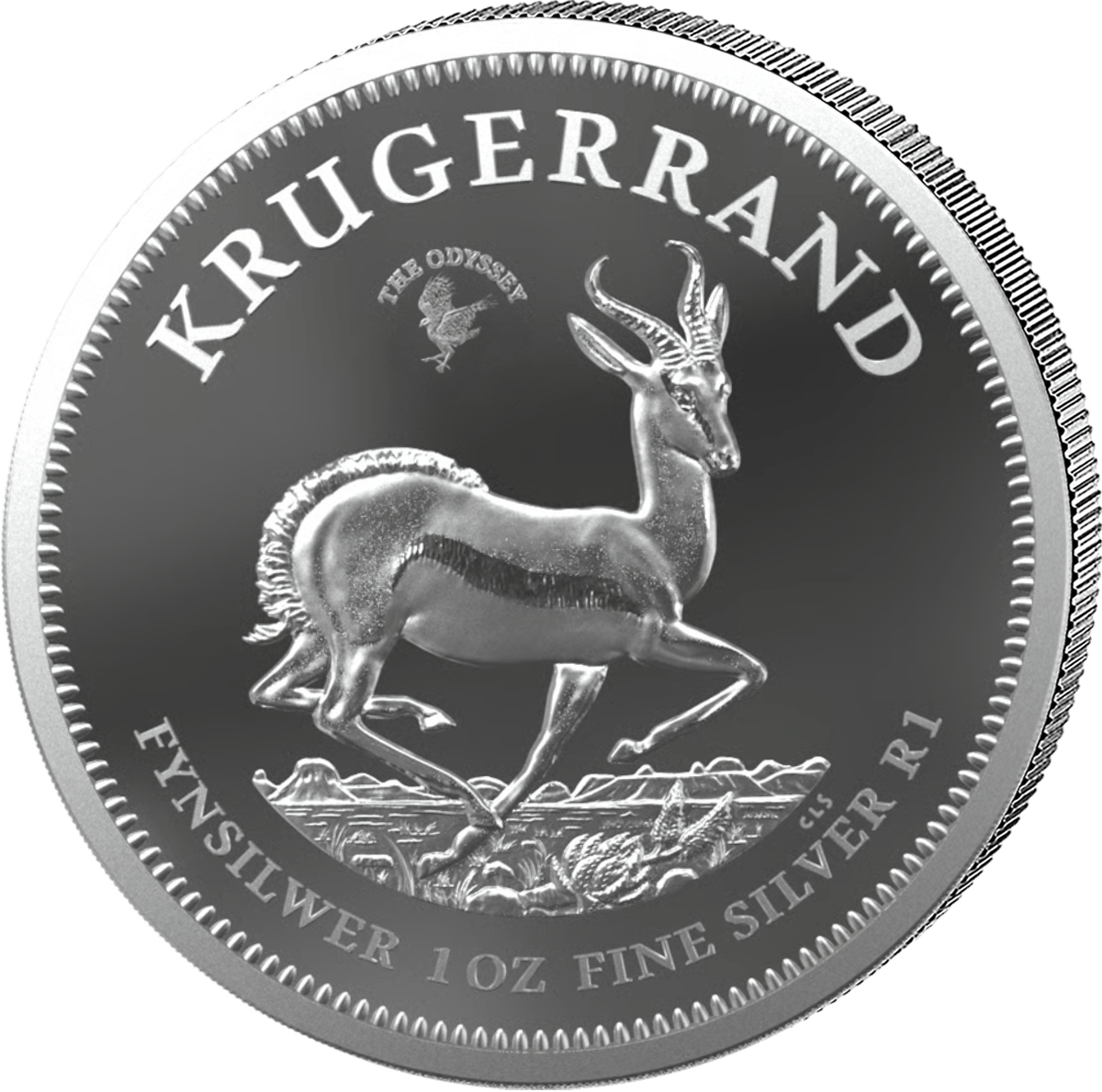
The South African Mint has announced seven annual issues, each with a bird of Africa. It has not yet made public which birds will follow the Martial Eagle.
 Odyssey of the Sky
Stay informed with product launches, financial news and exclusive offers. Sign up for our free newsletter today.
By entering your email address and clicking the "Submit" button, you give the following consent: "I agree to be informed by email about new products, financial news and exclusive offers, and therefore consent to the processing of my email address for the purpose of sending the newsletter. I can revoke this consent at any time without giving reasons, with effect for the future. The lawfulness of processing carried out prior to revocation remains unaffected."