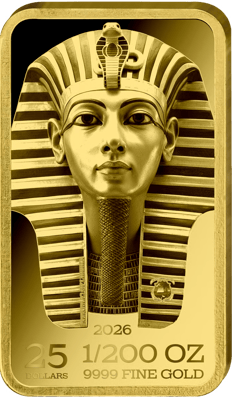
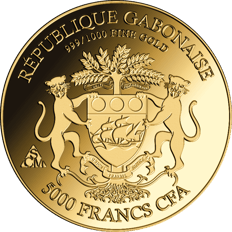
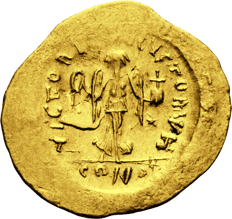
Only 6 left to order
Brothers Grimm Gold Fairy Tale Set 2027 (Mintage: 250 | Proof)
£331.57£499.02
VAT-free and excl. shipping
Ships from 18/12/2026

 More than 300,000
 Over 30 years
 Secure shipping
 Google: 4.9/5
Bullion coins made of gold have been popular as a means of wealth protection for many years. But there are many other gold coins that are suitable as an investment.


Almost everyone knows the Krugerrand, the Maple Leaf and the Vienna Philharmonic, but the world of gold coins is far larger and more varied. Under the term other gold coins we bring together everything that goes beyond the best-known classics: rare bullion issues, historic circulating coins, small gift coins and elaborately designed collector's pieces. It is precisely this variety that holds the special appeal, here both the level-headed investor and the enthusiastic collector will find the right coin. The following sections cover the history, denominations, authenticity, taxation and storage of these coins.

The collective term other gold coins covers all gold issues that do not belong to the major standard bullion coins. While the Krugerrand is regarded as the world's first modern bullion coin and issues such as the Maple Leaf or the Vienna Philharmonic are traded worldwide, this category hides a huge thematic range. It includes limited-edition design coins, historic issues and modern series that are equally prized by collectors and investors alike.
Essentially, these coins can be divided into two large groups: investment gold, whose value is primarily driven by the current gold price, and collector's coins, whose price is additionally determined by the design, mintage and condition. Many issues carry a face value in their respective national currency and are therefore official legal tender; for investment gold, however, the pure material value is almost always decisive for the market value.
Gold coins have accompanied mankind for thousands of years. Even in antiquity, minted gold pieces served as a means of payment and a store of value. However, the modern bullion coin in today's sense only emerged in 1967 with the Krugerrand from South Africa. It made gold accessible to a broad base of investors in a convenient, standardised form and established the troy ounce (oz) as the industry's most important unit of weight.
Numerous countries followed the South African example with their own issues: Canada, the USA, Austria, Australia and China each developed their own bullion coins with distinctive designs. At the same time, a rich tradition of historic circulating coins has been preserved. This cultural and geographic diversity is what gives the category its special charm, every coin tells its own story.
Many of the coins traded today as investment gold were originally genuine legal tender. The so-called circulating gold coins or coin money were used in everyday life in the 19th and early 20th centuries. Particularly well known are the gold coins from the German Empire, historic Austrian issues and the legendary Swiss Vreneli. Since many years of issue were minted in large quantities, they are still regarded today as solid investment gold at an affordable material value.
A major advantage of this category is the enormous range of weights. From a tiny fraction of an ounce to a substantial capital investment, practically every denomination is represented. Choosing the right size depends on the goal: small units are flexible and ideal as a gift, while large denominations offer the best price per gram.
Anyone drawing a comparison with gold bars will notice that coins often offer finer denominations and a collector's aspect, while bars are usually cheaper in terms of pure price per gram. For small, divisible amounts, 1 gram gold bars are also a popular alternative.
The fineness describes the gold content of a coin. Classic bullion coins such as the Krugerrand are made of 22 carat gold (916.7/1,000) with a copper alloy that makes them more durable. Many modern issues and most collector's coins, on the other hand, are made of fine gold at 999.9/1,000. The pure gold content is identical in both variants, the alloy merely increases scratch resistance.
The designs reveal the full creativity of the mints: animal motifs, historic figures, zodiac signs, buildings or themes from culture and religion. For collector's coins, the condition also plays a central role. Issues struck in Proof quality with a mirrored surface or in high relief with raised relief often achieve higher prices among enthusiasts than simple Brilliant Uncirculated (BU) versions.
A coin is more than its gold value, it combines the security of the precious metal with the fascination of a small work of art.
Authenticity verification is particularly important for less well-known issues. Genuine gold coins can be checked using several features that are difficult to counterfeit. Anyone who relies on verified goods significantly reduces the risk.
Kettner Edelmetalle relies on ISO-compliant authenticity verification and sources goods directly from renowned mints. This ensures that every coin has the stated fineness and the correct weight. Suitable coin capsules are ideal for safe storage after purchase.
A key advantage of investment gold is its tax treatment. In Germany, the purchase of investment gold is exempt from VAT under §25c UStG, provided the coins meet the legal criteria, which generally include a fineness of at least 900/1,000 and the status of official legal tender.
Tax notice
Investment gold is exempt from VAT in Germany under §25c UStG. For private sales, the holding period also applies: if physical gold is held for longer than one year, any capital gain is currently exempt from income tax under the current legal situation. This is general information and does not replace professional tax advice.
The situation is different for pure collector's coins without investment-gold status: VAT may apply here. Anyone who prioritises the investment aspect will find tax-favoured issues in the gold bullion coins category. For long-term wealth building, savings plan products are also a good option.
Gold has a high value density and requires comparatively little space, yet storage still needs careful thought. Essentially, there are three options: storing it at home, a bank safe deposit box, or custodial storage with a service provider. Each option has its own advantages and disadvantages in terms of access, cost and insurance.
For home storage, a certified safe is recommended. To prevent damage to the surface, sensitive Proof-quality issues should always be kept in coin capsules; for larger collections, coin cassettes are a good option. Fingerprints and moisture are the biggest enemies of a flawless surface, so coins should never be touched with bare hands on their face.
The decision between a bullion coin and a collector's coin depends on your personal goal. Anyone who sees gold primarily as wealth protection and a building block for diversifying their assets is well served by classic investment gold, which is traded close to its material value. Anyone who enjoys design, history and rarity, on the other hand, will find an additional emotional plus in collector's issues.
Popular thematic alternatives within gold coins include the American Eagle from the USA, the China Panda with its annually changing design, or the Australian Kangaroo. The Somalia Elephant and the Britannia are also very popular. It is worth taking a look at the entire gold coins category to find the right piece.
As a German family business with more than 280,000 satisfied customers, Kettner Edelmetalle offers a wide range of verified issues and 100% insured shipping.
The term covers all gold coins that do not belong to the major standard bullion coins such as the Krugerrand, Maple Leaf or Vienna Philharmonic. It includes limited-edition design coins, historic circulating issues, small gift coins and modern collector's series.
Investment gold is exempt from VAT in Germany under §25c UStG, provided the coin meets the legal criteria. Pure collector's coins without investment-gold status, on the other hand, may be subject to VAT. If in doubt, professional tax advice should be sought.
Small units such as 1 gram or fractional ounces offer a low entry price and are flexible to trade. In terms of pure price per gram, however, the 1 oz coin is cheaper, as the premium per gram falls as the weight increases.
Weight, diameter and thickness must exactly match the official specifications. Gold is also non-magnetic. Collector's coins are often supplied with a certificate of authenticity. Buying from a verified dealer with ISO-compliant authenticity verification provides additional security.
With bullion coins, the value is almost entirely based on the current gold price. With collector's coins, factors such as design, mintage and condition also come into play, meaning the price can exceed the pure material value.
Sensitive issues belong in coin capsules or coin cassettes to avoid scratches and fingerprints. A certified home safe, a bank safe deposit box or custodial storage are all suitable for storage. It is important to choose a dry location and avoid direct contact with the coin's surface.
 More Gold Coins
Stay informed with product launches, financial news and exclusive offers. Sign up for our free newsletter today.
By entering your email address and clicking the "Submit" button, you give the following consent: "I agree to be informed by email about new products, financial news and exclusive offers, and therefore consent to the processing of my email address for the purpose of sending the newsletter. I can revoke this consent at any time without giving reasons, with effect for the future. The lawfulness of processing carried out prior to revocation remains unaffected."