1 oz Platinum Kangaroo Nugget 2026
£1,743.16
excl. UK import VAT and shipping
Available in 2–3 business days

 More than 300,000
 Over 30 years
 Secure shipping
 Google: 4.9/5


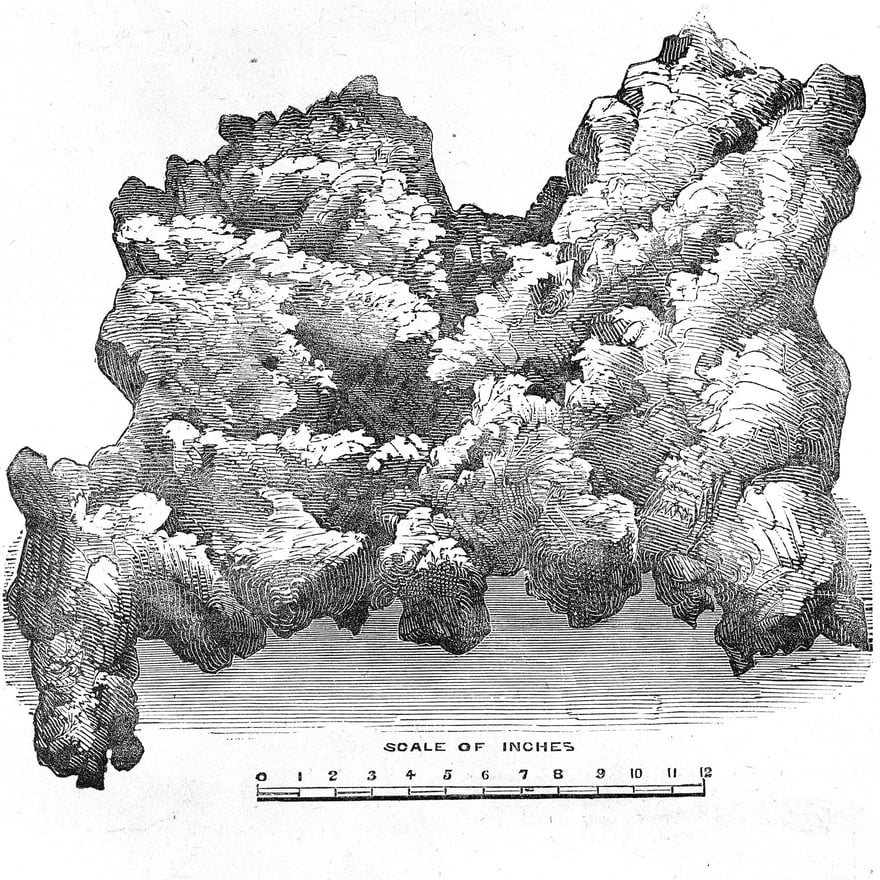
Moliagul, Victoria, 5 February 1869
In Bulldog Gully the Cornish miner John Deason came upon a lump of gold, only a few centimetres below the surface. It yielded about 70 kilograms of gold. To this day the “Welcome Stranger” is regarded as the largest known alluvial gold nugget.
The Perth Mint, opened in 1899 as a branch of the Royal Mint for the gold of Western Australia, issued gold coins in 1986 for the first time since 1931. The series was meant to evoke gold even in its name: it was called the Australian Nugget. Stuart Devlin drew four famous finds for it, one for each size:
In 1989 came the kangaroo. The coin still read THE AUSTRALIAN NUGGET, which is why the German trade knows the series to this day as the Känguru Nugget.
Stuart Devlin, 1989
The Perth Mint wanted a design that would be recognised all over the world. The first kangaroo design came from Stuart Devlin: a red kangaroo in mid‑leap, first on the Proof coins and from 1990 on the bullion coins as well.
In 1966 Devlin had already designed the animals on Australia’s cent coins, from the echidna to the platypus. Since 2018 his kangaroo against the rays of the sun has also appeared on the platinum coin.
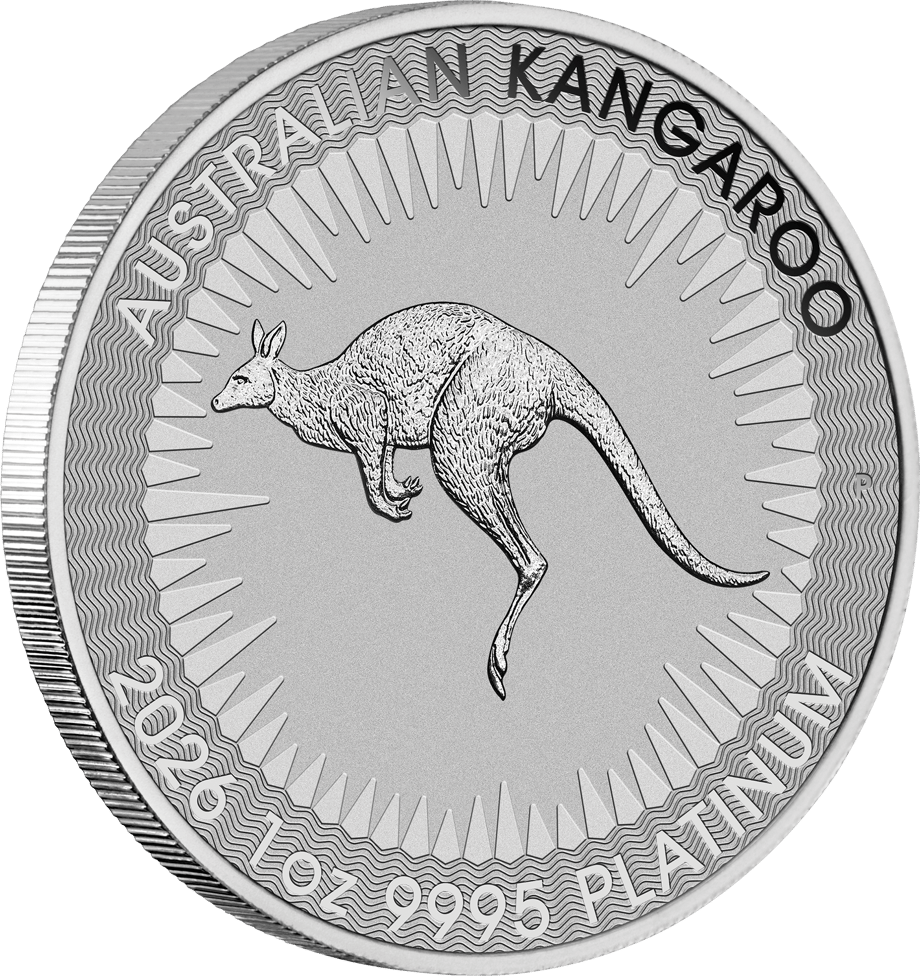
The reverse stayed the same, while portrait and inscription changed on the obverse:
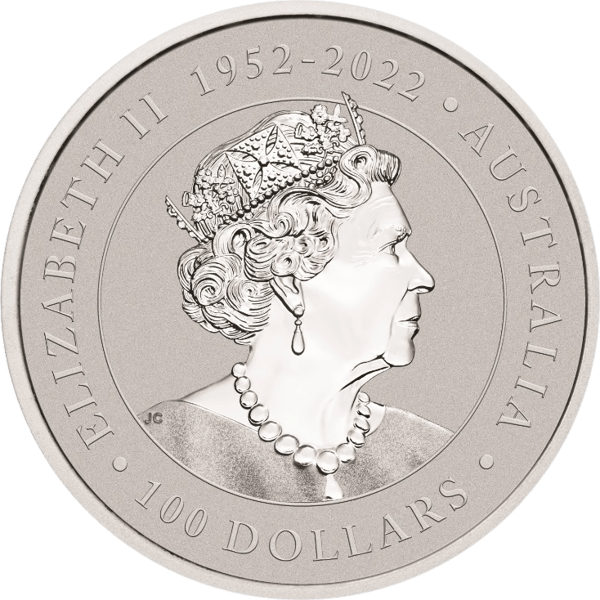
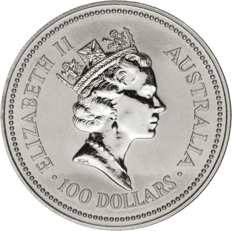
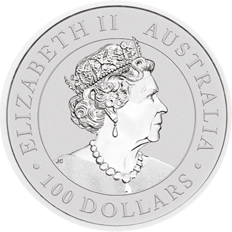
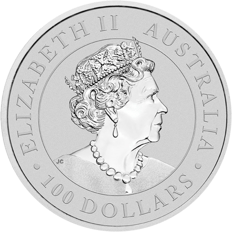
Elizabeth II, portrait by Jody Clark, with the years of her reign, 1952 to 2022
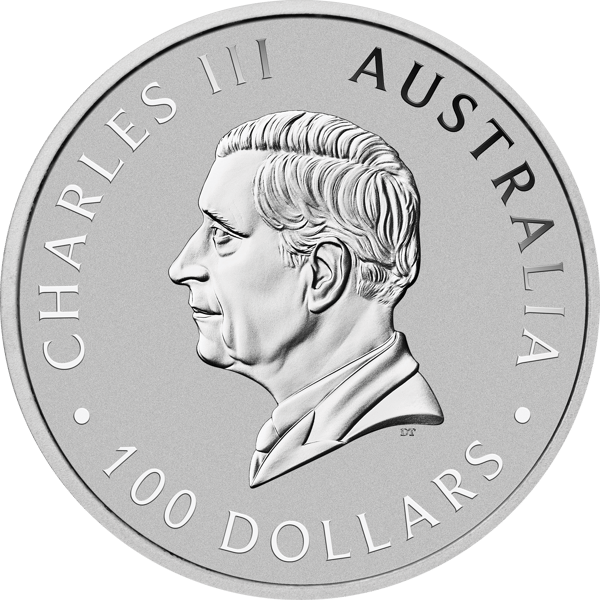
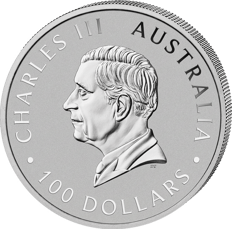
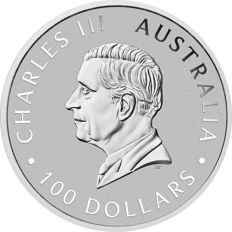
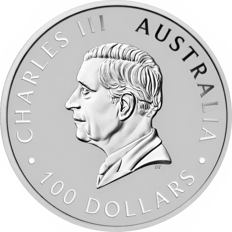
Charles III, portrait by Dan Thorne
View the coinThe Queen faced right; the King faces left. On coins the direction changes with each monarch, following a tradition that goes back at least to the 17th century.
Australian Treasury, 7 December 2023Endeavour River, 1770; London, 1772
The word kangaroo comes from the Guugu Yimidhirr gangurru. The crew of the Endeavour heard it on the Endeavour River in 1770, and on 4 August James Cook wrote “Kangooroo or Kanguru” in his journal.
In London in 1772, George Stubbs painted the animal from sketches and a pelt. He had never seen a living one. His picture is regarded as the earliest painting of a kangaroo in Western art.
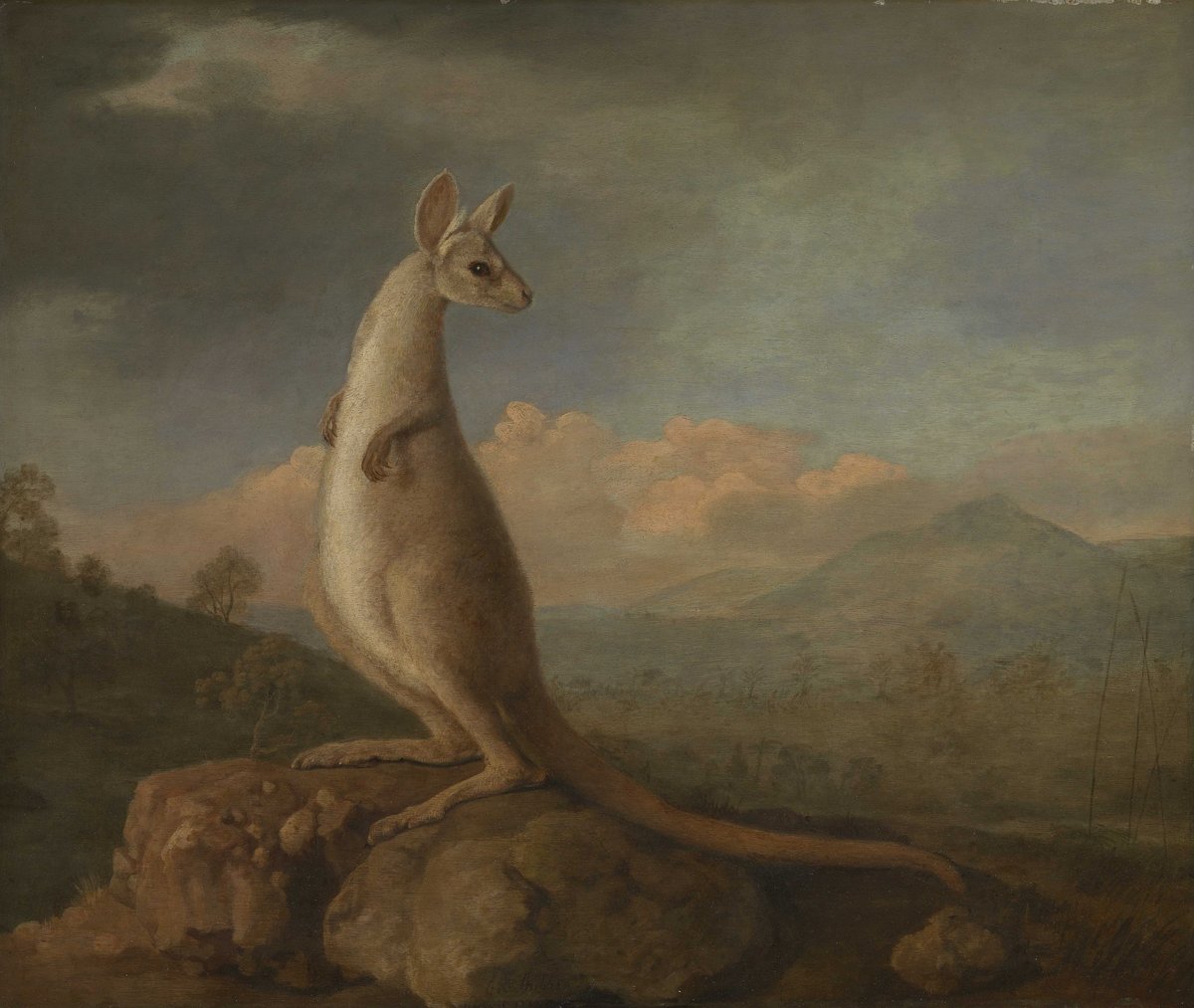
Since 1908 the kangaroo, together with the emu, has held the coat of arms of Australia. Since 1984 five kangaroos by Stuart Devlin have leapt across the dollar coin.
1986 to 2026
For the anniversary, two kangaroos leap across the water on the 2026 gold coins, with mountains in the distance. The privy mark “40” recalls the first issue of the Australian Nugget in 1986. The design is by Neil Hollis.
The gold coins carry the privy mark; the platinum coin does not. It still shows Devlin’s kangaroo.
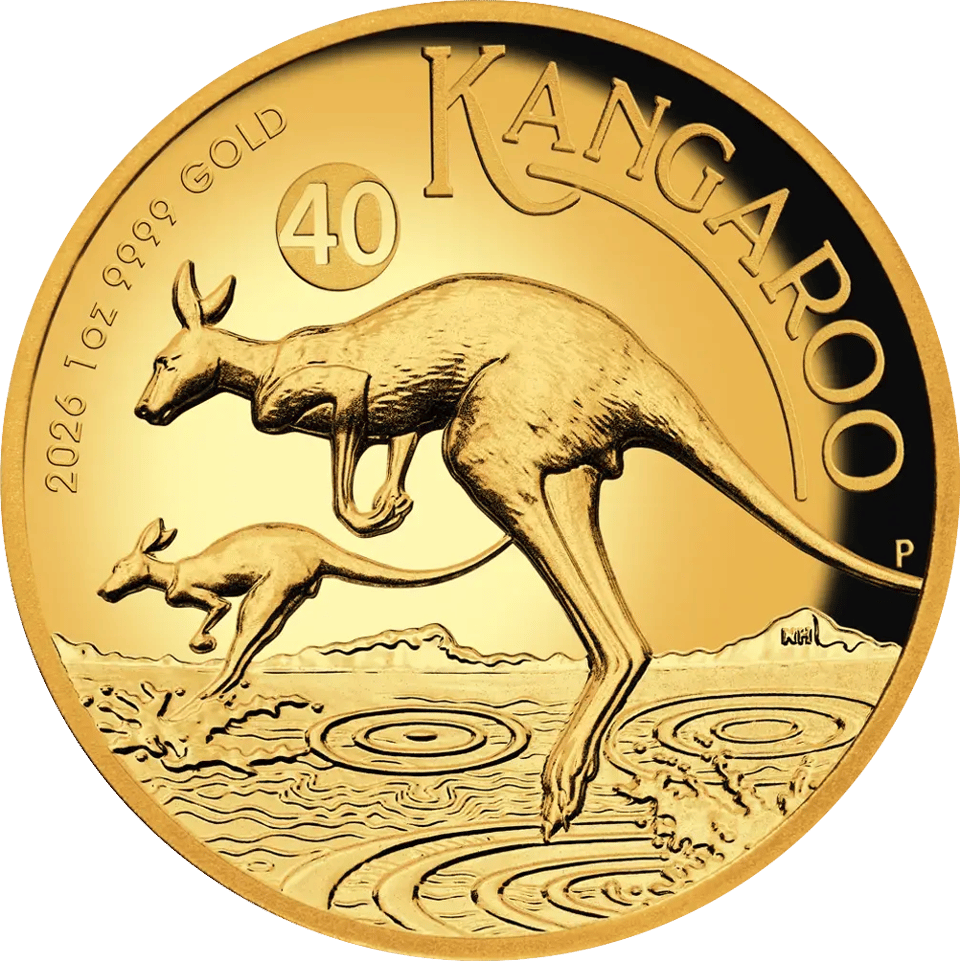 The privy mark 40
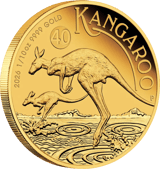 1/10 ounce gold16.60 mm, a maximum of 500 coins
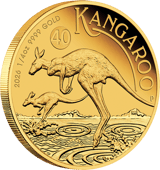 1/4 ounce gold20.60 mm, a maximum of 500 coins
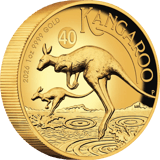 1 ounce gold, high relief27.60 mm on an especially thick blank, a maximum of 200 coins
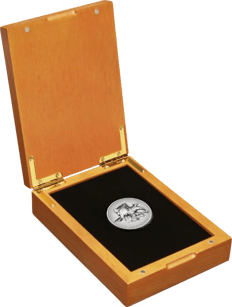
Proof, fine gold 999.9, in a case with a numbered certificate of authenticity.
In Perth since 1988
The Spanish called the white metal platina, little silver. In 1748 Antonio de Ulloa described it from the gold washings of the Chocó, in what is now Colombia, where it got in the way of the gold seekers.
Platinum is denser than gold, and yet The Perth Mint strikes both one‑ounce bullion coins 32.60 millimetres across. Its first platinum coin, in 1988, was the Koala.
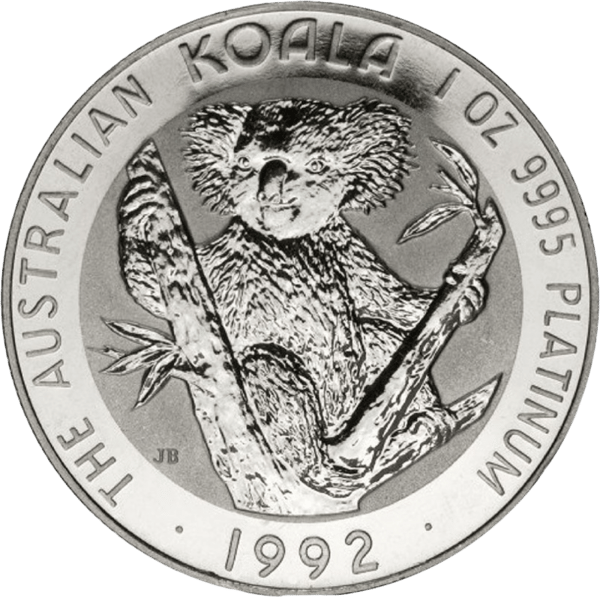
The Platinum Kangaroo Nugget is one of the world's few bullion coins that combine the rare white metal platinum with one of numismatics' most iconic animal designs. Minted by the Perth Mint in Western Australia, the series has complemented the established gold and silver Kangaroo issues since 2018. This guide explains the history, technical features, denominations, authenticity features, tax treatment and storage of the popular platinum bullion coin, and places it within the broader field of platinum coins.
Kangaroos and Australia are inseparably linked. It is therefore only logical that the state-owned Perth Mint has immortalised the national animal on numerous coins. Internationally, the series is known as the Australian Platinum Kangaroo; in German-speaking countries it is commonly referred to as the Kangaroo Nugget. The coin appeals both to investors who value physical platinum as a tangible asset and to collectors drawn to the high-quality design executed anew each year.
The silvery-white precious metal platinum is in no way inferior to its better-known relatives gold and silver in terms of value. As a bullion coin, the price of the Platinum Kangaroo Nugget essentially follows the platinum price, which, as with all precious metals, is quoted in US dollars and reflects supply and demand on the world market. Anyone with a general interest in the metal will find a broader introduction in the platinum category and among the platinum bars.
With the Kangaroo design, the Perth Mint offers one of the few continuous coin series issued in parallel across all three classic investment precious metals. Related animal designs from the same mint can be found in the silver Koala or the Kookaburra.
The roots of the series reach further back than the platinum issues themselves. From 1986, the Perth Mint originally minted a gold coin depicting real gold nuggets. After the iconic Welcome Stranger nugget had lent its name to the series, it was renamed, and from 1990 onwards a changing kangaroo design adorned the reverse each year.
Due to its continued popularity, a parallel silver series launched in 2015, before the platinum variant was added in 2018. This means the Perth Mint now covers the entire spectrum of investment precious metals. Anyone who prefers this design in a different metal will find what they are looking for among the gold Kangaroo coins or the silver Kangaroo coins.
When the mint introduced a platinum edition alongside gold and silver as part of its third Lunar series in 2020, it surprised many observers of numismatics. Since then, Australia has been one of the few countries to issue several platinum bullion coins in parallel. Collectors of this design world therefore also like to look at the Lunar Series III in platinum.
The Platinum Kangaroo Nugget is issued exclusively with a fineness of 999.5/1,000, making it almost pure platinum. The standard format is one troy ounce, corresponding to a fine weight of 31.1 grams. The face value struck on the coin is 100 Australian dollars, a symbolic figure well below the actual material value, as is customary for bullion coins.
The key specifications of the 1 oz edition at a glance:
| Feature | Specification |
|---|---|
| Precious metal | Platinum |
| Fineness | 999.5/1,000 |
| Fine weight | 1 oz / 31.1 g |
| Diameter | 32.60 mm |
| Coin thickness | 2.45 mm |
| Face value | 100 AUD |
| Edge | reeded (milled) |
| Mint | Perth Mint, Australia |
A characteristic feature is the reeded edge, which serves practical as well as visual purposes and makes counterfeiting more difficult. The classic bullion version is issued in Mint State (MS) quality; in certain years, the Perth Mint also releases enhanced collector's variants. Anyone wishing to compare different white metals will find further options among the palladium coins.
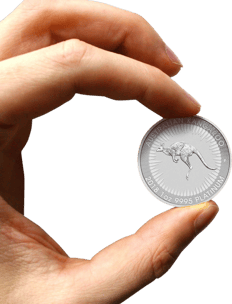
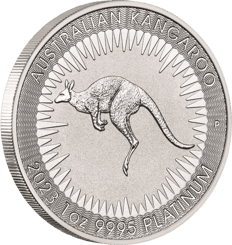
The design on the obverse shows a leaping red giant kangaroo, facing left, framed by a wreath of jagged points of varying length. Along the upper edge is the inscription Australian Kangaroo, below which appear the year of minting along with details of the fine weight and platinum content. The Perth Mint's mint mark P is struck to the right.
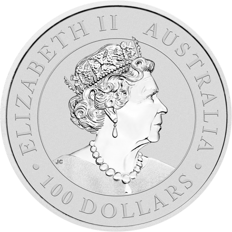
The value side traditionally bears the portrait of the British monarch: for many years the likeness of Queen Elizabeth II. The first profile was created by sculptor Ian Rank-Broadley; in 2019, Jody Clark of the British Royal Mint revised the design. Around the edge appear the monarch's name, the word Australia and the face value 100 Dollars. Collectors interested in closely related royal design themes are often also drawn to the Queen's Beasts or the platinum Britannia.
Unlike the annually changing gold nuggets, the platinum edition features a largely constant design that matches the silver edition. This continuity makes the coin easy to recognise, while collector variety tends to arise through the different years of issue and occasional special editions.
The classic format of the Platinum Kangaroo Nugget is the 1 oz coin. In certain years, the Perth Mint supplements the range with smaller fractional denominations as well as specially designed collector's variants. The gold version of the design is also available in several fractional sizes, such as 1/10 oz and 1/4 oz.
There is generally no fixed mintage limit for the Platinum Kangaroo Nugget. Nevertheless, the early years 2018, 2019 and 2020 were kept comparatively small, with a maximum of around 6,700 pieces; the 2020 mintage was somewhat higher. This limited availability contributes to demand. Anyone who prefers to build up platinum holdings in bar form will find suitable units, for example, among the 1 oz platinum bars.
Note on the First Year of Issue
Occasionally, 2017 appears as the first date of issue. The reason: the official sales launch of the respective current year's coin at the Perth Mint often begins as early as October or November of the previous year.
Platinum is significantly rarer than gold. Global deposits are concentrated in just a few countries, above all South Africa and Russia. This geographic concentration makes supply vulnerable to fluctuations in production and gives the metal its distinct character as a scarce commodity.
Added to this is strong industrial demand: platinum is corrosion-resistant, heat-resistant and an important catalytic material. Industries such as the automotive sector and dental technology depend on the metal. This dual character, investment asset and industrial raw material, sets platinum apart from purely investment metals and makes it a distinctive addition alongside classic bullion coins. Investors seeking broad diversification often combine the Platinum Kangaroo Nugget with classics such as the platinum Maple Leaf or the platinum Vienna Philharmonic.
The Perth Mint equips its coins with several security features. For the Platinum Kangaroo Nugget, these include a laser engraving as an integrated security feature, the precisely defined diameter and the precise edge design. Anyone wishing to verify a coin can use the following criteria as a guide:
At Kettner Edelmetalle, physical precious metal undergoes an ISO-compliant authenticity verification before being shipped under insurance. For safe handling and storage, suitable accessories are recommended.
In terms of taxation, platinum differs from investment gold. While investment gold in Germany is exempt from VAT under the relevant regulations, platinum coins are generally subject to VAT. For bullion coins, the margin scheme is frequently applied on import and trading, which can result in a lower effective tax burden than the standard rate.
Important Note
Tax treatment depends on the individual case and the applicable legal situation at the time. This text is for general information purposes only and does not replace tax or legal advice.
Anyone who wishes to avoid the VAT aspect often turns to VAT-exempt investment gold, for example in the form of gold bars or classic gold coins. Ultimately, the choice between metals depends on individual goals.
Platinum is a particularly resilient metal and, unlike silver, does not tarnish. Nevertheless, the sensitive minted surface should be protected from scratches and fingerprints. The following are suitable for storage:
As a general rule, bullion coins should only be touched by the edge and with clean gloves whenever possible. Cleaning with polish should be avoided, as it can damage the surface and reduce the collector's value. Further storage accessories are available in the coin pouches category.
The Platinum Kangaroo Nugget operates within a relatively small field of international platinum bullion coins. Among the best-known alternatives are the Canadian platinum Maple Leaf, the platinum American Eagle and the Austrian Vienna Philharmonic. African and Oceanic designs are also represented, such as the Somalia Elephant or the Platypus, which likewise comes from the Perth Mint.
Compared with these issues, the Kangaroo Nugget stands out for its high fineness of 999.5, its striking national animal design and the comparatively small mintages of the early years. Anyone who values design continuity and a close connection to a well-known mint will find this series an attractive addition to established classics such as the platinum Krugerrand.
The coin is issued with a fineness of 999.5/1,000, making it almost pure platinum. The standard weight is one troy ounce, or 31.1 grams.
The Perth Mint has also minted the Kangaroo Nugget in platinum since 2018. The design had previously already appeared in gold (from 1986/1990) and in silver (from 2015).
Unlike investment gold, platinum coins are generally subject to VAT. The margin scheme is frequently applied. The specific treatment depends on the individual case and the applicable legal situation, and this does not constitute tax advice.
The design side shows a leaping red giant kangaroo surrounded by a wreath of jagged points, along with the inscription Australian Kangaroo and the mint mark P of the Perth Mint. The value side traditionally bears the portrait of the British monarch.
The metal is the key difference: platinum is rarer and in strong industrial demand. In addition, the platinum edition features a largely constant design, while the gold nuggets change every year. The corresponding editions can be found in the gold Kangaroo coins and silver Kangaroo coins categories.
Ideally, the coin should be stored in a coin capsule, supplemented by a coin cassette for complete year sets. Safekeeping should take place in a safe or safe deposit box. The surface should not be polished and should only be touched by the edge.
 Kangaroo Nugget
Stay informed with product launches, financial news and exclusive offers. Sign up for our free newsletter today.
By entering your email address and clicking the "Submit" button, you give the following consent: "I agree to be informed by email about new products, financial news and exclusive offers, and therefore consent to the processing of my email address for the purpose of sending the newsletter. I can revoke this consent at any time without giving reasons, with effect for the future. The lawfulness of processing carried out prior to revocation remains unaffected."