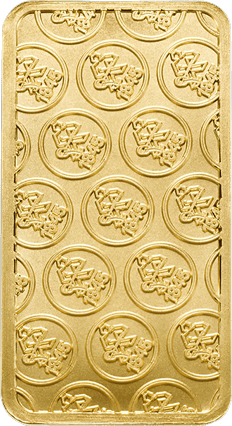
1 Ounce Silver Krugerrand 2026
£48.84
excl. UK import VAT and shipping
Ships from 25/11/2026

 More than 310,000
 Over 30 years
 Secure shipping
 Google: 4.9/5


Some coins and bars sell year after year, regardless of trends, headlines or market sentiment, and it is precisely these products that gather in the bestsellers. The list is therefore no random product, but a snapshot of sentiment: it shows which denominations, designs and metals customers are actually choosing to buy right now. The following sections cover the classics behind the sales figures, the choice between bars and coins, premiums, taxes and storage, and the question of what a bestseller list can really deliver as a decision-making aid.
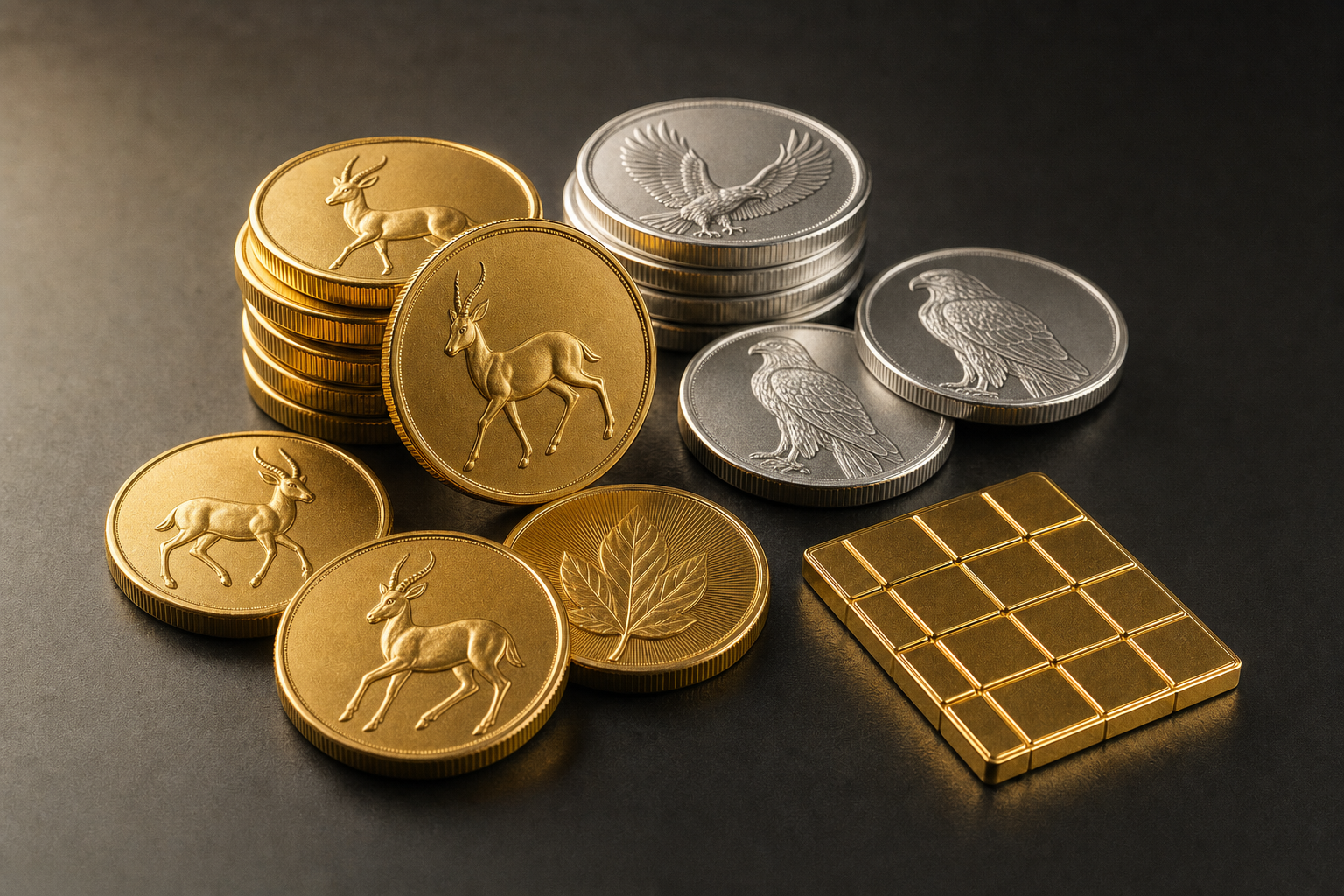
The bestsellers category brings together the best-selling products in gold, silver, platinum, palladium and copper. It is not curated editorially but follows demand: what is ordered often moves up, what sits unsold drops back down. This creates a snapshot of the market that visibly changes over the course of the year, for instance when the new years of issue of the major bullion coins appear in autumn, or when a rising gold price draws attention to small denominations.
Behind the sales figures lie three recurring patterns. First, the recognition effect: anyone buying precious metals for the first time reaches for names they know, Krugerrand, Maple Leaf, Vienna Philharmonic. Second, the price entry point: products in the two to three-digit range sell in higher quantities than a one-kilo bar. Third, the mintage: strictly limited editions sell out quickly, which creates short-term spikes in the statistics.
High demand is an indicator of liquidity: what many people buy can usually also be resold easily, because the market knows and values the product. That is precisely the practical benefit of the bestsellers. However, they say nothing about individual suitability. A collector focused on collector's coins makes different decisions than someone systematically building up physical gold as a reserve. The list therefore does not replace a strategy of your own, but shortens the pre-selection.
A core part of the bestsellers has consisted of the same series for years. These bullion coins are newly minted every year, distributed in mintages running into the millions, and traded worldwide, which makes them the most easily comparable products on the market.
Also in steady demand are historical gold coins with a small fine weight: the 20-franc Vreneli, the British Sovereign or coins from the German Empire. They carry a low premium per piece, are known throughout Europe and are therefore a classic way to start out in small steps.
Added to these are themed series that work mainly through their design: animal series such as the Big Five, national coins such as the German Eagle, or annual series based on the Chinese lunar calendar. For these, it is less the metal and more the appeal of the image that decides, a factor that experience shows influences sales figures more strongly than any fineness specification.
With precious metals, demand is not a side issue, it is the foundation that ensures a product can always find a buyer.
The second large group among the bestsellers is bars. They usually cost less per gram than coins because minting them requires less effort, but they lack the collector appeal. In practice, the decision comes down to purpose: bars maximise the amount of metal per euro, coins maximise divisibility and variety.
| Format | Typical use | Premium |
|---|---|---|
| 1 g to 5 g gold | Entry-level, gift, building up in small steps | high |
| 10 g to 50 g gold | Compromise between tradability and cost | medium |
| 100 g to 1 kg gold | Larger amounts in a single piece | low |
| 1 oz coin | World standard, valued everywhere | medium |
| 100 g to 1 kg silver | Building up volume in silver | low |
Divisible formats have been particularly popular for years. Gold CombiBars can be broken into gram segments, and silver minted bars work on the same principle. Anyone starting small finds the lowest entry point in the 1 g gold bars; anyone bundling larger sums turns to 100 g gold bars or straight to the 1 kg bar. With silver, the picture shifts: here volume is the limiting factor, which is why 1 kg silver bars are the common working format.
A point that is often underestimated in practice: the premium, the difference between the material value and the purchase price, falls as size increases, but flexibility falls along with it. A one-kilo bar can only be sold as a whole. Anyone who wants to keep partial sales an option therefore often combines one large piece with several smaller ones from the gold bar range or from the silver bars section.
Gold dominates the bestsellers because it has the highest value density and the deepest market worldwide. Silver scores with its low unit price and strong industrial demand, but fluctuates more noticeably in price. Platinum and palladium are niche metals with a narrow market, interesting for diversification but less liquid; accordingly, platinum coins appear less often among the top sellers. Copper coins, finally, are primarily design and entry-level products: attractive mintings at a low price, without any claim to a value-preservation function.
Diversification instead of a single bet
Many bestsellers are combinations: ready-made investor packages or crisis protection packages deliberately mix metals and denominations so that not everything depends on a single format.
A large part of the bestsellers are not pure investment products but limited collector mintings. Here, alongside the metal value, the execution also counts, and this can be read off from clear features.
For collector value, the mintage is the decisive factor. Mintings with only a few hundred pieces are structurally scarce, which makes them interesting on the secondary market, though this does not guarantee any rise in price; that depends on the popularity of the series and the design. Anyone specifically looking for this segment will find it under the categories limited editions and enhanced sets; fresh releases first appear under new coins and bars. Completeness collectors also like to turn to precious metal sets, in which several denominations of a series are brought together.
The price of a bestseller is made up of the current price of the metal and the premium. The premium covers minting, distribution, logistics and availability, and is, as a percentage, considerably higher for small denominations than for large ones. Two points are relevant from a tax perspective; the following information serves as general guidance and does not constitute tax advice.
Tax note
In Germany, investment gold is exempt from VAT under § 25c UStG, which applies to bars with a fineness of at least 995/1,000 and to common gold coins of at least 900/1,000. Silver, platinum, palladium and copper, on the other hand, are subject to VAT; for certain silver coins, the margin scheme under § 25a UStG applies. After a holding period of one year, profits from the sale of physical precious metals are exempt from income tax for private individuals (§ 23 EStG). This information is general in nature and does not constitute tax advice.
This interplay explains why the bestseller list shifts depending on market conditions: when the gold price rises sharply, demand moves towards smaller units and towards savings plan products, which allow holdings to be built up in small steps. When the price falls, large bars gain traction. Anyone wanting to sort out the motivation behind their own purchase will find background information in the topic areas inflation hedge and retirement planning.
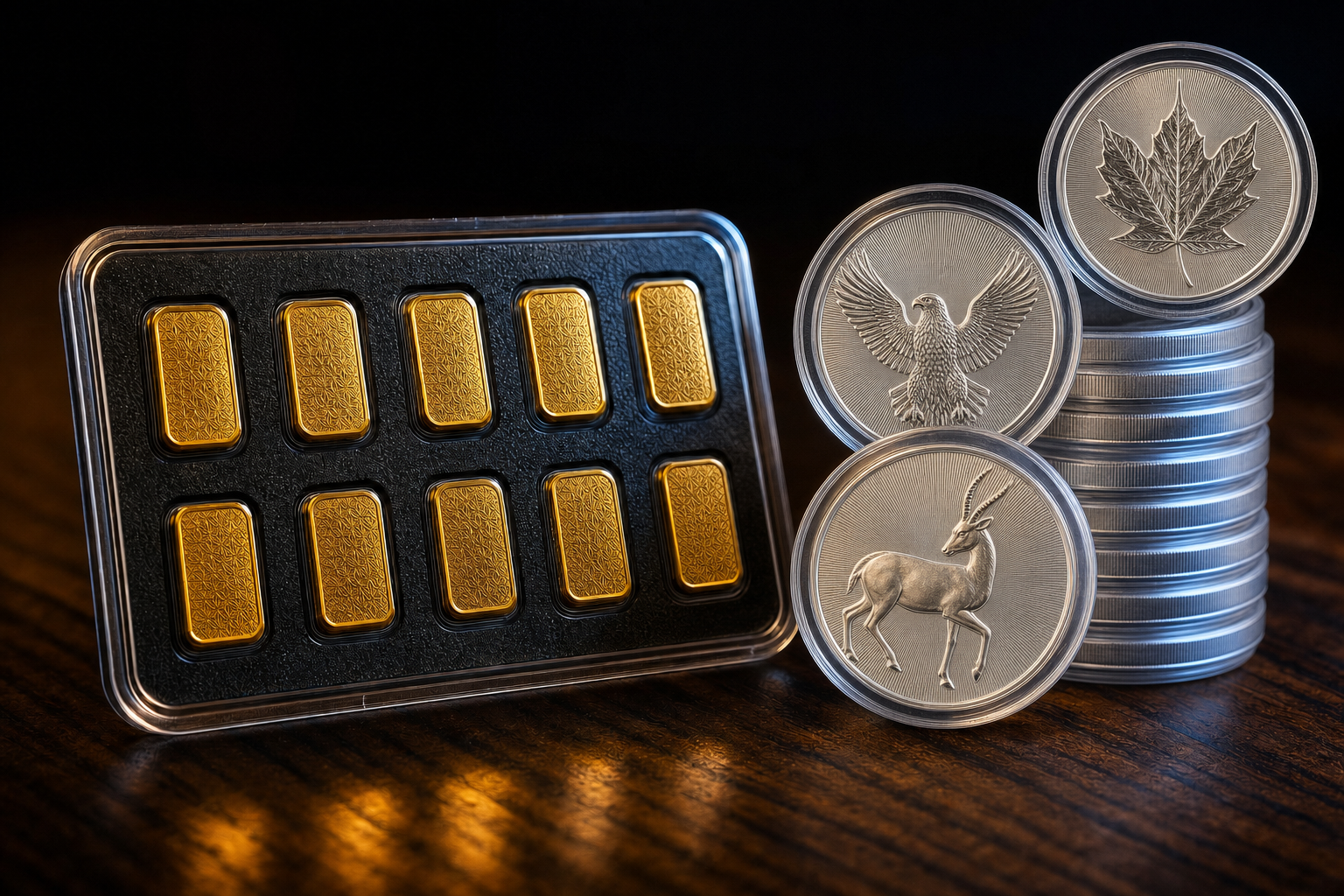
Bestsellers are in demand, and in-demand products are also attractive to counterfeiters. The most effective protection is provenance: mintings from renowned houses such as the South African Mint, the Royal Canadian Mint, or bars from refineries such as Heimerle und Meule, carry defined security features and are routinely checked in the trade. At Kettner Edelmetalle, every product undergoes an ISO-compliant authenticity verification before it leaves the logistics centre.
For storage, the rule is: dry, dark, no contact. Coin capsules prevent contact damage, coin tubes organise larger quantities of the same issue, and coin cassettes are suitable for growing collections. At home, a certified safe or a can safe provides basic protection; what matters here is coordinating with your home contents insurance, since strict upper limits usually apply to valuables. Silver also reacts to sulphur compounds in the air and tarnishes; this is a visual, not a material issue, but it does reduce the price of collector pieces.
For beginners, the list is the shortest route to proven products: anyone who does not want to weigh up which of hundreds of series is established on the market can choose one of the ounce coins traded worldwide and will rarely go wrong. For experienced buyers, it serves as a market barometer, a signal of where activity currently lies, which new release is really being taken up, and where mintages are running low. And for those buying gifts, the bestsellers are a pragmatic resource, because familiar designs and small formats need little explanation; suitable ideas are brought together in the gift ideas section, complemented by gold gifts.
What remains true in all three cases: physical precious metals are tangible assets without interest income. Their appeal lies not in a return, but in the fact that they exist independently of issuers and accounting systems, a gram of gold remains a gram of gold. This is precisely what explains why the classics in this category have remained the same for decades.
Continuously. The category follows actual ordering behaviour, so positions shift with every phase of the market. This is especially noticeable when new years of issue start in autumn and with limited editions, which can sell out within a few days.
No. High demand mainly means good tradability. Large bars usually carry the lowest premium, while popular coins and limited mintings are deliberately priced above the pure material value. A price comparison always makes sense based on the price per gram of fine metal.
For a first purchase, many arguments favour a common ounce coin, because it is known worldwide and therefore easy to value. Bars make sense when getting as much metal per euro as possible is the priority. A mix of both covers both objectives.
The legislator treats investment gold under § 25c UStG as a special asset and exempts it from VAT. Silver, platinum, palladium and copper, by contrast, are treated as ordinary goods and are taxed normally. For certain silver coins, the margin scheme under § 25a UStG can reduce the effective tax share. This, too, is general information about the legal situation and not tax advice; for individual cases, professional tax advice is decisive.
It determines scarcity. The smaller the mintage, the greater the potential gap between the material value and the market price. Whether this actually results in added value, however, depends on demand for the series, the design and the grade of preservation; there is no guarantee.
That is exactly where the advantage of well-known products lies: they are established in the trade and are valued based on the daily price, condition and the completeness of the packaging. The original capsule, case and certificate should therefore be kept, because incomplete collector editions are valued noticeably lower.
Small units can be used more flexibly and sold off in parts, which is a practical advantage in tense market situations. The price for this is a higher premium per gram. Ready-made combinations of several denominations can be found under crisis protection packages.
Stay informed with product launches, financial news and exclusive offers. Sign up for our free newsletter today.
By entering your email address and clicking the "Submit" button, you give the following consent: "I agree to be informed by email about new products, financial news and exclusive offers, and therefore consent to the processing of my email address for the purpose of sending the newsletter. I can revoke this consent at any time without giving reasons, with effect for the future. The lawfulness of processing carried out prior to revocation remains unaffected."