1 Ounce Silver Krugerrand 2026
£54.85
excl. UK import VAT and shipping
Available in 2–3 business days

 More than 300,000
 Over 30 years
 Secure shipping
 Google: 4.9/5
More and more people are choosing to buy silver in order to make an alternative investment or an additional investment alongside gold. Here you will find a large selection of our quality products: silver bars and silver coins.


Of all the metals, pure silver has the whitest colour and reflects the most light. In the middle of the visible spectrum, it can reflect around 98 of every 100 parts of light.
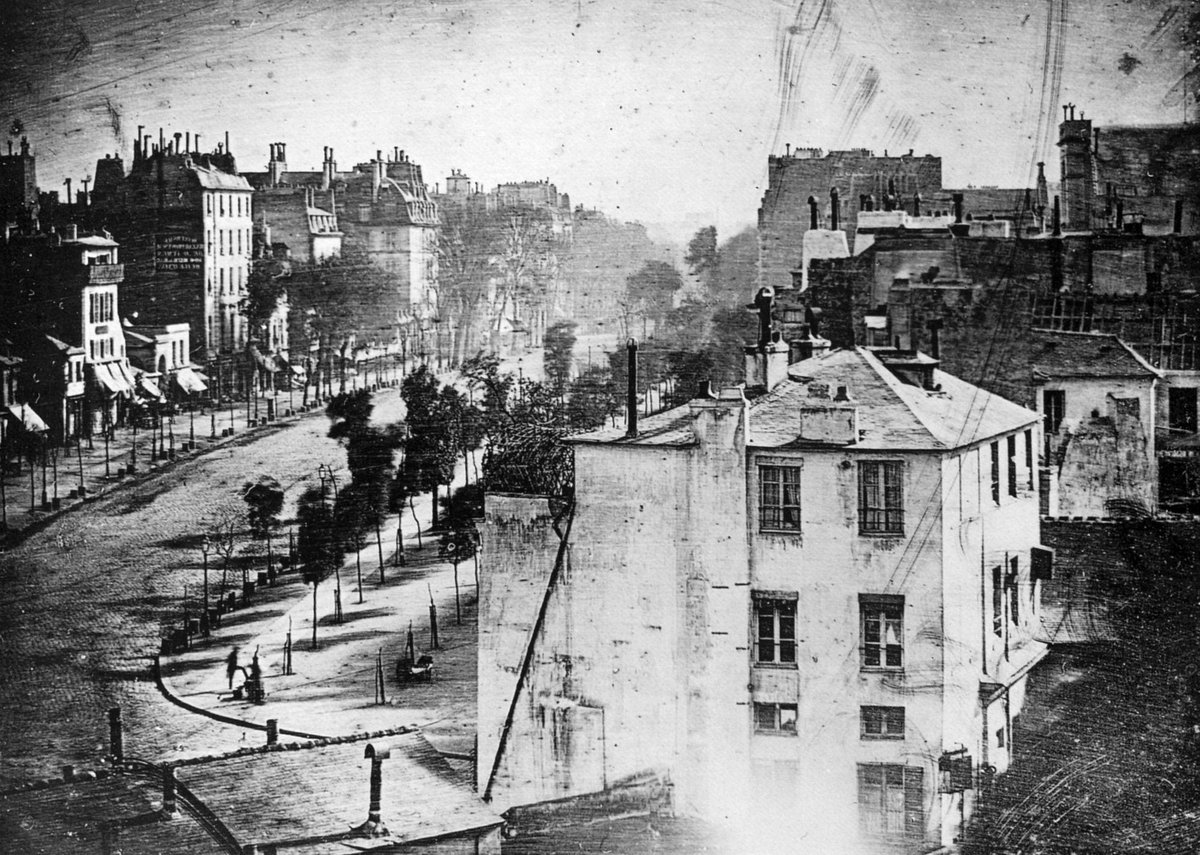
“The mirror with a memory”
Oliver Wendell Holmes on photography in 1859: the mirror with a memory.
The chemical symbol for silver comes from the Latin argentum. The root of the word means “shining, whitish”.
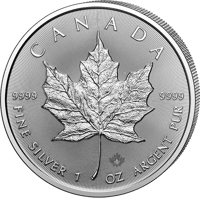 Maple Leaf1 ounce, CanadaFine silver 999.9/1,000
Along the bottom edge it reads ARGENT PUR, French for pure silver.
In 1168, silver ore was found near Christiansdorf. The “Berggeschrey”, as the rush after a silver find was once called, drew miners to the area, and the village became the town of Freiberg. Many of the first miners came from the Harz Mountains, including some from the Rammelsberg near Goslar.
“The Ore Mountains was the most important source of silver in Europe, particularly in the century from 1460 to 1560.”
UNESCO, justification for the Erzgebirge/Krušnohoří Mining Region World Heritage Site, 2019
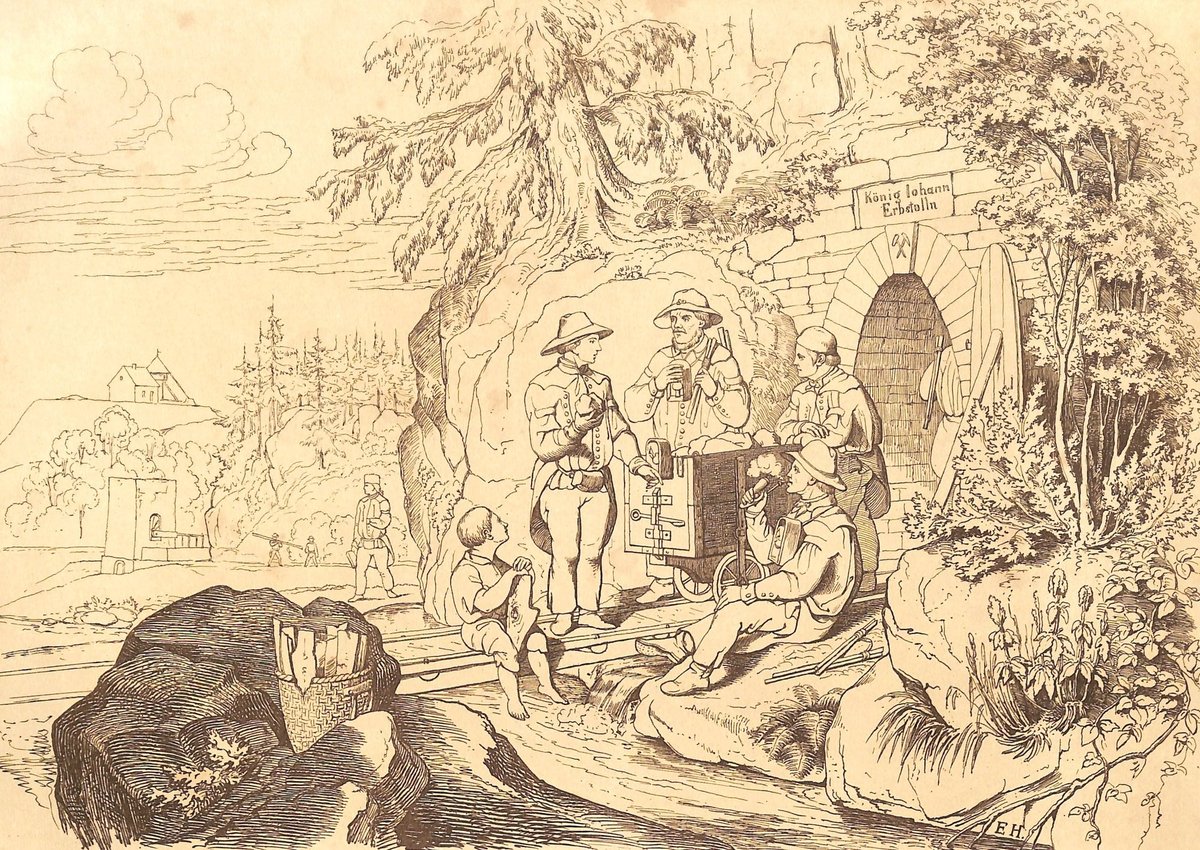
Around 8,000 tonnes of silver came from the Saxon Ore Mountains. That is the estimate of the Saxon State Office for Environment, Agriculture and Geology.
The Freiberg mines did not reach their highest output until 1884, with around 35 tonnes of silver. Mining in Freiberg was shut down in 1969.
The Freiberg Mining Academy was founded in 1765. It is the oldest mining academy still in existence.
At the Rammelsberg near Goslar, mining ended on 30 June 1988, after around 1,000 years.
The years are spaced to scale.
Joachimsthal lies in the Bohemian part of the Ore Mountains and is now called Jáchymov. On 9 January 1520, permission was given there to strike large silver coins, each weighing around 28 grams. Named after their town, they were called Joachimsthalers, and soon simply thalers.
On 6 July 1785, the Continental Congress decided that the money unit of the United States should be the dollar.
“Resolved, That the money unit of the United States of America be one dollar.”
Resolution of the Continental Congress, 6 July 1785
The Coinage Act of 1792 measured the new dollar against the Spanish silver coin. Each dollar was to be worth as much as a Spanish milled dollar, the silver peso.
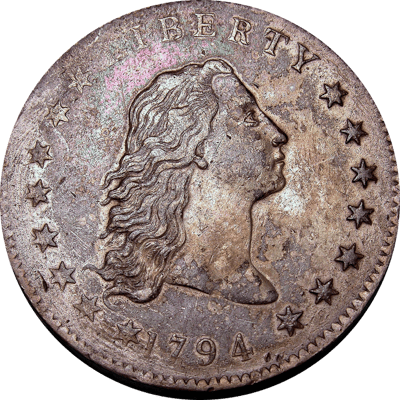
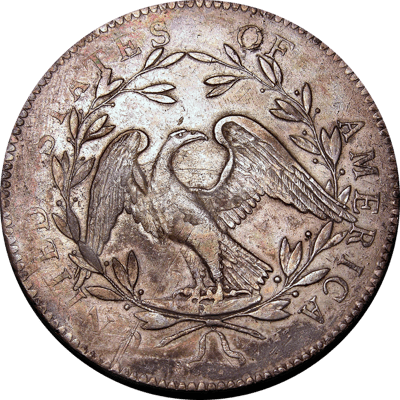
Its official name was real de a ocho, the eight‑real piece. In English it was called the Spanish dollar or the piece of eight.
According to the Smithsonian in Washington, the Mexican eight‑real piece was the most widely circulated coin in the world when the United States was founded. It remained legal tender in the United States until 1857.
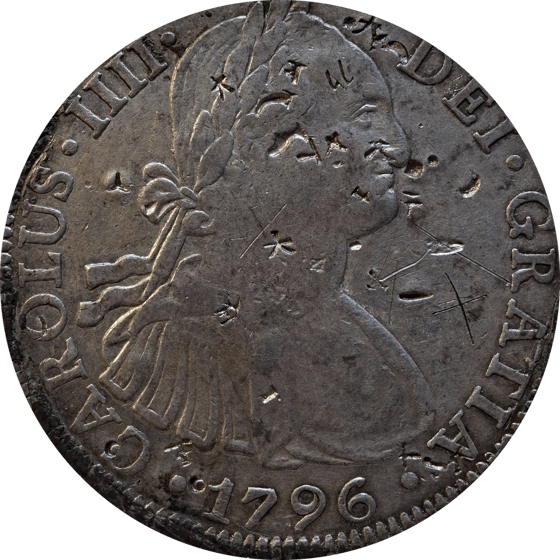
The founding of Manila in 1571 created the first direct and lasting trade link between the Americas and Asia.
In 1545, silver was found at Potosí in the Andes. According to UNESCO, the city was considered the largest industrial complex in the world in the 16th century. Its silver went mainly to Spain.
The back of the coin shows the two pillars after which the eight‑real piece was also called the pillar dollar in English. With this coin, the Perth Mint recalls the year 1800, when Governor King gave the Spanish dollar a fixed value in New South Wales.
In French, argent means both silver and money. The same is true of airgead in Irish and arian in Welsh. In Latin America, the Spanish plata stands for silver and for money.
| Language | Silver | Money |
|---|---|---|
| French | argent | argent (the same word) |
| Irish | airgead | airgead (the same word) |
| Welsh | arian | arian (the same word) |
| Spanishin Latin America | plata | plata (the same word) |
| English | silver | money |
It gave the rupee its name.
銀 means silver, and in Chinese 行 means “shop”. In Japan, the word was written into the regulations on national banks in 1872. Another option was 金行, with the character for gold. The choice fell on 銀行, which is said to have sounded better.
From it come the Spanish dinero and the d of old British pence. The £ sign comes from libra, Latin for pound.
Silver is both a precious metal and an industrial raw material. No other metal conducts electricity and heat as well, which is why it is found in solar cells, electronics and vehicles. At the same time, it served as money in its own right for centuries and remains to this day a store of value you can hold in your hand. With us, you can buy silver coins and silver bars from well-known mints and refineries. This guide shows how coins and bars differ, which silver coins are the best known worldwide, which denomination suits you, how VAT works and how to store silver correctly.
Silver stands on two legs. As a monetary metal, it shaped history, from the Roman denarius to the thaler, from which the dollar takes its name. As an industrial metal, it is indispensable today: according to the Silver Institute, more than half of global demand now flows into industry and technology, above all into photovoltaics and electronics. Since 2021, demand has exceeded supply from mines and recycling every year.
Physical silver is a tangible asset that depends on no bank and no promise of payment. Coins and bars belong to you directly, you can sell them in parts if needed and pass them on to the next generation. Many investors therefore hold silver alongside gold: gold concentrates a great deal of value in a small space, while silver brings industrial demand with it. You can read how the silver price is formed in our article on the silver price.
Silver coins are legal tender in their country of issue and carry a face value far below their silver value. Bullion coins such as the Maple Leaf, Krugerrand or Vienna Philharmonic are known to dealers all over the world, which makes reselling them easy. Almost all of them are issued anew every year, and many series change their design each time, which is why they are also sought after by collectors. We offer most silver coins under the margin scheme, more on this in the section on VAT.
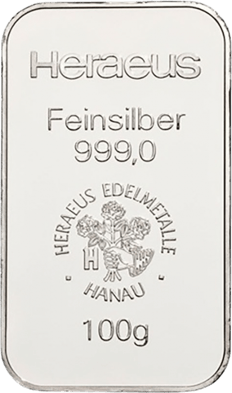
Silver bars come from refineries and have their weight, fineness and manufacturer stamped on them. They are available from one ounce up to the 15 kg bar. Large bars concentrate a lot of silver in a single piece, while CombiBars can be divided into individual pieces. Silver bars are subject to 19% VAT.
Between the two are minted bars: they have the shape of a bar and are at the same time coins with a face value. If you would rather not choose individually, you will find ready-assembled investor packages in silver.
These bullion coins form the core of the silver trade. Most weigh one troy ounce in their standard issue, that is around 31.1 grams of fine silver.
Collectors also value series with changing designs, such as the Perth Mint's Lunar Series III featuring the animals of the Chinese calendar, or the Royal Mint's Queen's Beasts featuring the heraldic animals of the British crown.
With silver coins, the ounce is the standard, and some series are also available in 2, 5 or 10 ounces and as a kilo coin. With bars, the range extends from the ounce through 100 g, 250 g and 500 g up to the kilo bar and the 5 kg bar.
The choice depends on how you want to use your silver later on. Individual ounces can be sold or given away piece by piece. Large bars can be stored compactly and are quickly counted. Many investors therefore combine both: a base stock of bars plus coins that can be sold off individually.
Investment silver has a fineness of 999/1,000 or 999.9/1,000, meaning it consists of at least 99.9 percent pure silver. Sterling silver at 925/1,000 and older tableware silver at 800/1,000 are intended for jewellery and cutlery and are not really an investment in the proper sense.
Counterfeits exist for silver just as they do for gold. The best protection is to buy from an established dealer. At home, you can check weight and dimensions with a precision scale and a calliper and compare them with the mint's specifications. Silver is not magnetic: a strong magnet will not stick to it, but will slide down a tilted bar at a noticeably slowed pace. Modern bullion coins also carry additional security features, the Maple Leaf, for example, has fine radial lines and a laser-engraved maple leaf.
Unlike investment gold, silver is not exempt from VAT in Germany. How the tax is factored into the price depends on whether you buy coins or bars.
VAT on silver purchases
We offer most silver coins under the margin scheme: the tax is then included in the price but not shown separately. Silver bars carry the full rate of 19% VAT.
What has changed in recent years regarding the margin scheme for silver is explained in our article on the margin scheme.
If you sell silver as a private individual, any profit is generally tax-free after a holding period of more than one year (§ 23 EStG). This is general information and does not replace tax advice.
This question arises for almost every investor, and the answer is often: both. Gold is considered a calm store of value, is exempt from VAT as investment gold and concentrates a great deal of value in a small space. Silver is more closely tied to industry, so it moves more lively and is well suited to building up a holding step by step.
How many ounces of silver correspond to the value of one ounce of gold is shown by the gold-to-silver ratio. Many investors use it to decide which metal to add to at any given time. Ready-made combinations of both metals can be found among the gold-silver packages.
Plan for more space with silver than with gold, since you receive a multiple of the metal for the same amount of money. Coins are best kept in the original coin tubes or in coin capsules, larger quantities in master boxes. For a larger holding, a safe of your own or a bank safe deposit box is advisable. Check whether your insurance covers the precious metals as well.
Silver reacts with sulphur in the air and tarnishes dark over time. Some coins also develop light patches known as milk spots. Both only affect the surface and do not change the silver content. Still, do not polish bullion coins, as scratches reduce their value more than any patina. Hold the pieces by the edge, ideally with cotton gloves, and store them in a dry place.
You can order your silver directly here in the shop or by phone from our customer advisors on 07930-2699, Monday to Friday from 8 am to 8 pm. If you would like to invest a larger amount, our customer advisors will be happy to put together an individual offer for you and discuss selection, payment and delivery with you. You can also put together your personal offer online.
Every shipment is insured for its full value. We pack your order at our own logistics centre in Germany and ship it in neutral boxes that give no indication of precious metals. For orders with a value of €20,000 or more, we recommend delivery by security courier. If your order is sent as a parcel, you will receive the tracking number by email. You can pay by bank transfer or directly online, for example with PayPal or credit card. The checkout will show you which payment methods are available for your order. You can read more about this under shipping and payment.
If you would like to build up your holding month by month, you will find suitable products under savings plan.
On request, we will buy back silver coins and silver bars you have purchased from us. After logging in to our buy-back portal, you select the items directly from your orders, you do not need an invoice for this. Silver from another purchase can be offered to us there together with the purchase invoice. Whether we make an offer for it depends on the item, the quantity and our current demand.
You will usually receive a written offer within 24 hours. If you accept it, you will receive an insured DHL shipping label for sending from Germany, free of charge for an offer amount of €500 or more. Please send in coins and bars complete, that is with capsule, case, blister card or certificate, if they were delivered with these. Otherwise, we may only pay out the metal value. Our experts check authenticity, completeness and condition, after which we transfer the amount to your account. For bullion coins and bars, the silver price on the day your silver arrives with us applies, for collector's coins, market demand applies. A buy-back from Switzerland and Liechtenstein is currently not possible due to customs regulations.
You can order directly here in the shop or by phone on 07930-2699, Monday to Friday from 8 am to 8 pm. Every shipment is insured for its full value and arrives in a neutral box. For larger amounts, our customer advisors will be happy to put together a personal offer for you.
Silver coins are known worldwide, can be sold individually and are mostly offered by us under the margin scheme. Silver bars come in many sizes up to 15 kilograms, and they are subject to 19% VAT. Many investors combine both.
We offer most silver coins under the margin scheme: the tax is then included in the price but not shown separately. Silver bars carry the full rate of 19% VAT. Investment gold, by contrast, is exempt from VAT.
As a private individual, generally not, if you have owned the silver for more than one year (§ 23 EStG). This is general information and does not replace tax advice.
The best-known silver bullion coins include the Maple Leaf, Krugerrand, Vienna Philharmonic, Britannia, American Eagle, Kangaroo and Libertad. Traders know them all over the world, which is why they are easy to sell back.
Weight and dimensions must match the mint's specifications, and silver is not magnetic. Modern bullion coins such as the Maple Leaf carry additional security features. The safest way is to buy from an established dealer.
Silver reacts with sulphur compounds in the air and forms a dark layer. This only affects the surface, the silver content remains the same. Still, you should not polish bullion coins.
On request, we buy back silver you have purchased from us. After logging in to the buy-back portal, you select the items directly from your orders and usually receive a written offer within 24 hours.
Stay informed with product launches, financial news and exclusive offers. Sign up for our free newsletter today.
By entering your email address and clicking the "Submit" button, you give the following consent: "I agree to be informed by email about new products, financial news and exclusive offers, and therefore consent to the processing of my email address for the purpose of sending the newsletter. I can revoke this consent at any time without giving reasons, with effect for the future. The lawfulness of processing carried out prior to revocation remains unaffected."