Only 4 left to order
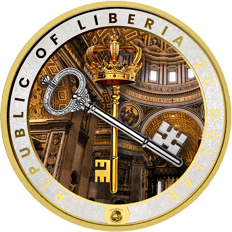
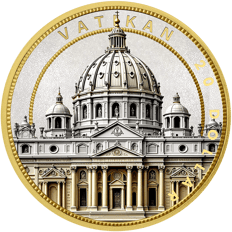
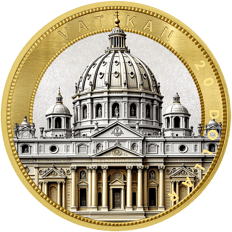
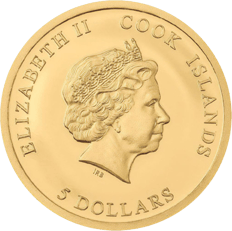
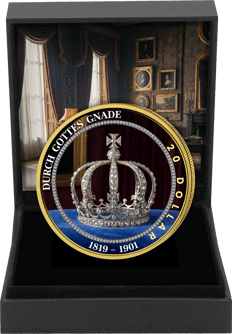
1 oz Silver Queen Victoria 125th Death Anniversary 2025 (Mintage: 100 | partially gold-plated)
£142.86
excl. UK import VAT and shipping
Available in 2–3 business days

 More than 310,000
 Over 30 years
 Secure shipping
 Google: 4.9/5


Commemorative coins marking a death anniversary honour the memory of significant personalities and historical events in precious metal. They combine the cultural remembrance tradition with the lasting material value of silver and gold, forming a distinct, clearly defined category within commemorative coins. This guide sheds light on the history and background of these mintages, the typical designs and occasions, denominations and grades of preservation, the significance of low mintages, as well as tax particulars and questions surrounding storage and authenticity.

A death anniversary commemorative coin is a mintage that commemorates the passing or the anniversary of the death of a well-known personality. Unlike classic bullion coins, whose value is primarily determined by the precious metal they contain, these issues place the commemorative character at the forefront. Design, occasion and, frequently, a limited mintage make them collector's items with thematic significance. Occasions such as a round-numbered anniversary (for instance the 125th or the 3rd anniversary of death) are particularly often taken up.
Mintages in fine silver are characteristic of this category, often with a partially gilded finish, more rarely in gold. The partial gilding visually highlights the portrait or a central image element and gives the coin a dignified expression that suits the occasion. Those interested in the technical side of this finish will also find suitable issues in the range of partially gilded silver coins.
Within the broader category of commemorative coins, the death anniversary forms one of several thematic branches. While an issue marking an anniversary celebrates a positive event such as a birthday or a company anniversary, the death anniversary mintage commemorates the loss and the lasting legacy of a person. Mintages on historical or social events, in turn, document turning points in contemporary history. The boundaries are fluid, since a death anniversary is at the same time an anniversary and thus an event of historical significance.
The minting of coins in memory of the deceased dates back to antiquity. As early as the Roman Empire, so-called consecration coins were issued after the death of an emperor, elevating the deceased among the gods. This tradition continued over the centuries. In Germany, there were numerous state commemorative issues marking the death anniversaries of well-known personalities, including in silver with a statutory face value, for instance during the era of the Deutsche Mark.
Historical mintages of the German Democratic Republic commemorated scholars, reformers and artists and were frequently made from nickel silver or silver alloys such as silver with a fineness of 625/1,000. These issues are sought-after numismatic items among collectors today. Modern death anniversary commemorative coins build on this long tradition, but rely on higher finenesses and elaborate finishes. Those interested in present-day state commemorative mintages will find a broad field among the Euro commemorative coins.
The world of designs on death anniversary commemorative coins is closely linked to the personalities whose memory is to be preserved. The spectrum ranges from historical rulers and ecclesiastical dignitaries to personalities of public life from more recent contemporary history.
A feature of many of these mintages is the detailed portrait on the obverse, further emphasised by partial gilding. The reverse frequently bears a coat of arms, a symbolic design, or a dedication with life dates and year of death.
Death anniversary commemorative coins are offered in various formats, with the 1 oz silver coin being the most common format. Smaller gold issues also exist, aimed at collectors focused on precious metal content.
The grade of preservation significantly affects the collector's value. Common qualities include Brilliant Uncirculated (BU), Mint State (MS), and the especially high-quality Proof. For Proof coins, the dies and blanks are specially prepared so that mirror-like surfaces and frosted design elements create a high-contrast effect. These versions usually appear in particularly small mintages and are supplied in cases or coin capsules.
A decisive criterion for death anniversary commemorative coins is the mintage size. Many issues appear in strictly limited quantities, sometimes just 100 or a few hundred pieces worldwide. This scarcity is a central factor for collector valuation, since the lower the mintage, the harder it is to obtain a specimen later on.
With a commemorative coin, it is not the precious metal alone that counts, but the occasion, the design and the rarity: these three determine its character as a collector's item.
Unlike classic investment products, the purchase of a limited commemorative coin should primarily stem from collector's interest. Those seeking pure precious metal value are better served by silver bars or gold bars, since these are traded without a collector's premium. Commemorative coins, on the other hand, offer an intangible added value that is difficult to express in pure material figures.
Note on collector's character
Limited commemorative coins are traded with a collector's premium above the pure precious metal value. Besides the metal price, their value depends heavily on design, mintage and grade of preservation. Performance cannot be predicted: the purchase is made for collecting enjoyment, not as a promise of return.
Tax classification differs considerably depending on the precious metal. Investment gold is exempt from VAT in Germany under the applicable regulations, which also applies to many gold commemorative coins of corresponding fineness. For silver coins, however, VAT is charged; for collector's coins, the margin scheme is often applied, under which only the trading margin is taxed.
For private sales transactions, the one-year holding period also applies: if a coin is held for longer than one year, any capital gain from its sale is tax-free. Those wishing to look into the VAT-free acquisition of gold in general will find further ranges in the gold bullion coins section. Only a tax advisor can provide binding information on an individual situation.
Since death anniversary commemorative coins often have enhanced surfaces, handling and storage deserve particular attention. Partially gilded surfaces and the delicate mirror surfaces of a Proof coin are sensitive to fingerprints and environmental influences.
Kettner Edelmetalle carries out an ISO-compliant authenticity verification and delivers all orders fully insured. The combination of documented provenance, original packaging and certificate is advantageous for a later resale of a collector's coin.
Due to their dignified character, these mintages are suitable as a lasting memento and as a gift idea for special occasions. A coin commemorating a personality significant to the recipient combines intangible and material value. Unlike fleeting presents, a precious metal coin endures across generations and can become part of a growing collection. Those seeking a broader selection of themed mintages will find an extensive range in the collector's coins section.
With a death anniversary commemorative coin, the commemorative character is at the forefront: design, occasion and, usually, a limited mintage make it a collector's item. With a classic bullion coin, by contrast, the price is primarily determined by the precious metal content it contains. Commemorative coins are therefore traded with a collector's premium.
The partial gilding visually highlights the portrait or a central image element and gives the mintage a dignified expression. It is applied selectively to a silver coin, emphasising the occasion without gilding the coin entirely.
Mintage is a key criterion. Many issues appear in strictly limited quantities, sometimes just 100 or a few hundred pieces. The lower the mintage, the harder it is to obtain a specimen later on, which can affect the collector's value but does not guarantee any performance.
That depends on the precious metal. Investment gold is generally exempt from VAT in Germany, which applies to many gold commemorative coins. Silver coins are subject to VAT, and for collector's coins the margin scheme is often applied. For individual situations, a tax advisor is the binding source of information.
Properly fitted coin capsules that protect against dust and scratches are recommended, as are coin cases or a coin box for larger collections. The coin should only be touched by the edge to avoid fingerprints on partially gilded surfaces and mirror surfaces. Cases and certificates should also be kept safely.
Yes. Due to their dignified character and connection to a specific personality, they make a lasting memento for special occasions. Unlike fleeting presents, a precious metal coin endures across generations and can become part of a collection.
 Commemorative CoinsAnniversary of Death
Stay informed with product launches, financial news and exclusive offers. Sign up for our free newsletter today.
By entering your email address and clicking the "Submit" button, you give the following consent: "I agree to be informed by email about new products, financial news and exclusive offers, and therefore consent to the processing of my email address for the purpose of sending the newsletter. I can revoke this consent at any time without giving reasons, with effect for the future. The lawfulness of processing carried out prior to revocation remains unaffected."