Only 3 left to order
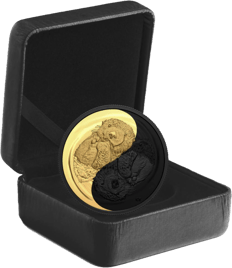
1 oz Silver Sea Otter Gold & Rhodium Plating 2022 (Mintage: 6500)
£319.72
excl. UK import VAT and shipping
Available in 2–3 business days

 More than 310,000
 Over 30 years
 Secure shipping
 Google: 4.9/5
The Wildlife Canada or Canadian Wildlife series was launched by the Royal Canadian Mint in 2011 to present a new Canadian animal each year. Since then, animals such as the bison and antelope have been featured. The 1 oz silver coins with a face value of 5 Canadian dollars have a fineness of 99.9%.


Endless pine forests, icy river valleys and the silent vastness of the tundra: hardly any country embodies untouched wilderness as vividly as Canada. The Royal Canadian Mint captured precisely this natural heritage in silver between 2011 and 2013. The Canadian Wildlife silver coins combine six iconic animal designs on one troy ounce of fine silver each and today rank among the most sought-after collector's and bullion coins of recent minting history. This guide examines the designs, technical specifications, authenticity features, tax particulars and the question of why the series became a rarity so quickly.
The series known as the Canadian Wildlife Series comprises exactly six issues, minted over three consecutive years. Each coin depicts a characteristic animal of Canadian fauna and was issued in the classic denomination of 1 troy ounce of fine silver with a fineness of 999.9/1,000. The face value stamped on the coin is 5 Canadian dollars, a purely symbolic figure, since the coin's actual material value lies far above that. This places the series firmly within the great tradition of Canadian bullion silver coins, whose best known representative is the Maple Leaf.
Unlike permanently issued bullion coins, the Wildlife series was limited in time from the outset. It is precisely this limitation that makes it appealing to collectors and investors alike: each design was issued for a single year only, after which it ended. Anyone who assembles the complete series holds a finished chapter of modern collector's coins history in their hands.
Each animal in the series tells a piece of Canadian natural history. The Timber Wolf opened the series in 2011, picking up a design that the Royal Canadian Mint had already used on an early bullion coin back in 2006. The Grizzly Bear followed in the same year and stands symbolically for the powerful wilderness of the Canadian West.
The first three designs are dedicated to the great hunters. The wolf and the cougar were additionally issued as partially gilded special editions, in which the animal motif is enhanced and highlighted, a visual contrast that is particularly popular among enthusiasts. Anyone interested in this finishing technique will find further issues in the category partially gilded silver coins. Thematically related Canadian predator designs are also brought together in the Canada Predators series.
With the moose, pronghorn and wood bison, the large herbivores came into focus from 2012 onwards. The pronghorn, often simply called an antelope, is considered North America's fastest land mammal, with top speeds of over 90 km/h. The wood bison formed a fitting conclusion to the series in 2013. Anyone wishing to continue exploring the fascination of Canadian wildlife will also find what they are looking for with the Canada Polar Bear.
To immortalise an animal on a coin means making a piece of landscape everlasting: fleeting wilderness becomes enduring precious metal.
The artistic signature of the series comes from two designers. The early motifs were created by engraver William Woodruff, recognisable by the engraved initials WW. From 2013, Canadian artist Emily Damstra took over the design, identifiable by the initials ED. At the top edge of the coin is the issuing country, Canada, while the bottom shows the inscription Fine Silver 1 oz argent pur, the Latin argentum standing for silver. The fineness 9999 is stamped directly into the motif.
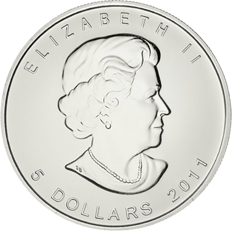
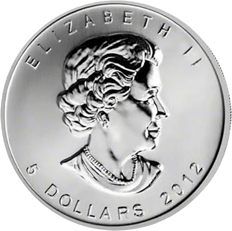
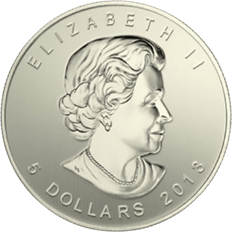
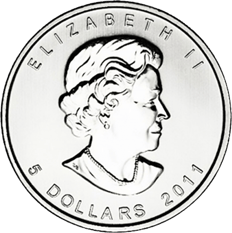
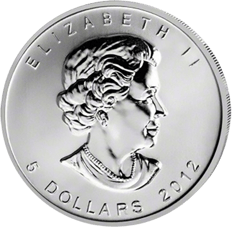
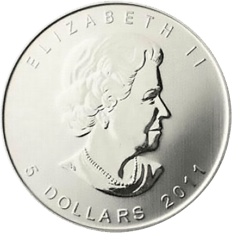
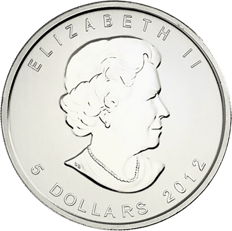
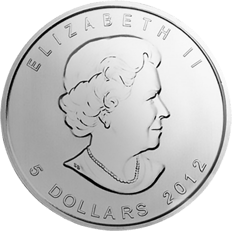
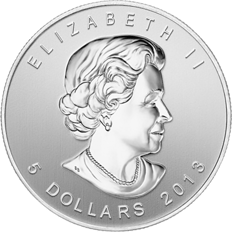
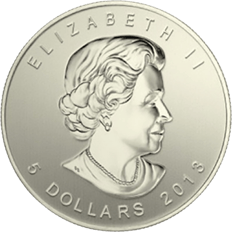
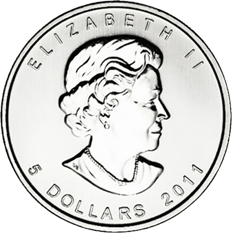
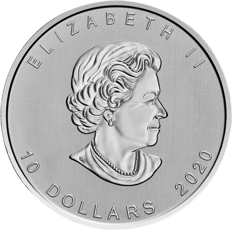
The value side follows the tradition of Canadian circulation coinage: it shows the portrait of Queen Elizabeth II after a design by portrait artist Susanna Blunt from 2003, the monarch without a crown, surrounded by her name, the year of minting and the face value. The same portrait also adorns other Canadian classics, which firmly anchors the series stylistically within the Royal Canadian Mint's programme.
All six issues of the regular series were minted to identical specifications, which makes collecting and comparing easier. The standard version was issued in Mint State (MS) quality with a mintage of up to one million pieces each, a solid basis for a limited series, yet one that was nonetheless quickly sold out.
| Feature | Specification |
|---|---|
| Material | Fine silver 999.9 |
| Weight | 1 troy ounce (31.1 g) |
| Diameter | 38 mm |
| Thickness | 3.15 mm |
| Edge | reeded |
| Face value | 5 Canadian dollars |
| Years of issue | 2011-2013 |
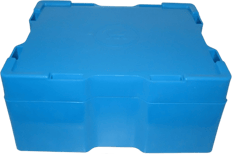
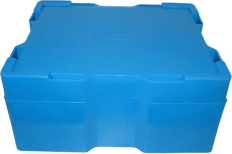
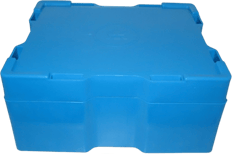
In addition to the individual coins, the Royal Canadian Mint also released 500-piece investment packs aimed at investors wishing to acquire larger quantities of silver at a favourable premium. Those who prefer to view the series purely as a compact silver investment can alternatively consider silver bars or classic silver bullion coins. For the orderly storage of complete series, suitable coin tubes are ideal.
Silver coins from a state mint such as the Royal Canadian Mint rank among the most forgery-proof bullion products available. Even so, it is worth knowing the key authenticity features. The decisive factors are above all the exact physical specifications: weight, diameter and thickness must match the official figures. Any deviation is a clear warning sign.
At Kettner Edelmetalle, every coin undergoes an ISO-compliant authenticity verification before it leaves the high-security logistics centre. Those who wish to protect their coins permanently can use suitable coin capsules, which guard against scratches, fingerprints and tarnishing.
An important difference from gold coins concerns VAT. While investment gold is exempt from VAT in Germany, silver coins are generally subject to VAT. For investment silver coins imported from outside the EU, the margin scheme is often applied, under which tax is charged only on the trading margin, which keeps the final price lower than it would be under full taxation.
Tax notice
After the one-year speculation period has elapsed, a private capital gain from the sale of silver coins in Germany is generally tax-free. This information does not replace tax advice; a specialist adviser should be consulted for individual cases.
Anyone wishing to make full use of the tax advantage of precious metals will find an overview of popular investment classics in gold and silver in the bullion coins category.
The particular appeal of the Canadian Wildlife silver coins lies in their finite nature. Since each design was minted for only one year and the series ended in 2013, no reissue is possible. On the secondary market, well-preserved specimens and complete sets are therefore regularly traded above their pure silver value. The partially gilded special editions and the 500-piece investment packs in particular are considered highly sought after.
Collectors may find it worthwhile to compare the series with other animal-themed silver coins. Those who appreciate the nature-inspired world of motifs in the Canada Wildlife series might compare the Koala or the Australian Kookaburra issues. The year-specific designs of the Lunar Series II or the popular Kangaroo also appeal to a similar collector audience. Within the Canadian programme, the Maple Leaf remains the lasting reference for fine silver. As a general rule, past performance is no guarantee of future results, and precious metal prices fluctuate.
Silver reacts more sensitively to environmental influences than gold and can tarnish over time. To keep the designs' lustre intact, dry, airtight storage is recommended. Direct skin contact should be avoided, as fingerprints can permanently damage the surface. Coin capsules are suitable for individual pieces, while coin cassettes or a coin case are ideal for entire collections. Larger holdings can be safely stored in a canister safe.
Kettner Edelmetalle ships all orders 100% insured and discreetly, an important point when valuable collector's items are to find their way home.
The series consists of six designs minted between 2011 and 2013: wolf, grizzly bear, cougar, moose, pronghorn and bison. Each animal appeared in only one year, making the series a finite, complete collection.
Each coin consists of one troy ounce of fine silver with a fineness of 999.9/1,000. The value 9999 is stamped directly into the motif side.
The face value is a legally fixed nominal value and, in theory, valid legal tender in Canada. However, the actual value of a coin depends on its silver content and collector demand, and is significantly higher.
In the partially gilded special editions, the animal motif is highlighted with fine gold gilding. These variants were issued in smaller quantities and are therefore considered particularly sought-after collector's items.
Both. Thanks to the high fineness and the well-known mint, the coins are suitable as a silver investment, while the limited mintage and the attractive animal designs also make them interesting for collectors.
Ideal is dry, airtight storage in coin capsules or coin cassettes to prevent tarnishing and scratches. Direct skin contact should be avoided, as fingerprints can damage the sensitive silver surface.
 Wildlife Canada
Stay informed with product launches, financial news and exclusive offers. Sign up for our free newsletter today.
By entering your email address and clicking the "Submit" button, you give the following consent: "I agree to be informed by email about new products, financial news and exclusive offers, and therefore consent to the processing of my email address for the purpose of sending the newsletter. I can revoke this consent at any time without giving reasons, with effect for the future. The lawfulness of processing carried out prior to revocation remains unaffected."