Sold out

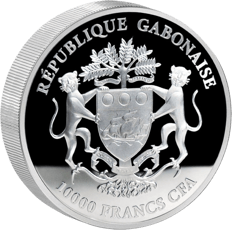
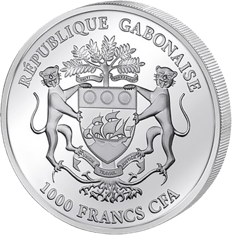
1kg Silver Gabon Springbok 2013 PP (Mintage: 500 | Proof)
£1,655.81
excl. UK import VAT and shipping
currently not available

 More than 310,000
 Over 30 years
 Secure shipping
 Google: 4.9/5
The African Springbok is the "silver Krugerrand" among bullion coins, and is also very popular as a collector's item in its partially gold-plated version. With a fineness of 99.9%, the silver coin (which holds its minting licence in Malawi) is delivered in a coin capsule in the finest quality — a true eye-catcher.


The African Springbok is regarded by many investors as the silver sibling of the famous Krugerrand: a 1-ounce bullion coin made of 999 fine silver, depicting South Africa's national animal set against an African grassland landscape. First issued around 2011 under a minting licence from Malawi and minted in later years by countries such as Gabon and the Republic of the Congo, the series combines classic investment silver with a striking design that recurs annually. This guide examines its origin and design, the available finishes and denominations, authenticity features, the tax treatment of silver coins, as well as sensible storage, and places the Springbok within the context of other bullion and collector's coins.
The springbok (Antidorcas marsupialis) is the national animal of South Africa and a widely recognised symbol of southern Africa. On the silver coin of the same name, the nimble animal is depicted in full leap across the savannah, which directly explains the series' name. The series first appeared in the early 2010s and was continued in subsequent years annually with a changing date, resulting in an unbroken sequence of years of issue.
A characteristic feature is the cross-country issuance: early strikes carry the licence from Malawi, while later years name, among others, Gabon and the Republic of the Congo as the issuing country. This places the Springbok within the group of African bullion coins that make high-quality silver available at a comparatively fair premium over the pure material value. Anyone generally interested in classic silver investments will find the entire range organised by theme in the silver coins overview.

The Krugerrand is the most traded gold bullion coin in the world, but is traditionally issued in gold. Since an official silver version of the Krugerrand was missing for a long time, the African Springbok established itself as an independent silver coin with an African design and, in a sense, took on the role of a silver bullion coin from the region. The term is therefore to be understood as a classification, not as an official product name. Anyone wishing to compare the gold and silver worlds will now also find a dedicated silver Krugerrand in the range.
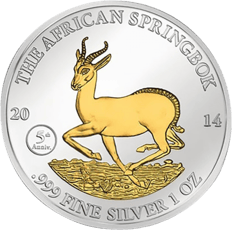
The obverse shows a springbok leaping lightly across a grassland landscape. A raised head, two slightly curved horns and long, pointed ears make the animal unmistakable. Around the edge, the coin carries the inscription The African Springbok at the top and the denomination .999 Fine Silver 1 oz at the bottom. The two digit pairs of the year of issue are arranged to the sides of the design.
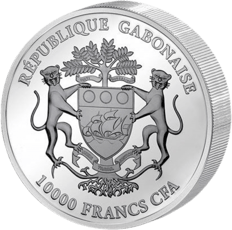
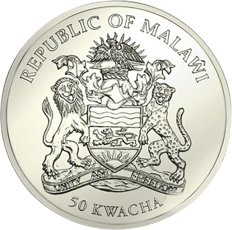
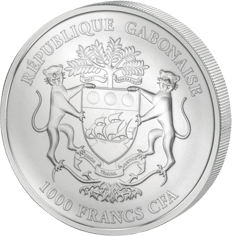
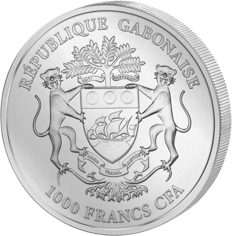
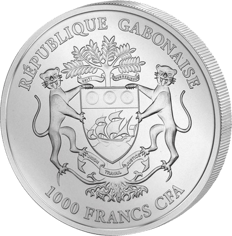
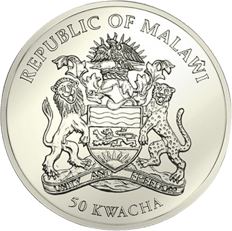
The reverse states the respective issuing country together with its coat of arms as well as the face value of the coin. Because the issuing country has changed over the years, the reverses differ by year of issue in country name, coat of arms and face value, while the Springbok design on the obverse remains as a connecting element.
The design stays, the country changes: it is precisely this combination of constancy and variation that makes the Springbok series appealing to collectors.
The Springbok exists not only as a plain bullion coin in Brilliant Uncirculated quality, but also in elaborately enhanced variants for collectors. The most important finishes at a glance:
Anyone specifically looking for enhanced classics will find what they need in the categories partially gilded silver coins and coloured silver coins, where the Springbok is represented alongside other designs. Larger collector sets can also be discovered in the area of silver investor packages.
Unlike many international series, the Springbok is minted almost exclusively in a single standard size: 1 ounce (31.1 grams) of fine silver. This focus on a single format keeps production costs low and makes the coin a straightforward entry-level product for building wealth in silver. In addition, individual 1-kilogram issues have appeared as limited collector's items, some partially gilded or in Proof quality.
Anyone who prefers larger weight units in pure bar form will often find classic silver bars the more cost-effective alternative, while the coin format draws its appeal from design, minting quality and collectability.

The technical specifications of the 1-ounce issue have remained largely constant across the years of issue and can be readily compared with other bullion coins:
| Feature | Specification |
|---|---|
| Material | Fine silver |
| Fineness | 999/1,000 (99.9%) |
| Fine weight | 1 oz (31.1 g) |
| Design | Springbok in the savannah |
| Issuing countries | including Malawi, Gabon, Republic of the Congo |
| Delivery | usually in a coin capsule |
With a fineness of 999/1,000, the Springbok is on par with many modern silver bullion classics such as the Maple Leaf or the Vienna Philharmonic. For safely storing the sensitive silver surface, suitable coin capsules are recommended, as they reduce scratches and tarnishing.
Silver coins can be checked for authenticity based on several features. With the Springbok, the precise minting of the design, the correct edge inscriptions (The African Springbok and .999 Fine Silver 1 oz) as well as the exact weight and diameter are particularly telling. Key verification steps at a glance:
As the official German partner of the South African Mint and with ISO-compliant authenticity verification, Kettner Edelmetalle places great value on verified goods. Anyone wishing to trace the origin of mintings can find information on the respective mints via the manufacturer overview.
Tax notice
Silver coins are subject to VAT in Germany. When importing investment silver from non-EU countries, the so-called margin scheme taxation may apply, whereby only the dealer's margin is taxed. After a holding period of more than one year, private capital gains from precious metals are tax-free. This is general information and does not replace tax advice.
Unlike investment gold, which is exempt from VAT under §25c UStG, silver coins are generally subject to VAT. The price of a Springbok silver coin is made up of the current silver price, a premium for minting and distribution, as well as any collector's premiums for enhanced or limited editions. Brilliant Uncirculated bullion issues are closer to the pure material value, while partially gilded, coloured or Proof pieces can carry a significantly higher premium.
Anyone who regards silver primarily as a building block for wealth protection often combines bullion coins with bars and other classics. Suitable inspiration can be found in the themed sections inflation hedge and retirement provision, where precious metals are placed in the context of long-term goals. Historical market data show that silver fluctuates more strongly than gold, however, no statement about future price developments can be derived from this.
Silver reacts more sensitively to environmental influences than gold and can tarnish on contact with humidity and sulphur compounds. Careful storage is therefore recommended for long-term value preservation. The following have proven effective:
For the orderly storage of entire year sets, cases and boxes from the coin cases and coin tubes ranges are suitable. One fundamental note: tarnish marks should not be removed by aggressive polishing, as this damages the minting and reduces collector's value. The entire storage range is bundled in the accessories category.
Within the popular animal-design series, the Springbok represents southern Africa. Anyone who appreciates thematically related African designs will find alternatives such as the Somalia Elephant or series centred around the great wildlife in the Big Five silver coins. Classic bullion investment coins with high liquidity, on the other hand, are the Canadian Maple Leaf, the Austrian Vienna Philharmonic and the American American Eagle.
For collectors with a preference for changing yearly designs, the various Lunar series are interesting, while the Mexican Libertad and the Australian Koala series are likewise reissued annually. The Springbok stands out from these classics through its African origin and cross-country issuance history, adding a distinctive design to a broadly diversified silver collection.
No, it is not an official silver Krugerrand. The term is a descriptive classification, because the Springbok, as an African silver bullion coin, takes on a similar role. The classic Krugerrand is a gold coin; a dedicated silver Krugerrand now exists as a separate series.
The standard issue consists of 999 fine silver (99.9%) and contains one troy ounce, i.e. around 31.1 grams of silver. In addition, limited special editions exist, for example in a 1-kilogram format.
The early years of issue were released under a minting licence from Malawi, while later issues name, among others, Gabon and the Republic of the Congo as the issuing country. The Springbok design refers to southern Africa, as the springbok is the national animal of South Africa.
With partially gilded editions, the design is enhanced with a fine gold layer, while coloured editions are designed in colour. Both variants are primarily collector's items and carry a higher premium compared to the plain bullion coin, as the finishing is more elaborate.
Ideal is dry, dark storage in a coin capsule, supplemented by coin tubes or cases for multiple specimens. This protects the minting and surface from scratches and tarnishing caused by humidity. Tarnish marks should not be polished away, as this can reduce the value.
Yes, unlike investment gold, silver coins are subject to VAT in Germany. For imported goods, the margin scheme may apply, under which only the dealer's margin is taxed. Private capital gains are tax-free after a holding period of more than one year. For binding information, tax advice is recommended.
 Afric. Springbok
Stay informed with product launches, financial news and exclusive offers. Sign up for our free newsletter today.
By entering your email address and clicking the "Submit" button, you give the following consent: "I agree to be informed by email about new products, financial news and exclusive offers, and therefore consent to the processing of my email address for the purpose of sending the newsletter. I can revoke this consent at any time without giving reasons, with effect for the future. The lawfulness of processing carried out prior to revocation remains unaffected."