


Sold out

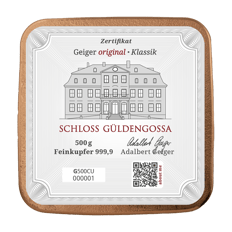
500g Copper Bar Güldengossa (cast)
£22.16
excl. UK import VAT and shipping
currently not available

 More than 300,000
 Over 30 years
 Secure shipping
 Google: 4.9/5
The 500 g copper bar is one of the most popular entry-level formats in the industrial metals sector: a manageable half-kilogram of fine copper with a fineness of 999.9, appealing to collectors and cost-conscious buyers alike. Copper bars of this weight combine a noticeable material feel with a low purchase price and a clear, easily verifiable craftsmanship. This guide covers production, shapes, fineness, tax treatment, storage and the differences compared to other bar formats, and explains who the 500-gram format suits.
A bar of 500 grams of fine copper sits in a price range where precious metals such as gold or silver would only be available in tiny denominations. Copper is considerably cheaper than the classic investment metals, which means a substantial, satisfyingly heavy bar can be bought here for a two-digit euro amount. The format is therefore a typical entry point for anyone wanting to experience the tactile feel of a metal bar without the capital outlay of a precious metal bar.
Copper itself is a reddish, lustrous semi-precious metal with excellent electrical and thermal conductivity. As a bar it is usually offered in purities of 999 or 999.9. Anyone wishing to familiarise themselves with the broader range beforehand will find an overview of all available weight classes in the copper bars category. The copper section additionally offers further products relating to the metal.

With copper bars a fundamental distinction is made between two manufacturing methods, which differ considerably in appearance and character. The 500 gram format is especially often offered as a cast bar, since this method fully unfolds its rustic charm at larger weights.
In casting, liquid copper is poured into an open mould, where it solidifies. The result is a bar with a lively, slightly irregular surface, visible casting structures and often a typical square or cushion-shaped outline. Cast pieces are considered particularly valuable in appearance, because minimal variations make every bar a one-off. A well-known example of this method is the Güldengossa bar, produced in Germany, which combines traditional casting technique with a high fineness.
Minted bars are created by pressing a copper blank under high pressure between two minting dies. They have smooth, precisely defined edges, an evenly glossy surface and often detailed designs or manufacturer information. This method dominates smaller weights such as the 1 oz copper bar, while larger formats such as the 10 oz copper bar are found in both variants.
The usual fineness is 999.9, which corresponds to a copper content of 99.99 percent. This high degree of purity is responsible for the characteristic warm reddish colour and the glossy surface of freshly produced bars. In air, however, copper tends to form patina: over time the surface darkens and can take on a matte, sometimes brownish to greenish tone. This process is purely cosmetic and affects neither weight nor material value.
Due to its comparatively low density, a half-kilo copper bar turns out larger than a corresponding bar made of a precious metal. It is precisely this substantial volume that makes the format attractive to many buyers who appreciate a visible, tangible block of metal.

Among investment and collector metals, copper occupies a special position. It is not a classic precious metal but an industrial metal, whose price depends heavily on worldwide demand from the construction industry, the electrical industry and the energy transition. A direct comparison reveals clear differences.
Anyone wishing to use precious metal formats as a reference will find a directly comparable weight in the 500 g silver bar and the high-priced equivalent in the 500 g gold bar. The difference in size between these bars at identical weight vividly illustrates the different material densities.
Note on the nature of copper
Copper bars are predominantly regarded as collector's and enthusiast's items as well as an affordable entry point into the world of metal bars. They are not a substitute for classic investment gold and do not serve as a store of value in the sense of precious metals. These remarks are purely informative and do not constitute investment advice.
Unlike investment gold, which in Germany is exempt from VAT under the relevant regulations, copper bars are subject to the standard VAT rate. The price shown at purchase is therefore to be understood as inclusive of VAT. This fact is a key difference from investment gold and should be taken into account when considering the price.
For tax purposes, copper is treated like an ordinary commodity. Anyone wishing to look into the different treatment of investment gold will find the classic VAT-exempt products in the gold bullion coins range; the gold bars and silver bars categories additionally provide an impression of the tax framework for precious metals. For specific tax questions, consulting a qualified advisor is recommended.
Since copper reacts to air, moisture and skin contact, storage plays an important role in preserving its appearance. A 500 g bar can easily be kept at home, but benefits from a few simple precautions.
Suitable accessories for protected storage can be found in the coin capsules and coin cases categories. Anyone looking for secure storage for several metals in general will find further solutions in the general accessories section. Important to know: the natural patina can be removed with special agents, though many collectors deliberately appreciate the aged look.
A copper bar tells its story through its surface: the patina is not a flaw but visible proof of the pure metal.
The half-kilo format strikes a middle ground between the small, often minted units and the heavy blocks. It is large enough to convey a distinct sense of material, while remaining very accessible in price.
For collectors, the cast 500 g bar is particularly appealing due to its individual surface and artisanal appearance. Anyone wishing to display various weights side by side likes to combine the format with the 1 kg copper bar or the substantial 5 kg copper bar.
As an entry-level item or an unusual gift, a 500 g copper bar is ideal: it looks valuable, is affordable and sparks interest in the subject of metals. Related ideas can be found in the gift ideas section. Anyone looking for an entry point via smaller units will find what they need with the 10 oz copper bar or in the copper coins category.
When purchasing a copper bar, it is worth examining a few key points that determine quality and value retention.
As a German family business with over 200,000 satisfied customers, Kettner Edelmetalle relies on verified goods and insured shipping. Anyone wishing to expand their portfolio beyond copper will find the classic precious metal products in the silver coins and gold coins sections.
Standard fine copper bars have a fineness of 999.9, corresponding to a copper content of 99.99 percent. This means they consist almost entirely of pure copper.
Copper reacts with oxygen and moisture in the air and forms a patina. This discolouration is purely cosmetic and affects neither the weight nor the material value of the bar. Many collectors even deliberately appreciate the aged look.
Yes. Unlike investment gold, which is exempt from VAT, copper bars are subject to the standard VAT rate. The price shown is therefore understood to include VAT.
Cast bars are created by pouring liquid copper into a mould and have a lively, individual surface. Minted bars are pressed from a blank and appear smoother, more precise and more detailed. For the 500-gram format, the cast method is particularly widespread.
Dry storage with protection from moisture and skin contact is recommended. Cotton gloves when handling and individual packaging in capsules or foils preserve the shine and delay patina formation.
The format is suitable for collectors who appreciate a valuable appearance, as well as for beginners and gift buyers looking for an affordable, tangible metal object. As a substitute for classic investment gold, however, copper is not intended.
 500 g Copper Bars
Stay informed with product launches, financial news and exclusive offers. Sign up for our free newsletter today.
By entering your email address and clicking the "Submit" button, you give the following consent: "I agree to be informed by email about new products, financial news and exclusive offers, and therefore consent to the processing of my email address for the purpose of sending the newsletter. I can revoke this consent at any time without giving reasons, with effect for the future. The lawfulness of processing carried out prior to revocation remains unaffected."