Sold out

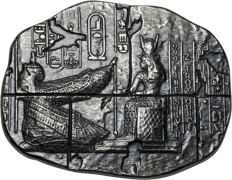
2 oz Silver Relic Bar Egyptian Goddesses Hand-Poured
£72.78
excl. UK import VAT and shipping
currently not available

 More than 310,000
 Over 30 years
 Secure shipping
 Google: 4.9/5


The 2 oz silver bar combines a manageable weight class with an attractive price per troy ounce, positioned precisely at the intersection of investment object and collector's item. With a fine weight of around 62.2 grams, this denomination offers more substance than the classic entry-level bar, while remaining well below the large investment bars. This guide examines production, fineness, cast and struck variants, tax particulars, storage, and the purchase criteria that really matter for this size.
Two troy ounces correspond exactly to 62.207 grams of pure silver. This size thus closes a gap between the widely used smaller units and the heavier investment bars. Anyone wishing to spread their silver holdings more broadly likes to combine the 2 oz class with the 1 oz silver bar and the 100 g silver bar, in order to respond flexibly to different selling situations.
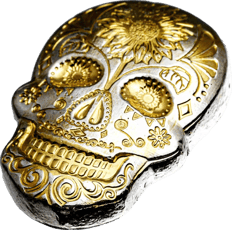
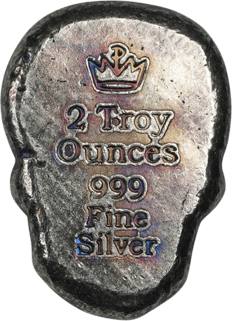
Silver bars in this weight class come in two fundamentally different forms: as a machine-struck bar with crisply sharp contours, and as a hand-cast piece with a rustic, irregular surface. Particularly in the 2 oz class, cast motif bars have carved out a firm place for themselves, because the greater weight gives the craftsmanship more surface area for detailed design.
The 2 oz denomination benefits from a lower premium per gram than very small bars, because striking and casting costs are spread across more material. At the same time, the individual bar remains easy to divide and store. For building up a larger holding, it is worth considering heavier units such as the 250 g silver bar or the 1 kg silver bar, where the premium falls further.
Investment silver is generally produced with a fineness of 999/1,000 (fine silver) or even 999.9/1,000. This high degree of purity is the basis for international tradability and is usually stamped or struck directly onto the bar together with the weight, metal designation and fineness. For products from renowned refineries such as Heraeus, this marking is standard.
Struck bars are produced under high pressure from pre-formed blanks. The result is smooth surfaces, crisp edges and a uniform finish. This industrial precision makes struck pieces particularly popular with price-conscious investors who place value on a low premium.
Hand-cast bars are cast in moulds and then finished by hand. Each piece has a slightly different structure, so that each is effectively a one-off. In the 2 oz class there are numerous elaborately designed motifs that mark the transition from a pure investment product to a collector's item. Anyone who values such pieces will also find elaborately designed versions among the enhanced silver bars.
The 2 oz size is part of a wide range of weight classes. For building wealth, it makes sense to spread one's holdings across several units, so as not to be dependent on a single large bar at the time of a later sale.
Besides classic bars, the silver bars category also includes special forms such as minted bars and CombiBars, which can be broken into smaller pieces.
Checking authenticity is one of the most important aspects when buying silver. Reputable bars carry a clear stamping of weight, fineness and metal designation; many manufacturers also give their products an individual serial number or supply them in a sealed blister pack with a certificate.
Several methods have become established for verifying authenticity:
Kettner Edelmetalle relies on an ISO-compliant authenticity verification process and a fully automated high-security logistics centre, so that the silver delivered arrives checked and flawless. Anyone who wants to complement their silver with coins will find further verified products in the silver bullion coins section.
Unlike investment gold, which is exempt from VAT under §25c UStG, silver bars in Germany are subject to the standard rate of VAT. This is a key difference compared with gold products and should factor into the purchase decision.
Tax note
Silver bars are taxed at the standard rate in Germany, while the margin scheme can apply to certain silver coins. For private sales transactions, a one-year holding period also applies: if silver is held for longer than twelve months, any resulting capital gain is tax-free. This is general information and does not replace tax advice.
Anyone wishing to make use of the tax advantages of gold will find a suitable alternative in the gold bars section: many investors deliberately combine both metals.
Silver reacts more sensitively to environmental influences than gold and can tarnish on contact with humidity or sulphur compounds. Proper storage therefore preserves both its visual condition and its value. Dry, temperature-stable locations have proven effective, as has protective packaging that reduces direct contact with air.
For preserving value, the rule is: the less hand contact and moisture, the better. Suitable storage is provided by coin capsules for individual pieces, as well as coin cassettes and can safes for larger holdings. Valuable collector's bars can additionally be kept insured in a bank safe deposit box or a high-quality home safe.
The 2 oz silver bar moves between two worlds. As a pure investment product, what counts above all is the silver value and as low a premium as possible. As a collector's item, the design, mintage, craftsmanship and condition play the decisive role: here the appeal to collectors can significantly exceed the pure material value.
A hand-cast bar is not simply produced, but designed: this is where its special appeal for collectors lies.
Anyone focusing on variety of design will also find a broad range of themes among silver coins. For the long-term, regular build-up of a silver holding, savings plan products are also suitable.
Before buying, it is worth looking at several factors that determine quality and later tradability:
For broader diversification across several metals, it is worth looking at ready-assembled silver investor packages, which bundle various products.
Two troy ounces correspond exactly to 62.207 grams of pure silver. For cast motif bars, the actual gross weight can vary slightly due to the design, but the fine silver weight remains at two ounces.
Struck bars are produced under high pressure and have smooth, even surfaces with a low premium. Cast bars are cast in moulds and finished by hand, resulting in characterful one-off pieces with a rustic surface: popular with collectors.
Yes, in Germany silver bars are subject to the standard rate of VAT, unlike investment gold, which is exempt from VAT. After a holding period of more than one year, any capital gain is tax-free for private individuals. This does not replace tax advice.
Dry, temperature-stable locations with little air contact are ideal to avoid tarnishing. Coin capsules, cassettes or can safes protect the surface; valuable collector's items can be kept insured in a bank safe deposit box or home safe.
Both are possible. Plain struck bars serve primarily as an investment, while cast motif bars can gain additional collector's value through craftsmanship, mintage and design that exceeds the pure material value.
What matters is a fineness of at least 999/1,000, a well-known manufacturer, Brilliant Uncirculated (BU) condition, and a transparent premium. For collector's items, a certificate and original packaging additionally improve later tradability.
 2 oz Silver Bars
Stay informed with product launches, financial news and exclusive offers. Sign up for our free newsletter today.
By entering your email address and clicking the "Submit" button, you give the following consent: "I agree to be informed by email about new products, financial news and exclusive offers, and therefore consent to the processing of my email address for the purpose of sending the newsletter. I can revoke this consent at any time without giving reasons, with effect for the future. The lawfulness of processing carried out prior to revocation remains unaffected."