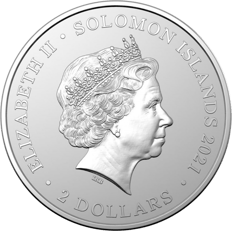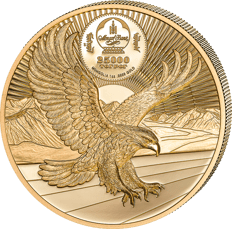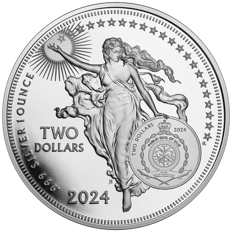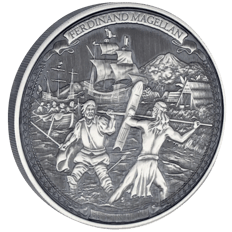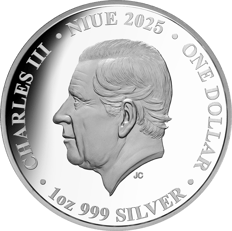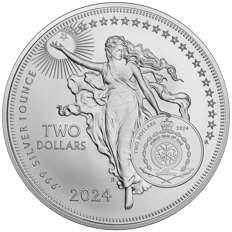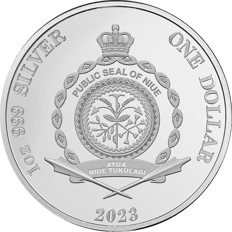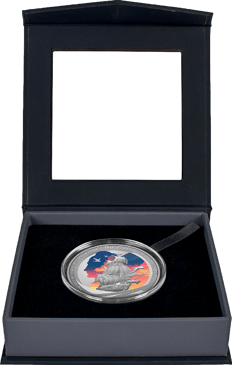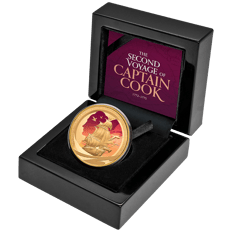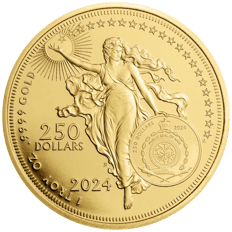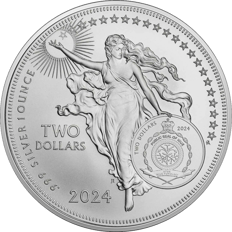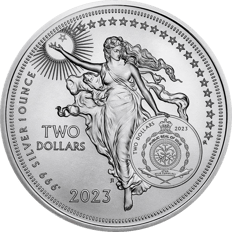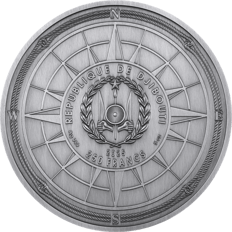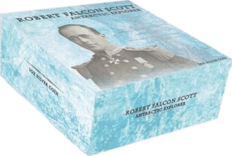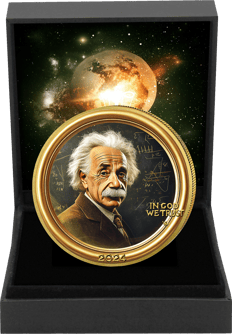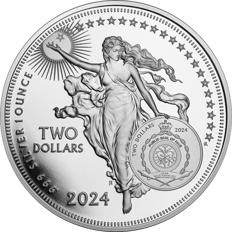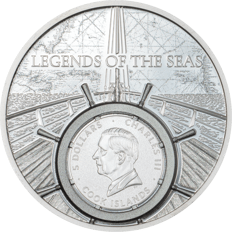
1 oz Silver Legends of the Seas Santa Maria 2026 (Mintage: 999 | Proof)
£244.30
excl. UK import VAT and shipping
Available in 2–3 business days

 More than 310,000
 Over 30 years
 Secure shipping
 Google: 4.9/5


Explorer coins are dedicated to the people who redrew the map of the world: seafarers, travelling researchers and pioneers whose expeditions shaped entire eras. As themed collector coins, they combine a historical narrative with the real material value of gold and silver, struck in limited mintage, often in Proof quality. This guide explains which figures and designs this collecting field covers, how investment and collector products differ, how mintage, condition and fineness affect value, and what to bear in mind regarding taxation and storage.
The explorer motif is one of the oldest narrative traditions in numismatics. Even historical coins and medals honoured seafarers and cartographers, because their voyages carried political and economic significance. Modern mints take up this theme and devote dedicated editions to famous explorers, ranging from the great sea voyages of the early modern period to the polar expeditions of the 20th century. Within the overarching category of Historical Figures, explorers form a clearly defined collecting field that is thematically distinct from politicians, musicians and monarchs.
A characteristic feature of these editions is the close link between visual language and history: the obverse often shows the explorer's portrait, while the reverse depicts a ship, a route, a navigational instrument or a cartographic representation. Many designs appear as a one-ounce coin, with some series also offered as heavier five-ounce editions with raised relief. Those interested in the broader context will find related historical themes in the History section as well as among the Cities and Landscapes.
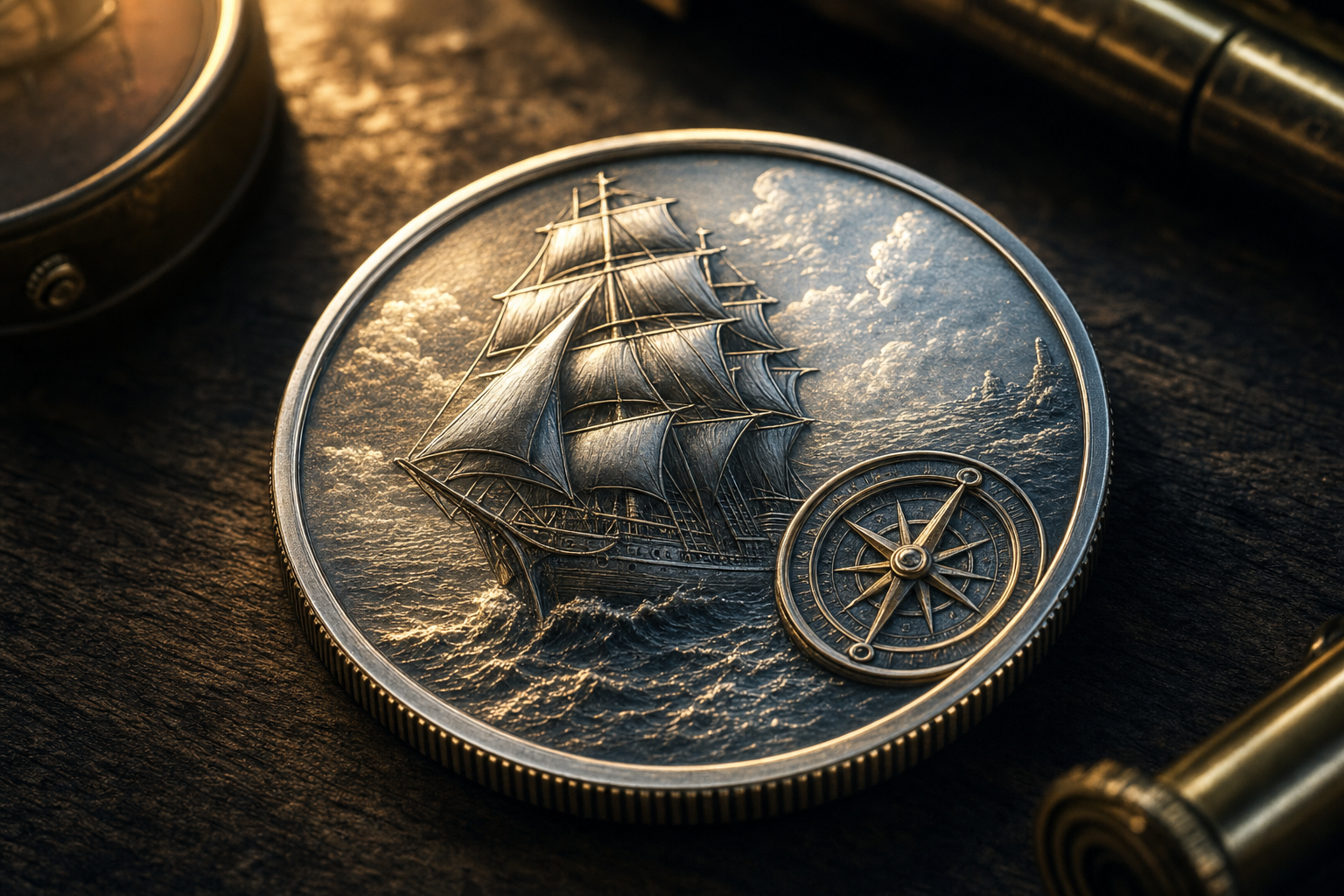
The spectrum ranges from the classic seafarers of the Age of Discovery to researchers whose work extended far beyond geography. Typical designs include:
Because many of these editions are also attractive as investment gold, this collecting field overlaps with classic gold coins and themed silver coins.
Explorer coins move between two worlds. Part of the range is designed as a collector's item: small mintages, elaborate minting quality, sometimes colouring or partial gilding. Besides the precious metal content, their price is driven by rarity, design and condition. Another part is more strongly oriented towards material value and is well suited as a themed addition to a holding of classic bullion coins.
When deciding on a purchase, it helps to clarify your own priority. Those who invest primarily in precious metal pay attention to a low premium over the spot price and prefer common one-ounce formats. Those who collect place greater weight on mintage size, year of issue and condition. Both approaches are not mutually exclusive: themed series in particular can serve just as well as a gift idea as a long-term part of a broadly diversified precious metals collection.
An explorer coin tells the story of a journey, while at the same time carrying the lasting value of the precious metal from which it is struck.
Explorer designs appear predominantly in silver and gold, less often in other precious metals. For modern editions, the fineness is usually 999 or 999.9 thousandths. The most common denomination is one ounce (31.1 grams), which offers a balanced ratio of design surface, weight and price.
Silver explorer coins are the entry point into this collecting field. They offer a generous design surface for detailed depictions and are priced significantly below comparable gold editions. Those looking to expand their collection will find numerous thematically related editions in the broad range of further silver coins as well as among the coloured silver coins. For standardised investment silver, it is also worth considering silver bullion coins.
Gold explorer coins are aimed at collectors with a higher budget and at investors who want to combine a themed design with the lasting value of gold. They often appear in very small mintages and in Proof quality. Those who prioritise material value compare such editions with classic Vienna Philharmonics, the Maple Leaf or the Krugerrand, or supplement their holdings with divisible gold bars.
For collector coins, three factors largely determine character and value: the mintage size, the condition and the minting quality. These characteristics should be checked before every purchase.
A coin's condition is only preserved if it is stored properly. Even minor scratches or fingerprints can reduce the value of a Proof edition. Suitable protective materials can be found in the range of coin capsules and coin cassettes.
Collector coins with small mintages are counterfeited less often than common bullion coins, yet the same basic rules of authenticity verification apply. What matters is that the weight, diameter and fineness match the official specifications of the mint, along with the quality of the strike. At Kettner Edelmetalle, every edition undergoes an ISO-compliant authenticity verification before it is shipped.
A reputable dealer documents the provenance and delivers the edition in its original condition. Those who want general information on buying precious metals safely will find further ranges among the gold coins and bullion coins.
Tax classification differs considerably between the precious metals. In Germany, investment gold is generally exempt from VAT under the applicable value-added tax rules, provided the statutory criteria for investment gold are met. For this reason, many gold explorer coins are offered with a VAT-free notice.
Tax notice
In Germany, investment gold is generally exempt from VAT. Silver coins, by contrast, are subject to VAT, often in the form of margin scheme taxation. A private capital gain can remain tax-free once the one-year holding period has elapsed. This is general information and does not replace individual tax advice.
VAT is charged on silver coins, which for imported collector coins is often reflected through the margin scheme. Those who prioritise the tax aspect should be aware of the difference between gold and silver editions and structure their holdings accordingly, supplementing them, for example, with VAT-exempt gold bars or classic investment gold.
Particularly with Proof editions, value depends heavily on condition. Coins should only be held by the edges and never cleaned, as even light polishing can permanently reduce their collector's value. For long-term storage, a combination of a protective capsule and a suitable container is recommended.
Suitable accessories can be found in the Accessories section, for example among the coin cases or the collector's accessories. For storing larger holdings at home, a safe can also be worthwhile; in addition, the trade offers can safes for discreet storage.
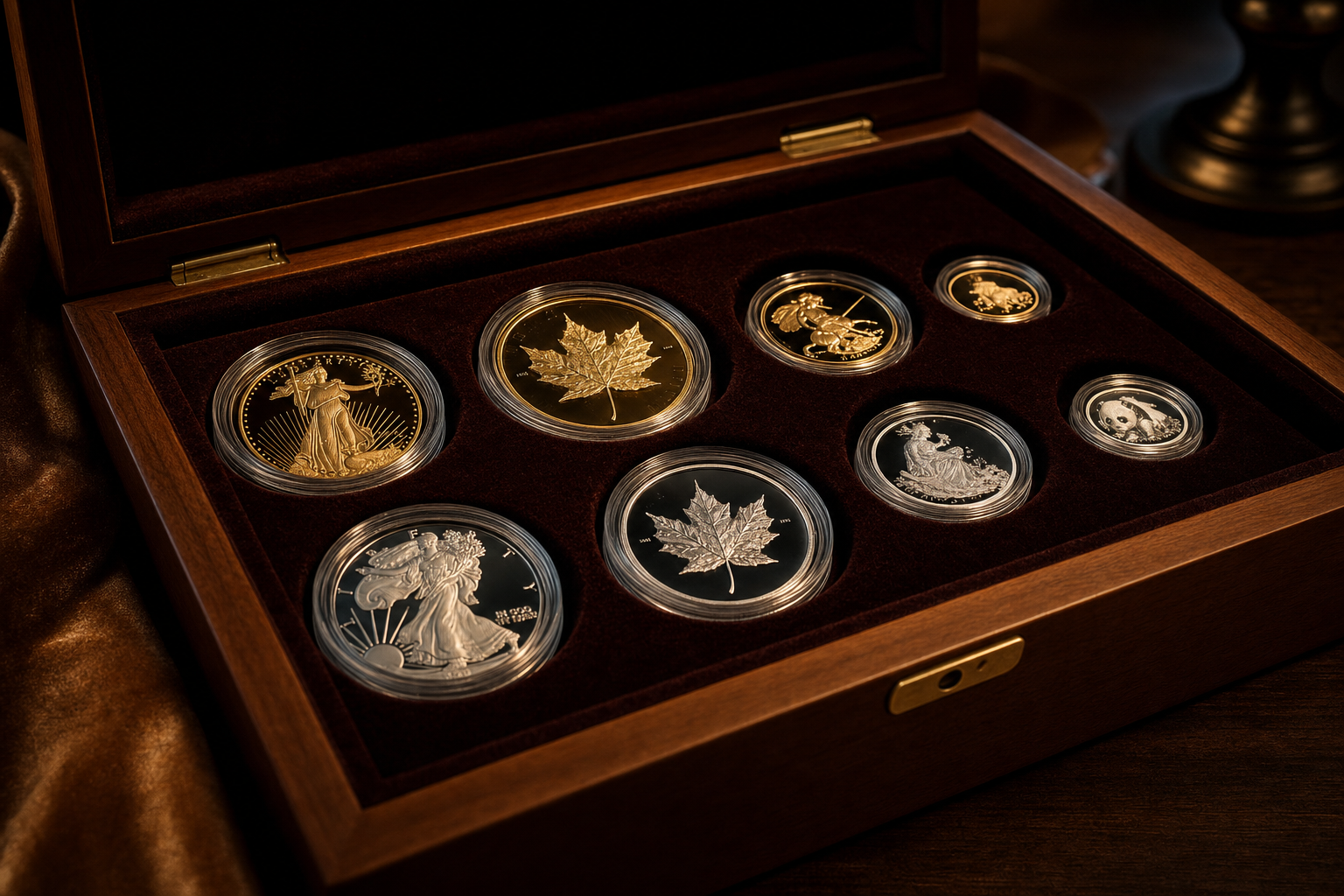
This collecting field includes seafarers such as Christopher Columbus, Ferdinand Magellan and Jacques Cartier, Pacific explorers such as James Cook, travellers such as Marco Polo, naturalists such as Charles Darwin, as well as polar pioneers and historical military commanders. The designs appear in both silver and gold, predominantly in limited mintage.
Proof denotes the highest minting quality. The fields appear mirror-like, while the design stands out with a frosted finish. Such editions are produced with special care, are usually packaged individually and should only be touched by the edges to avoid damaging the delicate mirror shine.
Both are possible. Editions with a very small mintage and elaborate special finishes are primarily collector's items, whose value also depends on rarity and condition. Gold one-ounce editions, by contrast, combine the design with material value and can be regarded as a themed addition to classic bullion coins.
In Germany, investment gold is generally exempt from VAT, provided the statutory criteria are met. Silver coins, by contrast, are subject to VAT, often in the form of margin scheme taxation for imported collector coins. This information is of a general nature and does not replace individual tax advice.
A combination of a coin capsule and a suitable container, such as a coin cassette or a coin case, stored in a dry, temperature-stable location, is recommended. Coins should only be touched by the edges and never cleaned, as polishing can permanently reduce their collector's value.
Mintage indicates how many specimens were struck. Small mintages of only a few hundred pieces are considered particularly sought after and can command a collector's premium beyond the pure material value. Larger mintages in the five-figure range tend to be more strongly oriented towards the precious metal value.
 PersonalitiesExplorer
Stay informed with product launches, financial news and exclusive offers. Sign up for our free newsletter today.
By entering your email address and clicking the "Submit" button, you give the following consent: "I agree to be informed by email about new products, financial news and exclusive offers, and therefore consent to the processing of my email address for the purpose of sending the newsletter. I can revoke this consent at any time without giving reasons, with effect for the future. The lawfulness of processing carried out prior to revocation remains unaffected."