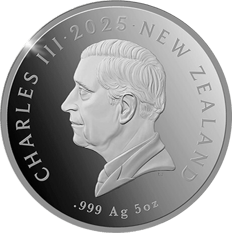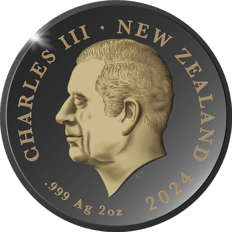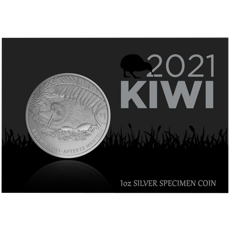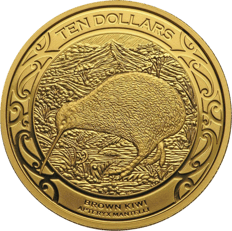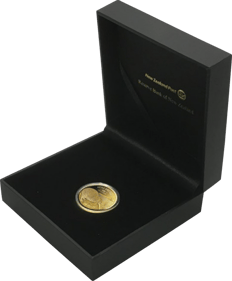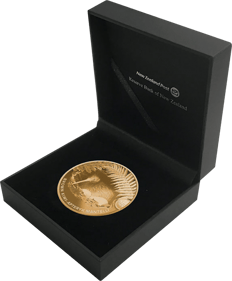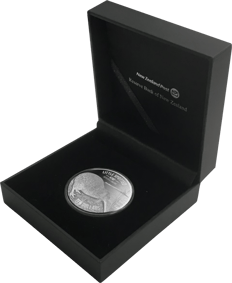
1 oz Silver Kiwi 2025 (Mintage: 2,500 | Proof)
£142.86
excl. UK import VAT and shipping
Available in 2–3 business days

 More than 310,000
 Over 30 years
 Secure shipping
 Google: 4.9/5
The kiwi bird is one of the symbols of New Zealand. The flightless bird is depicted on the reverse of every Silver Kiwi coin. The design changes slightly each year, primarily in the background. The collector's coin from the New Zealand Mint is offered in limited mintage and could therefore still have enormous upside potential.


Five species of kiwi live in New Zealand: brown kiwi, roroa, little spotted kiwi, rowi and tokoeka, according to the Department of Conservation. The brown kiwi (Apteryx mantelli) is nocturnal: by day it rests in a burrow, a hollow tree or log, or under thick vegetation, and comes out shortly after nightfall, according to New Zealand Birds Online. The chapters show five things that make the kiwi what it is.

According to Martin and colleagues, only in the kiwi do the nostrils, the openings of the nose, lie near the tip of the upper bill; in all other birds they open near the base of the bill or inside, on the palate. Cunningham’s team compared the bill tip of the brown kiwi with those of four species that also probe in the ground. Only in the kiwi were the openings at the front, on average 4.3 to 7.1 mm behind the tip of the bill bone.
About 2.5 mm behind the tip of the bill bone, individual sensory pits branch off from two canals for nerves, left and right. In them sit touch receptors (Herbst corpuscles), small sense organs for vibrations and differences in pressure in the ground: in tissue sections, on average 6.32 per pit were visible in the kiwi (38 pits from four birds), and 10.27 in the bar-tailed godwit (15 pits from one bird). Sandpipers, kiwi and ibises are only distantly related; their bill tips with sensory pits arose independently of one another.
The olfactory bulbs, the parts of the brain that process smells, are relatively larger in the brown kiwi than in all 55 other bird species that Corfield and colleagues compared. Whether the kiwi finds its food more by touch or by smell remains open.
The nares of kiwi were downward-facing and shielded dorsally by ‘curtains’ of keratin.
Diagram, not a measurement
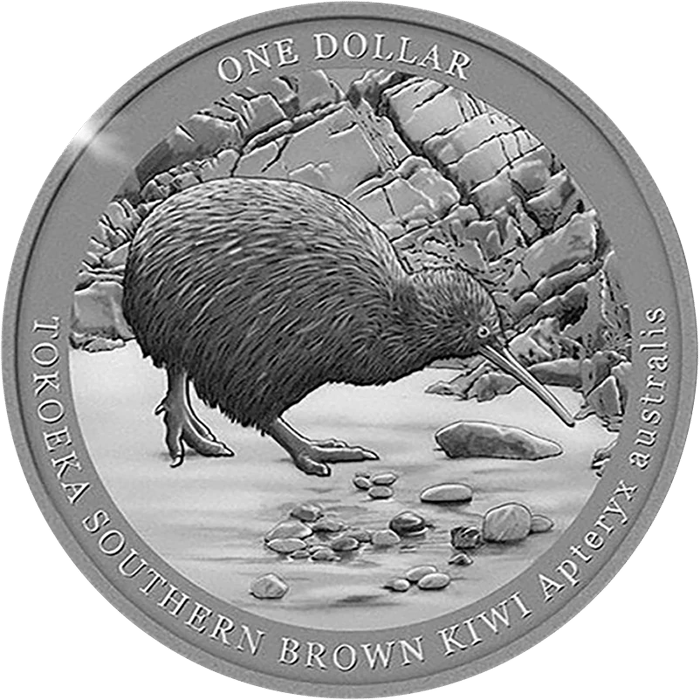
The coin shows a kiwi of the species tokoeka with its bill lowered, on a beach with scattered stones in front of rocks.
The eye of the brown kiwi is 7.0 mm across, measured on two eyes. For its body weight it is clearly smaller than expected from a comparison with 104 flying bird species. The visual field of each eye, the area it takes in at once, is 125° wide. The binocular field at the front, where both eyes see the same thing, is almost entirely missing, and behind the head lies a large area without sight. Martin’s team measured the visual fields on one brown kiwi and one bird of the species roroa.
The optic nerve, which carries the image to the brain, is 0.77 mm thick in the brown kiwi and 1.58 mm in the pigeon. Several genes for opsins, the visual pigments of colour vision, are switched off in the genome of the brown kiwi, likely only after the ancestor of today’s kiwi arrived in New Zealand, according to Le Duc and colleagues.
the bill falls at the very periphery of the visual field and the birds cannot see their own bill tip.
Head and bill from above; diagram, the angles are given in the text
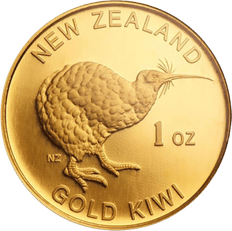
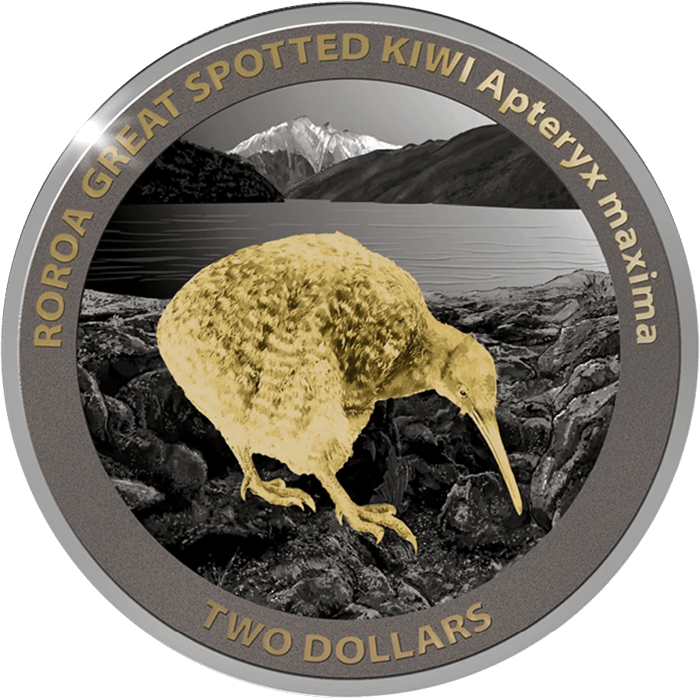
The coin shows a golden kiwi of the species roroa on dark rocks at the shore of a lake, with mountains behind it.
Kiwi lay very large eggs relative to their body weight. Vieco‑Galvez and colleagues measured how thick the shell is, the hard outer layer of the egg: on average 304.77 micrometres (thousandths of a millimetre) in the brown kiwi, 368.95 in the rowi and 383.96 in the tokoeka from the Haast mountains. The thickness seemed to follow the latitude, thinner in the northernmost species, thicker in the southernmost.
Abourachid, Castro and Provini found a strongly curved pelvis, the bones of the hip, a stiff tail and enlarged ribs in the brown kiwi and the little spotted kiwi. In a female carrying an egg, the egg sits on the belly side under the pelvis; in other birds it sits nearer the spine. In the 3D model of the incubation posture, the enlarged ribs could bear the weight of the bird when it rests on the large egg, in males and females alike. Despite the very long incubation, the embryo works as economically as the embryos of other birds, measured in the brown kiwi (Prinzinger and Dietz).
The eggshell of Apteryx is unusually thin and less porous than allometrically expected possibly as a compensation for a very long incubation period.
Diagram, not a measurement
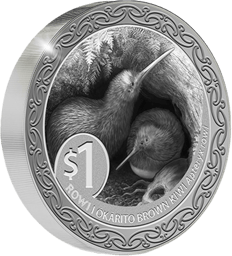
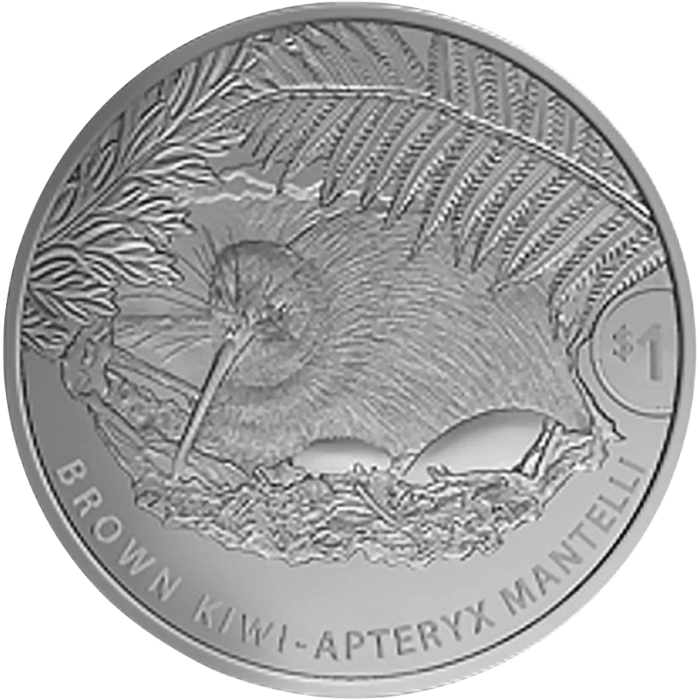
The coin shows a brown kiwi in a nest hollow, two eggs in the nesting material in front of it and a fern frond over it.
Kiwi hatch fully feathered. At about five days old the chicks leave the nest and look for food; they are never fed by their parents, and young kiwi take three to five years to reach full size, according to the Department of Conservation. They bring a reserve with them from the egg: the yolk is the store of food in the egg, and what is left of it at hatching is called the residual yolk.
In the brown kiwi, 48% of the yolk of the fresh egg is found again as residual yolk in the hatched chick; it can serve the chick as its sole source of energy and growth until at least 17 days after hatching.
Prinzinger and Dietz, measured in the brown kiwi (four eggs and chicks)
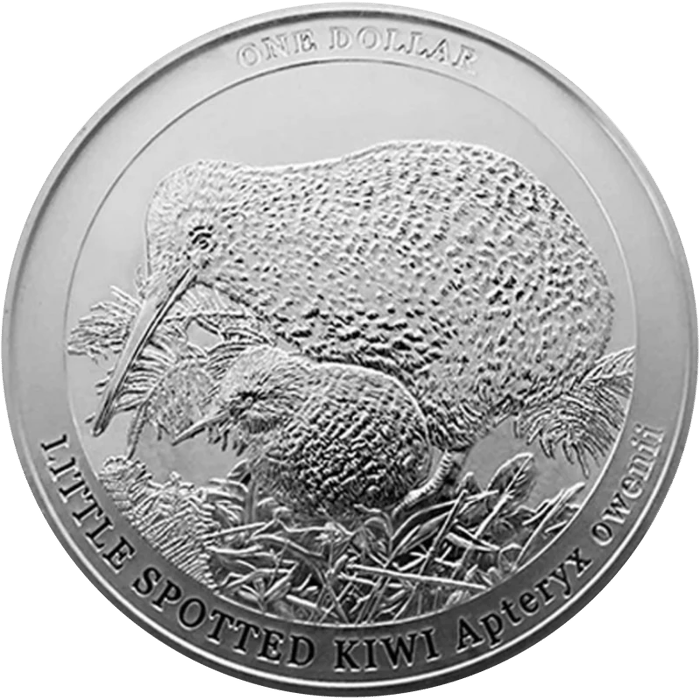
The coin shows a little spotted kiwi, a chick in front of it and grasses at the edge.
The closest relatives of today’s kiwi are the elephant birds of Madagascar; the moa, which lived in New Zealand, are related too, but not the closest, according to the Department of Conservation. Mitchell and colleagues found this in the mitochondrial genomes of two elephant birds. For the team, this argues against a separation of the lineages at the break-up of the supercontinent Gondwana, and for a spread by flight.

According to Grealy and colleagues, data from ancient DNA in eggshells point to a rapid splitting of the palaeognaths, the group to which kiwi and elephant birds belong, 69 to 52 million years ago, long after the break-up of Gondwana. According to Widrig and colleagues, a fossil breastbone supports the view that at least some early relatives of today’s palaeognaths could fly far. In digital casts of the braincase of two species of elephant bird, Torres and Clarke found very small visual centres, as in the kiwi; they interpret this as a sign of a life at night.
For the elephant bird Vorombe titan, Hansford and Turvey give a mean body weight of almost 650 kg. Brown kiwi, roroa, rowi and tokoeka weigh at most 2.0 to 3.0 kg, depending on species and sex (Vieco‑Galvez and colleagues).
Roroa1 ounce (31.1 g) silver1 ounce silverThe nostrils near the bill tip, the small eye and the body around a large egg set the kiwi apart from other birds; added to these are a chick with its own reserve and relatives that lived on Madagascar. Most of this was measured in the brown kiwi, and some things, such as the question of touch or smell, are still open.
Hardly any silver coin combines a love of animals and collecting passion as closely as the Silver Kiwi from New Zealand. Since 2004, the small, flightless ratite has adorned the design side of this coveted series, changing its appearance year after year, sometimes pecking attentively, sometimes roaming warily through the nocturnal undergrowth. The following sections cover the history of the coin, its series and designs, the technical specifications, authenticity features, the tax treatment, and the question of why this particular bird inspires such devotion among collectors.
The kiwi is much more than just an animal motif. It is considered the national symbol of New Zealand, and the country's inhabitants proudly call themselves Kiwis. This nocturnal bird belongs to the order of ratites, cannot fly, and lives exclusively on the islands of New Zealand. This cultural significance made it the ideal choice for its own silver coin series, giving the country international visibility.
The issuer of the coin is New Zealand Post, a peculiarity, since one would normally expect the state mint to be the issuing authority. This historically grown arrangement still shapes the series today. The coin is struck by various international partners, including the New Zealand Mint, the Perth Mint in Australia, and the German art mint B.H. Mayer.
Internationally, the coin is also known as the New Zealand Silver Dollar. Since the first issue, the design side has always shown a kiwi facing left in various poses against changing, typically New Zealand backgrounds. This annual change is precisely the heart of the series: no year of issue is like another, and every design tells a piece of New Zealand's nature.
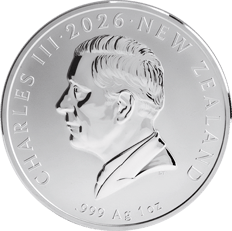
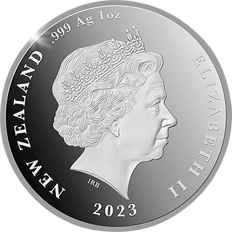
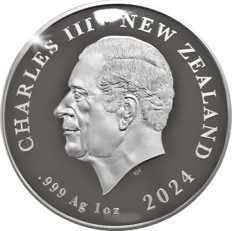
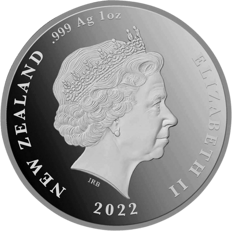
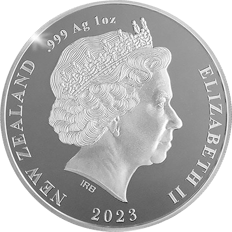
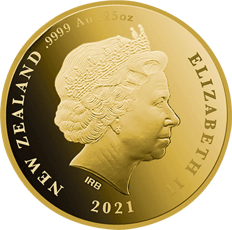
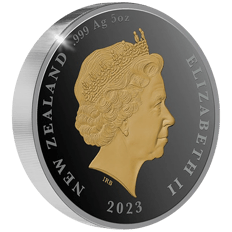
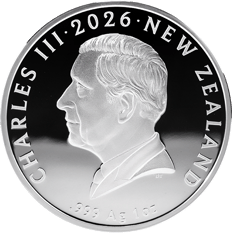
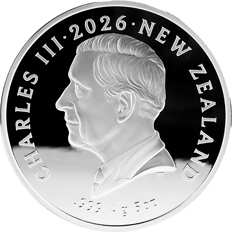
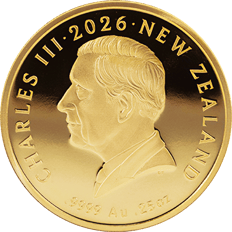
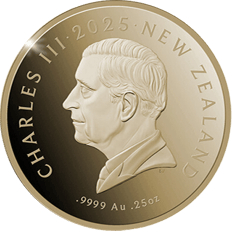
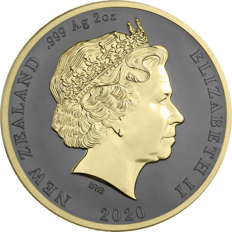
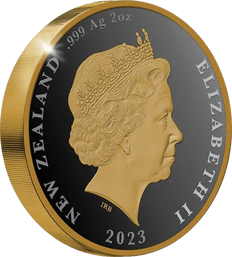
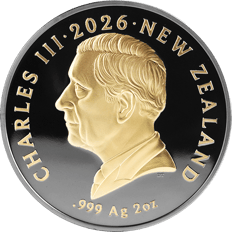
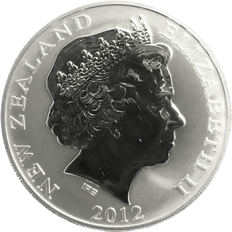
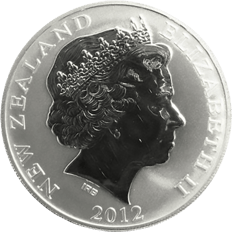
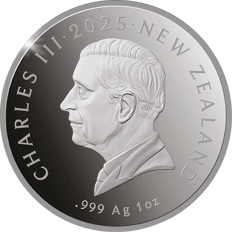
The value side featured the portrait of Queen Elizabeth II as Head of State of New Zealand for many years, a classic feature of Commonwealth coinage. Anyone comparing the different years of issue side by side will quickly notice how finely the engravers have captured the character of this shy bird. This diversity of design clearly sets the Kiwi apart from purely bullion coins such as the Maple Leaf or the Vienna Philharmonic, whose design remains unchanged for decades.

A kiwi cannot be tamed, it can only be admired. It is precisely this charm that turns every issue of the series into a small collector's event.
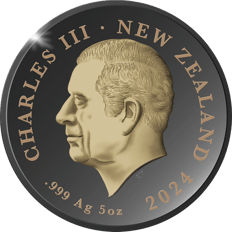
The classic Silver Kiwi exists primarily as a 1 oz coin. One troy ounce corresponds to 31.1 grams of fine silver with a fineness of 999/1,000. The face value is usually 1 New Zealand dollar. In addition to the standard ounce, special formats such as 2.5 oz issues and partially gilded variants have also been released over the years, adding further variety to the series.
The coin is offered in two main minting qualities, which differ in appearance, packaging and premium:
For storage, suitable coin pockets or a coin case are recommended, to protect the sensitive Proof surface from scratches and fingerprints.
The history of the coin can be divided into three consecutive series, reflecting its lasting success, particularly in Germany too.
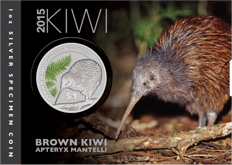
The first issue was simply named New Zealand. The very first edition from 2004 is now considered a rarity and trades on the collector's market for a multiple of its original issue price. Within this series, individual kiwi species were specifically portrayed, from the Great Spotted Kiwi in 2004 and 2005, through the Rowi Kiwi (2006), to the Brown Kiwi (2007) and the Tokoeka Kiwi (2008). These early years laid the foundation for the series' reputation.
Due to the great success, the second series Icons of New Zealand followed in 2009. It consistently continued the idea of an annually changing design and reinforced the popularity of the Silver Kiwi in German-speaking countries.
Just a little later, the third series Kiwi Treasures began, continuing the success seamlessly. Besides the classic kiwi, individual issues also focused on other New Zealand animals and themes. Anyone comparing the different series will find thematic similarities with other nature-themed collector series such as the Wildlife Canada series, the Australian Koala series, or the annually changing designs of the Lunar Series II.
The decisive appeal of the Silver Kiwi lies in its low mintage. While common bullion coins are struck in the millions, Kiwi years of issue often number only a few thousand pieces. This scarcity results in a collector's premium above and beyond the pure silver price.
The following historical mintage figures of the early years serve as a guide:
| Year of Issue | Brilliant Uncirculated (Blister) | Proof (Case) |
|---|---|---|
| 2004 | 2,500 | 1,500 |
| 2005 | 4,000 | 2,200 |
| 2006 | 5,000 | 2,000 |
| 2007 | 5,000 | 3,000 |
| 2008 | 8,000 | 5,000 |
Since the Kiwi predominantly exists as a 1 oz coin, a single specimen already fully covers the respective year of issue. This is precisely why many collectors choose to deliberately gather several years of issue, building up a complete collection. Anyone wishing to additionally invest in common investment silver will find in silver bars the more cost-effective alternative without a collector's premium.
Note on Price Development
Historical performance is no guarantee of future prices. The collector's value of a coin depends on mintage, demand, condition and market situation, and can fluctuate. The information provided is for informational purposes only and does not constitute investment advice.
With collector's coins carrying a high premium, a careful inspection is particularly worthwhile. The Silver Kiwi can be reliably classified using several features:
As a German family business, Kettner Edelmetalle relies on ISO-compliant authenticity verification, so that every coin traded is checked for its authenticity. Anyone wishing to delve deeper into the subject will find helpful testing and care aids in the collector's accessories category.
Unlike investment gold, investment silver in Germany is generally subject to VAT. For silver coins from outside the EU, which includes New Zealand mintages, commercial dealers often apply the margin scheme taxation, which results in an effective tax rate noticeably lower than the standard rate.
In addition, the one-year holding period applies to private sales: if a silver coin is held for longer than one year, any capital gain is, under current law, tax-free. Anyone wishing to consider gold as a tax-privileged alternative will find suitable entry-level formats in gold coins and the smaller 1 gram gold bars. Tax information does not replace individual advice from a tax adviser.
Proof coins in particular react sensitively to touch and environmental influences. A single fingerprint can permanently etch itself into the mirrored surface. For safe storage, a combination of protective packaging and a suitable storage location is therefore recommended.
Anyone wishing to systematically expand their collection can add related animal designs from the range, such as the Somalia Elephant or issues from the Birds of Prey series.
The first Silver Kiwi coin was issued in 2004 by New Zealand Post. Since then, a new design of the flightless ratite has appeared every year, resulting in what is now an extensive collector series.
The classic Silver Kiwi exists mainly as a 1 oz coin with 31.1 grams of fine silver and a fineness of 999/1,000. Over the years, special formats such as 2.5 oz issues as well as partially gilded and coloured variants have also occasionally been released.
Brilliant Uncirculated coins (BU) are usually supplied in a blister pack or coin capsule and form the entry-level variant. Proof (PP) is characterised by a mirrored background and frosted design elements, is supplied in a case with a certificate of authenticity, and is priced higher.
The decisive factors are the annually changing design and the comparatively low mintages. This scarcity leads to a collector's premium above and beyond the pure silver price. Early years of issue such as 2004 now trade for a multiple of their original issue price.
The issuer is New Zealand Post. Minting is carried out by various international partners, including the New Zealand Mint, the Perth Mint in Australia, and the German art mint B.H. Mayer.
Ideally, the coin should be stored in its original packaging, supplemented by coin capsules, coin pockets or a coin case. The storage location should be dry, dark and temperature-stable. Proof coins should only be handled by the edge and, if possible, with gloves.
 Kiwi
Stay informed with product launches, financial news and exclusive offers. Sign up for our free newsletter today.
By entering your email address and clicking the "Submit" button, you give the following consent: "I agree to be informed by email about new products, financial news and exclusive offers, and therefore consent to the processing of my email address for the purpose of sending the newsletter. I can revoke this consent at any time without giving reasons, with effect for the future. The lawfulness of processing carried out prior to revocation remains unaffected."