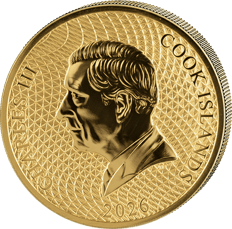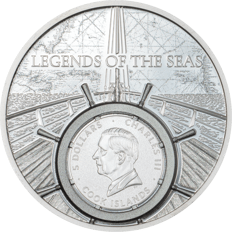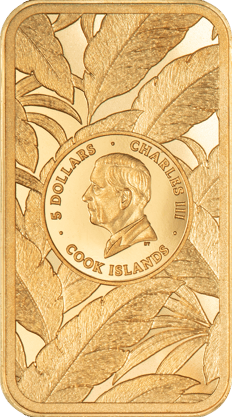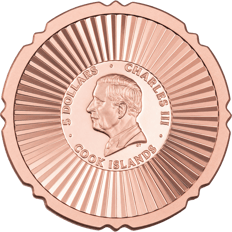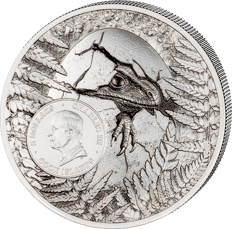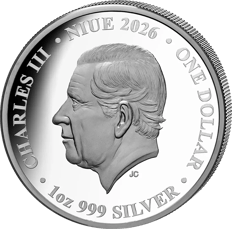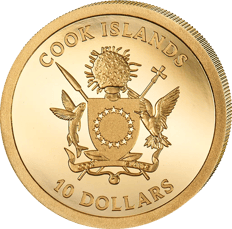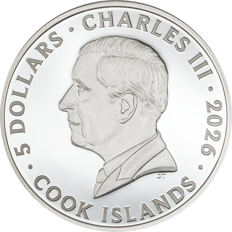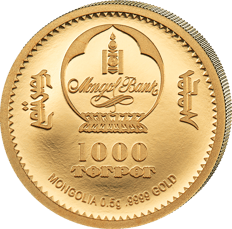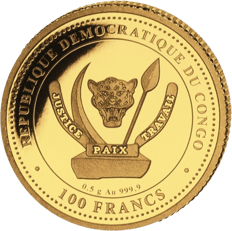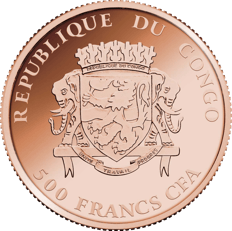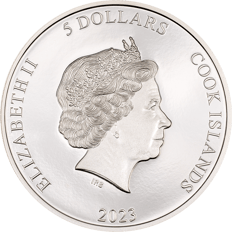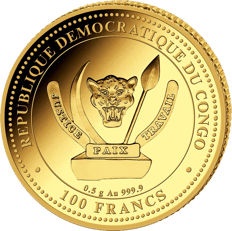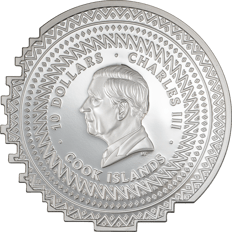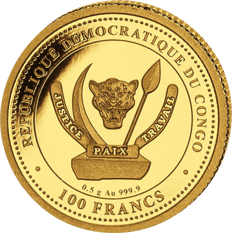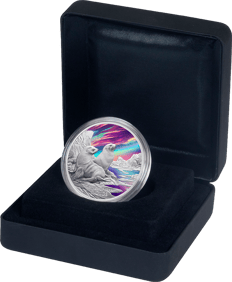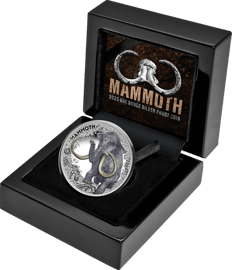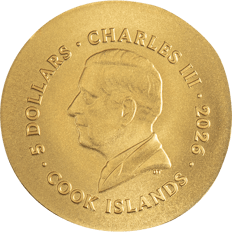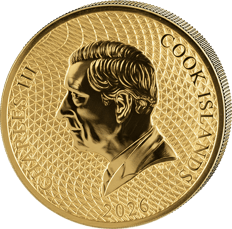
2g Gold Cook Island Bounty 2026
£274.95
VAT-free and excl. shipping
Available in 2–3 business days

 More than 300,000
 Over 30 years
 Secure shipping
 Google: 4.9/5


Authenticity
Every piece bears the mark of B.H. Mayer. Before it goes out to you, we check it ourselves.
Every bullion coin bears the design of its mint and the year it was struck, and almost every one its weight and fineness.
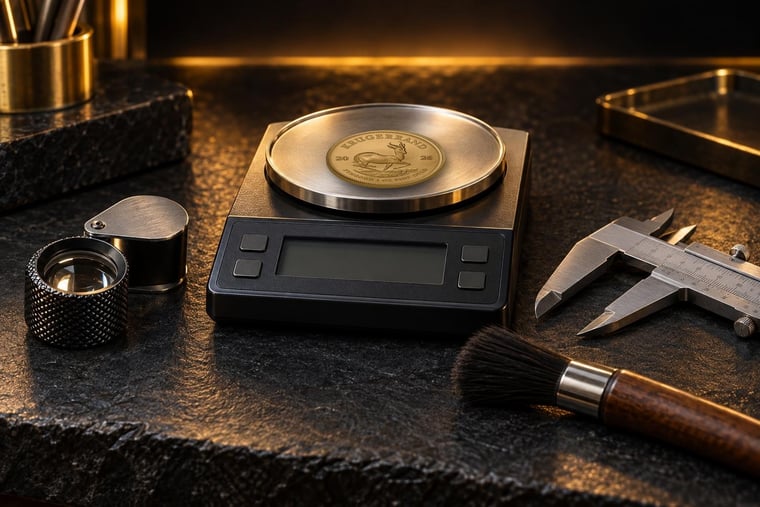
In our CCTV-monitored high-security area, two specialists check every order following the four-eyes principle, including its weight and, by X-ray, its authenticity.
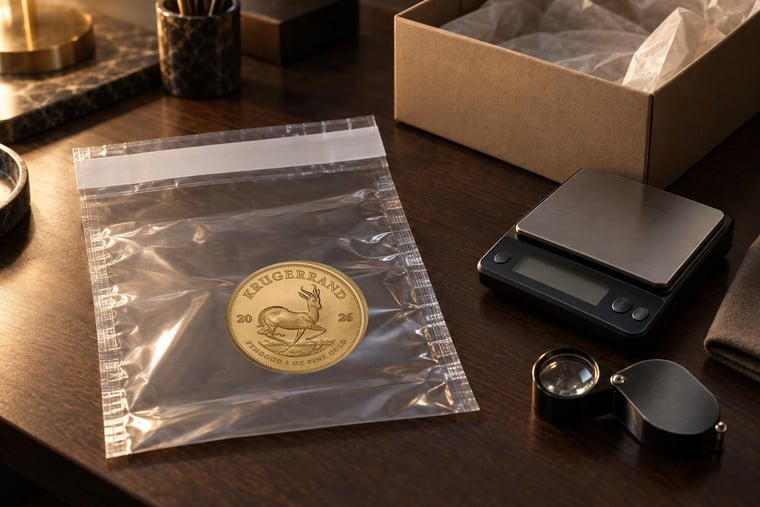
We then seal your order in a security bag that can only be opened once. You will be the first to open it.
Our testing methods
The house
Sources: manufacturer’s details, as of 14 November 2026
The B.H. Mayer's Kunstprägeanstalt is one of the oldest and most renowned private mints in Europe. Founded in 1871 in Pforzheim, the name today stands for technically sophisticated collector's coins with elaborate finishes, high reliefs and limited mintages. This guide sheds light on the history of the house, the typical minting techniques and finishes, the most important design series, as well as the tax-related and practical aspects surrounding the purchase and storage of B.H. Mayer mintings.
The roots of the company go back to 1871, when Bernhard Heinrich Mayer founded a workshop for engravings and mintings in Pforzheim. Over several generations, the business developed from a classic art mint into an internationally active specialist for coins, medals and security mintings. The company's current location near Munich and its origins in the Pforzheim region, the traditional centre of German precious metal processing, have shaped the house's craftsmanship-driven self-image.
Unlike state mints, which primarily produce circulation and bullion coins, B.H. Mayer has specialised in numismatic collector's items. The mint produces official commemorative and collector's coins on behalf of various issuing countries, including island states such as the Cook Islands or Niue, with a design and technical execution that goes far beyond the standard. Anyone generally interested in the role of individual manufacturers will find an overview in the manufacturer overview, which lists numerous other mints.
Over the decades, the house has built a reputation for innovation in minting technology. Techniques such as colour applications, partial gilding and ultra-high-relief mintings were used and further developed at an early stage. This combination of craftsmanship tradition and technical experimentation clearly distinguishes the house's mintings from pure investment products, such as those found among bullion coins.
A key feature of the mint is the variety of finishing techniques. Collectors particularly value this technical range, as it gives each design its own distinctive effect. The following finishes occur especially often:
Many of these techniques can also be observed at other mints: a comparison with issues from the New Zealand Mint or the Germania Mint, which likewise focus on design-sophisticated collector's coins, is worthwhile. The material ranges from silver coins and gold coins to platinum and copper mintings.
With high relief, the raised design elements are worked out of the coin's surface significantly more than with a standard minting. This requires several minting processes under high pressure and precisely matched tooling. The result is a sculptural, three-dimensional effect that comes into its own particularly with figurative designs, such as depictions of animals. Anyone collecting such sculptural designs will also find thematically related issues in the Land Animals section.

The range of themes among the B.H. Mayer mintings carried by Kettner Edelmetalle is exceptionally broad. It ranges from natural-history and historical designs to modern, playful series with genuine inlays such as four-leaf clovers or fossils. Recurring themes include:
The zodiac mintings take up the same design theme also found in the classic Lunar series. For collectors specifically searching for numismatic special editions, the collector's coins category offers a good starting point, while fans of prehistoric designs will find what they are looking for in the Prehistoric Era theme section.
Many of the mintings are issued as official coins of sovereign states, with issuing countries such as the Cook Islands, Niue, Mongolia or the Republic of the Congo frequently used. The face value is symbolic here; the coin's value derives from its precious metal content, mintage and collector demand. Anyone interested in the issues of individual island states will find suitable examples among the Cook Islands gold coins.
A characteristic feature of B.H. Mayer mintings is their frequently low mintage. Series of 199, 400, 750 or 999 pieces are not uncommon, and some special editions appear in even smaller numbers. This limitation is a key factor for collector value: the lower the mintage and the more sought-after the design, the greater the premium that can form above the pure material value.
With collector's coins, it is not just the weight of the precious metal that counts, but the interplay of design, minting quality and rarity.
It is important to distinguish between bullion and collector's products: classic bullion coins track the daily price of the precious metal closely, while collector's mintings carry a numismatic premium. Anyone wishing primarily to invest in precious metal is often better served by standardised products such as gold bars or common Maple Leaf silver coins. Collector's mintings, on the other hand, appeal to those who value design, craftsmanship and limitation.
Note on collector value
A collector's premium is no guarantee of a future increase in value. The development of numismatic prices depends on supply, demand and condition. This information is for guidance only and does not constitute investment advice.
B.H. Mayer mintings are issued in gold, silver, platinum and copper. The following overview matches the common materials to their typical areas of use:
| Precious metal | Typical denominations | Special feature |
|---|---|---|
| Gold | 0.5 g to 1 oz | VAT exempt, small denominations popular as gifts |
| Silver | 1 oz to 1 kg | great design variety, many high-relief issues |
| Platinum | 1 oz | rare, high-priced special editions |
| Copper | individual issues | affordable entry point for design collectors |
Small gold denominations from 0.5 or 1 gram are well suited as a starting point or as a gift, as can also be found under Gold Gifts. Larger silver mintings of up to one kilogram tend to appeal to ambitious collectors. A classification of the various silver weights is offered by the silver bars section as a comparison with standardised investment formats.
Since collector's coins carry a premium above the material value, authenticity verification is particularly important. Reputable mintings display several features by which authenticity can be established:
Kettner Edelmetalle relies on an ISO-compliant authenticity verification process and insures every shipment at 100 percent of its value. For long-term preservation of value, storage in the original case or in suitable coin capsules, which protect the sensitive surfaces from contact and environmental influences, is also recommended.
Proper storage is particularly crucial for mintings in Proof quality. Fingerprints, moisture and temperature fluctuations can permanently damage the sensitive surfaces. Several solutions are available for safe storage:
Suitable accessories for presenting and protecting a collection can be found in the coin cassettes section as well as among the coin cases. Anyone handling coins should always do so by the edges and ideally with cotton gloves, so as not to damage the polished surfaces.

Tax classification depends largely on the precious metal. Investment gold is exempt from VAT in Germany under §25c UStG; this generally also applies to gold coins, provided they meet the statutory criteria for investment gold. Silver, platinum and copper coins, on the other hand, are subject to VAT; for collector's coins made of silver, the margin scheme taxation is often applied.
Tax note
Under the current legal situation, any profit from the private sale of precious metals can remain tax-free after a holding period of one year. The specific treatment depends on the individual case. This information does not replace tax advice.
Anyone wishing to delve deeper into the tax advantages of gold will find further ranges in the gold bullion coins section. The preservation of value over time is a topic that is also repeatedly addressed in connection with inflation hedging.
The art mint, founded in 1871 in Pforzheim, specialises in technically elaborate collector's coins. Characteristic features include finishes such as high relief, Proof, antique finish, partial gilding and colour applications, as well as frequently low mintages.
These are predominantly collector's coins with a premium above the material value. Anyone wishing to invest purely in precious metal is usually better served by standardised bars or classic bullion coins. Collector's mintings appeal to buyers who value design, minting quality and rarity.
The mintings are available in gold, silver, platinum and copper. Silver is the most widespread and offers the greatest design variety, gold frequently appears in small denominations from 0.5 grams, while platinum and copper issues are rarer.
Low mintages increase rarity and thus the appeal for collectors. Series of 199, 400 or 999 pieces are typical. The limited number of pieces is a key factor for the numismatic value of a minting.
Ideal options are the original case or precisely fitting coin capsules, which protect the surface from contact and environmental influences. Coins should only be touched at the edge and ideally with gloves, to avoid fingerprints on polished surfaces.
Investment gold is exempt from VAT under §25c UStG. VAT is payable on silver, platinum and copper coins, with the margin scheme taxation often applying to silver collector's coins. For a binding classification, tax advice is recommended.
 B.H. Mayer

Personal advice
Our client advisers know the range of B.H. Mayer and help you choose, by phone or at an appointment that suits you.
Monday to Friday, 8 am to 8 pm
Stay informed with product launches, financial news and exclusive offers. Sign up for our free newsletter today.
By entering your email address and clicking the "Submit" button, you give the following consent: "I agree to be informed by email about new products, financial news and exclusive offers, and therefore consent to the processing of my email address for the purpose of sending the newsletter. I can revoke this consent at any time without giving reasons, with effect for the future. The lawfulness of processing carried out prior to revocation remains unaffected."