1 Ounce Gold Krugerrand 2026
£3,083.14
VAT-free and excl. shipping
Available in 2–3 business days
 +49 7930-2699

 More than 300,000
 Over 30 years
 Secure shipping
 Google: 4.9/5
The Krugerrand bullion coin is the world's best-selling gold coin and has been experiencing a strong surge in popularity in recent years. The gold coins of the Krugerrand impress with outstanding minting quality. The Krugerrand is now also available as a silver coin and in many limited special editions.


This is how the coins compare in size. In gold, the 1/10, 1/4, 1/2 and 1 ounce come as bullion coins and in proof, and the 2 ounces in proof. The South African Mint issues the 1/20 and the 1/50 ounce only in its sets. The 5 and 50 ounce coins are special issues.
The silver ounce is larger than the gold ounce: 38.725 compared with 32.69 millimetres.
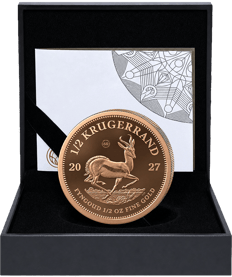
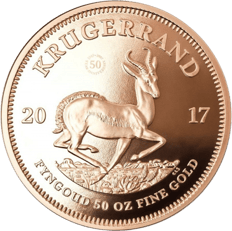
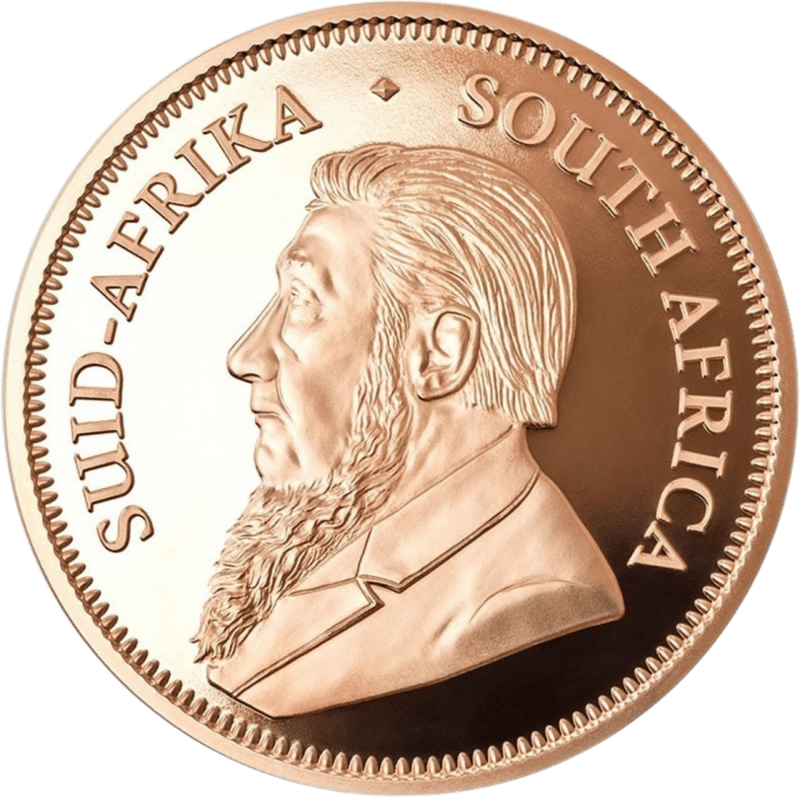
Shown: the portrait sides of the 2026 proof coins and of the 50 ounce coin from 2017. Dimensions according to the South African Mint and the Government Gazette of the Republic of South Africa.
All three measure 32.69 millimetres. They differ in finish and in mintage.
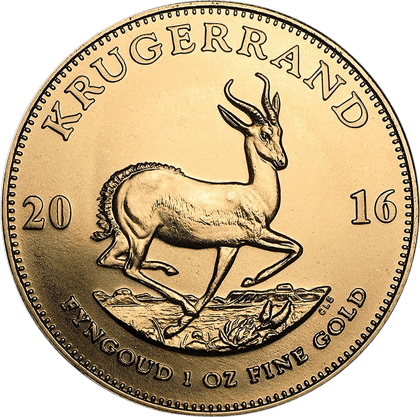
Struck without a fixed mintage, for investors.
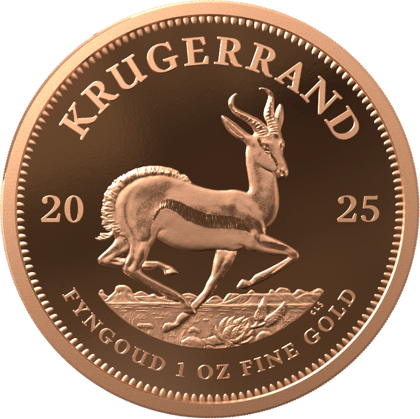
Matte design on a mirror field, in limited mintage and with a certificate of authenticity.
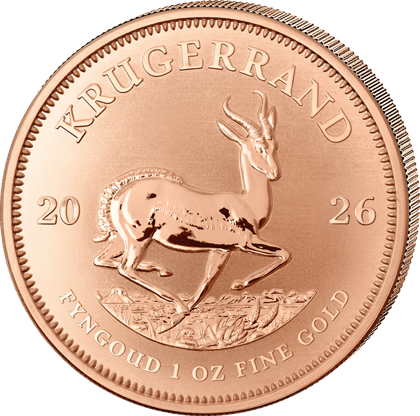
Polished design on a matte field, the inverse of proof. Since 2024.
Both weigh 67.86 grams. The Piedfort has the diameter of the 1 ounce coin and is twice as thick. The wide version has existed since 2018, the Piedfort since 2024.
The South African Mint’s sets build on one another. Each step adds the next larger coin, until all seven sizes come together.
The coins in these sets are struck in proof.
Some issues bear an additional small mark, the Privy Mark. It sits above the springbok’s back. Issues with a Privy Mark usually appear in their own small mintages.
Each of these issues has its own occasion, its own mark or a special finish. All of them are listed here in the category.
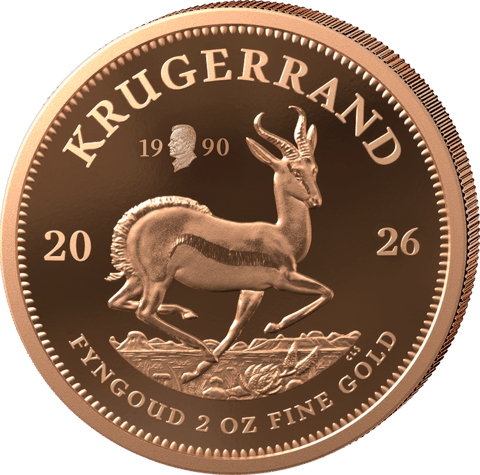 Kettner edition20261/10 to 2 ounces and setsWilly BrandtThe Privy Mark above the springbok shows the portrait of Willy Brandt between the numerals 19 and 90. It recalls 1990, the year in which Nelson Mandela was released and Germany was reunited.
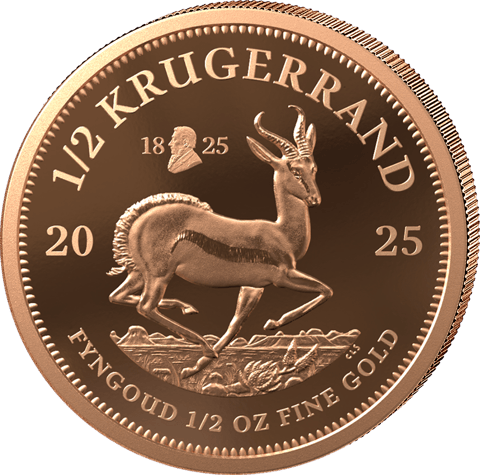 20251/10 to 2 ounces and sets200 years of Paul KrugerThe Privy Mark above the springbok shows a small portrait between the numerals 18 and 25, the year of Paul Kruger’s birth. The issue was released in 2025 for the 200th anniversary of his birth on 10 October 1825.
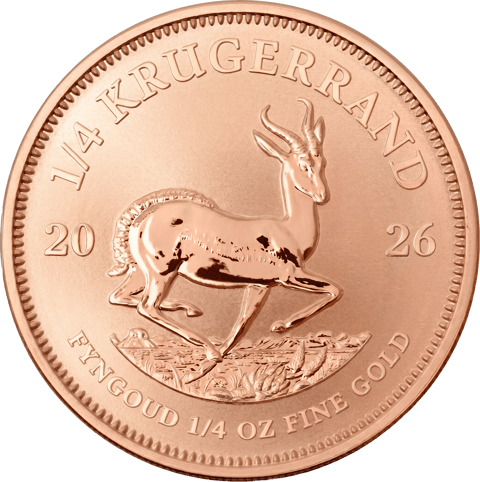 2024 to 20261/10 to 1 ounce and setsReverse Proof in six sizesUntil 2025, the Reverse Proof in gold was only available as a 1 ounce coin, and in 2026 the 1/10, 1/4 and 1/2 ounce were added. The sets also contain the 1/20 and the 1/50 ounce in this finish, with up to six coins in one case.
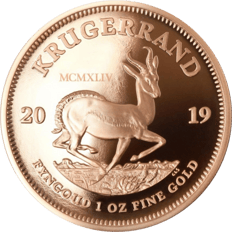
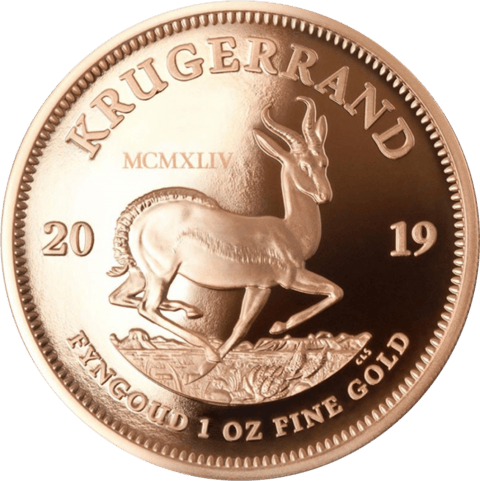 2019 and 20201 ounce75 years of D‑Day and VE‑DayThe 2019 ounce commemorates the Normandy landings in 1944 and the 2020 ounce the end of the war in Europe in 1945, each on its 75th anniversary. Above the springbok, the Privy Mark shows the year in Roman numerals.
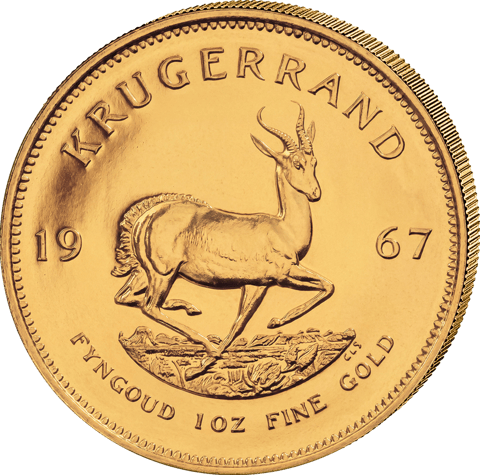 19671 ounceDated 1967On 3 July 1967, the South African Mint struck the first Krugerrand, at that time only as a 1 ounce coin. This ounce bears the year 1967 and comes in a case with a South African Mint paper sleeve.
More on the history of the coin: The Krugerrand saga
In January, the South African Mint switches the bullion coin dies to the new year.
For bullion coins without a year in their name, for example with the suffix “various years” or “assorted years”, the year of minting is not specified. You can find a particular year with the “Year of minting” filter.
Hardly any coin embodies the fascination of gold as distinctively as the Krugerrand. Minted by the South African Mint since 1967, it is considered the most traded gold bullion coin in the world, recognisable by its warm, slightly reddish colour and the proud springbok on the reverse. This overview covers its history and design, the various denominations, authenticity features, tax treatment, and the question of what makes the Krugerrand so popular with investors and collectors to this day.
The history of the Krugerrand begins with a name and a stretch of land. The name element Kruger commemorates Paul Kruger, the last president of the South African Republic, who was in office between 1882 and 1902. The addition Rand refers to the Witwatersrand, the ridge near Johannesburg where the great South African gold discoveries began in 1886. This combination of a person and a gold region gave rise to a name that today stands for investment gold worldwide.
When the first Krugerrand left the mint in 1967, it was the first modern gold coin created specifically for private investors and contained exactly one troy ounce of gold. It is therefore regarded as the forefather of all bullion coins, long before the Maple Leaf or the Vienna Philharmonic came onto the market. Over the decades, more than 50 million ounces have been minted; no other gold coin is in circulation in comparable quantities. A look at the rest of the gold coins range shows just how strongly the Krugerrand has shaped entire generations of bullion coins.
The Krugerrand was the first gold coin to express its value not through a face value but through its pure fine weight, and in doing so became the benchmark for an entire industry.
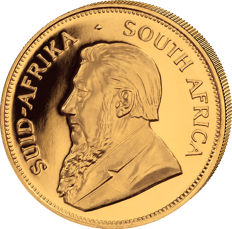
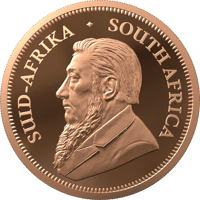
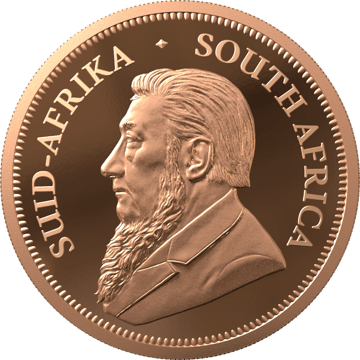
The obverse shows the portrait of Paul Kruger and has remained unchanged since the first issue. To the right and left of the portrait, the name of the country appears in two languages: Suid-Afrika in Afrikaans and South Africa in English. The design deliberately recalls the historic Burgers Pond, an early South African gold coin.
On the reverse, a springbok leaps across the coin's surface, the national animal of South Africa, designed by sculptor Coert Steynberg, whose initials CLS can be found finely worked into the edge of the design. The image is completed by the year of minting, the weight, and the bilingual inscription Fyngoud and Fine Gold. The edge of the coin is reeded, a classic security feature shared by many gold bullion coins.
The most striking feature of the Krugerrand is its colour. This results from a copper alloy: alongside the gold, the coin contains around 8.33% copper, which sets the fineness at 916.7/1,000. Nevertheless, each coin contains the full fine weight of the stated gold content; in the case of the one-ounce issue, that means exactly 31.10 grams of pure gold within a total weight of 33.93 grams.
The addition of copper is more than cosmetic. It makes the coin noticeably more scratch-resistant and more durable than pure fine gold coins with a fineness of 999.9. While more delicate bullion coins quickly show fine scratches in everyday handling, the Krugerrand withstands handling and transport considerably better. For safe storage, suitable accessories such as coin capsules are nonetheless recommended, protecting the coin from fingerprints and abrasion.
Good to know
The copper alloy does not reduce the value. Investors receive the same amount of pure gold as with a fine gold coin, just in a more robust, longer-lasting form.
Initially available only as a one-ounce coin, the range was expanded in 1980 to include three smaller sizes. Today, the Krugerrand covers a broad spectrum, from an affordable entry point to a substantial bullion investment. The four classic gold sizes at a glance:
| Size | Weight | Diameter | Thickness | since |
|---|---|---|---|---|
| 1 oz | 33.93 g | 32.69 mm | 2.75 mm | 1967 |
| 1/2 oz | 16.97 g | 27.00 mm | 2.24 mm | 1980 |
| 1/4 oz | 8.48 g | 22.00 mm | 1.52 mm | 1980 |
| 1/10 oz | 3.39 g | 16.50 mm | 1.19 mm | 1980 |
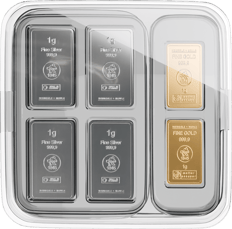
Of particular interest to collectors and those giving gifts are the combined Fractional Sets with four coins, which bring together several sizes in one case; even more extensive combinations are offered by the six-coin gold sets. Besides the gold issue, the Krugerrand has long also been available as a silver coin and as a platinum coin, with the springbok design always preserved.
Precisely because of its fame, the Krugerrand has repeatedly been a target for counterfeiters over the years. With new coins bought directly from the manufacturer there is no cause for concern, but with pieces from the secondary market or auctions, a careful check is worthwhile. Several simple methods quickly provide certainty:
More elaborate methods such as ultrasound or X-ray analysis remain the preserve of specialist firms. At Kettner Edelmetalle, every coin undergoes an ISO-compliant authenticity verification before leaving the logistics centre, a benefit shared with other American Eagle issues and further bullion coins in the range.
The value of the Krugerrand is based almost entirely on the current gold price. Unlike pure collector's coins, the standard investment issue, whether the current year or various older years of issue, is traded at the material value per gram of fine gold; the specific year of minting plays only a minor role here. If the gold price rises or falls, the price of the coin moves accordingly, both for purchases and for the buy-back price at which the coin can later be sold again.
This close link to the metal price makes the Krugerrand one of the most liquid gold coins of all: it is internationally known, traded worldwide, and can be sold on again almost anywhere. Anyone considering adding to their existing holdings will also find classic gold bars as an alternative alongside coins, usually with an even lower premium per gram.
A significant argument in favour of gold coins is their tax status. In Germany, investment gold is exempt from VAT under § 25c UStG, provided it meets the statutory criteria; the Krugerrand, as a South African gold coin, meets these due to its fineness and its status as official legal tender. Buyers therefore pay no VAT on the coin, meaning the entire amount goes into pure gold.
Tax note
Under current law, the sale of privately held investment gold is tax-free after a holding period of one year. This is general information and does not replace individual tax advice.
This makes gold markedly different from silver, which is regularly subject to VAT when newly purchased. Anyone wishing to combine both metals will find a wide range of counterparts to the Krugerrand in the silver coins section.
Whether you hold a few coins or a larger collection, proper storage preserves value and condition. For individual pieces, coin capsules are a good option, protecting against scratches and environmental influences. Anyone wishing to organise several sizes can turn to coin cases, which create order and an appealing overview.
When it comes to choosing a storage location, a home safe and a bank safe deposit box are both options. Both have their merits: a home safe grants access at any time, while a safe deposit box offers physical separation from the home. In any case, it is important to insure the holding adequately. Kettner Edelmetalle ships with 100% insurance as standard, right to the front door, so protection begins as soon as the shipment is sent.
The Krugerrand appeals to two groups that often overlap. On one hand, investors looking for a well-known, highly liquid, tax-advantaged gold coin at a low premium. On the other, collectors, who take pleasure in limited special editions, Proof issues, and year-by-year series.
Anyone wishing to compare the Krugerrand with other classics will find interesting alternatives in coins such as the Canadian Maple Leaf, the Austrian Vienna Philharmonic, or the British Britannia, each with its own character, fineness, and history.
The colouring results from the copper alloy. Around 8.33% copper lowers the fineness to 916.7/1,000 and gives the coin its warm, slightly reddish tone. The fine weight of pure gold it contains remains unaffected.
The gold issue is available in the sizes 1 oz, 1/2 oz, 1/4 oz, and 1/10 oz. The one-ounce coin has been minted since 1967, while the three smaller sizes were added in 1980. In addition, there are collector's sets and special editions in various forms.
Yes. As investment gold, the Krugerrand meets the statutory criteria for VAT exemption. No VAT is therefore charged on purchase. For questions about your personal situation, tax advice is recommended.
Initial indications are provided by checking weight and dimensions, a magnet test, visual inspection with a magnifying glass, and the sound test. Reliable results come from professional methods such as ultrasound or X-ray analysis. New coins from a specialist dealer undergo a verified authenticity check in any case.
For the standard investment Krugerrand, the price is based almost entirely on the current gold price plus a small premium. The year of minting is secondary for standard coins. Only individual limited special editions can carry a collector's value beyond this.
Yes. As the most traded gold coin in the world, the Krugerrand enjoys a high level of recognition and liquidity. It is bought back internationally and can be sold on again close to the current gold price, making it particularly flexible.
 Krugerrand
Stay informed with product launches, financial news and exclusive offers. Sign up for our free newsletter today.
By entering your email address and clicking the "Submit" button, you give the following consent: "I agree to be informed by email about new products, financial news and exclusive offers, and therefore consent to the processing of my email address for the purpose of sending the newsletter. I can revoke this consent at any time without giving reasons, with effect for the future. The lawfulness of processing carried out prior to revocation remains unaffected."