Offer -£85.72

Only 6 left to order
1 oz Silver Krugerrand Willy Brandt Privy Mark 2026 PP (Mintage: 2,500 | Proof)
£256.29£342.01
incl. VAT and plus shipping costs
Ships from 16/11/2026

 More than 280,000
 15 years
 Secure shipping
 Google: 4.9/5Customer satisfaction: Excellent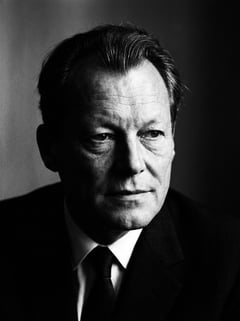
Willy Brandt · 1913–1992
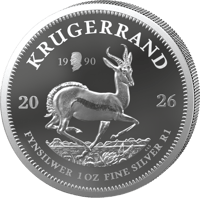
Twelve issues in silver & gold · prestige set: only 20 pieces
Mandela walks free, Germany becomes one — and Willy Brandt extends his hand to both. The South African Mint now captures that year in silver and gold.Bonn, 11 June 1990. Willy Brandt shakes hands with Nelson Mandela — a man who had still been a prisoner four months earlier. "Here you are among friends." That same year, Germany becomes one again. The South African Mint now captures this year in silver and gold — for only the second time ever, the Krugerrand bears a German motif.
12 issues · From €256
Pre-order now — delivery from 4 September 2026
Twelve issues, strictly limited — from the silver ounce to the prestige set with six gold coins. Order first and you are part of the first issue.


Three sizes: 1/10 to 1/50 oz

Four sizes: 1/4 to 1/50 oz

Five sizes: 1/2 to 1/50 oz

All six sizes: 1 to 1/50 oz
The 1/20 oz and 1/50 oz strikes are available exclusively in the sets — they are not offered individually.


The issues will be delivered from 4 September 2026 — strictly in order of purchase, with the 5 oz silver coin following from 21 December 2026. Want to be the first to know? Just call us: +49 7930-2699.
The film about this edition
Three minutes showing why this year belongs in gold and silver — the road from Robben Island to Bonn, and from Bonn to Berlin.
„Nelson Mandela, you are among friends here.“
Willy Brandt · Bonn, 11 June 1990
Some sentences are bigger than the moment they are spoken in. When Willy Brandt shakes the hand of a man who spent 27 years behind bars in June 1990, thousands cheer in Bonn. Many weep. Two nations breaking free of their chains in this one year — and two men who gave everything for it.
36 years later this moment returns — struck into the most noble format South Africa has to offer: the Krugerrand.
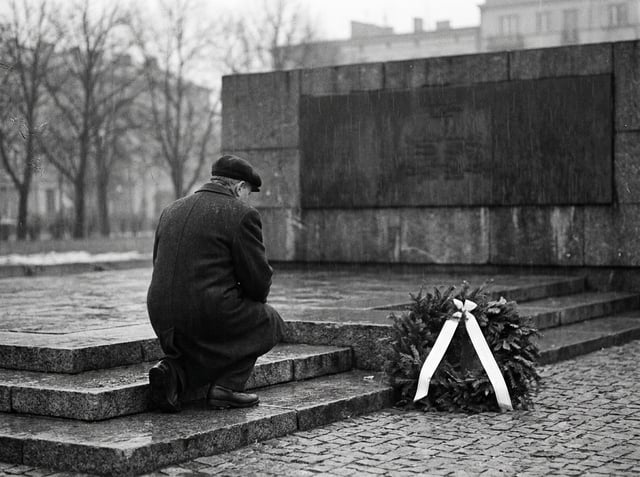
Warsaw, 7 December 1970 — symbolic image
Chapter One
Lübeck, 1913. The boy born as Herbert Frahm grows up without a father, between harbour cranes and workers’ kitchens. At 19 he flees the Nazis to Norway — carrying nothing but a code name meant to protect him: Willy Brandt. He will never give up this name again.
13 August 1961: As Governing Mayor of Berlin he stands before the Wall that cuts his city in two overnight. Prevent it he cannot. But he stands there, more upright than most of his time — and vows to overcome this wall: not with force, but with patience.
Warsaw, 7 December 1970. A grey, wet winter day. The German Chancellor steps before the Warsaw Ghetto memorial, adjusts the wreath — and sinks to his knees. No adviser planned it, no protocol foresaw it. He later wrote: "On the abyss of German history and carrying the burden of the millions who were murdered, I did what people do when words fail them."
One year later he receives the Nobel Peace Prize. The gesture of Warsaw was argued over, then as now. What is beyond argument is what it gave back to Germany: the trust of the world. The very trust without which 3 October 1990 might never have come.
Chapter Two
In 1896 a German telegram shakes the world: Kaiser Wilhelm II congratulates President Paul Kruger — the beginning of a bond between Germany and South Africa that the South African Mint would honour 130 years later with the first German privy mark in Krugerrand history.
90 years later, 1986: Again a German writes to South Africa. Willy Brandt travels to the Cape, speaks with Desmond Tutu and Winnie Mandela — and asks to visit the most famous prisoner in the world. The apartheid regime refuses. When Brandt sends a telegram to Nelson Mandela months later, the authorities refuse to deliver it.
But history can be delayed — not stopped. Four years later, no telegrams are needed anymore.

The message South Africa was never allowed to receive — symbolic image
Chapter Three
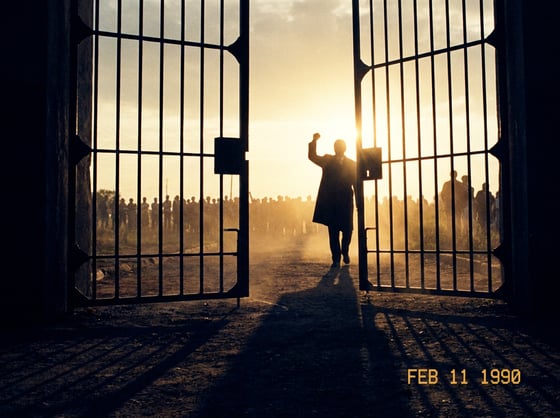 11 February 1990
After 27 years, Nelson Mandela walks out of prison — upright, fist raised, holding his wife’s hand. Hundreds of millions watch this walk on their screens. The world holds its breath.
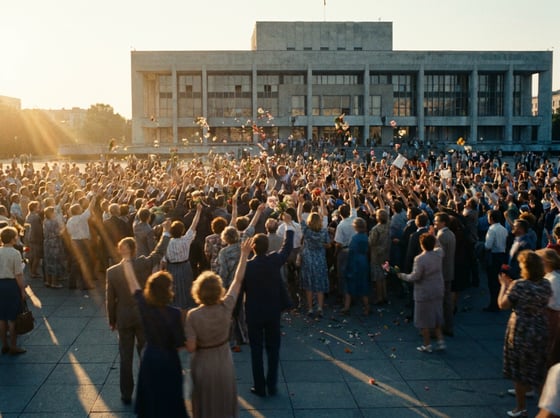 11 June 1990
On his first trip to Europe as a free man, Mandela stands before Willy Brandt — the man who fought for his release for years. Thousands welcome him. Brandt’s greeting goes down in history: "Here you are among friends."
 3 October 1990
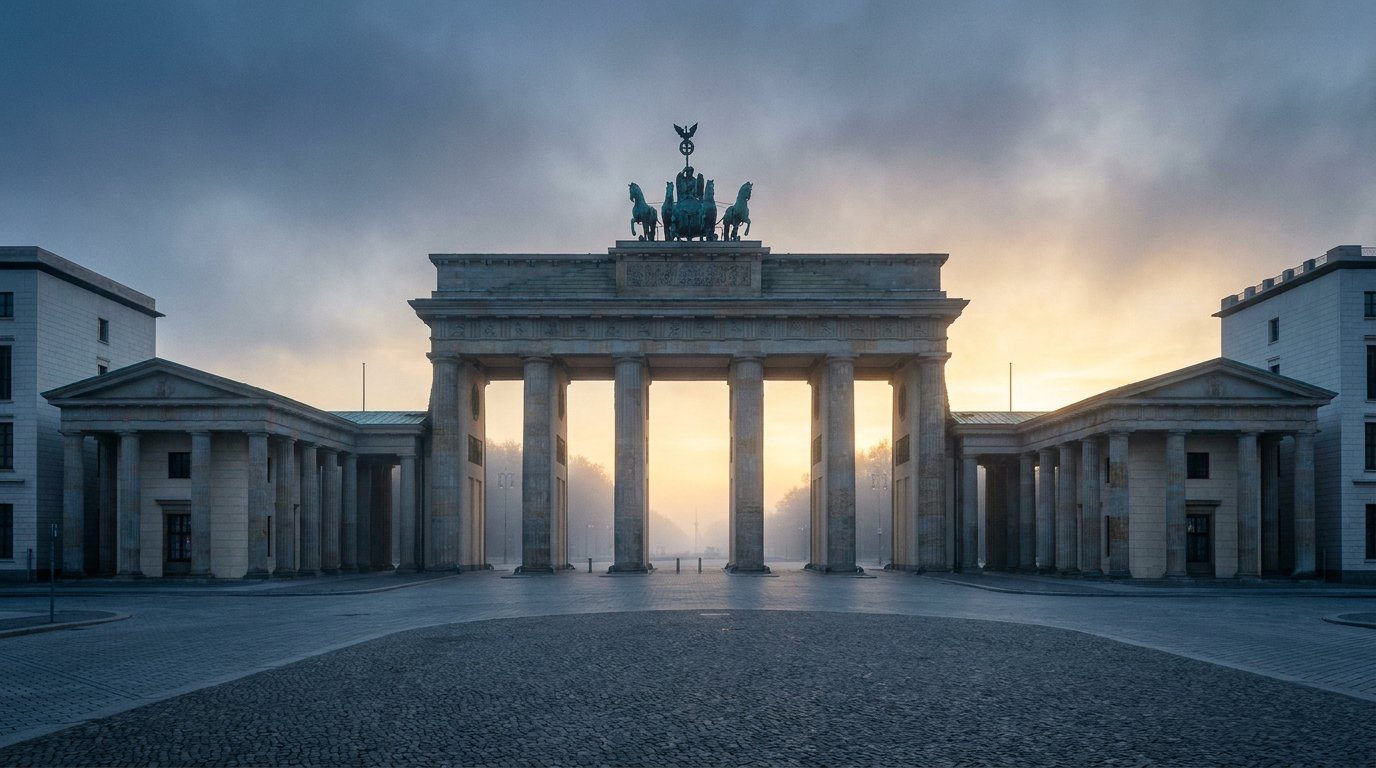
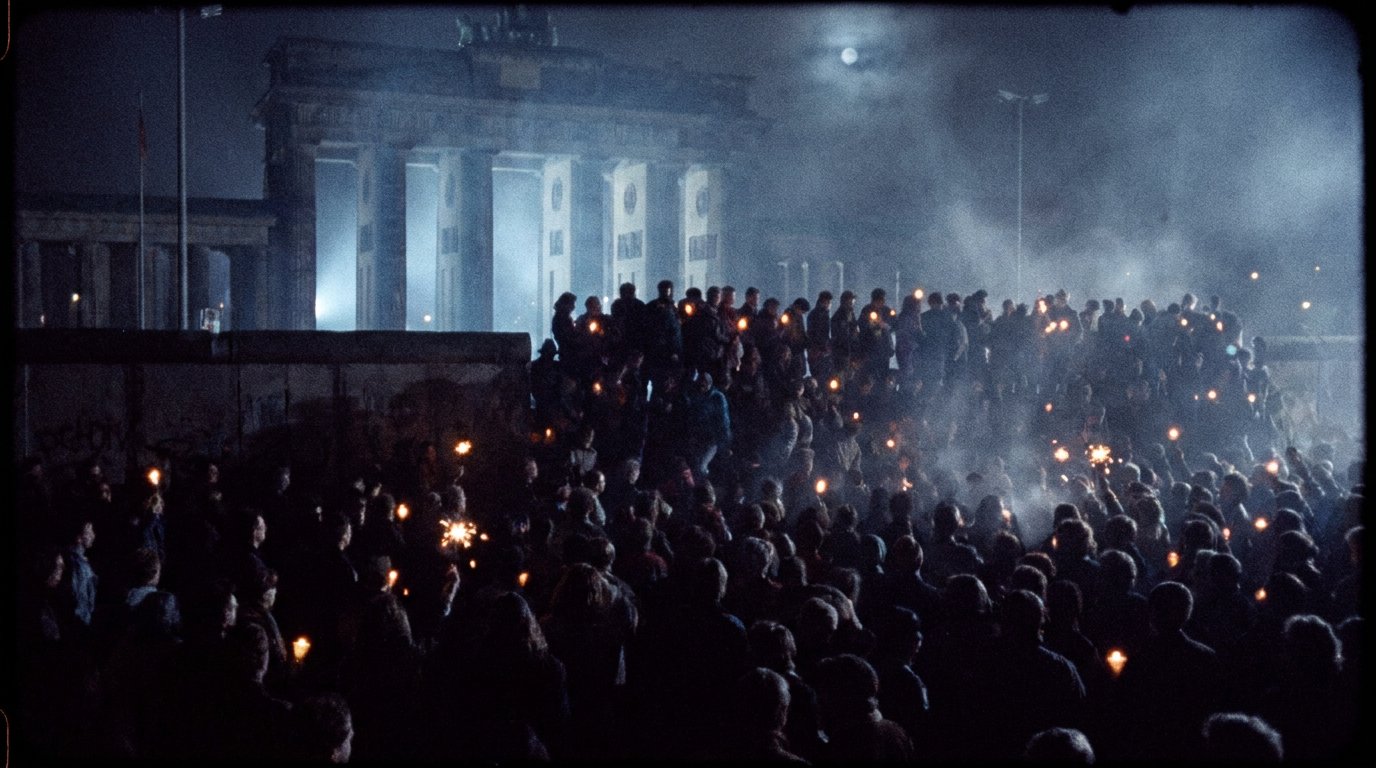
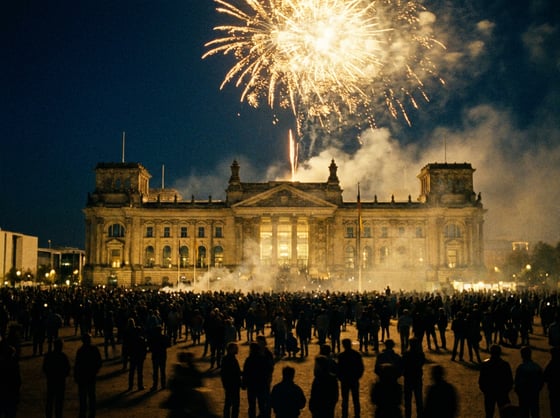
Germany is one country again. In front of the Reichstag stands an old man with tears in his eyes — Willy Brandt, whose politics made this day possible. His words from the night the Wall fell have long become part of the national memory: "Now what belongs together will grow together."
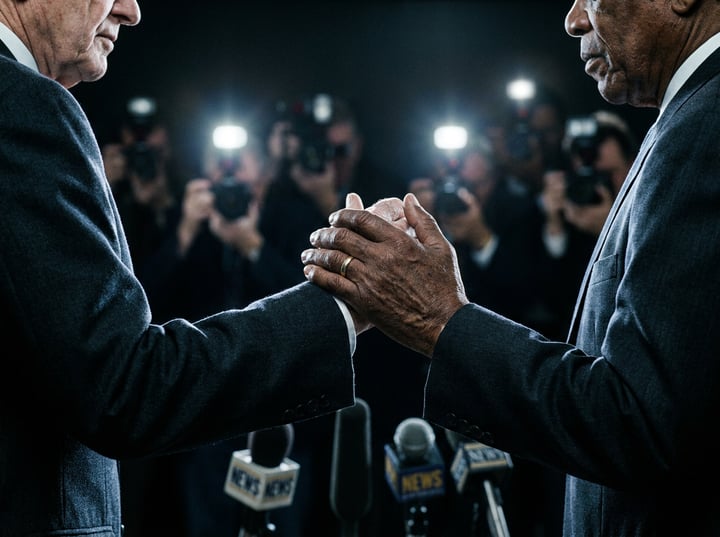
„The freed Nelson Mandela is even more: he is a symbol of the willingness to reconcile and of peace at the same time.“
Willy Brandt · Reception in Bonn, 11 June 1990
One year, two nations casting off their chains. This is exactly the year every coin of this edition carries in its privy mark: 19 on the left, 90 on the right, and between them the man who built bridges while others built walls. Not as a mere number — as a promise that freedom wins.
The strike
Since 1967 the Krugerrand has carried a privy mark only on special occasions — a tiny additional strike that turns a coin into a collector’s piece.
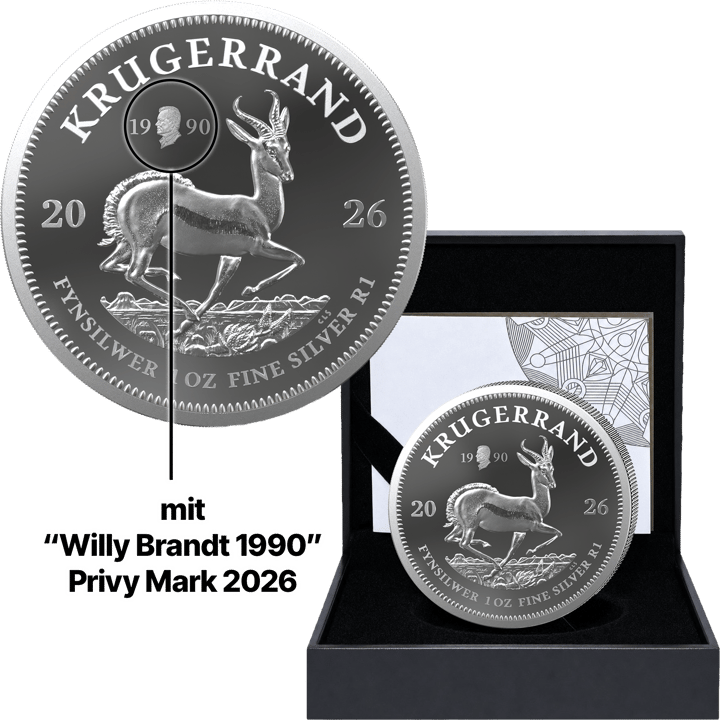
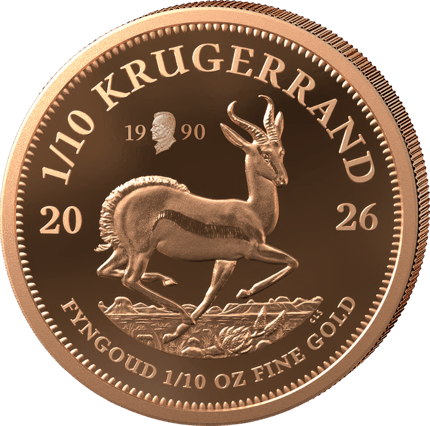
Under the loupe: Brandt portrait between 19 and 90
Above the springbok, where only connoisseurs look, the South African Mint strikes the portrait of Willy Brandt — framed by the digits 19 and 90. Sharply engraved, smaller than a fingernail: the second German motif in 59 years of the Krugerrand.
Every coin is struck in proof quality: mirror-like fields, velvet-matt raised motif, struck multiple times with polished dies. The highest quality level a mint can award — delivered in a case with a numbered certificate of authenticity.
Willy Brandt received the Nobel Peace Prize in 1971, Nelson Mandela in 1993. The privy mark commemorates the meeting of two men honoured for closing divides. No other coin in the world tells this story.
The Germany series
In 2026 the South African Mint wrote German history into the Krugerrand for the first time with the Kaiser Wilhelm II privy mark — the gold issues were nearly sold out within months. Now comes the second chapter: Willy Brandt. From the telegram of 1896 to the handshake of 1990.
An emperor and a chancellor — their politics may be debated. Their place in German history may not.
As the exclusive partner and distributor of the South African Mint, Kettner Edelmetalle brings this edition to market as the sole seller worldwide. Which also means: what is sold out here is sold out everywhere.
Official Partners

„Striking history together.“
A look at the predecessors of this series
The 3-coin fractional sets of the privy mark series are as sought-after among collectors as hardly any other Krugerrand issue. The numbers speak for themselves:
Issued at €1,490 — completely sold out within a short time. Anyone searching today needs luck and patience.
Issued at €1,490 — the first German motif in Krugerrand history. Valued at almost three times that today.
Completely sold out before the first coin was even delivered. History repeats itself.
Both predecessor sets were issued at €1,490 — today they trade at a multiple of that. The Willy Brandt 3-coin set is already completely sold out as well. Still available for pre-order: the 4-coin set (150 pieces), the 5-coin set (30 pieces) and the prestige set with all six sizes — only 20 pieces worldwide.
Kettner Edelmetalle dealer prices, as of July 2026. Past performance is no guarantee of future developments.
Three silver issues.Nine issues in gold.
One year that changed everything.
Willy Brandt died in October 1992 — two years after the handshake with Mandela, two years after German unity. What remains are moments. And for the first time: a coin that holds on to them.
PS: Not sure which issue suits you? Call us — we advise you personally and without sales pressure: +49 7930-2699.